

The global travel industry is witnessing a profound shift towards high-end experiences, with the luxury segment emerging as a dominant force driving profits and strategic investments across cruises, airlines, and hospitality. At the forefront of this opulent surge are cruise lines like Regent Seven Seas Cruises, a brand under Norwegian Cruise Line Holdings (NCLH), which are setting new benchmarks for lavish journeys on the high seas. This pivot towards exclusivity is not merely a fleeting trend but a calculated response to a growing demographic of affluent travelers willing to pay a premium for unparalleled service, space, and unique experiences, even as some early signs of market saturation and economic sensitivities begin to surface in specific niches.
The Anatomy of Ultra-Luxury Cruising: Regent’s Bold Vision
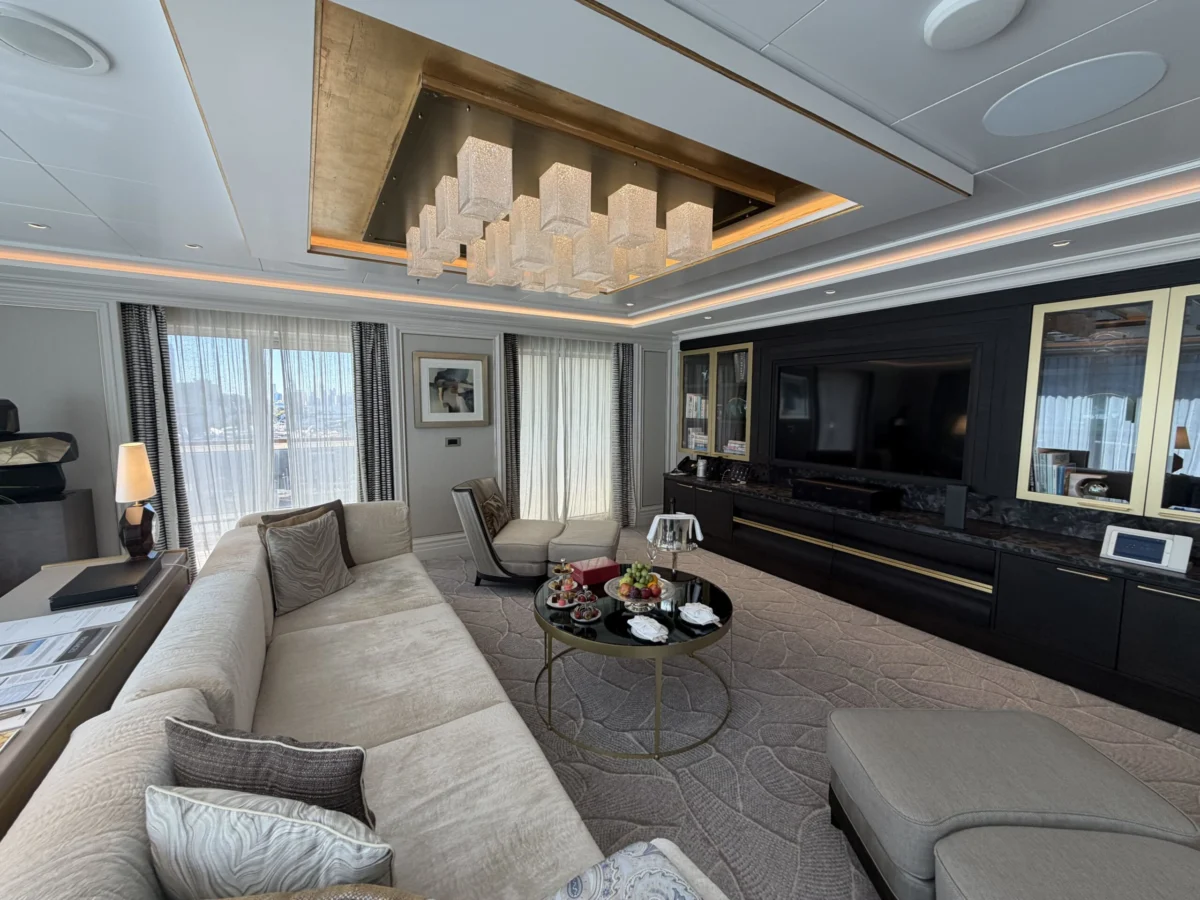
Regent Seven Seas Cruises exemplifies this upscale transformation. Their all-luxury vessel, the Seven Seas Splendor, offers accommodations ranging from a substantial $1,800 per night to an astronomical $15,000 for its crown jewel, the Regent Suite. This top-tier booking transcends mere space, though its approximately 5,100 square feet of lavish living is certainly a draw. The Regent Suite is a floating palace, featuring a private Steinway piano, an exclusive dining room, and a sprawling wraparound deck complete with a hot tub and panoramic views rivaling those from the ship’s bridge. The demand for such extravagance is evident: Regent confirmed to CNBC that multiple passengers vied for the suite on the Splendor’s upcoming 151-night global cruise embarking in January, a testament to its consistent occupancy.
Regent’s ambition extends further into the future with the planned debut of the Seven Seas Prestige in December, marking the brand’s first new ship class in a decade. This next-generation vessel is poised to elevate luxury even higher, with its premier suite projected to command an astonishing $25,000 per night. This pricing strategy reflects an unwavering confidence in the sustained demand for ultra-luxury experiences, pushing the boundaries of what travelers expect from a cruise vacation. These elite ships, often carrying fewer than a thousand passengers compared to the megaships accommodating over 7,500 with their surfing simulators and waterslides, are increasingly becoming the profit engines for companies like Norwegian Cruise Line Holdings.
Norwegian Cruise Line Holdings’ Strategic Compass
John Chidsey, CEO of Norwegian Cruise Line Holdings, has explicitly articulated his strategic focus on refining the positioning of the company’s luxury brands, Regent and Oceania. His vision centers on enhancing product offerings, elevating the guest experience, and bolstering their commercial performance. While specific financial metrics for the individual brands were not disclosed, Chidsey expressed optimism regarding Regent and Oceania’s robust outlook for 2027, underscoring the vital role these luxury segments play in the company’s overall profitability and market differentiation. This strategic emphasis aligns with a broader industry trend where premiumization is seen as a pathway to higher margins and greater resilience against economic fluctuations compared to the more price-sensitive mass-market segments.
A Wider Ocean: The Competitive Luxury Cruise Landscape
The drive towards luxury is not unique to Norwegian Cruise Line Holdings; it’s a pervasive strategy across the entire cruise industry. Competitors are pouring significant investments into new ships and meticulously crafted, specialized experiences designed to captivate the affluent traveler. Regent faces formidable competition from established luxury cruise lines such as Royal Caribbean’s Silversea and Carnival’s Seabourn. However, the competitive arena is also expanding with new, high-profile entrants: renowned hotel brands like Four Seasons, Aman, and Orient Express are translating their land-based reputations for exclusivity and impeccable service into yacht-style vessels. This convergence of hospitality and cruising signifies a growing recognition that the discerning luxury traveler seeks a seamless, branded experience across all modes of travel.
The industry’s commitment to this segment is quantifiable. Projections indicate a substantial expansion of the global luxury cruise fleet, growing from 104 ships in 2026 to at least 130 by 2036. This expansion reflects an impressive growth trajectory, with the Cruise Lines International Association (CLIA) reporting a 71% increase in the number of luxury ships and an 84% increase in berths between 2020 and 2025. Future orders suggest another 26% jump in ship count and a 32% increase in capacity through the end of 2029. While global cruise passengers are forecasted to increase by approximately 11% between 2025 and 2028, CLIA data highlights that the lion’s share of industry investment dollars is disproportionately flowing into luxury and expedition brands, characterized by smaller vessels and fewer berths. This strategic allocation underscores a clear industry-wide bet on the profitability and growth potential of the premium segment.
The Broader Tapestry of Premium Travel: Airlines and Hospitality
The trend of "uber-upscale" offerings extends far beyond the cruise sector, permeating various facets of the travel and leisure industry. Hotels, casinos, airlines, restaurants, and spas are all actively investing in and expanding their premium services, recognizing that affluent customers consistently demonstrate a willingness to pay for enhanced space, personalized service, and distinctive, memorable experiences.

In the airline sector, carriers are redefining luxury air travel. United Airlines, for instance, launched its larger Polaris Studio suites this year, featuring privacy doors and an elevated caviar service, signaling a move towards more exclusive inflight experiences. American Airlines has similarly increased its lie-flat capacity and reported a significant 18.5% rise in premium passenger unit revenue in the third quarter, outperforming the 14.4% growth in its main cabin. This stark contrast underscores the financial leverage gained from catering to the premium traveler.
The hotel industry is mirroring this trend. Marriott’s second-quarter results revealed that luxury revenue per available room (RevPAR) surged by 9.1% year-over-year in the U.S. and Canada, significantly outpacing the 5% growth across all Marriott hotels in the region. Marriott CEO Anthony Capuano articulated this burgeoning demand in June, describing an "almost insatiable appetite" for luxury travel. Similarly, Wynn Resorts, a brand synonymous with high-end clientele, has strategically opted to maintain its premium room rates in Las Vegas, even amidst a recent slowdown in visitation, rather than compromising its luxury positioning by chasing volume with discounted offerings. This deliberate choice highlights a commitment to brand integrity and the value perception among its affluent customer base.
Drivers of the Opulent Demand: Why Luxury Thrives
Several intertwined factors are fueling this unprecedented demand for luxury travel. Post-pandemic, there has been a significant surge in "revenge travel," with many consumers, particularly those with disposable income, eager to make up for lost time and experiences. This initial pent-up demand has evolved into a sustained preference for higher-quality, more meaningful, and less crowded travel experiences. Global wealth accumulation, particularly among high-net-worth individuals, has created a larger pool of potential luxury travelers. These individuals are not just seeking opulence but also authenticity, exclusivity, and personalized service that transforms a trip into an extraordinary journey. The desire for unique, Instagrammable moments and curated cultural immersion also plays a role, with luxury providers often excelling at delivering these bespoke elements. Moreover, the emphasis on wellness, sustainability, and responsible travel has also influenced the luxury market, as high-end brands increasingly integrate these values into their offerings, appealing to a more conscious affluent traveler.
Navigating Choppy Waters? Emerging Challenges and Market Nuances
Despite the overarching bullish outlook, the luxury travel sector is not without its complexities and potential vulnerabilities. The narrative that offering luxury automatically guarantees success has been challenged in some instances. The Ritz-Carlton Yacht Collection, for example, has reportedly struggled with occupancy rates despite substantial marketing efforts, accumulating nearly $700 million in losses since 2017, as reported by the Financial Times. This case highlights that a prestigious brand name, while a significant asset, does not automatically translate into sustained commercial success; execution, market fit, and the delivery of a truly distinctive experience are paramount.
Furthermore, the very expansion of luxury offerings across multiple brands and sectors could, paradoxically, dilute the perception of scarcity and exclusivity, which is a core allure of the luxury market. As more companies enter this space, the challenge intensifies to convince discerning travelers that their particular experience genuinely justifies the premium price point.
Economic headwinds and regional market sensitivities also present challenges. Las Vegas Sands reported earnings that missed revenue and profit expectations, particularly impacted by the high-end segments in both Macao and Singapore. CEO Patrick Dumont acknowledged the softness, stating, "When the customers don’t show up, it’s a little problematic," and suggested that "perhaps people are not feeling as good about the market," although he views the quarter as an aberration. When questioned by CNBC in Macao about potential overcrowding in luxury travel, Dumont emphasized the long-term wealth creation in Asia, asserting that the core challenge isn’t a lack of customers, but rather the imperative for companies to "create enough of an interesting set of experiences where people find us indispensable in their lives." This perspective underscores that in a crowded luxury market, differentiation through innovation and unforgettable experiences will be key to retaining and attracting high-value clientele.
The Future of High-End Journeys: Innovation and Indispensability
The luxury travel industry stands at an intriguing juncture. While the demand for exclusive, high-quality experiences remains robust, fueled by global wealth and a desire for meaningful journeys, the landscape is becoming increasingly competitive. The substantial investments by cruise lines like Regent, major hotel brands, and airlines signal a collective belief in the enduring profitability of this segment. However, the experiences of companies like the Ritz-Carlton Yacht Collection and the regional market fluctuations noted by Las Vegas Sands serve as cautionary tales, emphasizing that success in luxury is contingent not just on a high price tag, but on delivering consistent, exceptional value and an experience that truly differentiates itself.
As the luxury fleet expands and premium offerings proliferate across travel categories, the focus will increasingly shift from merely existing in the luxury space to becoming indispensable. This will require continuous innovation, an unwavering commitment to personalized service, and a deep understanding of the evolving desires of the affluent traveler. The future of high-end journeys will be defined by those who can master the art of crafting not just a trip, but a curated, unforgettable life experience that compels customers to return, time and again, to their preferred purveyors of luxury.
