

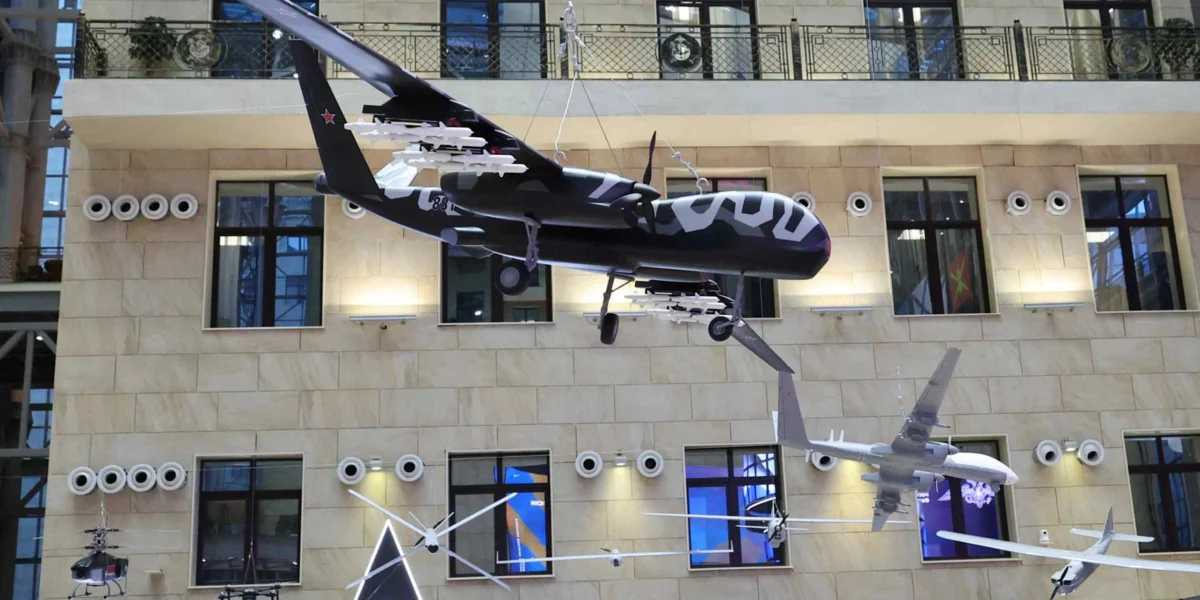
Fourteen years ago, the chilling narrative of Daniel Suarez’s novel Kill Decision painted a dystopian future where swarms of autonomous killer drones posed an existential threat to humanity. Today, the battlefields of Ukraine are rapidly transforming this once-fictional concept into a stark, evolving reality. The relentless conflict, now in its third year, has become an unprecedented testing ground for advanced drone technology, pushing the boundaries of unmanned aerial systems and raising profound questions about the future of warfare. From reconnaissance and surveillance to precision strikes and autonomous engagement, the sophistication and proliferation of drones in the Ukrainian theatre signal a significant inflection point in military strategy and ethics.
The initial deployment of drones in the early stages of the 2022 invasion largely mirrored their use in previous conflicts: intelligence gathering, artillery spotting, and the deployment of rudimentary explosive devices dropped from low altitudes. However, the dynamic nature of the Ukrainian conflict, characterized by attritional trench warfare, rapid counter-offensives, and a constant need for tactical advantage, has spurred an accelerated pace of innovation and adaptation. Both Ukrainian forces and their Russian counterparts have relentlessly iterated on drone designs, operational tactics, and countermeasures, leading to a technological arms race played out in real-time over the contested skies.
The Evolution of Drone Warfare: From Eyes in the Sky to Lethal Autonomy
The current generation of drones deployed in Ukraine represents a stark departure from the pilotless aircraft of just a decade ago. While many still operate under direct human control, a growing number exhibit increasingly sophisticated levels of autonomy. This evolution encompasses several key areas:
- Swarming Capabilities: The concept of coordinated drone swarms, once confined to theoretical discussions and science fiction, is now a tangible reality. While fully autonomous, self-directing swarms capable of independent decision-making remain largely aspirational, units of drones are being employed in coordinated attacks. These attacks aim to overwhelm enemy defenses through sheer numbers and coordinated targeting, making it difficult for air defense systems to track and engage each individual threat. Reports from the front lines suggest instances where multiple drones, launched in rapid succession or from different vectors, have been used to saturate defensive positions.
- Artificial Intelligence Integration: The integration of artificial intelligence (AI) into drone systems is perhaps the most significant leap. AI algorithms are being used for target recognition, object tracking, navigation in GPS-denied environments, and even for rudimentary threat assessment. This allows drones to operate more effectively in complex and contested airspace, reducing reliance on continuous human input and enabling faster reaction times. For instance, AI can help drones identify specific types of military vehicles or distinguish between combatants and civilians, although the ethical implications of such automated decision-making are a subject of intense debate.
- Enhanced Lethality and Precision: The types of ordnance carried by drones have also evolved. Beyond simple explosive charges, drones are now equipped with guided munitions, anti-tank missiles, and increasingly sophisticated anti-personnel payloads. The precision with which these drones can deliver their payloads has increased dramatically, allowing for targeted strikes on high-value assets, individual soldiers, and fortified positions with a reduced risk of collateral damage, assuming accurate targeting.
- Counter-Drone Technologies: The proliferation of offensive drones has, in turn, spurred a parallel development in counter-drone technologies. These range from electronic warfare systems designed to jam drone communications and navigation signals, to kinetic solutions such as specialized interceptor drones or ground-based projectile systems. The constant cat-and-mouse game between offensive and defensive drone capabilities is a defining characteristic of the current conflict.
A Timeline of Escalation and Innovation
The trajectory of drone warfare in Ukraine can be traced through several key phases:
February 2022: Initial Invasion and Reconnaissance Dominance
The early days of the full-scale invasion saw Russian forces leverage a significant advantage in reconnaissance drones for artillery spotting and battlefield intelligence. Ukraine, initially reliant on a smaller, less advanced drone inventory, quickly adapted, utilizing commercial drones modified for military purposes. The iconic "Bayraktar TB2" Turkish drones, though deployed in limited numbers, proved highly effective in early engagements, inflicting significant damage on Russian armored columns.
Mid-2022: The Rise of FPV Drones and Suicide Drones
As the conflict settled into a more attritional phase, the effectiveness of larger, more expensive drones became a target for enemy air defenses. This led to a surge in the use of smaller, cheaper, and highly agile First-Person View (FPV) drones. These drones, often operated by a single soldier using a headset, can be maneuvered with incredible precision, allowing them to navigate complex terrain and target individual soldiers, trenches, or lightly armored vehicles. Simultaneously, the use of loitering munitions, often referred to as "suicide drones," intensified. These drones can fly over a target area, search for a specific target, and then dive onto it to detonate their warhead.
Late 2022 – 2023: Mass Production and AI Integration
Both sides recognized the need for mass production to sustain the drone war. Efforts were ramped up to domestically produce drones and adapt existing platforms. Russia, in particular, has been reported to be increasing its domestic drone manufacturing capabilities, including leveraging Iranian designs like the Shahed series. Ukraine has also seen a significant surge in domestic drone production, with numerous volunteer initiatives and government-backed programs contributing to the supply chain. This period also saw more significant experimentation with AI for target identification and navigation.
2024 and Beyond: Towards Greater Autonomy and Swarming Tactics
While precise data is difficult to verify due to the fog of war, anecdotal evidence and military analyses suggest a continued push towards greater autonomy. The development of "drone in a box" systems, enabling rapid deployment and coordination, is also becoming more prevalent. The lessons learned from the large-scale use of drones are informing military doctrines globally, with a growing emphasis on integrated drone operations as a core component of modern combat.
Supporting Data and Technological Advancements
The sheer scale of drone deployment in Ukraine is unprecedented. While exact figures are proprietary and constantly shifting, estimates suggest tens of thousands of drones of various types are in operation.
- FPV Drone Production: Reports indicate that Ukraine is producing thousands of FPV drones monthly, with a goal to significantly increase this number. This rapid production cycle is crucial for sustaining operations, as FPV drones are often lost in combat.
- Loitering Munition Effectiveness: Loitering munitions, like Russia’s Lancet and Ukraine’s various domestic variants, have been credited with destroying hundreds of high-value military assets, including artillery pieces, air defense systems, and armored vehicles. Their ability to loiter and wait for the opportune moment to strike has proven particularly effective against static or slow-moving targets.
- Commercial Drone Adaptation: The adaptation of commercial drones, such as the DJI Mavic series, for military purposes has been a significant factor. These drones, readily available and relatively inexpensive, have been modified with thermal cameras and payload delivery systems, enabling them to perform critical reconnaissance and light attack missions. This democratization of aerial surveillance and strike capabilities has profoundly altered the battlefield dynamics.
- Counter-Drone Investment: Global investment in counter-drone technologies has surged in response to the proliferation of hostile UAS. This includes the development of directed energy weapons, advanced electronic warfare suites, and sophisticated AI-powered detection and tracking systems.
Official Responses and International Reactions
The escalating use of advanced drone technology has drawn significant attention from governments, international organizations, and defense analysts worldwide.
- NATO and Western Support: Western allies, including the United States and members of the European Union, have provided Ukraine with significant military aid, which has included advanced drone systems and counter-drone technologies. There is a clear understanding that Ukraine is serving as a crucial proving ground for technologies that will shape future conflicts. Discussions within NATO focus on integrating drone warfare into broader military strategies and developing standardized protocols for their use.
- Russian Military Doctrine: Russia’s military leadership has publicly acknowledged the importance of drone warfare and has emphasized its commitment to increasing domestic production and technological development in this area. The integration of drones into combined arms operations is a stated priority.
- Ethical and Legal Debates: The increasing autonomy of drones has ignited intense ethical and legal debates. International humanitarian law, particularly concerning the principles of distinction and proportionality in attacks, is being tested. Questions arise about accountability when an autonomous system makes a lethal decision. The United Nations and various human rights organizations are closely monitoring the use of drones and advocating for robust regulatory frameworks. The concept of "meaningful human control" over lethal force remains a central point of contention.
Broader Impact and Implications for Future Warfare
The experiences in Ukraine are not merely a regional conflict but a harbinger of global shifts in military strategy.
- Democratization of Air Power: The relative affordability and accessibility of advanced drone technology are democratizing air power. Nations with limited traditional air forces can now field potent aerial assets. This could lead to a more fragmented and asymmetric global security landscape.
- The Future of the Soldier: The role of the human soldier is being redefined. While direct combat may still be necessary, a greater emphasis will likely be placed on operating and managing autonomous systems, interpreting data from drones, and making critical decisions in complex, technologically saturated environments. The psychological impact of fighting against unseen, autonomous threats is also a new frontier.
- Redefining Defense Industries: Defense industries worldwide are rapidly reorienting their research and development towards unmanned systems, AI, and counter-drone solutions. This will likely lead to significant investments and a transformation of the global defense market.
- The Specter of Autonomous Lethal Weapons (LAWS): The advancements in Ukraine bring the deployment of fully autonomous lethal weapons systems (LAWS) closer to reality. The ongoing debates about the ethical and legal implications of such systems are becoming increasingly urgent as the technology matures. The potential for unintended escalation, the difficulty of assigning blame, and the moral implications of delegating life-and-death decisions to machines are profound challenges that humanity must confront.
The conflict in Ukraine has irrevocably altered the landscape of modern warfare. The dream of science fiction has begun to manifest on the battlefield, with autonomous drones no longer confined to the pages of a novel but actively shaping the realities of conflict. The lessons learned from this ongoing, brutal experimentation will undoubtedly influence military doctrines, technological development, and ethical considerations for decades to come, forcing a global reckoning with the implications of artificial intelligence and unmanned systems in the domain of lethal force. The question is no longer if these technologies will be widely deployed, but rather how they will be controlled and what ethical guardrails will be put in place to prevent a future where the decisions of machines dictate the fate of human lives.
