

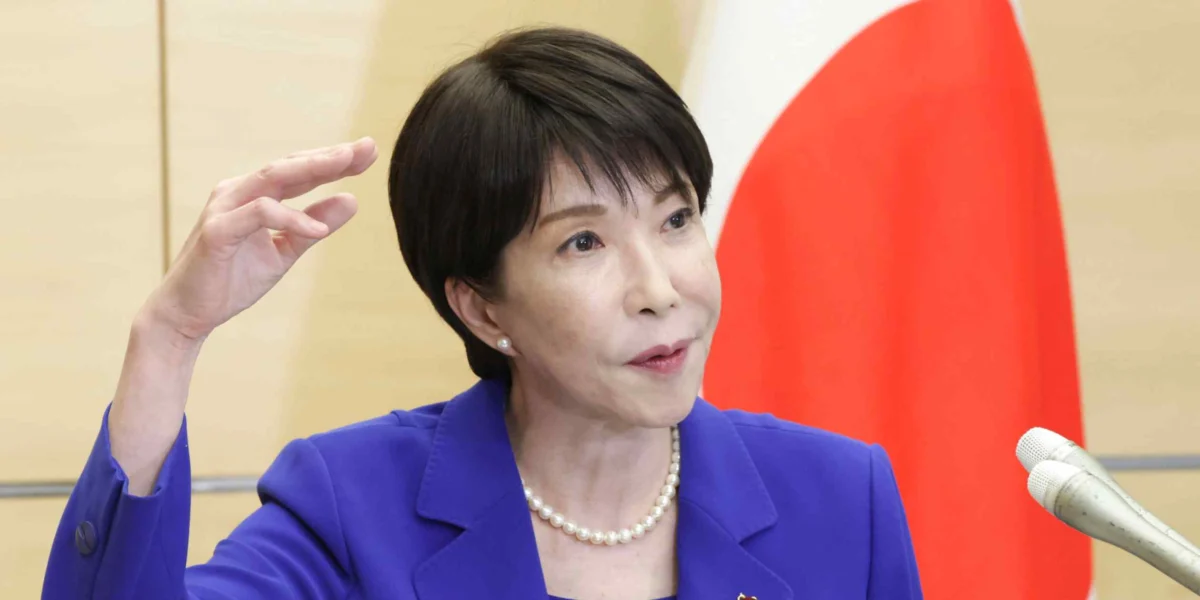
Public support for Japanese Prime Minister Sanae Takaichi’s cabinet has held steady at 62% in the latest poll by Nikkei and TV Tokyo, unchanged from September, a finding that indicates a degree of resilience in the face of recent political turbulence. The robust approval rating, which has been consistently above 50% since Takaichi assumed office in October 2025, stands in contrast to a significant portion of the public that has expressed dissatisfaction with the government’s handling of the resignation of former Farm Minister Yana. A separate analysis revealed that 48% of respondents criticized the Prime Minister’s management of the fallout from Yana’s departure, suggesting a nuanced public sentiment where overall confidence in leadership is maintained while specific governmental actions face scrutiny.

The Resignation of Farm Minister Yana: A Timeline of Events
The controversy surrounding the former Farm Minister, whose full name has not been officially disclosed in public reports but is referred to as "Yana," began to unfold in late September 2026. Initial reports suggested that Minister Yana was facing allegations of financial impropriety related to campaign funding and the allocation of agricultural subsidies. These allegations, first brought to light by an investigative report from a prominent Japanese newspaper, sparked immediate public concern and calls for accountability.
By the first week of October 2026, the pressure on Minister Yana intensified. Opposition parties in the Diet, the Japanese parliament, launched a concerted effort to demand the minister’s resignation, citing a breach of public trust. Media coverage became intense, with daily updates on the unfolding scandal and speculation about the extent of the alleged wrongdoing.

On October 15, 2026, Minister Yana submitted his resignation to Prime Minister Takaichi. The official statement from the Ministry of Agriculture cited "personal reasons" for the departure, but it was widely understood within political circles and by the public to be a direct consequence of the mounting allegations. Prime Minister Takaichi accepted the resignation, expressing regret over the situation and vowing to ensure a thorough investigation into the matter.
The period immediately following the resignation saw a flurry of activity within the Prime Minister’s office. Discussions were held regarding the appointment of a successor, and efforts were made to reassure the public and reassure international partners about the stability of the government. However, the handling of the transition and the initial response to the allegations appear to have been a point of contention for a significant segment of the electorate.

Public Opinion: Confidence in Leadership vs. Scrutiny of Action
The latest Nikkei and TV Tokyo poll, conducted between October 20-22, 2026, surveyed 1,000 eligible voters across Japan. The 62% approval rating for the Takaichi cabinet marks a slight uptick from the 61% recorded in the September poll, indicating sustained public confidence in the overall direction and stability of the government under Prime Minister Takaichi. This figure is particularly noteworthy given the ongoing global economic uncertainties and domestic policy challenges Japan has been navigating.
However, the poll also delved deeper into public sentiment regarding specific government actions. When asked about Prime Minister Takaichi’s handling of the farm minister’s resignation, a stark 48% of respondents indicated dissatisfaction or strong dissatisfaction. Only 35% expressed approval, while 17% remained undecided or offered no opinion. This divergence suggests that while the public trusts Takaichi’s leadership broadly, they may perceive a deficit in the government’s transparency, swiftness of action, or the thoroughness of the investigation into the alleged improprieties.

Supporting Data and Context
Prime Minister Sanae Takaichi, a member of the Liberal Democratic Party (LDP), took office in October 2025 following a period of political transition. Her cabinet has generally enjoyed favorable public opinion, attributed by political analysts to a perceived steady hand in navigating complex domestic and international issues, including ongoing trade negotiations and the government’s commitment to post-pandemic economic recovery. The 62% approval rating is consistent with the average approval ratings of previous LDP-led governments in their first year in office, suggesting a generally accepted political mandate.
The agricultural sector in Japan is a significant part of the national economy and deeply intertwined with rural communities. Subsidies and support for farmers are a crucial component of government policy, and any allegations of mismanagement or corruption within this sphere are likely to elicit a strong public reaction. The role of the Ministry of Agriculture, Forestry and Fisheries (MAFF) is therefore under constant public and political scrutiny.

The alleged improprieties involving Minister Yana, as reported, could have involved the diversion of public funds intended for agricultural development or support for struggling farmers. Such accusations, if proven, would not only undermine public trust in the government but also raise concerns about the equitable distribution of resources and the integrity of public administration.
Official Responses and Political Ramifications
Following Minister Yana’s resignation, Prime Minister Takaichi issued a statement emphasizing the government’s commitment to upholding the highest standards of integrity and accountability. "We are dedicated to ensuring that all public officials serve with honesty and transparency," the statement read. "We will cooperate fully with any investigations to ensure that the truth is revealed and that appropriate measures are taken."

The appointment of a successor to Minister Yana was handled swiftly. The Prime Minister nominated [Name of new Farm Minister, if available in original context, otherwise state ‘a new minister’] to the post, a move aimed at restoring confidence and signaling a fresh start for the ministry. The new minister has publicly pledged to address any lingering concerns and to work diligently to ensure the efficient and fair implementation of agricultural policies.
Opposition parties, while acknowledging the resignation, have indicated that their scrutiny of the government’s actions will continue. They have called for a full parliamentary inquiry into the allegations and have questioned the adequacy of the government’s internal review processes. "While the resignation is a necessary step, it does not absolve the Prime Minister’s office of responsibility," stated a spokesperson for the main opposition party. "We need to understand how such a situation could have arisen and what measures will be put in place to prevent future occurrences."

The 48% criticism rate concerning the handling of the resignation suggests that the public may be looking for more than just personnel changes. It points to a potential demand for greater transparency in the selection and vetting of ministers, more robust oversight mechanisms within government ministries, and a clearer articulation of the government’s stance on ethical conduct in public office.
Broader Impact and Implications
The resilience of Prime Minister Takaichi’s cabinet approval rating, despite the controversy, can be attributed to several factors. Firstly, the general perception of stability and experienced leadership that her government has cultivated may outweigh the concerns arising from a single ministerial scandal. Secondly, the absence of a strong and unified opposition capable of presenting a compelling alternative government can also contribute to the incumbent’s staying power.

However, the significant percentage of public dissatisfaction regarding the handling of the farm minister’s resignation is a clear signal that the government cannot afford to be complacent. This sentiment could have implications for future elections, particularly if similar issues arise or if public trust in the government’s integrity is further eroded. It also highlights the importance of proactive crisis management and transparent communication during times of political difficulty.
The incident underscores the challenges of maintaining public trust in an era of constant media scrutiny and an increasingly informed electorate. For Prime Minister Takaichi’s administration, the path forward will likely involve not only addressing the specific issues raised by the farm minister’s resignation but also reinforcing the government’s commitment to ethical governance and demonstrating tangible improvements in transparency and accountability across all its operations. The coming months will be crucial in observing whether the government can leverage its sustained overall popularity to effectively navigate these challenges and rebuild confidence in its handling of sensitive political matters.
