

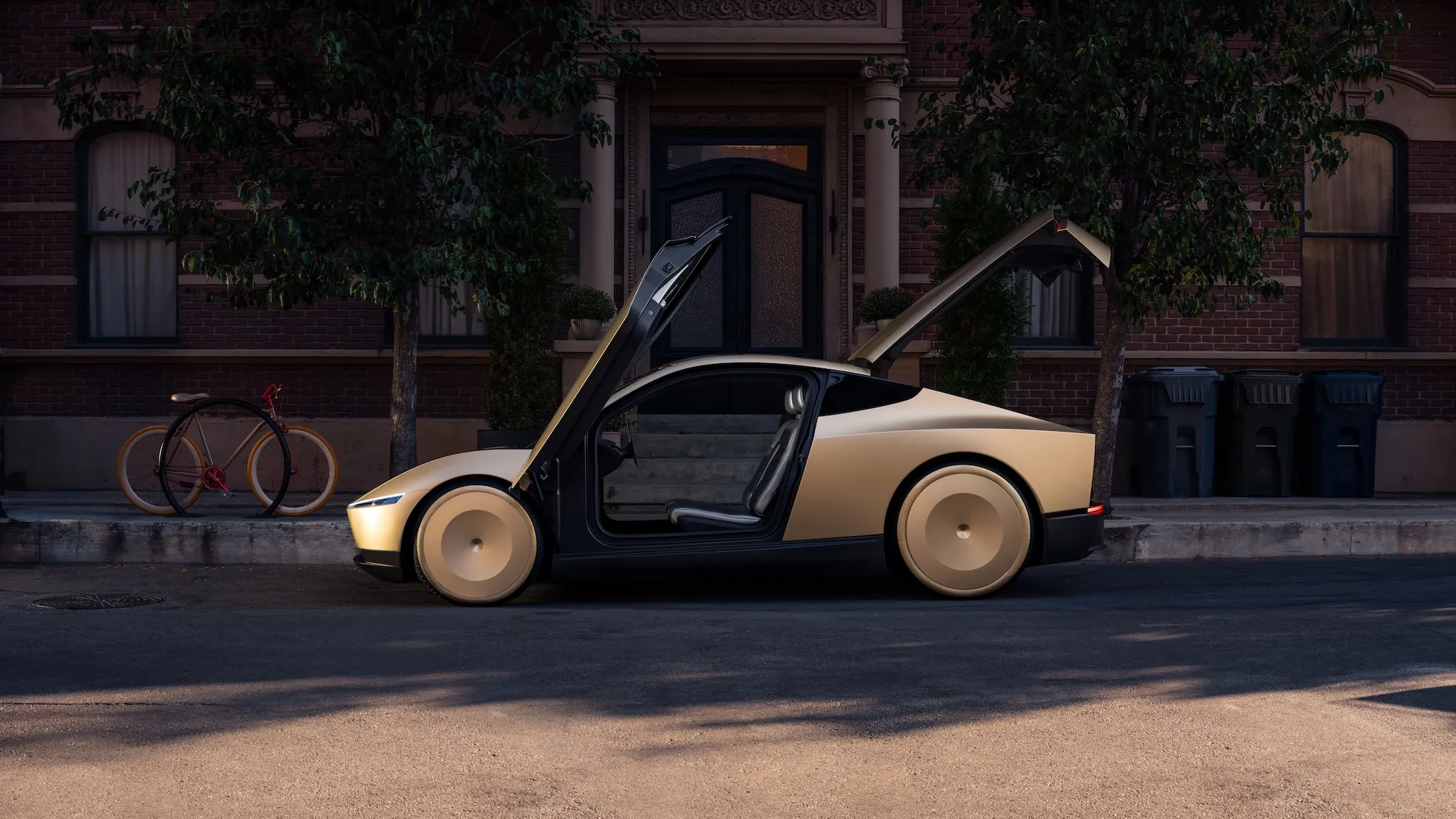
Tesla announced Wednesday its intention to commence sales of its purpose-built Cybercab to customers by the close of the year, a bold move that arrives concurrently with a federal investigation into whether the autonomous two-seater meets existing vehicle safety standards. The distinctive gold-hued vehicle, designed without a steering wheel or other traditional manual controls, represents a significant pivot in the electric vehicle giant’s long-term autonomous driving ambitions, shifting from a software-centric upgrade model for existing cars to a dedicated "transport as a service" hardware platform.
The Cybercab Vision: From Concept to Commercialization
The unveiling of the Cybercab last month at an event in Austin marked a concrete step towards Tesla’s long-prophesied robotaxi network. Unlike previous iterations of Tesla’s autonomous vision, which centered on retrofitting privately owned vehicles with Full Self-Driving (FSD) software updates, the Cybercab is a bespoke vehicle engineered from the ground up for fully autonomous ride-hailing operations. Lars Moravy, Tesla’s vice president of engineering, elaborated during the company’s third-quarter earnings call that current Cybercab production is earmarked for Tesla’s proprietary robotaxi fleet. However, as this internal fleet expands and operational efficiencies are refined, the company plans to "mainly deliver fully designed autonomous vehicles to our customers," indicating a phased rollout that will begin on a small scale before broader distribution. This strategy allows Tesla to gather crucial data on delivery logistics, ownership models for autonomous fleets, and the intricacies of managing such a service before scaling aggressively.
Tesla had previously hinted at the possibility of selling these autonomous vehicles to third parties around the Austin Cybercab event, even launching an online form to gauge interest from prospective robotaxi fleet operators. The confirmation on the earnings call clarifies Tesla’s commitment to this new business model, positioning the Cybercab not as a consumer-owned vehicle, but primarily as an asset for a ride-hailing service. CEO Elon Musk reiterated this distinction, stating, "Cybercab is primarily going to be something that is offered as like transport as a service, whereas our other cars would be more, you know, the cars that you’d want to own, like the 3 and the Y and whatnot, and the Roadster, obviously." He further emphasized that "the vast majority of the Cybercab stuff will be essentially Tesla-owned and transported as a service." This strategy seeks to capitalize on the burgeoning market for autonomous mobility services, which analysts project could reach hundreds of billions of dollars globally by the next decade, driven by increased urbanization, demand for on-demand transportation, and potential reductions in traffic congestion and emissions.
Regulatory Crossroads: The NHTSA Investigation
Central to the Cybercab’s commercial viability is its ability to navigate the complex and evolving regulatory landscape for autonomous vehicles. Just hours after the Cybercabs began operating on public streets in Austin, the National Highway Traffic Safety Administration (NHTSA), the federal auto safety regulator, announced it had opened an investigation into the vehicle. This probe represents a significant hurdle, as the Cybercab’s design—lacking a steering wheel, brake pedal, and traditional rearview and side mirrors—directly challenges long-established Federal Motor Vehicle Safety Standards (FMVSS).
FMVSS mandates specific manual controls and safety features that have been foundational to vehicle design for decades. Automakers typically self-certify that their vehicles comply with these standards, a process Tesla followed for the Cybercab. However, NHTSA’s investigation aims to "examine the process and technical data on which Tesla relied when certifying the Cybercab and related issues." This scrutiny is critical because current regulations do not explicitly accommodate vehicles entirely devoid of manual controls. While the Department of Transportation recently proposed removing some of these requirements for vehicles specifically designed for autonomous operation, such changes are not yet enacted into law. This regulatory lag creates a gray area, and the outcome of NHTSA’s investigation could have far-reaching implications, potentially affecting not only Tesla’s ability to legally operate or sell the Cybercab but also setting a precedent for how future autonomous vehicles without traditional human interfaces are regulated in the United States. Industry experts suggest that a negative finding could result in a recall, operational restrictions, or significant delays, underscoring the delicate balance between technological innovation and public safety mandates.
Tesla’s Evolving Autonomous Driving Strategy: A Chronology of Promises and Pivots
The Cybercab’s emergence and its direct-to-customer sales plan mark a distinct evolution, if not a departure, from Tesla’s long-standing strategy for achieving widespread autonomy. For years, CEO Elon Musk has passionately articulated a vision of a massive robotaxi fleet powered by millions of privately owned Tesla vehicles, which would transform into self-driving taxis via a simple software update. This concept, first floated publicly in detail around 2016-2017, promised vehicle owners the ability to generate income by allowing their cars to operate autonomously when not in use, fundamentally altering the economics of car ownership.
However, this ambitious plan has yet to materialize. The journey to truly "full self-driving" has proven far more complex and protracted than initially anticipated. Tesla owners today can subscribe to Full Self-Driving (Supervised), an advanced driver-assistance system (ADAS) that automates numerous driving tasks but unequivocally requires the driver to remain engaged and ready to take over at all times. Despite continuous software updates aimed at improving its capabilities, FSD (Supervised) operates at what is generally considered Level 2 autonomy by SAE International standards, where the human driver is still the primary operator. This distinction is often blurred in public perception, fueled by numerous online videos depicting drivers pushing the limits of this supervision requirement, raising concerns among safety advocates and regulators alike.
Musk’s recent comments on the earnings call explicitly highlight this strategic shift. He announced that an unsupervised version of FSD – the fully self-driving version, implying Level 4 autonomy – would be rolled out to existing Tesla owners sometime in the second quarter of next year. This represents yet another delay for many Tesla owners who invested significant sums, either by outright purchase or subscription, in the FSD software years ago under the promise of imminent full autonomy. The irony is stark: if both timelines hold, third-party fleet customers purchasing the purpose-built Cybercab could potentially operate a fully autonomous robotaxi service before individual Tesla owners gain access to truly unsupervised self-driving capabilities in their existing vehicles. This sequence raises questions about Tesla’s commitment to its early FSD adopters and the long-term value proposition of the FSD package for personal vehicles versus dedicated autonomous platforms.
The pivot towards a purpose-built Cybercab likely stems from several factors. Developing a dedicated vehicle allows for optimal hardware integration, ensuring sensors, computing power, and redundant systems are seamlessly designed for autonomous operation from the outset. It also offers greater control over the operational environment, as a purpose-built robotaxi fleet can be deployed in geo-fenced areas with meticulously mapped routes and controlled conditions, potentially simplifying the regulatory approval process compared to enabling unsupervised autonomy on millions of varied consumer vehicles across diverse road conditions. Furthermore, managing driver behavior and potential misuse, a persistent challenge with FSD (Supervised), is inherently mitigated in a fleet of vehicles without manual controls, directly owned and operated by Tesla or approved third parties.
Broader Impact and Implications
Tesla’s aggressive push into the robotaxi market with the Cybercab, despite regulatory headwinds, signals a high-stakes bet on the future of urban mobility.
Economically, this move could unlock substantial new revenue streams for Tesla beyond vehicle sales. The "transport as a service" model offers recurring revenue, while sales of Cybercabs to third-party fleet operators would provide additional capital. This also positions Tesla more directly against established robotaxi players like Waymo (Google’s autonomous driving unit) and Cruise (GM’s subsidiary), which have been operating limited commercial services in select cities for several years. While Waymo and Cruise have faced their own regulatory and operational challenges, they have built considerable experience in deploying and managing autonomous fleets. Tesla’s advantage could lie in its manufacturing scale and brand recognition, but it will need to rapidly build out the operational expertise that rivals have accumulated.
The societal implications are equally profound. Successful deployment of robotaxis like the Cybercab promises significant benefits, including a potential reduction in traffic accidents (as human error is largely eliminated), decreased urban congestion, lower emissions from optimized routing and electric powertrains, and expanded access to transportation for various demographics. However, widespread adoption hinges on public trust in the safety and reliability of these driverless systems, which can be fragile and easily eroded by high-profile incidents or regulatory setbacks. The NHTSA investigation, therefore, is not merely a technicality; it is a critical test of public confidence and regulatory robustness in the autonomous vehicle era.
Challenges and Outlook
Beyond the immediate regulatory scrutiny, Tesla faces numerous challenges in scaling the Cybercab program. The technical hurdles of achieving truly robust Level 4 or Level 5 autonomy in all weather conditions, diverse road scenarios, and unpredictable urban environments remain formidable. While significant progress has been made, edge cases and complex interactions continue to test even the most advanced AI systems. Furthermore, building out the necessary charging infrastructure, maintenance networks, and operational support for a large-scale robotaxi fleet will require substantial investment and logistical prowess.
The outcome of the NHTSA investigation will undeniably cast a long shadow over Tesla’s Cybercab ambitions. A favorable resolution could accelerate market entry and set a precedent for future regulations accommodating purpose-built AVs. Conversely, an unfavorable ruling could necessitate significant design modifications, operational restrictions, or prolonged delays, potentially disrupting Tesla’s ambitious timeline and impacting investor confidence. Regardless of the immediate outcome, Tesla’s Cybercab represents a bold step into the future of transportation, challenging both technological boundaries and established regulatory frameworks, and setting the stage for a new chapter in the race for autonomous mobility.
