

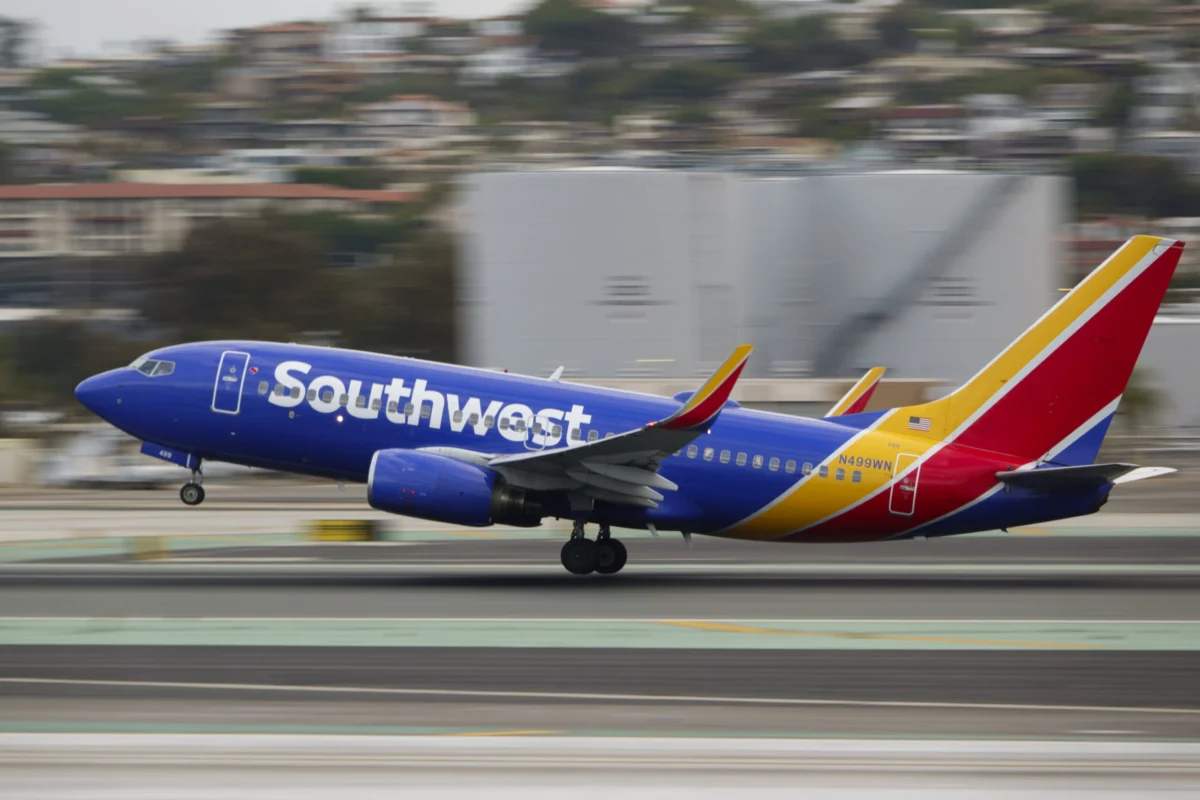
Southwest Airlines, a long-standing titan in the American domestic air travel market, has announced a significant downward revision to its adjusted profit forecast for the fiscal year 2026, marking it as the third major U.S. carrier this month to grapple with the escalating pressures of higher fuel prices. Despite this challenging economic headwind, CEO Bob Jordan maintained an optimistic outlook on passenger demand, asserting that travelers continue to book flights even in the face of elevated airfares. The airline now anticipates earning between $2.60 and $2.85 per share on an adjusted basis for the current year, a substantial reduction from its more ambitious July forecast, which projected earnings in the range of $3.25 to as much as $4.25 per share. This recalibration signals a broader industry struggle to reconcile robust demand with rapidly climbing operational expenditures, particularly in the energy sector.
The announcement came as part of the carrier’s third-quarter 2026 earnings report, which, while revealing certain strengths, highlighted the pervasive impact of external cost factors. For the third quarter, Southwest posted a net income of $270 million, or 55 cents per share, a considerable improvement from the $54 million, or 10 cents per share, reported in the same period a year earlier. Total revenue for the quarter demonstrated strong growth, rising by more than 21% to reach $8.42 billion. When adjusted for one-time items, the airline reported a more favorable 66 cents per share. However, these positive indicators on the top and bottom lines for the quarter itself were overshadowed by the revised full-year outlook, reflecting a more cautious stance on future profitability. Analysts, whose consensus estimates from LSEG often guide market expectations, were closely watching these figures, particularly in light of similar adjustments made by industry peers.
The Pervasive Impact of Fuel Price Volatility
The primary driver behind Southwest’s revised profit forecast, as explicitly stated by the airline’s leadership, is the sustained increase in fuel prices. Global crude oil markets have experienced significant volatility throughout 2026, influenced by a confluence of geopolitical tensions, supply chain disruptions, and shifting demand dynamics in major economies. Factors such as ongoing conflicts in key oil-producing regions, production cuts by OPEC+ nations, and a stronger-than-anticipated rebound in global economic activity have collectively pushed the price of jet fuel to levels not seen in several years. For an airline, fuel typically represents one of the largest operating expenses, often accounting for 25-35% of total costs. A substantial increase in this single line item can quickly erode profit margins, even when passenger demand remains robust.
The airline industry operates on tight margins, making it particularly vulnerable to such external shocks. Airlines often employ hedging strategies to mitigate fuel price risks, but these strategies are not foolproof and can only offer partial protection against prolonged price surges. The current environment suggests that the effectiveness of these hedges may be reaching its limits, forcing carriers like Southwest to absorb a greater portion of the increased costs directly. This situation is further complicated by the competitive nature of the airline market, where carriers must carefully balance passing on higher costs to consumers through increased fares against the risk of deterring price-sensitive travelers. Southwest’s CEO, Bob Jordan, noted in the earnings release that "Demand remained strong as we lapped last year’s bag fee and other commercial initiatives, reinforcing our belief that the earnings power we’ve built is durable, even with significantly higher fuel costs." This statement underscores the delicate equilibrium the airline is attempting to maintain: leveraging strong demand and new revenue streams to offset elevated operational expenses.
Strategic Pivot: Remaking the Southwest Business Model
Underpinning Southwest’s current financial narrative is a multi-year, ambitious transformation of its long-established business model. For decades, Southwest Airlines carved out a unique niche in the U.S. market by offering a simplified, customer-friendly approach centered on two free checked bags per passenger, open seating, and a robust point-to-point route network. This model, often dubbed the "Southwest Effect," was credited with stimulating demand and driving down fares across the industry. However, in recent years, mounting pressure to grow revenue and compete more effectively with legacy carriers and ultra-low-cost competitors has prompted a significant strategic pivot.
Southwest has been gradually dismantling some of these iconic policies. The airline has introduced new revenue streams by charging for many seat assignments, a stark departure from its historical open-seating policy. More notably, it has begun implementing bag fees for additional luggage beyond its established allowance, aligning itself more closely with the practices of major competitors like Delta, United, and American Airlines. While a spokesman clarified that the reported average passenger fare of $231.69 in the third quarter (up almost 27% from the same quarter of 2025) does not include these add-on fees, these ancillary charges are becoming an increasingly vital component of the airline’s overall revenue strategy. The shift reflects a broader industry trend where airlines are increasingly unbundling services, allowing them to offer lower base fares while generating significant additional revenue from optional extras. This transition, while financially motivated, carries inherent risks related to customer perception and brand loyalty, given Southwest’s historical reputation for transparency and inclusive pricing. The challenge for Southwest is to evolve its business model without alienating its fiercely loyal customer base that has long valued its distinctive approach.
Industry-Wide Headwinds and Competitive Landscape
Southwest’s revised forecast is not an isolated incident but rather indicative of broader challenges facing the entire U.S. airline industry in late 2026. Both Delta Air Lines and United Airlines had previously announced cuts to their profit outlooks for the remainder of the year when they reported their third-quarter earnings. These two carriers, like Southwest, cited similar pressures, primarily stemming from higher fuel costs and, in some cases, elevated labor expenses. Notably, both Delta and United also reported missing top- and bottom-line expectations for the third quarter, signaling a pervasive difficulty across the sector in meeting ambitious financial targets.
Beyond fuel, several other factors are contributing to the industry’s complex operating environment:
- Labor Costs: The airline industry has seen significant increases in labor costs, driven by ongoing pilot shortages, successful union negotiations for higher wages and improved benefits, and a general tightening of the labor market. These costs are sticky and represent a long-term structural change for airlines.
- Supply Chain Issues: Persistent global supply chain disruptions continue to affect aircraft manufacturers, leading to delays in new aircraft deliveries. This impacts airlines’ capacity expansion plans and fleet modernization efforts, potentially forcing them to operate older, less fuel-efficient aircraft for longer. Maintenance and repair operations also face challenges due to part shortages.
- Inflationary Pressures: While passenger demand remains strong, broader inflationary pressures on consumers could eventually temper discretionary spending on air travel. Airlines must carefully monitor this balance, as excessive fare increases could lead to a softening of demand.
- Air Traffic Control (ATC) Constraints: Increased demand has put a strain on the U.S. air traffic control system, leading to delays and cancellations that impact operational efficiency and customer satisfaction, adding to airlines’ costs.
Despite these challenges, demand for air travel has shown remarkable resilience. The "revenge travel" phenomenon, spurred by pent-up demand post-pandemic, has sustained high load factors and allowed airlines to command higher fares. Southwest, for instance, forecast per-share adjusted earnings of between 55 cents and 80 cents in the fourth quarter and projected unit revenue (a key gauge of airfare and ancillary revenue per available seat mile) to be up as much as 21% from a year earlier. It also expects to grow capacity by up to 4% year over year, indicating a continued commitment to expansion despite the cost pressures. This suggests that while costs are a significant concern, the underlying market for air travel remains robust, offering a potential offset if cost pressures can be managed.
Chronology and Context of the Forecast Revision
The sequence of events leading to Southwest’s revised forecast provides crucial context. The initial, more optimistic forecast, released in July 2026, reflected a period when fuel price trajectories might have appeared more favorable or when the full impact of their sustained increase had not yet materialized in the airline’s financial models. By the time of the third-quarter earnings report in late October 2026, several months of elevated crude oil and jet fuel prices had accumulated, making it clear that the previous projections were no longer attainable. This period saw WTI (West Texas Intermediate) and Brent crude benchmarks fluctuating significantly, often settling at levels considerably higher than the assumptions built into earlier financial guidance.
The decision to revise forecasts downward is never taken lightly by publicly traded companies, as it can trigger negative investor reactions. However, providing transparent and realistic guidance is considered essential for maintaining credibility with the market. The fact that Southwest, Delta, and United all made similar adjustments within a short timeframe underscores that the challenges are systemic, affecting the entire industry rather than being specific to any single carrier’s operational missteps. This collective recalibration signals to investors that the baseline operating environment for airlines has shifted, demanding a reassessment of valuation models and future growth expectations.
Implications for Travelers and Investors
For travelers, the implications are likely to manifest in continued elevated airfares and a sustained focus by airlines on ancillary revenue. As Southwest continues its business model transformation, passengers can expect to see more opportunities for personalized service options at an additional cost, moving further away from the all-inclusive pricing model that once defined the airline. The average passenger fare of $231.69 in Q3 2026, representing a nearly 27% increase from Q3 2025, is a tangible example of how higher operational costs are being passed on to the consumer. While demand has absorbed these increases so far, there will inevitably be a ceiling, and airlines must gauge this threshold carefully.
For investors, the revised forecasts from Southwest and its peers introduce a degree of uncertainty. While strong demand and revenue growth are positive, the erosion of profit margins due to uncontrollable external factors like fuel prices can temper enthusiasm. Analysts will be scrutinizing airlines’ ability to manage costs, optimize route networks, and successfully implement new revenue strategies. Southwest’s stock performance following the announcement will be a key indicator of market sentiment regarding its strategic direction and resilience in a challenging environment. The company’s long-term success will hinge on its ability to effectively integrate its evolving business model with its foundational principles of operational efficiency and customer service, all while navigating a volatile global economic landscape. The coming quarters will be crucial in demonstrating whether Southwest can maintain its "durable earnings power" as CEO Jordan suggests, even as the winds of change blow strongly through the industry.
