

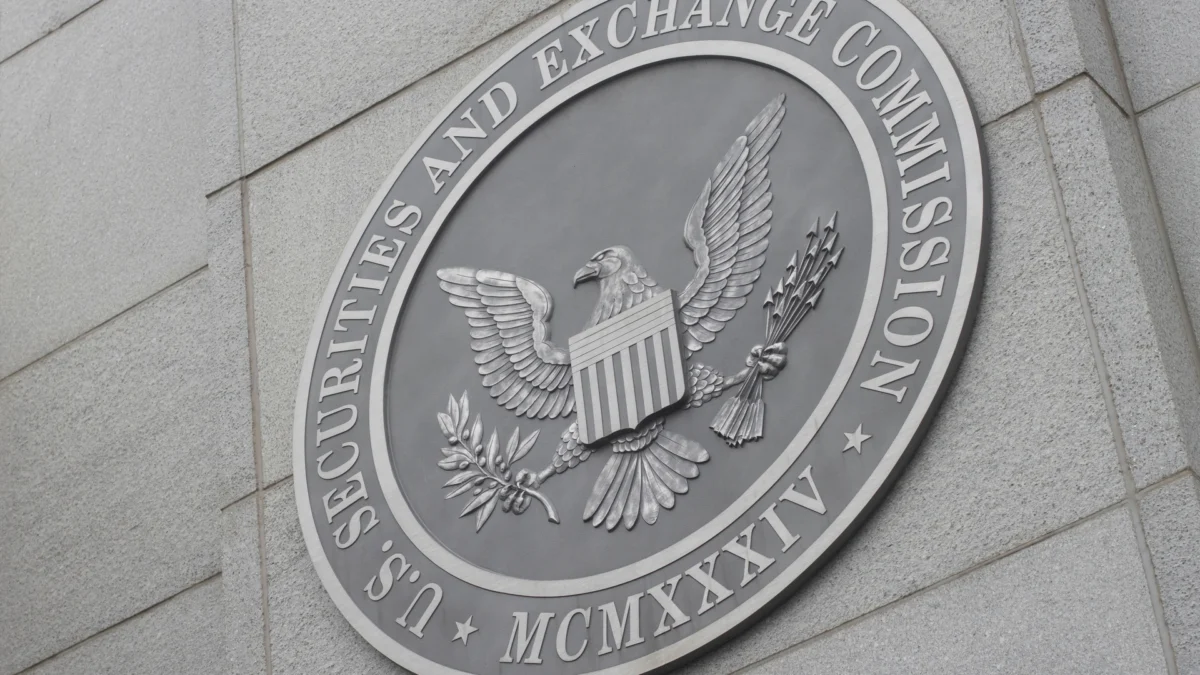
The U.S. Securities and Exchange Commission (SEC) has announced that three distinct entities have submitted notifications of their intent to operate tokenized securities venues, signaling a significant development in the integration of blockchain technology with traditional financial markets. This move follows the SEC’s establishment of a new regulatory framework designed to accommodate the trading of tokenized stocks, a concept that leverages the underlying technology of cryptocurrencies to modernize financial infrastructure. The companies that have formally alerted the regulatory body to their plans are Tokenized Stock Venue, Perpetuals.com, and OKX.
This proactive step by these firms indicates a growing confidence in the regulatory environment for digital assets, particularly under the current administration. The SEC’s announcement, made on a Wednesday, detailed that these entities are positioning themselves to facilitate the trading of tokenized securities, a nascent but rapidly evolving sector within the broader financial technology landscape.
A New Era for Tokenized Securities Trading
Among the initial filers is OKX, a prominent cryptocurrency exchange, which, in conjunction with the Intercontinental Exchange (ICE), has put forth plans to launch a new platform named OKXICE. This platform is specifically designed to offer trading capabilities for tokenized securities, representing a tangible step towards bringing these digital representations of traditional assets to a wider market. The joint effort between OKX and ICE suggests a strategic alliance aimed at combining the technological prowess of a crypto-native firm with the established infrastructure and market reach of a major exchange operator.
The regulatory groundwork for this development was laid in September when the SEC offered a five-year exemption to platforms that facilitate the trading of tokenized stocks. This initiative, though met with some legislative hurdles in broader digital asset regulation, demonstrates the SEC’s willingness to explore and adapt its oversight to emerging financial technologies. The agency’s push to regulate the crypto space continues apace, even as major digital asset legislation has faced setbacks in Congress. This duality highlights a complex regulatory environment where the SEC is actively seeking to establish clear rules for the burgeoning digital asset industry.
The Promise of Tokenization in Finance
Tokenized stocks represent the latest frontier in the application of blockchain technology to traditional finance. Proponents argue that by digitizing stocks and representing them as tokens on a blockchain, trading can be transformed. The potential for 24/7 trading is frequently cited as a key benefit, a stark contrast to the limited trading hours of conventional stock exchanges. This continuous availability could offer greater flexibility and accessibility for investors, potentially democratizing access to capital markets.
Furthermore, tokenization can lead to increased efficiency and reduced costs in financial transactions. The immutability and transparency of blockchain technology can streamline processes such as settlement, clearing, and record-keeping, minimizing the need for intermediaries and reducing the potential for errors. This could translate into faster transaction speeds and lower fees for investors and issuers alike.
The underlying principle of tokenization involves converting the rights and ownership of an asset, such as a share of stock, into a digital token on a blockchain. This token can then be bought, sold, and transferred digitally, with ownership recorded on a distributed ledger. The blockchain ensures that each token is unique and traceable, providing a secure and verifiable record of ownership.
Navigating the Regulatory Path
Despite the enthusiasm surrounding tokenized securities, the SEC has issued a cautionary note. While the submission of plans indicates an intent to operate under the new rule, it does not automatically guarantee that these entities have met all the requisite conditions. The SEC’s role remains to ensure that any platform operating within its purview adheres to established investor protection standards and securities laws. This implies that a rigorous review process is likely underway for each of the three entities.
The current regulatory stance of the SEC is notably different from that of previous administrations. Under the leadership of SEC Chair Paul Atkins, the agency has adopted a more proactive and seemingly supportive approach towards the cryptocurrency and blockchain sectors. Atkins has publicly articulated a vision for the SEC to "update" and "modernize" its oversight of securities in the "age of blockchain and crypto assets." This signals a strategic intent to position the United States as a leading jurisdiction in the global digital asset economy, with ambitions to become the "crypto capital of the world."
This shift in regulatory philosophy stands in contrast to the previous administration under President Joe Biden, during which the SEC was perceived as more adversarial towards the crypto industry. Under that period, the SEC initiated several high-profile lawsuits against major cryptocurrency companies, including Coinbase and Kraken, leading to criticism of "regulation by enforcement." The current administration, led by President Donald Trump, has conversely signaled a more favorable inclination towards digital assets, with the President reportedly advocating for policies that support the growth of the crypto space and signing legislation and executive orders aimed at fostering innovation in the sector.
Broader Industry Trends and Precedents
The move towards tokenized securities is not an isolated development but rather a continuation of a broader trend where traditional financial institutions are exploring the use of blockchain technology. For years, established financial titans such as BlackRock and Franklin Templeton have utilized blockchain rails to tokenize money market funds, demonstrating the practicality and benefits of this technology in managing traditional financial products.
Moreover, the increasing integration of blockchain with traditional markets is evident in other areas. In January, the S&P 500 authorized a partnership with the crypto platform Trade[XYZ], enabling the debut of a new derivative contract on the decentralized exchange Hyperliquid. This development allows traders to engage with the S&P 500 index on a 24/7 basis, further blurring the lines between traditional finance and the digital asset ecosystem.
The potential implications of these tokenized securities venues are far-reaching. They could lead to:
- Increased Liquidity: By enabling 24/7 trading and potentially reaching a broader global investor base, tokenized securities could enhance liquidity for various assets.
- Fractional Ownership: Tokenization can facilitate fractional ownership of high-value assets, making them more accessible to a wider range of investors who might not be able to afford entire shares.
- Enhanced Transparency and Security: Blockchain’s inherent transparency and security features can provide a more robust and auditable record of ownership and transactions.
- Innovation in Financial Products: The underlying technology can pave the way for novel financial instruments and investment strategies.
- Regulatory Challenges and Opportunities: While the SEC’s new rule is a step forward, the ongoing evolution of tokenized assets will continue to present regulatory challenges and necessitate adaptive frameworks.
The SEC’s acknowledgment of these three entities signals a critical juncture in the maturation of the digital asset market. As these tokenized securities venues begin to operate, their success and adherence to regulatory standards will be closely watched, not only by the financial industry but also by regulators and investors worldwide. The outcome of these ventures could significantly influence the future trajectory of how securities are issued, traded, and managed in the digital age, potentially reshaping the global financial landscape. The journey towards a more digitized and accessible financial future, powered by blockchain technology, appears to be accelerating, with the SEC now playing a more direct role in guiding its path.
