

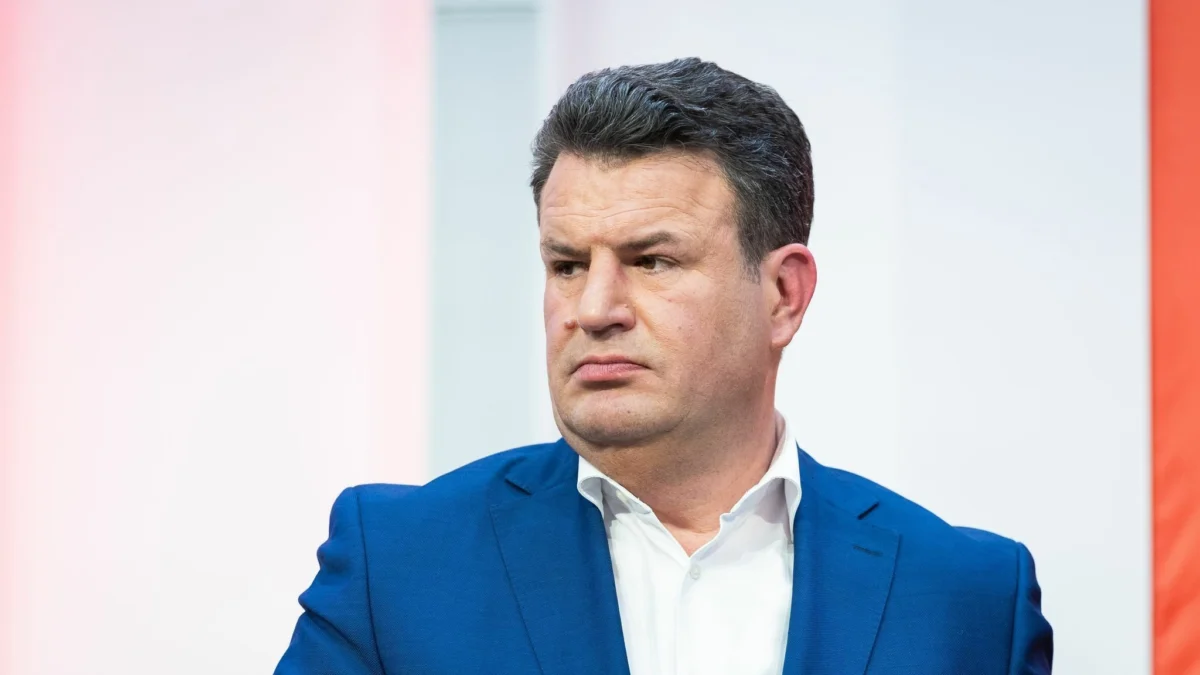
Berlin – Former Federal Minister of Labour and Social Affairs, Hubertus Heil, has not ruled out a bid for the leadership of the Social Democratic Party (SPD) at the upcoming special party conference in January. In a statement made on Sunday during an appearance on ARD, Heil indicated his openness to the possibility, stating, "I cannot rule out that I will run." This declaration signals a potential challenge to the current party leadership and raises questions about the future direction of the SPD as it navigates a complex political landscape.
Heil emphasized that his potential candidacy is not about differentiating himself from current SPD Chairman Lars Klingbeil, but rather about strengthening the party and restoring its visibility. "It’s not about distinguishing myself from anyone, but about the SPD becoming stronger again and being recognizable," Heil articulated. His statement suggests a focus on revitalizing the party’s image and its ability to connect with voters, a crucial consideration given recent electoral performances.

The former minister also tied his decision to the party’s policy direction in the coming weeks. "We will now talk to each other," he stated, underscoring the importance of internal party discussions and consensus-building regarding the SPD’s ideological stance and policy priorities. This conditional approach highlights Heil’s strategic thinking, indicating that a formal announcement would likely depend on the clarity and direction emerging from these internal deliberations.
Heil also addressed the SPD’s role within the current coalition government, stressing the need for the party to remain committed to its responsibilities and to be open to compromise. He cautioned against a purely oppositional stance, stating, "It’s not about persevering. This government must not fail, it must deliver." This sentiment reflects the inherent challenges of being part of a multi-party coalition, where balancing party principles with the demands of governing is a constant negotiation.
Background and Political Context
The announcement comes at a critical juncture for the Social Democratic Party. Following a period of internal debate and a significant electoral setback in the last federal elections, the SPD is grappling with questions of leadership and strategic direction. The party’s performance in recent polls has indicated a decline in public support, prompting a reassessment of its policies and its ability to represent the interests of its traditional voter base.

The SPD’s current leadership, comprising Lars Klingbeil and Co-Chair Saskia Eskens, has faced the challenge of unifying the party and articulating a clear vision for its future. The coalition government, formed with the Green Party and the Free Democratic Party (FDP), has been navigating a series of complex domestic and international issues, including economic challenges, energy policy, and geopolitical instability. Within this challenging environment, internal party dynamics often come to the forefront, influencing both policy decisions and leadership aspirations.
The special party conference scheduled for January is intended to address these challenges and chart a course for the SPD’s future. Heil’s statement indicates his intention to be a significant voice in this process, potentially offering an alternative leadership perspective.
Hubertus Heil’s Political Stance and Experience
Hubertus Heil, a seasoned politician with extensive experience in federal government, has held significant positions within the SPD. As Federal Minister of Labour and Social Affairs from 2018 to 2021, he was instrumental in shaping key social policies, including reforms to the pension system and unemployment benefits. His tenure was marked by a pragmatic approach, often seeking to balance social welfare objectives with economic realities.
Heil’s political career began in the 1990s, and he has served as a Member of the German Bundestag since 2002. His consistent presence in national politics has provided him with a deep understanding of the legislative process and the intricacies of inter-party negotiations. His proponents often point to his ability to bridge divides within the party and his reputation as a credible and experienced statesman.
His emphasis on "strength" and "recognizability" for the SPD suggests a desire to reconnect with the party’s core values and to present a more cohesive and impactful political message. This could be interpreted as a response to perceptions that the SPD has become too fragmented or has lost its distinct identity within the broader political spectrum.
The Road to the Special Party Conference
The SPD’s decision to hold a special party conference in January underscores the urgency of the leadership discussions. Party conferences are pivotal moments where the SPD formally sets its policy agenda, elects its leadership, and deliberates on its strategic direction. The outcome of these conferences can significantly influence the party’s electoral prospects and its role in national politics.

The timeline leading up to the conference will likely be characterized by intense internal campaigning and debate. Potential candidates will seek to build support among party delegates, outlining their vision for the SPD and their proposed solutions to the challenges facing the party and the country. Heil’s early declaration of potential candidacy sets a tone for these discussions, signaling his readiness to engage in a leadership contest.
The specific date and location of the special party conference will be crucial factors in the mobilization of party members and the overall tenor of the proceedings. The conference will likely serve as a litmus test for the party’s internal cohesion and its ability to present a united front.
Potential Implications for the SPD and the Coalition
Hubertus Heil’s potential candidacy for the SPD leadership carries several significant implications. Firstly, it introduces a dynamic element into the party’s leadership race, potentially creating a competitive environment that could invigorate internal debate and policy development. A contested leadership election could lead to a more robust discussion of the SPD’s future, potentially resulting in clearer policy positions and a more defined ideological direction.

Secondly, Heil’s emphasis on strengthening the party and its public image suggests a strategic focus on regaining voter trust and support. If he were to succeed in a leadership bid, his tenure could be marked by efforts to revitalize the SPD’s brand and to articulate its contributions to the coalition government more effectively.
Thirdly, his statements about the coalition government highlight the delicate balance the SPD must maintain. As a key partner in the current administration, the SPD’s actions and leadership decisions will inevitably impact the stability and effectiveness of the government. Heil’s commitment to the government’s success, while also advocating for party renewal, reflects the complex responsibilities of governing in a coalition.
The SPD’s current polling numbers indicate a need for a significant shift in public perception. According to recent surveys, the SPD has been trailing behind the conservative CDU/CSU alliance and the Green Party. For instance, if polling from late 2023 is considered, the SPD often hovered in the low twenties, a figure that is generally seen as insufficient for leading a federal government. This context makes the upcoming leadership selection and policy debates even more critical for the party’s long-term viability.

The statements from Heil also provide an opportunity for other political actors to react. While direct responses from Lars Klingbeil or Saskia Eskens are not yet publicly available, it is reasonable to infer that they will be closely monitoring these developments. Their own strategies for party renewal and their approaches to coalition governance will likely be scrutinized in light of Heil’s potential challenge. The FDP and the Green Party, as coalition partners, will also be observing the SPD’s internal dynamics, as these can have a bearing on the overall stability and direction of the government.
A Focus on Policy and Substance
Heil’s conditional stance on his candidacy, linking it to the party’s ideological positioning, underscores a broader trend in political leadership where substance and policy are increasingly emphasized. In an era of complex challenges, voters often look for parties that can offer credible solutions and a clear vision for the future. By prioritizing the clarification of the SPD’s policy course, Heil signals an understanding of this demand.
The SPD’s platform has traditionally centered on social justice, economic fairness, and environmental sustainability. However, the party has faced challenges in effectively communicating its message and in adapting its policies to the evolving needs of German society. Issues such as the digital transformation, the transition to a green economy, and the challenges of social integration require nuanced and forward-looking policy proposals.
Heil’s past work in the Ministry of Labour and Social Affairs suggests a potential focus on issues related to employment, social security, and worker rights. These are core concerns for the SPD’s traditional base, and a renewed emphasis on these areas could resonate with voters. Furthermore, his commitment to responsible governance within the coalition suggests an approach that seeks to deliver tangible improvements in people’s lives, rather than engaging in purely ideological battles.
The coming weeks will be crucial for the SPD as it prepares for its special party conference. Hubertus Heil’s willingness to step into the leadership discussion adds a significant dimension to this process, suggesting that the party is at a crossroads and is open to a renewed debate about its identity and its future direction. The outcome of these discussions will not only shape the SPD but will also have a notable impact on the political landscape of Germany.
