

BANGKOK — Asia’s economic landscape, while demonstrating a commendable overall resilience against the headwinds of an energy supply shock and a persistent cost-of-living crisis, is exhibiting increasingly uneven growth patterns. This divergence is becoming starkly apparent as several nations find themselves on the periphery of the burgeoning artificial intelligence revolution and other potent economic tailwinds, according to insights gleaned from the recently concluded International Monetary Fund (IMF) and World Bank Annual Meetings held in Bangkok. The gatherings, which brought together finance ministers, central bankers, and economic leaders from across the globe, underscored a growing disparity in the region’s ability to capitalize on emerging opportunities and mitigate persistent vulnerabilities.

A Region of Contrasts: Resilience Tempered by Divergence
The broader narrative emanating from the Bangkok meetings painted a picture of an Asian economy that has, by and large, navigated recent global economic turbulence with a degree of fortitude. Solid GDP growth figures have been a testament to robust domestic demand, effective policy interventions, and a gradual recovery in tourism and trade for many nations. However, beneath this overarching success story lies a more complex reality. The benefits of rapid technological advancements, particularly in the realm of artificial intelligence (AI), are not being distributed equitably. Countries with limited digital infrastructure, a less skilled workforce, or a greater reliance on traditional industries are at risk of being left behind, exacerbating existing inequalities and potentially hindering long-term sustainable development.
The energy supply shock, stemming from geopolitical tensions and disruptions in global energy markets, presented a significant challenge, driving up inflation and impacting production costs. Similarly, the persistent cost-of-living crisis, characterized by elevated prices for essential goods and services, has continued to weigh on household incomes and consumer spending across the region. While many Asian economies have managed to absorb these shocks and maintain positive growth trajectories, the underlying fragility and the uneven distribution of the benefits from global economic shifts are key concerns that dominated discussions in Bangkok.

The Significance of the Bangkok Meetings
The choice of Bangkok as the host city for the IMF and World Bank Annual Meetings was itself symbolic. Thailand, a nation that has historically been a significant player in Asia’s economic ascent, was hosting these pivotal international gatherings for the first time in 35 years. This provided a unique platform for regional leaders to engage directly with global financial institutions and their peers, fostering dialogue on shared challenges and collaborative solutions. The meetings, which typically span several days, serve as a critical forum for:
- Policy Coordination: Discussing macroeconomic policies, fiscal strategies, and monetary approaches to address global economic challenges.
- Financial Stability: Assessing risks to the global financial system and promoting measures to enhance stability.
- Development Agendas: Reviewing progress on sustainable development goals and identifying pathways for future development financing.
- Knowledge Sharing: Exchanging best practices and innovative solutions across countries and institutions.
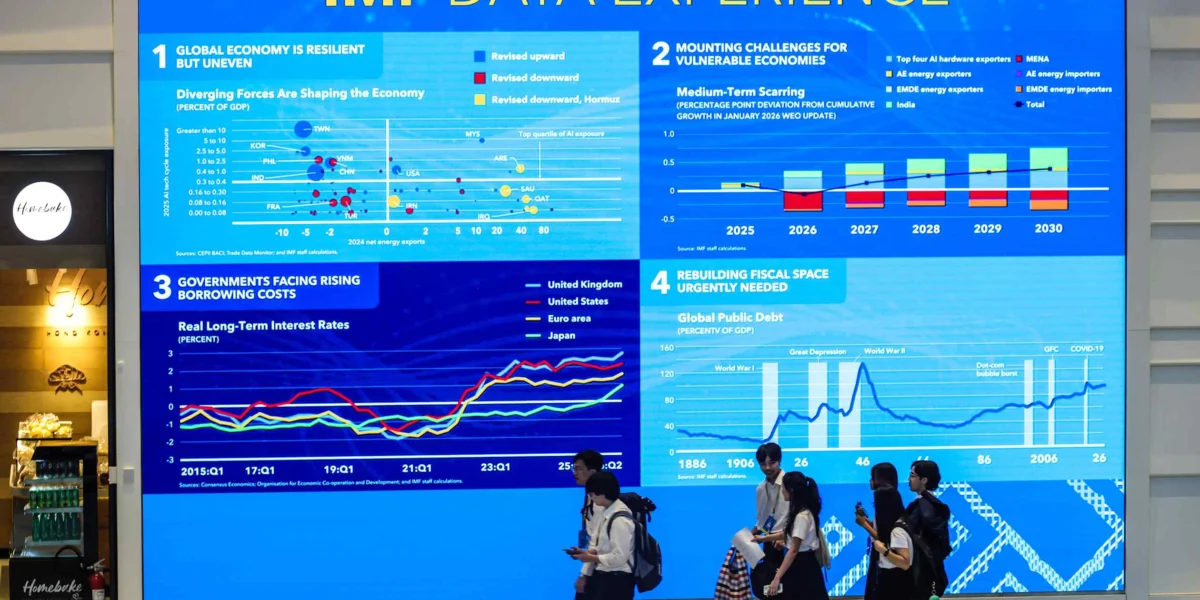
The data displayed on electronic boards, such as the one pictured in Bangkok on October 17, 2026, served as a constant visual reminder of the global economic interconnectedness and the complex data-driven nature of modern policymaking. These meetings, held against a backdrop of evolving global economic dynamics, provided a crucial opportunity to reassess regional economic health and chart a course for future prosperity.

Uneven Participation in the AI Revolution
A central theme that emerged from the closed-door sessions and public dialogues in Bangkok was the uneven impact of the ongoing AI revolution on Asian economies. While countries with strong technological ecosystems, advanced research and development capabilities, and a digitally adept workforce are poised to reap significant benefits from AI-driven productivity gains, automation, and new service industries, others are struggling to keep pace.
Supporting Data and Analysis:

- Digital Infrastructure Gaps: Reports from the World Bank highlight significant disparities in internet penetration, broadband speed, and access to reliable electricity across Asian nations. For example, while some East Asian economies boast near-universal high-speed internet access, several countries in South and Southeast Asia still grapple with substantial digital divides, limiting their ability to adopt and leverage AI technologies.
- Skills Mismatch: The rapid evolution of AI demands a workforce equipped with advanced digital literacy, data science expertise, and critical thinking skills. Many Asian nations face a significant skills mismatch, with educational systems not yet adequately aligned with the demands of the future job market. This is particularly true for countries with large informal sectors or those heavily reliant on labor-intensive manufacturing.
- Investment in R&D: Global innovation indices reveal a stark contrast in research and development spending. Nations like South Korea, Singapore, and Taiwan are investing heavily in AI research, fostering vibrant tech hubs, and attracting significant venture capital. Conversely, many developing economies in the region allocate a much smaller proportion of their GDP to R&D, hindering their ability to innovate and compete.
- AI Adoption Rates: While specific, up-to-the-minute data for 2026 is still emerging, preliminary analyses suggest that AI adoption rates for businesses are significantly higher in advanced economies within Asia compared to their developing counterparts. This translates to a widening productivity gap and potential for competitive disadvantage.
The implication of this uneven participation is a potential entrenchment of economic disparities. Countries that can effectively integrate AI into their economies are likely to experience accelerated growth, enhanced competitiveness, and higher living standards. Those that cannot risk falling further behind, facing challenges in job creation, export diversification, and overall economic development.
Navigating the Cost of Living Crisis and Energy Shocks
The resilience of Asian economies in the face of an energy supply shock and a worsening cost-of-living crisis was a key point of discussion. The surge in global energy prices, exacerbated by geopolitical events and supply chain disruptions, directly impacted inflation rates across the region. This, in turn, fueled the cost-of-living crisis, squeezing household budgets and impacting consumer confidence.

Timeline and Chronology of Recent Challenges:
- Early 2022: Escalating geopolitical tensions begin to impact global energy markets, leading to initial price increases.
- Mid-2022 to Late 2023: Energy prices peak, contributing significantly to inflationary pressures worldwide. Many Asian central banks respond with interest rate hikes to curb inflation, impacting borrowing costs and economic activity.
- Throughout 2024: While energy prices show some moderation, geopolitical uncertainties persist. The cost-of-living crisis deepens in many countries as households grapple with sustained high prices for food, housing, and transportation.
- 2025-2026 (leading up to the IMF meetings): Asian economies demonstrate continued resilience, with inflation showing signs of cooling in some nations, but concerns remain about the sustainability of recovery and the impact of lingering global economic fragilities. The IMF and World Bank meetings in late 2026 were held at a juncture where policy adjustments were crucial to address both immediate pressures and longer-term structural challenges.
Official Responses and Statements (Inferred):

Finance ministers and central bank governors from various Asian nations, speaking on the sidelines of the meetings, likely reiterated their commitment to fiscal prudence and monetary policy vigilance. Statements from institutions like the Asian Development Bank (ADB) and national economic ministries often emphasize a multi-pronged approach, including:
- Targeted Social Safety Nets: Implementing or strengthening programs to support vulnerable populations most affected by rising living costs.
- Energy Diversification: Investing in renewable energy sources and improving energy efficiency to reduce reliance on volatile fossil fuel markets.
- Supply Chain Resilience: Working to strengthen domestic and regional supply chains to mitigate the impact of global disruptions.
- Fiscal Support: Carefully calibrated fiscal stimulus or support measures to cushion economic downturns without exacerbating inflationary pressures.
The IMF, in its regional economic outlook reports released around the time of the meetings, likely highlighted the need for continued structural reforms to bolster long-term growth potential and enhance resilience against future shocks.

Broader Impact and Implications for the Region
The widening economic divides observed in Asia have significant implications for the region’s future trajectory.
- Increased Inequality: If the benefits of technological advancement and global economic integration are not more broadly shared, income and wealth inequality within and between Asian nations could escalate. This can lead to social unrest and political instability.
- Shifting Geopolitical Dynamics: Economic disparities can influence geopolitical alliances and regional power balances. Countries that fall behind may become more reliant on external support, potentially altering regional dynamics.
- Slower Sustainable Development: The uneven progress in addressing challenges like climate change and poverty could be exacerbated. Nations struggling with basic economic development may find it harder to invest in crucial long-term sustainability initiatives.
- Global Economic Stability: Asia’s economic performance is a significant driver of global growth. Persistent disparities and vulnerabilities within the region could pose risks to global economic stability and recovery.
The conclusions of the IMF and World Bank Annual Meetings in Bangkok serve as a critical juncture for Asia. While the region has demonstrated remarkable resilience, the uneven distribution of economic gains and the persistent challenges of a volatile global environment demand focused, collaborative, and forward-thinking policy responses. The ability of Asian nations to bridge these emerging divides will be a defining factor in their pursuit of inclusive and sustainable prosperity in the years to come. The discussions and insights gleaned from this significant international gathering will undoubtedly shape economic strategies and policy priorities across the continent.
