

HIROYUKI AKITA
October 18, 2026 13:56 JST
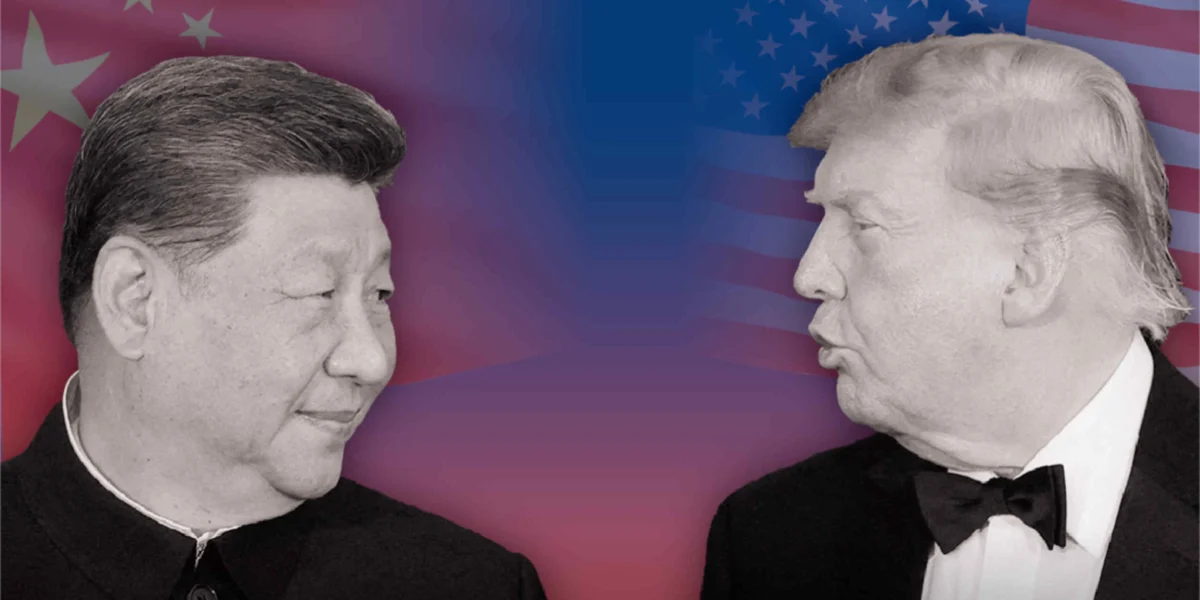
WASHINGTON — In a highly unusual diplomatic development, U.S. President Donald Trump and his Chinese counterpart Xi Jinping have agreed to meet two more times by the end of the year. This series of high-level engagements, unprecedented in its frequency and proximity, signals a concerted effort by both leaders to manage a complex and often volatile bilateral relationship. While the stated objective is to foster stability and open lines of communication, deep-seated disagreements, particularly concerning Taiwan, continue to cast a long shadow over these planned summits.
The initial announcement of these additional meetings, made following a discreet session between the two leaders on the sidelines of a multilateral summit, has been met with a mixture of cautious optimism and underlying concern within diplomatic circles and among geopolitical analysts. The exact dates and locations for the upcoming encounters are yet to be disclosed, adding to the speculative nature of the development. However, the sheer commitment to further dialogue underscores a recognition by both Washington and Beijing of the critical juncture at which their relationship stands.
A Strategic Dance on a Fragile Foundation
The recurring meetings between President Trump and President Xi are occurring against a backdrop of significant global flux. The world order, already grappling with economic uncertainties and evolving security landscapes, is particularly sensitive to the dynamics between the two largest economies. The Trump administration’s "America First" foreign policy, characterized by its transactional approach and willingness to challenge established norms, has significantly reshaped global diplomacy. Simultaneously, China, under President Xi, has pursued a more assertive stance on the international stage, seeking to solidify its economic and strategic influence.
Taiwan, a self-governing democracy with a robust economy and a strategically vital location, remains the most contentious flashpoint in the U.S.-China relationship. Beijing views Taiwan as a renegade province, a core national interest that it is prepared to reclaim by force if necessary. The United States, while acknowledging Beijing’s "one China" policy, maintains unofficial relations with Taipei and provides it with defensive capabilities, a policy enshrined in the Taiwan Relations Act of 1979. This delicate balancing act, often referred to as strategic ambiguity, has for decades prevented open conflict, but recent rhetoric and military posturing from both sides have intensified concerns about its long-term viability.
The Shadow of Taiwan: A Persistent Divide
Despite the eagerness for continued dialogue, the fundamental divergence on the status of Taiwan remains a significant obstacle. President Trump, known for his direct and often unpredictable negotiating style, has previously expressed a willingness to engage with China on a range of issues, but his administration’s stance on Taiwan has been subject to shifts. While often reiterating support for cross-Strait peace, specific policy decisions, such as increased arms sales to Taiwan or public statements of solidarity, have consistently drawn sharp rebukes from Beijing.
President Xi, on the other hand, has made it clear that Taiwan’s eventual unification with the mainland is an irrefutable historical imperative. Under his leadership, China has significantly increased its military presence and activities around Taiwan, including frequent air and naval incursions into the island’s Air Defense Identification Zone (ADIZ) and intensified military exercises. These actions are widely interpreted as a signal of Beijing’s growing impatience and its preparation for potential contingencies.
The core of the division lies in differing interpretations of international law, historical claims, and the right to self-determination. China’s “one China principle” asserts that there is only one sovereign state under the name “China,” and that the People’s Republic of China is its sole legitimate government, with Taiwan as part of it. The United States, while recognizing this principle, does not explicitly endorse Beijing’s claim of sovereignty over Taiwan, instead acknowledging Beijing’s position. This nuanced diplomatic formulation has allowed for a semblance of normalcy, but the increasing assertiveness from Beijing and the U.S.’s continued support for Taiwan’s defense capabilities create a constant tension.
A Chronology of Engagement and Escalation
The planned meetings are not occurring in a vacuum. The U.S.-China relationship has been characterized by periods of intense trade friction, diplomatic spats, and escalating military activities, punctuated by moments of high-level engagement.
- Early 2020s: The Trump administration initiated a trade war with China, imposing tariffs on a wide range of Chinese goods. This period also saw increased U.S. naval transits through the Taiwan Strait and stronger rhetorical support for Taiwan from Washington.
- Mid-2020s: As tensions persisted, both leaders engaged in several high-profile meetings, attempting to de-escalate friction points. These meetings often resulted in temporary agreements or understandings, but underlying strategic disagreements remained unresolved. China continued its military modernization and increased its activities around Taiwan, leading to heightened U.S. and Taiwanese concerns.
- Late 2025/Early 2026: The geopolitical landscape saw further shifts, with increased focus on regional security alliances and competition for technological dominance. The Taiwan issue became even more prominent, with increased international attention on the potential for conflict.
- October 2026 (Current Context): The announcement of two additional meetings between Trump and Xi by the end of the year signifies a renewed push for direct engagement amidst these persistent challenges. The timing suggests a recognition that communication channels must remain open, even as core issues remain intractable.
Supporting Data: A Shifting Power Dynamic
The strategic importance of Taiwan is underscored by several factors:
- Economic Significance: Taiwan is a global leader in semiconductor manufacturing, producing over 60% of the world’s semiconductors and 90% of the most advanced chips. Disruptions to this supply chain would have catastrophic global economic consequences. The island is also a crucial node in global shipping lanes.
- Military Geography: Taiwan’s location is strategically critical. Its control would significantly enhance China’s ability to project power into the Western Pacific, potentially challenging U.S. allies such as Japan and the Philippines, and affecting access to vital sea lanes.
- Defense Spending: Both China and the U.S. have been increasing their defense budgets. China’s military spending has grown by an average of 7% annually over the past decade, reaching an estimated $293 billion in 2025. The U.S. defense budget for 2026 is projected to be over $800 billion. This arms race underscores the heightened security concerns in the region.
- Public Opinion: In Taiwan, polls consistently show overwhelming support for maintaining the status quo, with a strong majority opposing unification with mainland China under the current political system. Meanwhile, public opinion in the U.S. generally supports Taiwan’s right to self-defense.
Official Responses and International Reactions
While official statements from Washington and Beijing regarding the upcoming meetings have been deliberately vague, they emphasize a desire for "constructive dialogue" and "managing differences." U.S. officials have stressed the importance of maintaining peace and stability in the Indo-Pacific region, while Chinese counterparts have reiterated their commitment to national sovereignty and territorial integrity.
Allies of both nations are closely observing these developments. Japan and South Korea, both key U.S. allies in the region, have expressed their hope that dialogue will lead to de-escalation. European nations, heavily reliant on global trade, are also keenly interested in stability and have often advocated for diplomatic solutions. However, the underlying concerns about the potential for conflict over Taiwan remain a source of anxiety for many international actors.
Broader Implications and Future Outlook
The continued engagement between President Trump and President Xi, while potentially stabilizing in the short term, does not fundamentally alter the trajectory of the U.S.-China relationship, particularly concerning Taiwan. The deep-seated ideological differences and competing strategic interests mean that progress on such a sensitive issue is likely to be incremental at best, and fraught with setbacks.
The implications of these ongoing discussions are multifaceted:
- Risk Mitigation: The meetings offer a critical avenue for direct communication, which can help prevent miscalculations and accidental escalation, especially in a region with heightened military activity.
- Potential for Limited Agreements: While a breakthrough on Taiwan is improbable, the leaders might find common ground on other issues, such as climate change cooperation or pandemic preparedness, which could offer some positive momentum.
- Continued Strategic Competition: The fundamental competition for global influence, technological dominance, and regional security will persist. The Taiwan issue will remain a persistent challenge, testing the limits of diplomatic engagement.
- Impact on Global Order: The way the U.S. and China manage their disagreements, particularly on Taiwan, will have profound implications for the future of international relations, global trade, and regional security architecture.
Ultimately, the success of these upcoming Trump-Xi meetings will be measured not by immediate breakthroughs, but by their ability to foster sustained communication and prevent the simmering tensions over Taiwan from boiling over into outright conflict. The world will be watching closely to see if diplomacy can indeed navigate the treacherous waters of this critical geopolitical challenge.
