

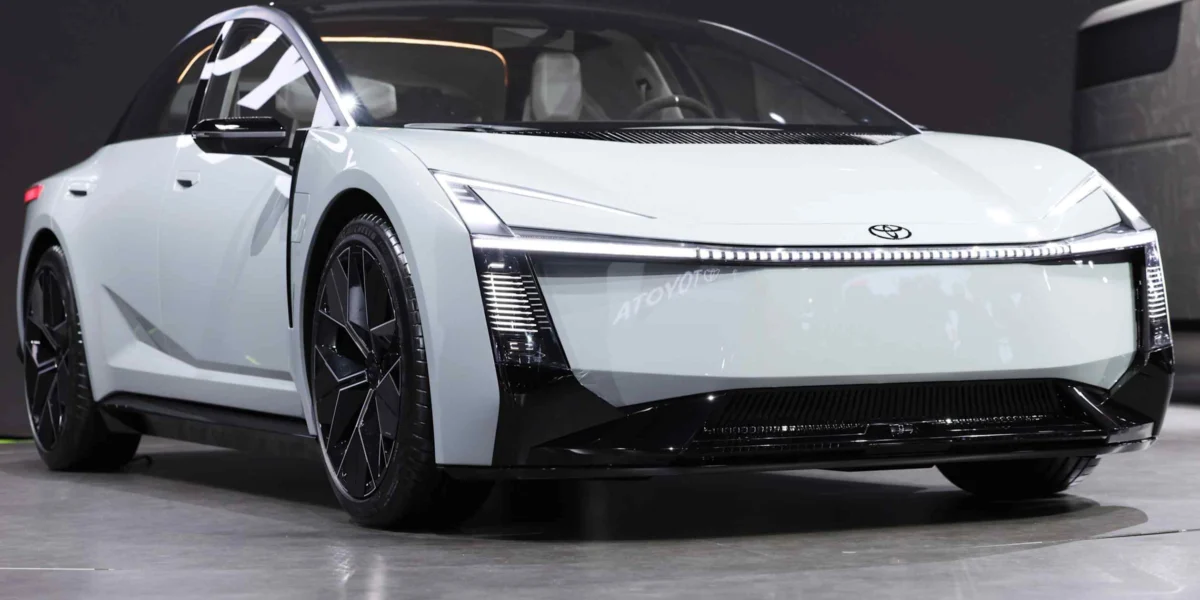
NAGOYA, Japan – Toyota Motor, the world’s largest automaker, has announced a significant strategic shift in its production plans, revealing its intention to manufacture the next-generation Corolla in China commencing in 2028. This pivotal decision underscores Toyota’s commitment to adapting to the evolving dynamics of the Chinese automotive market, a region where the company has faced increasing competition and a slowdown in growth. The forthcoming Corolla will be built upon a versatile vehicle platform designed to accommodate a range of powertrain options, a move intended to bolster flexibility and competitiveness in a market that is rapidly transitioning towards electrification and facing broader economic headwinds.
The announcement, made by sources close to the company and reported by Nikkei, signals a recalibration of Toyota’s long-standing strategy in one of its most crucial global markets. While the specific joint venture partner in China has not yet been officially disclosed, the decision to localize production of such an iconic and high-volume model as the Corolla indicates a deep-seated commitment to the Chinese consumer and the local automotive ecosystem. Toyota has a well-established presence in China through its joint ventures, notably with FAW Group and Guangzhou Automobile Group Co. (GAC). The chosen partner will undoubtedly play a critical role in the successful implementation of this ambitious production plan.
Strategic Rationale: Navigating a Shifting Chinese Automotive Landscape
The Chinese automotive market, once a seemingly inexhaustible engine of growth for global manufacturers, is currently experiencing a period of significant transformation and deceleration. Several factors are contributing to this recalibration. Firstly, the rapid acceleration of electrification, driven by government policies, technological advancements, and burgeoning consumer demand, has reshaped the competitive landscape. Domestic Chinese brands, such as BYD, NIO, and XPeng, have emerged as formidable players, not only dominating the electric vehicle (EV) segment but also increasingly challenging established international automakers in the hybrid and internal combustion engine (ICE) vehicle markets.
Secondly, the overall economic climate in China has introduced an element of uncertainty. Factors such as a property market downturn, demographic shifts, and evolving consumer spending habits are contributing to a more cautious purchasing environment. This has led to increased price competition across the industry, forcing manufacturers to re-evaluate their pricing strategies and production costs.
For Toyota, the Corolla represents a cornerstone of its global sales volume and a symbol of reliability and affordability. Its success in China has been substantial, but recent years have seen its market share come under pressure. By bringing the production of the next-generation Corolla in-house through a local joint venture, Toyota aims to achieve several key objectives.
Enhancing Cost Competitiveness and Supply Chain Agility
Localizing production of the Corolla in China is expected to yield significant cost efficiencies. Reduced reliance on imported components, lower logistics expenses, and the ability to leverage local supply chains will directly impact the vehicle’s final price point, making it more competitive against domestic rivals. Furthermore, it will allow Toyota to respond more swiftly to fluctuations in demand and supply chain disruptions, a lesson learned from recent global manufacturing challenges. This agility is paramount in a market characterized by rapid product cycles and intense competition.
Future-Proofing with a Flexible Powertrain Platform
The decision to adopt a vehicle platform compatible with "different powertrain types" is perhaps the most forward-looking aspect of this announcement. This indicates that the next-generation Corolla will be engineered to seamlessly integrate various propulsion systems, including advanced hybrid powertrains, plug-in hybrids (PHEVs), and potentially fully electric (BEV) variants. This inherent flexibility is a strategic imperative for navigating the uncertain future of automotive propulsion in China.
While hybrid technology has been a strong suit for Toyota, the rapid advance of battery electric vehicles (BEVs) in China necessitates a broader approach. By designing a platform that can accommodate multiple powertrain options, Toyota can tailor its offerings to specific market demands and regulatory requirements, without the need for entirely separate vehicle architectures. This "multi-pathway" strategy allows for a more agile response to the pace of electrification in China, which is currently leading the world in BEV adoption.
A Timeline of Adaptation and Growth
Toyota’s presence in China dates back several decades, with its initial forays into the market beginning in the late 1970s and early 1980s through imports. However, significant localized production commenced in the 1990s, a period marked by China’s increasing openness to foreign investment and the burgeoning demand for personal transportation.
- Early Engagements (1970s-1980s): Initial import and distribution of Toyota vehicles, establishing brand presence and market understanding.
- Joint Venture Era Begins (1990s): Establishment of key joint ventures with Chinese partners, leading to the localized assembly and production of models like the Corolla. The first Corolla models produced locally were primarily based on older generations, catering to a growing middle class.
- Expansion and Model Diversification (2000s): Toyota significantly expanded its production capacity and introduced a wider range of models to the Chinese market, solidifying its position as a leading foreign automaker. The Corolla continued to be a top seller, known for its reliability and fuel efficiency.
- Facing Increased Competition (2010s): The rise of domestic Chinese brands, particularly in the SUV segment, began to challenge Toyota’s dominance. The shift towards electrification also started to gain momentum, with Chinese companies leading the charge in battery technology and EV development.
- Electrification Push and Market Realignment (2020s-Present): Toyota has accelerated its electrification strategy, introducing more hybrid and plug-in hybrid models. However, the pace of BEV adoption in China has outstripped many global expectations. The company has also seen its overall market share face pressure from both established international rivals and increasingly sophisticated domestic competitors.
- The 2028 Corolla Production Decision (Announced 2026): The plan to produce the next-generation Corolla in China from 2028 signifies a direct response to these market realities, emphasizing localization, platform flexibility, and cost competitiveness. The reveal of the new Corolla at last fall’s Tokyo Mobility Show in 2025, as suggested by the image caption, would have provided an early glimpse into the design and technological direction of the vehicle to be produced locally.
Supporting Data and Market Context
The decision to localize Corolla production in China is supported by several key data points that highlight the market’s challenges and opportunities:
- Slowing Sales Growth: China’s automotive market, while the world’s largest, has experienced a significant deceleration in growth. While sales saw robust expansion in previous decades, recent years have seen more modest increases, with some periods of contraction, particularly for traditional ICE vehicles. In 2023, for instance, while overall sales showed growth, the pace was less than in preceding boom years.
- Dominance of Electrification: China is the global leader in electric vehicle sales and adoption. In 2023, NEVs (New Energy Vehicles, which include BEVs and PHEVs) accounted for a substantial portion of new car sales, with projections indicating this share will continue to grow rapidly. This trend necessitates that automakers have competitive offerings across the electrification spectrum.
- Intense Price Competition: The Chinese market is characterized by aggressive price competition, especially in the NEV segment. Domestic brands have often leveraged their cost advantages and localized supply chains to offer compelling value propositions, forcing international players to reconsider their pricing and production strategies.
- Toyota’s Market Share: While Toyota remains a significant player, its market share in China has faced challenges. In 2023, for example, its share in the passenger vehicle market hovered around the 10-12% mark, a figure that, while substantial, has seen pressure from rivals. The Corolla, though a consistent seller, is part of a broader portfolio that needs to adapt to evolving consumer preferences.
Potential Reactions and Industry Implications
While Toyota has not released official statements regarding the specific joint venture or detailed production plans, the strategic shift is likely to elicit a range of reactions from various stakeholders.
Domestic Chinese Automakers: Companies like BYD, Geely, and SAIC will view this as both a confirmation of their market dominance and a continued challenge. Toyota’s decision to localize production of a high-volume model signals its intent to compete more aggressively on price and product, particularly with versatile powertrain options. This may prompt further innovation and cost-reduction efforts from Chinese competitors.
Other International Automakers: Toyota’s move could serve as a bellwether for other international manufacturers operating in China. It reinforces the necessity of localized production, flexible platforms, and a deep understanding of the Chinese consumer’s evolving demands, especially regarding electrification and value. Companies that have been slower to adapt may feel increased pressure to follow suit.
Suppliers and Technology Providers: The decision will have a ripple effect on the automotive supply chain in China. Local suppliers of components, battery technology, and software will likely see increased opportunities as Toyota seeks to integrate them into its production processes. This could also accelerate the development and adoption of advanced automotive technologies within China.
Consumers: For Chinese consumers, the localization of the next-generation Corolla could translate into more competitive pricing, a wider range of powertrain options tailored to local preferences, and potentially faster model updates. The emphasis on a flexible platform suggests that consumers may have more choices in terms of hybrid, plug-in hybrid, or even electric variants of the iconic model.
Broader Impact and Future Outlook
The strategic decision by Toyota to produce the next-generation Corolla in China from 2028 carries significant implications not only for the company but also for the broader global automotive industry. It underscores a clear recognition that the Chinese market is no longer a simple extension of global strategies but a unique ecosystem with its own driving forces and competitive dynamics.
Toyota’s commitment to a flexible platform is particularly noteworthy. This approach anticipates a future where multiple powertrain technologies will coexist for a considerable period, rather than a singular, rapid transition to full electrification. By building this adaptability into the core of one of its most important models, Toyota is positioning itself to weather the complexities of evolving regulatory landscapes, fluctuating consumer preferences, and the ongoing debate surrounding the optimal path to sustainable mobility.
This move also signifies a deeper integration of Toyota’s operations within China, moving beyond mere assembly to a more comprehensive manufacturing and development presence. This could involve closer collaboration with Chinese research and development centers, a greater reliance on local engineering talent, and a more nuanced understanding of the specific needs and desires of Chinese drivers.
Ultimately, Toyota’s 2028 Corolla production plan in China is a testament to its long-term vision and its willingness to adapt to the seismic shifts occurring within the global automotive industry. It is a calculated strategy designed to preserve and enhance its position in a critical market, demonstrating that even established giants must continually evolve to remain at the forefront of automotive innovation and consumer satisfaction. The success of this initiative will be closely watched as a key indicator of how traditional automotive powerhouses navigate the accelerating transition to a new era of mobility.
