

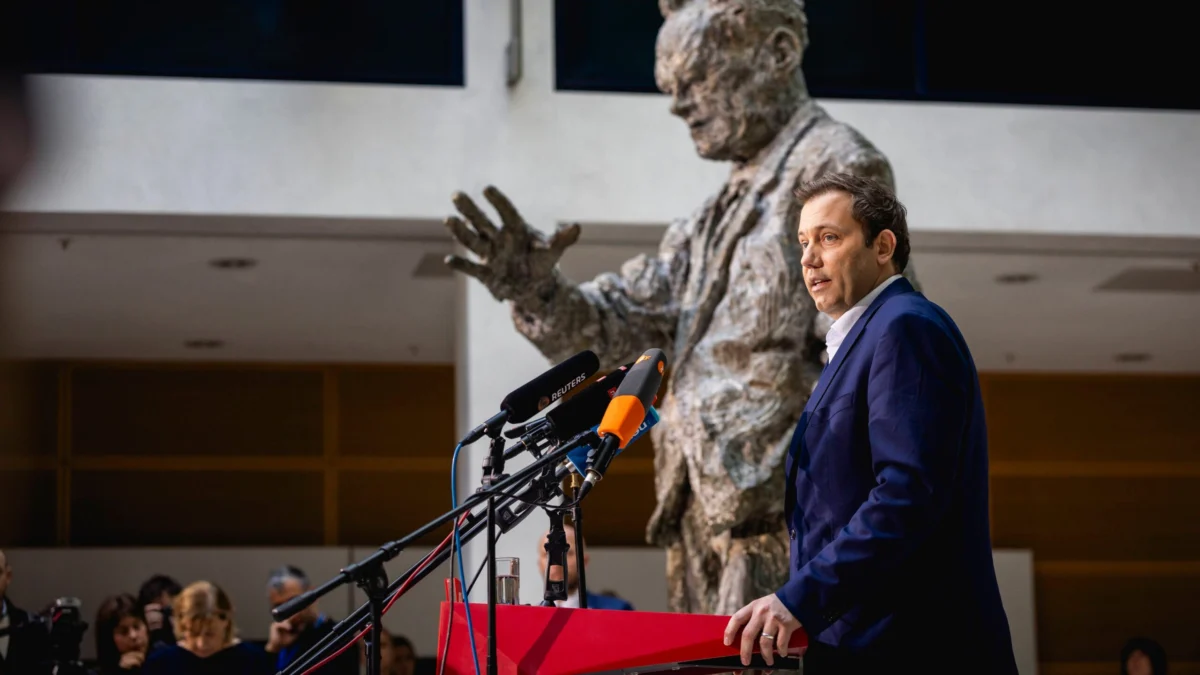
Berlin is abuzz with political tremors following the abrupt resignations of Bärbel Bas, the Federal Minister of Labour and Social Affairs and Co-Chair of the Social Democratic Party (SPD). The dramatic turn of events, announced early Monday morning, has shifted the political spotlight from the CDU’s planned retreat to a profound crisis within the SPD, casting a shadow over the stability of the governing coalition.
Bas, citing a recent death in her immediate family, declared she no longer possessed the strength to adequately fulfill her demanding roles. Her departure from both the ministry and the party leadership sent shockwaves through the political landscape. While the CDU, led by Friedrich Merz, had convened for its own strategic discussions following recent electoral setbacks, the SPD found itself grappling with an internal crisis of unprecedented magnitude.
A Rapidly Unfolding Crisis
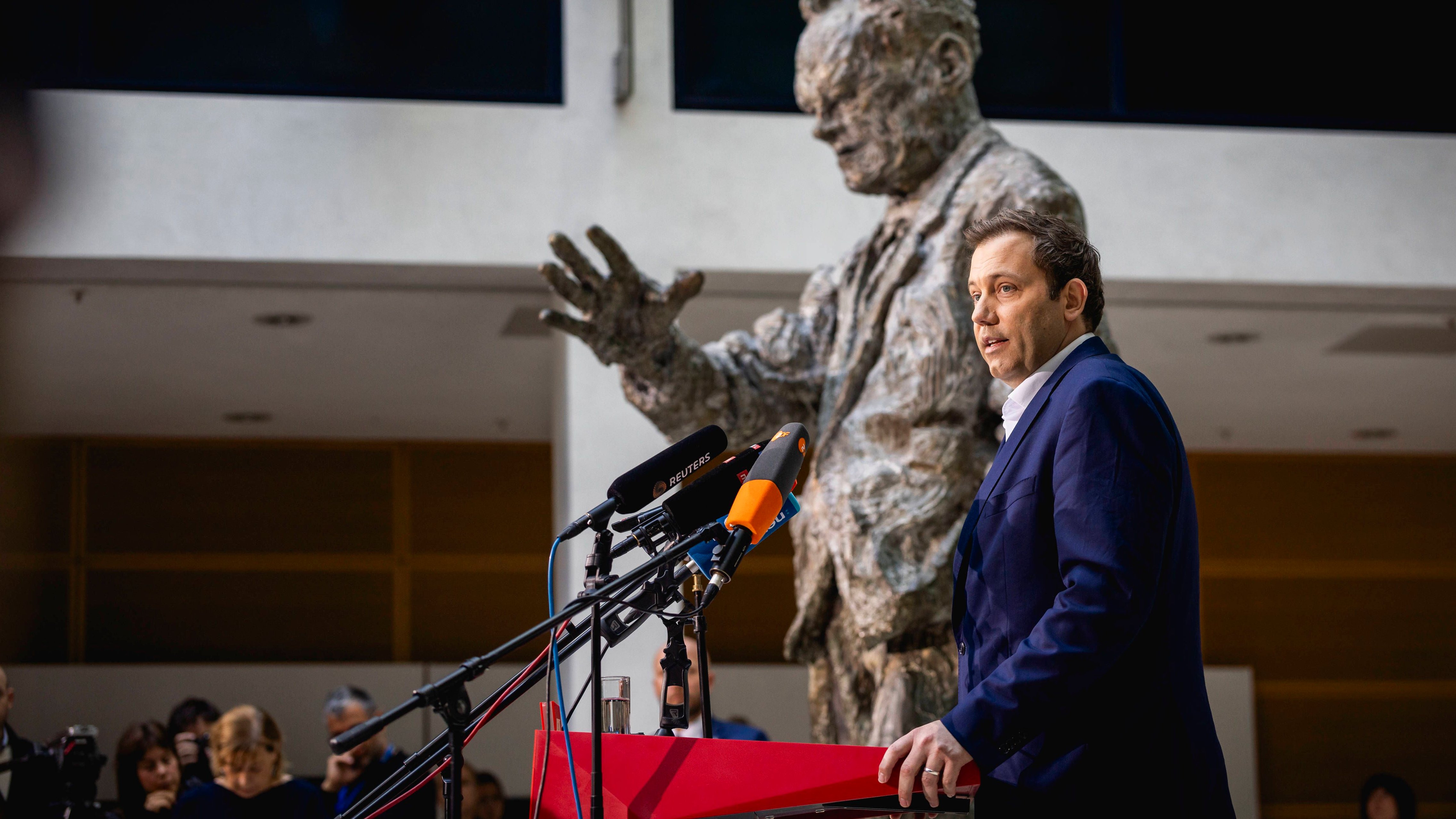
The speed at which events unfolded caught many by surprise. While the CDU’s leadership was preparing for an afternoon appearance by Merz, news broke of Bas’s immediate resignation. This unexpected development immediately overshadowed the Union’s deliberations.
Lars Klingbeil, the other Co-Chair of the SPD, was reportedly informed of Bas’s decision on Saturday. By Monday morning, he had convened an emergency meeting of the SPD’s presidium. His planned five-day international trip to India and Thailand was abruptly canceled, underscoring the gravity of the situation. For Klingbeil, Bas’s resignation has become a matter of his own political survival, as the party he co-leads faces an uncertain future.
Succession Dilemmas and Political Maneuvering
The immediate aftermath saw a swift consensus emerging on a ministerial replacement. Alexander Schweitzer, the former Minister-President of Rhineland-Palatinate, is widely expected to succeed Bas as the Federal Minister of Labour. His prior experience in government and proven track record are seen as crucial in ensuring the ministry’s continued functionality.
However, the question of who will succeed Bas as SPD Co-Chair is far more complex and potentially carries greater implications for the federal coalition’s stability. This leadership vacuum presents a significant challenge for Klingbeil, whose own leadership has been under scrutiny. He was elected Co-Chair in June of the previous year with a somewhat lackluster 64.9 percent of the vote, a figure that has since fueled growing criticism and calls for a renewed party leadership.
In an attempt to navigate this complex situation, Klingbeil proposed to the SPD presidium that the party’s planned party convention in December be postponed and instead hold an ordinary party congress in January 2027. This congress would not only elect Bas’s successor but also the entire party leadership. This strategic move, while aimed at addressing the crisis comprehensively, also represents a considerable risk, particularly for Klingbeil himself.
The SPD’s internal dynamics have been fraught with tension. Various SPD sub-organizations have publicly called for a leadership overhaul. Klingbeil’s initial plan for a party convention was seen by some as an attempt to circumvent a more thorough leadership contest. However, the necessity of electing a new party chair now makes a broader vote on the entire leadership appear more logical and politically unavoidable.
Potential Candidates and Internal Divisions

Information obtained by Handelsblatt suggests that Klingbeil is also advocating for a woman to temporarily assume the interim leadership role until a new party chair is elected. This move is interpreted by some within the party as an attempt to pave the way for a future dual leadership with himself.
The names of two prominent female politicians have been circulating for both the interim and permanent leadership positions: Manuela Schwesig, the Minister-President of Mecklenburg-Vorpommern, and Anke Rehlinger, her counterpart in Saarland. However, both have reportedly declined to step into the role, emphasizing that simply replacing Bärbel Bas with another individual would not address the underlying issues.
Schwesig publicly stated that the SPD already has a party leader and deputies, asserting the party’s operational capability. She indicated her focus would remain on the coalition negotiations in Mecklenburg-Vorpommern.
Rehlinger, according to participants in the presidium meeting, reiterated her long-standing position: she is not available for the federal leadership. With state elections in Saarland scheduled for April 2027, taking on the party leadership shortly before would significantly disrupt her electoral campaign plans.

This leaves Schwesig as the most prominent potential candidate. While she could only participate briefly in Monday’s presidium call due to her ongoing coalition negotiations, there are differing accounts regarding her commitment. Some reports suggest she, like Rehlinger, declared her unavailability for the party leadership, while others indicate her statement might have been confined to the interim leadership position.
Regardless of the specific statements made on Monday, it is anticipated that the pressure on both Rehlinger and Schwesig to assume leadership roles will intensify in the coming days. For Schwesig, rejecting the leadership may become increasingly difficult, especially if she is indeed willing to consider it. Unlike Rehlinger, Schwesig would be stepping into a leadership role at a time when coalition negotiations are concluded, rather than facing an immediate election campaign. Her successful resurgence in Mecklenburg-Vorpommern has also positioned her as a beacon of hope for many within the party.
However, some SPD politicians express skepticism about Klingbeil’s prospects for securing a majority at a future party congress, particularly one held after the government implements austerity measures that have already caused discontent within the party. For Schwesig, the timing of a potential leadership takeover could be advantageous, as she would inherit a situation where key social reforms are already decided, thus potentially avoiding direct culpability for unpopular policies.
Some within the SPD are suggesting that if Schwesig assumes the party leadership, it would be an opportune moment to separate party and government roles. This would allow Klingbeil to remain as Finance Minister while Schwesig, as sole party leader, could focus on the SPD and effectively dismantle the unpopular dual leadership structure. The question is being raised: "What reason would there be for Schwesig to keep Klingbeil by her side?"

Markus Tönns, spokesperson for the Ruhr SPD, expressed his explicit support for Klingbeil’s decision to hold new elections for the entire party executive. However, he stressed the need for "strong party leadership" that is not burdened by additional prominent offices. Tönns believes that experienced individuals within the SPD parliamentary group could fill this role.
Klingbeil has a reputation as a skilled political strategist and survivor. Many SPD leaders in the parliamentary group, party, and cabinet owe their positions to him. Any challenge to his leadership would first need to overcome this established network of support.
Union’s Response and Accusations of "Inhuman" Behavior
The CDU, meanwhile, has sought to project an image of returning to its planned agenda. Their primary response to Bas’s resignation has been to deny any personal attacks and emphasize their focus on policy differences. Friedrich Merz stated that he last had contact with Bas nearly three weeks ago and that their discussions were solely focused on policy matters, never personal issues. He asserted that the CDU has consistently expressed its sympathy for Bas during the past three weeks.

However, Manuela Schwesig sharply criticized the Union’s conduct, describing it as "inhuman." She alleged that Union politicians continued to attack Bas in the media despite the personal tragedy she was enduring. Schwesig characterized the preceding days as "subterranean." Bas herself had noted in her resignation statement that she had faced repeated attacks "unfortunately also from the ranks of the coalition partner."
The Union leadership, however, perceived Schwesig’s statements as "disturbing." Members of the presidium and executive committee reported that Bas’s resignation was only a marginal topic of discussion. The prevailing sentiment within the CDU was that Bas’s difficulties had been evident for weeks, and that criticism had primarily focused on policy disagreements. While acknowledging that personal remarks are unacceptable, they maintained that their focus had been on substantive issues.
Merz reiterated on Monday afternoon that he had always discussed policy matters with Bas, never personal ones, and that the CDU had consistently conveyed its sympathy.
The Coalition’s Future: Stability or Shifting Sands?

Despite the significant upheaval within the SPD, Merz expressed confidence that the leadership changes would not jeopardize the coalition agreement or the decisions made by the coalition committee. This statement suggests a pragmatic approach from the CDU, focused on maintaining governmental stability.
The question remains: can the SPD, reeling from this internal crisis, quickly regain its footing and continue its work within the coalition? The unexpected departure of a key leader and the ensuing leadership battle have undoubtedly created a period of uncertainty. While the CDU appears ready to move forward, the SPD faces a challenging path to rebuilding its leadership and restoring public confidence. The coming weeks will be critical in determining the long-term implications of this dramatic turn of events for both the SPD and the German federal government.
