

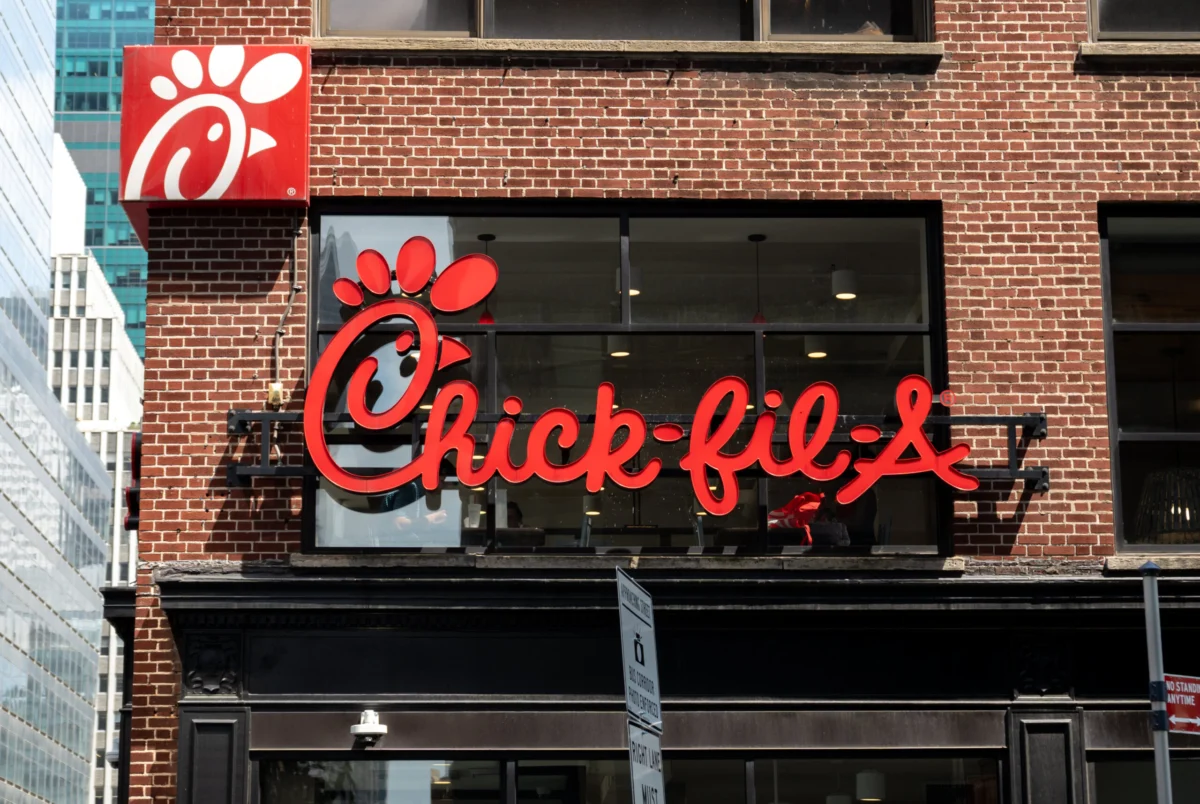
New York City, NY – August 6, 2026 – In an era defined by fluctuating consumer demand, persistent inflation, and fierce competition, Chick-fil-A stands as an anomaly in the quick-service restaurant (QSR) landscape. While many of its publicly traded peers grapple with declining traffic and disappointing financial outcomes, the privately held, family-owned chicken chain continues to post robust growth, driven by an unwavering commitment to its foundational values and strategic, albeit "calculated," expansion. CEO Andrew Cathy, who assumed leadership nearly five years ago, recently articulated the company’s dual strategy: an ambitious international push balanced with a deeply rooted dedication to its unique brand of hospitality and operational excellence.
Cathy, the grandson of founder S. Truett Cathy and son of former CEO Dan Cathy, took the helm at a particularly challenging juncture for the restaurant sector. The industry has since contended with elevated inflation, significantly impacting operating costs and forcing consumers to become more discerning about their dining choices. This has translated into "sluggish traffic" across the board for giants like McDonald’s, Popeyes, and KFC. Yet, Chick-fil-A has largely bucked this trend. "This has been a good year," Cathy affirmed during an interview in downtown Manhattan, ahead of an event to promote the company’s Shared Table hunger relief program. He credited the chain’s sustained performance to its operators’ "good job executing on the fundamentals and adding the hospitality to it."
Financial Resilience Amidst Industry Headwinds
As a privately held entity, Chick-fil-A is not obligated to release quarterly earnings, a distinction that allows it to prioritize long-term strategic initiatives over short-term market pressures. However, insights gleaned from franchise disclosures paint a picture of impressive financial health. In 2025, the company’s revenue surged by 14% to $10.3 billion, while its net income saw a modest but positive uptick of 1% to $1.05 billion. More tellingly, its approximately 3,000 locations generated a staggering $23.92 billion in system sales last year. This places Chick-fil-A as the third-largest U.S. restaurant by sales, trailing only McDonald’s and Starbucks, a remarkable feat for a chain with a significantly smaller footprint than its top two competitors.
This financial strength is particularly noteworthy given the broader economic context. The U.S. Bureau of Labor Statistics reported a sustained increase in the Consumer Price Index for food away from home throughout 2024 and 2025, putting immense pressure on restaurant margins and consumer wallets. Many QSR operators have struggled to pass on these costs without alienating price-sensitive customers, leading to a dip in transaction volumes. Chick-fil-A’s ability to maintain growth suggests a strong value proposition and customer loyalty that transcends typical market fluctuations, a testament to its consistent service and product quality.
Strategic Expansion: Balancing Caution with Global Ambition
Despite Cathy’s description of Chick-fil-A’s growth as "calculated" and "conservative," the numbers reflect a robust expansion trajectory. The company opened 179 new restaurants last year alone. Its international footprint has also expanded significantly, with recent launches in markets as diverse as Canada, Singapore, and the United Kingdom. This international push is part of an ambitious $1 billion expansion plan, signaling a serious intent to establish Chick-fil-A as a global brand, far beyond its traditional Southeastern U.S. stronghold.
The international expansion, however, comes with its own set of complexities. Adapting to diverse culinary preferences, regulatory environments, and labor markets requires careful planning. In the United Kingdom, for instance, the brand has faced some public scrutiny regarding its corporate values, necessitating a delicate balance between brand consistency and local cultural sensitivity. Yet, the appeal of its distinct menu and service model appears to be a powerful draw, as evidenced by the successful openings and sustained interest in new international locations.
Cathy emphasizes that the decision to remain private offers distinct advantages in executing this long-term vision. "We’re able to plan for the quarter century, and we don’t have to plan for the quarter," he stated. This sentiment underscores a core difference from publicly traded companies, which often face intense pressure from shareholders to deliver short-term results, potentially compromising long-term strategic investments. The struggles of recent QSR public offerings, such as Jersey Mike’s, whose shares have fallen nearly 28% since its July IPO, or reports that Dunkin’ owner Inspire Brands is unlikely to go public this year due to sector performance, further highlight the benefits of Chick-fil-A’s private status in a volatile market. It allows for patient capital deployment and the ability to weather economic storms without immediate market retribution.
The "Human Plus" Approach to Hospitality and Technology
A cornerstone of Chick-fil-A’s success, and a point of non-negotiation for Cathy, is its legendary customer service. This "signature Southern hospitality" is seen not as a static tradition but as an evolving commitment. While the company explores future-forward concepts like drone delivery and leveraging artificial intelligence "behind the scenes," Cathy draws a clear line at substituting human interaction with technology where hospitality is paramount.
"From our experience, we really want that hospitality to be human to human," Cathy asserted, explicitly ruling out AI voice ordering in drive-thru lanes. This stance stands in stark contrast to industry rivals like McDonald’s, which announced plans at its September investor day to test "Archy," its voice AI technology, for order-taking in both English and Spanish. While AI offers efficiency gains, Chick-fil-A’s leadership believes that the personal touch is irreplaceable in creating a "warm environment for consumers."
This "human plus" approach is not unique to Chick-fil-A in its emphasis on service, but its consistent execution sets it apart. Other chains are also scrambling to re-emphasize hospitality: Starbucks famously bought 200,000 Sharpie markers for baristas to write friendly messages, Burger King redefined its manager role into a "Your Way Champion," and McDonald’s launched its "Make It Golden" training program focusing on hospitality and food quality. These initiatives underscore the industry’s recognition that customer experience is a critical differentiator in a crowded market where consumers are increasingly selective.
For over a decade, Chick-fil-A consistently topped the American Customer Satisfaction Index (ACSI) among fast-food chains. While Jersey Mike’s recently edged out Chick-fil-A in the 2026 study, Chick-fil-A’s score remained unchanged from the previous year, indicating a steadfast level of customer approval. This long-standing reputation for superior service is a powerful competitive advantage, fostering strong brand loyalty and insulating the company to some extent from the traffic woes plaguing competitors.
Menu Evolution and the "Chicken Sandwich Wars"
Chick-fil-A’s menu is famously simple, a deliberate strategy to maintain operational efficiency and product consistency. However, even this core tenet is subject to careful evolution. The chain strategically introduces seasonal limited-time offerings (LTOs) like the Honey Pepper Pimento Chicken Sandwich or its innovative Chicken & Waffles Sandwiches. These LTOs serve as culinary test beds, allowing the company to gauge customer interest in new flavors and profiles without overcomplicating its core operations. If an item proves to be a "home run," as Cathy describes it, it might earn a permanent spot on the menu, as seen with the popular Pineapple Dragonfruit drink line. This cautious approach ensures that new additions align with the brand’s identity and operational capabilities.
The competitive landscape in the chicken segment has intensified dramatically since 2019, when Restaurant Brands International’s Popeyes ignited the "chicken sandwich wars" with its highly successful entry. While Chick-fil-A has maintained its dominant position, holding roughly a 43% market share in the U.S. chicken segment as of 2024 (according to Barclays), Popeyes’ entry successfully catapulted it to the No. 2 spot with about 11% share. The "wars" are far from over, with McDonald’s preparing to test hand-breaded chicken strips and sandwiches, signaling a renewed effort to capture a larger slice of the lucrative chicken market. Far from being intimidated, Cathy welcomes the competition. "I’m grateful that there’s competition in the chicken space, because that means we’re in a good space to be," he remarked, adding, "Competition just makes us better." This perspective reflects a confidence in the brand’s ability to innovate and refine its offerings, constantly seeking "what little details can we do to make that environment even more welcoming for customers?"
Red Wagon Ventures: Beyond the Chicken Sandwich
Chick-fil-A’s innovation extends beyond its traditional restaurant model through Red Wagon Ventures, an incubator established in 2017. Named after the red wagon S. Truett Cathy used to sell Coca-Cola bottles as a six-year-old entrepreneur, Red Wagon Ventures embodies the founder’s pioneering spirit. While the "lion’s share" of company resources remains focused on refining the core Chick-fil-A business, this dedicated team explores "new ideas and thinking about what could be some things that could help us grow into the future," Cathy explained.
Some ventures have remained within the restaurant industry but explored different formats. The experimental "Little Blue Menu" concept, for instance, offered traditional Chick-fil-A items alongside burgers, pizza, and onion rings, serving as a ghost kitchen model. However, the company is converting its final Little Blue Menu location into a traditional Chick-fil-A next year, indicating a learning process and refinement of strategy. More recently, Red Wagon Ventures launched "Daybright," a beverage-focused concept offering coffees, smoothies, juices, and doughnuts, notably without the iconic chicken sandwiches or waffle fries. This diversification into new formats and dayparts reflects an exploration of broader consumer needs and market opportunities.
Perhaps most intriguing is Red Wagon Ventures’ foray beyond the restaurant sector entirely. Last year saw the launch of Acrew Home Professionals, a home repair and maintenance business that explicitly leverages the Chick-fil-A ethos by promoting "service with a smile." This move highlights a strategic recognition that Chick-fil-A’s core competencies – operational excellence, customer-centricity, and a strong service culture – are transferable assets. "I think from a family business standpoint, we’ve got to build off of our core competencies and look at other types of things that we can get into, so we can continue to serve customers in unique ways," Cathy explained.
Looking ahead, Red Wagon Ventures also plans to explore acquisitions of other family businesses, particularly those lacking a clear succession plan or seeking to sell. This strategy allows Chick-fil-A to expand its portfolio and leverage its operational expertise in new domains, while respecting the legacy of other family enterprises. Cathy often studies businesses that have endured for over a century, noting that "innovation and thinking ahead" are critical for long-term survival. At 80 years old, Chick-fil-A is still several decades shy of the century mark, but its proactive approach to diversification and growth through Red Wagon Ventures suggests a profound commitment to enduring legacy, echoing S. Truett Cathy’s own entrepreneurial spirit, who opened a new business at 92.
In conclusion, under Andrew Cathy’s leadership, Chick-fil-A is charting a course that skillfully balances rapid global expansion with an unwavering adherence to its deeply ingrained values. By leveraging its private status for long-term strategic planning, prioritizing human-centric hospitality, cautiously innovating its menu, and diversifying through Red Wagon Ventures, the company demonstrates a resilient and forward-thinking model for success in an increasingly complex and competitive industry. Its performance continues to serve as a benchmark, proving that steadfast commitment to purpose and people can yield remarkable results, even when the broader market faces significant headwinds.
