

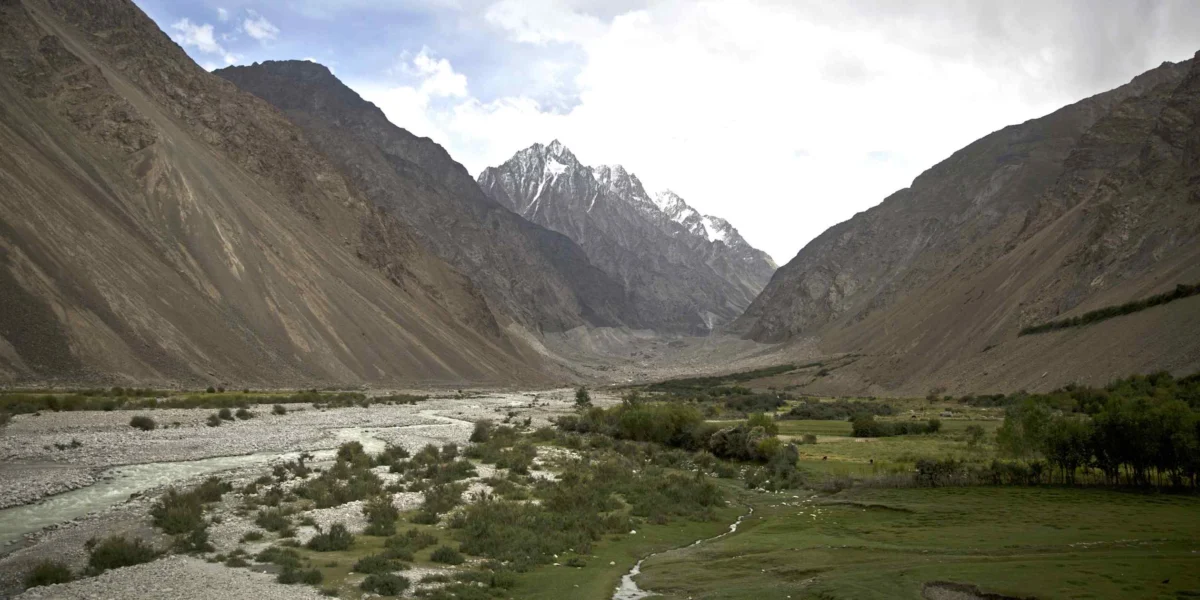
The Taliban government of Afghanistan has recently opened a road through the Wakhan Corridor, a narrow strip of land on the northeastern edge of its territory, to create a direct trade route with China. This development, confirmed through official statements and satellite imagery analysis, marks a significant geopolitical shift with potentially far-reaching economic and strategic implications for both nations and the wider region. The opening of this historic passage, long constrained by challenging terrain and political isolation, represents a concerted effort by the Taliban to integrate Afghanistan into regional trade networks and to leverage its unique geography for economic gain.
The Strategic Significance of the Wakhan Corridor
The Wakhan Corridor, a remote and rugged mountainous region in the northeastern province of Badakhshan, has historically served as a buffer zone between Afghanistan and China. Stretching approximately 350 kilometers (217 miles) long and varying in width from 13 to 65 kilometers (8 to 40 miles), it is bordered by Tajikistan to the north, Pakistan to the south, and the People’s Republic of China to the east. Its strategic importance lies in its proximity to China’s Xinjiang Uyghur Autonomous Region, a key hub for Beijing’s ambitious Belt and Road Initiative (BRI).
For decades, the Wakhan Corridor remained largely inaccessible to significant trade due to its formidable mountain passes, including the formidable Broghil Pass, which stands at over 12,000 feet. The infrastructure in the region is rudimentary at best, characterized by treacherous, unpaved tracks that are often impassable for much of the year due to heavy snowfall and extreme weather conditions. However, its potential as a direct land link between Afghanistan and China has long been recognized.
A Long-Awaited Connection: Timeline and Development
The idea of utilizing the Wakhan Corridor for trade is not new. Discussions and nascent plans have surfaced periodically over the past several decades, often intertwined with broader geopolitical considerations. However, the political instability in Afghanistan and the limited infrastructure investment in the region consistently hampered any substantial progress.
The current push by the Taliban government appears to be a more concrete and determined effort, building upon prior, less formal interactions. While specific dates for the road’s completion and official opening are not widely publicized, reports suggest that construction and enhancement efforts have been underway for the past year, accelerating in recent months. This coincided with a period of increased diplomatic engagement between Kabul and Beijing.
- Pre-2021: Sporadic, low-level trade and transit through the Wakhan Corridor occurred, primarily involving local communities and limited goods. The route was largely impractical for large-scale commerce.
- August 2021: The Taliban seized control of Afghanistan. This event initiated a new phase of Afghan foreign policy, with a focus on economic self-sufficiency and regional integration.
- 2022-2023: Reports emerge of increased Taliban efforts to improve infrastructure within the Wakhan Corridor, including rudimentary road enhancements and the establishment of border checkpoints. Diplomatic exchanges between Afghan officials and Chinese counterparts intensify, with trade facilitation being a key agenda item.
- Early 2024: Satellite imagery analysis begins to show increased activity and potential improvements along key routes within the corridor.
- Late 2026 (as per the article’s publication date): Official confirmation of the opening of a direct trade route through the Wakhan Corridor.
Economic and Geopolitical Implications
The opening of this direct trade route is poised to have significant ramifications:
For Afghanistan:
- Economic Diversification and Growth: Afghanistan, heavily reliant on foreign aid and facing widespread poverty, stands to benefit from new revenue streams generated by trade. It could open up markets for Afghan agricultural products and minerals, while also facilitating the import of essential goods and industrial materials.
- Reduced Transit Costs and Time: By bypassing Pakistan and other intermediaries, Afghanistan can potentially reduce transit times and costs for goods moving to and from China. This could make Afghan exports more competitive.
- Infrastructure Development: The route’s establishment will likely necessitate further investment in infrastructure within the Wakhan Corridor and connecting regions, potentially leading to job creation and improved local economies.
- Increased Regional Connectivity: This route could serve as a gateway for Afghanistan to connect with Central Asian markets, further integrating the country into regional supply chains.
For China:
- Enhanced Access to Central Asia and Beyond: The Wakhan Corridor offers China a more direct and potentially shorter route to Central Asian countries, bypassing existing transit routes that are longer or more politically sensitive.
- Diversification of BRI Routes: This new corridor provides an alternative or supplementary route for China’s Belt and Road Initiative, reducing reliance on existing infrastructure and potentially mitigating risks associated with geopolitical tensions in other regions.
- Strategic Foothold in a Sensitive Region: Establishing a robust trade route through the Wakhan Corridor strengthens China’s economic and strategic presence in a region that has historically been of concern due to its proximity to Xinjiang and its porous borders.
- Access to Afghanistan’s Untapped Resources: While sanctions and instability have hindered significant investment, Afghanistan possesses considerable mineral wealth. A stable trade route could facilitate future resource extraction and trade for Chinese companies.
For the Region:
- Shifting Trade Dynamics: The increased flow of goods between Afghanistan and China could alter existing trade patterns in Central and South Asia, potentially impacting countries like Pakistan, which has historically served as a primary transit route for Afghan trade.
- Geopolitical Realignment: The strengthening of ties between Afghanistan and China, facilitated by this trade route, could influence regional alliances and power dynamics. It may also draw increased attention from other major global players.
- Security Concerns: The opening of a more accessible route through a historically sensitive border region will inevitably raise security concerns, particularly regarding the potential for increased cross-border movement of illicit goods, individuals, and the implications for stability in Xinjiang.
Official Statements and Reactions (Inferred)
While official statements from the Taliban government are the primary source confirming the opening of the route, the broader implications would likely elicit varied reactions from other regional and international actors.
Taliban Government (Inferred): Officials from the interim Taliban administration are likely to herald this development as a major success in their economic policy, emphasizing job creation, revenue generation, and Afghanistan’s emergence as a key transit hub. They would likely frame it as a testament to their ability to stabilize the country and foster international trade relations. Statements would likely focus on the mutual benefits for Afghanistan and China, and the potential for increased prosperity.
People’s Republic of China (Inferred): Beijing is expected to cautiously welcome the development, highlighting it as another step in fostering regional connectivity and economic cooperation. Official pronouncements would likely emphasize the mutually beneficial nature of the trade route and its contribution to regional stability and prosperity, aligning with the broader narrative of the Belt and Road Initiative. However, China would also be keenly aware of the security implications and would likely seek assurances from the Taliban regarding border control and the prevention of illicit activities.
Pakistan (Inferred): Pakistan’s reaction would likely be complex. While potentially seeing opportunities for increased trade with Afghanistan and Central Asia through its existing infrastructure, it would also be concerned about a potential diversion of trade away from its own routes, such as the Karakoram Highway and its ports. Islamabad would likely seek to ensure that its own economic interests are not adversely affected and would monitor the security implications closely.
Central Asian Republics (Inferred): Countries like Tajikistan, Uzbekistan, and Turkmenistan, which share borders with Afghanistan and are key players in regional trade, would likely view this development with a mix of interest and apprehension. They might see opportunities for enhanced trade and connectivity with China via Afghanistan, but also potential competition and concerns about increased instability if the route is not managed effectively.
United States and European Union (Inferred): Western nations, which have imposed sanctions on the Taliban regime and have expressed concerns about human rights and security in Afghanistan, would likely view this development with skepticism. They would likely emphasize the need for transparency, adherence to international standards, and assurances regarding security and the prevention of illicit activities before considering any engagement. The potential for increased Chinese influence in Afghanistan might also be a point of concern.
Supporting Data and Context
The Wakhan Corridor’s geographical position places it at a critical juncture. Data from the World Bank and UN agencies has consistently highlighted Afghanistan’s significant unmet infrastructure needs and its reliance on trade routes passing through neighboring countries. For instance, prior to this development, a substantial portion of Afghanistan’s international trade passed through Pakistan, contributing to significant transit costs and delays.
The economic potential of Afghanistan, despite years of conflict, remains considerable. The country is estimated to possess mineral reserves worth over $1 trillion, including iron ore, copper, gold, and lithium. However, extracting and exporting these resources has been severely hampered by a lack of infrastructure and secure trade routes.
China’s Belt and Road Initiative, launched in 2013, aims to create a vast network of infrastructure projects connecting Asia with Africa and Europe. The opening of the Wakhan Corridor route aligns perfectly with BRI’s objective of diversifying and expanding its logistical and economic corridors, particularly towards landlocked Central Asian nations and potentially further west. The Xinjiang region, the eastern terminus of this new route, is a vital component of BRI, with extensive rail and road networks already in place.
Challenges and Future Outlook
Despite the potential benefits, significant challenges remain. The harsh mountainous terrain of the Wakhan Corridor presents ongoing logistical hurdles. Extreme weather conditions can disrupt transportation for extended periods, and the construction and maintenance of all-weather roads will require substantial investment and engineering expertise.
Security remains a paramount concern. The border region is known for its remoteness and porousness, making it a potential transit point for illicit activities, including drug trafficking and the movement of extremist elements. The Taliban government will need to demonstrate its capacity to effectively manage and secure this route to ensure its long-term viability and to allay the concerns of regional and international actors.
Furthermore, the international community’s engagement with the Taliban regime is limited due to concerns over governance, human rights, and security. This could impact the extent to which the trade route can be fully integrated into global supply chains and attract broader international investment.
In conclusion, the opening of the Wakhan Corridor as a direct trade route between Afghanistan and China represents a pivotal moment in regional geopolitics. It offers Afghanistan a potential pathway towards economic recovery and integration, while simultaneously enhancing China’s strategic reach and diversifying its Belt and Road Initiative. However, the success of this venture will hinge on overcoming significant infrastructural, logistical, and security challenges, as well as navigating the complex web of regional and international relations. The long-term implications of this new artery of commerce will undoubtedly unfold in the coming years, reshaping trade flows and geopolitical alignments across Central and South Asia.
