

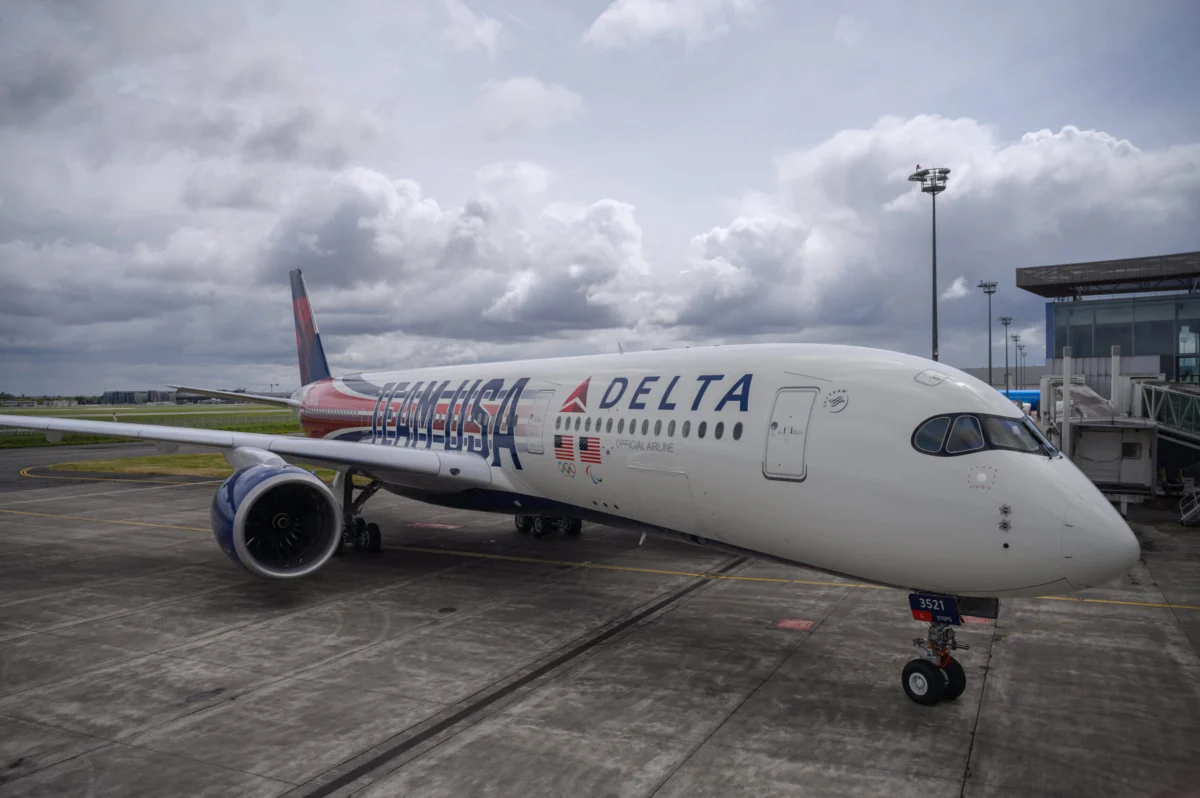
Delta Air Lines CEO Ed Bastian has indicated that the carrier is re-evaluating the launch of its highly anticipated direct flight between Atlanta and Riyadh, Saudi Arabia, following a recent escalation of attacks attributed to Iran-backed Houthi rebels in Yemen. The new route, which was poised to be the first nonstop service between the United States and the Saudi capital operated by a U.S. airline, is currently scheduled to commence on October 23. The deliberation comes in the wake of renewed Houthi aggression, including a deadly incident at Riyadh’s King Khalid International Airport, underscoring the volatile security landscape in the region.
Delta’s Strategic Reconsideration and Safety Protocols
Ed Bastian conveyed his disappointment regarding the recent developments, stating in an interview, "Obviously, we were disappointed to see the news this week. Safety is going to make the call." This statement underscores the paramount importance airlines place on passenger and crew safety, especially when operating in or near regions experiencing geopolitical instability. The airline is expected to inform its customers of a definitive decision in the near future. The planned service was initially slated to operate daily from October 23 to October 30, before transitioning to a three-times-a-week schedule, marking a significant expansion of Delta’s international network and its footprint in the Middle East.
This cautious approach by Delta is not isolated. German flag carrier Lufthansa has already announced a temporary suspension of its flights into Saudi Arabia, with services paused through at least October 16, as confirmed by a company spokesman. Such decisions highlight a broader industry trend where airlines adjust their operational strategies in response to evolving security assessments, often guided by national aviation authorities and their own internal risk analysis. The Federal Aviation Administration (FAA) in the United States, for instance, issues Notices to Airmen (NOTAMs) or Special Federal Aviation Regulations (SFARs) to advise U.S. carriers about potential risks in various global airspaces, though specific advisories regarding commercial flights directly into Riyadh for U.S. airlines had not been widely publicized prior to these recent incidents.
Escalation of Houthi Attacks and Regional Instability
The immediate catalyst for Delta’s reconsideration stems from intensified Houthi rebel attacks targeting Saudi Arabian infrastructure. The Saudi civil aviation authority reported that three individuals were killed during recent strikes at King Khalid International Airport in Riyadh. While details surrounding the precise nature of these attacks – whether missile, drone, or a combination – are often subject to ongoing investigation, the intent to disrupt and cause casualties is clear. These incidents are part of a broader pattern of cross-border assaults by the Houthis, who have frequently targeted airports, oil facilities, and other critical infrastructure within Saudi Arabia since the start of the Yemen civil war.
The conflict in Yemen, which began in late 2014, pits the Iran-backed Houthi movement against the internationally recognized Yemeni government, supported by a Saudi-led coalition. Saudi Arabia intervened in the conflict in March 2015, launching an air campaign aimed at restoring the legitimate government and curbing Houthi expansion. Since then, the Houthis have consistently launched missiles and drones into Saudi territory, often claiming responsibility for sophisticated attacks designed to inflict economic damage and sow fear. Previous notable incidents include the September 2019 drone attacks on Saudi Aramco’s Abqaiq and Khurais oil facilities, which temporarily halved Saudi oil output and sent shockwaves through global energy markets. While these attacks were primarily economic in nature, the recent targeting of a major international airport with casualties marks a direct threat to civilian aviation and human life, prompting immediate safety concerns for airlines.
Chronology of Recent Events and Broader Context
The planned Atlanta-Riyadh route was announced earlier this year, signaling Delta’s intent to capitalize on growing business and tourism ties between the U.S. and Saudi Arabia. This expansion aligns with Saudi Arabia’s ambitious Vision 2030, a comprehensive reform plan aimed at diversifying its economy away from oil, fostering new industries, and significantly boosting tourism. The kingdom has invested heavily in modernizing its airports and promoting itself as a global travel destination, making direct air links with major international hubs like Atlanta crucial.
The recent escalation of Houthi attacks, particularly those impacting civilian infrastructure, has cast a shadow over these development plans. While the exact date of the attacks resulting in three fatalities at King Khalid International Airport was not immediately specified in the initial reports, the news became prominent in the week leading up to Delta’s CEO comments. This rapid deterioration of the security situation has compelled airlines to react swiftly. Lufthansa’s decision to pause flights through mid-October provides a concrete example of how quickly carriers can adjust operations in response to perceived threats, often operating on short-term advisories and continuously monitoring intelligence.
The broader geopolitical context involves the ongoing rivalry between Saudi Arabia and Iran, with Yemen serving as a major proxy battleground. Iran denies directly arming the Houthis but publicly supports their cause. Western powers, including the U.S., have repeatedly condemned Houthi attacks on Saudi Arabia and called for a peaceful resolution to the Yemen conflict. The presence of sophisticated weaponry, including ballistic missiles and armed drones, in the Houthis’ arsenal raises concerns about the potential for wider regional destabilization and the implications for international shipping and air travel routes in the Middle East.
Implications for International Air Travel and Regional Stability
The potential delay or cancellation of Delta’s Atlanta-Riyadh flight carries several implications. For Delta, it represents a setback in its strategic expansion into the Middle Eastern market. The airline would incur costs associated with route planning, marketing, and slot allocations that might now need to be adjusted. More broadly, it sends a message about the inherent risks of operating in regions affected by armed conflict, even when the target is a major international airport far from direct combat zones.
For Saudi Arabia, the incidents pose a challenge to its efforts to project an image of stability and safety necessary to attract foreign investment and tourism. Recurring attacks on critical infrastructure, particularly airports, can deter both business travelers and tourists, impacting the kingdom’s Vision 2030 goals. The Saudi government and its civil aviation authorities are under pressure to demonstrate robust security measures and assure international partners of the safety of their airspace and ground facilities.
From a passenger perspective, a delay means disrupted travel plans for those who had booked the inaugural flights. While airlines typically offer rebooking or refunds in such circumstances, the inconvenience and uncertainty can be significant. Furthermore, it highlights the importance for travelers to monitor travel advisories and airline communications when planning trips to potentially volatile regions.
The wider implications extend to the global aviation industry, which has already faced unprecedented challenges from the COVID-19 pandemic. Geopolitical risks, particularly those involving acts of terrorism or conflict impacting civilian transportation, add another layer of complexity to operational planning and risk management. Airlines must continually assess intelligence, collaborate with governments and international aviation bodies, and be prepared to make difficult decisions that prioritize safety above commercial interests.
Airline Safety Protocols and Future Outlook
Aviation safety protocols in conflict zones are highly stringent. Airlines rely on intelligence from various sources, including government agencies (like the FAA, EASA), security firms, and their own internal risk assessment teams. These protocols often involve:
- Threat Assessment: Continuous monitoring of geopolitical developments, conflict intensity, and specific threats to aviation infrastructure.
- Risk Mitigation: Adjusting flight paths, imposing altitude restrictions, or, in severe cases, suspending operations to affected areas.
- Coordination with Authorities: Working closely with air traffic control, airport security, and government bodies in host countries.
- Crew Briefings: Providing comprehensive information to pilots and cabin crew about security situations.
The decision by Delta’s CEO, Ed Bastian, reflects these robust safety considerations. It’s a calculated move to prioritize the well-being of passengers and crew over the immediate commercial benefits of launching a new route. This approach is consistent with industry best practices, where safety is non-negotiable.
Looking ahead, the commencement of the Atlanta-Riyadh flight will largely depend on a de-escalation of hostilities and a sustained period of security stability in Saudi Arabia. The Saudi-led coalition and the Houthis have engaged in intermittent ceasefire talks, often mediated by international actors, but a lasting political solution to the Yemen conflict remains elusive. Until a more stable security environment is established, airlines will likely remain cautious about expanding or even maintaining services to areas perceived to be at high risk. The coming weeks will be critical as Delta continues its assessment, weighing geopolitical realities against its strategic business objectives, with safety as the ultimate arbiter.
