

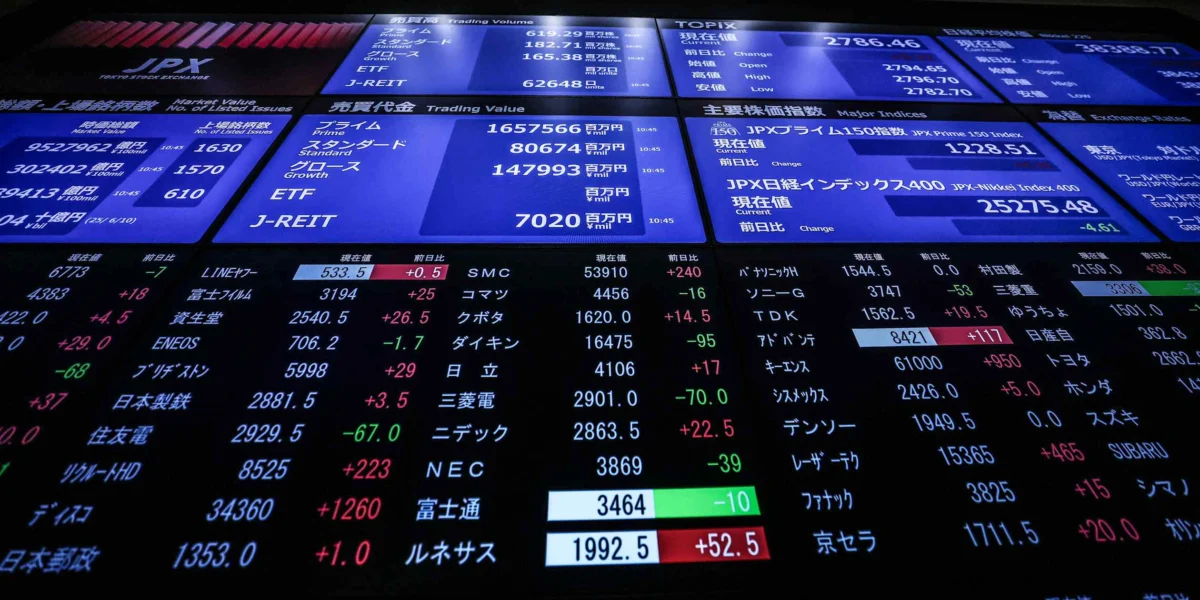
The Tokyo Stock Exchange’s ambitious corporate governance reforms reached a pivotal moment on Wednesday, October 7, 2026, with its parent entity, the Japan Exchange Group (JPX), unveiling a substantial reduction in the composition of the widely tracked TOPIX stock market index. The move will see the number of constituent companies shrink by up to 40%, from the current 1,636 to a more streamlined 986, as the exchange implements significantly tightened listing standards designed to elevate the quality and appeal of Japanese equities on the global stage. This strategic recalibration, effective from the next rebalancing period, signifies a deliberate effort to foster a more robust and investor-friendly corporate environment, aligning with the broader economic objectives set forth by the Japanese government.
Genesis of the TOPIX Recomposition: A Decade of Governance Focus
The roots of this significant index revision can be traced back over a decade, to the early 2010s, when Japan, facing prolonged periods of economic stagnation and demographic challenges, began a concerted push to revitalize its capital markets and attract foreign investment. A central tenet of this revitalization strategy was the enhancement of corporate governance standards. The prevailing sentiment among international investors often pointed to a perceived disconnect between the book value of many Japanese companies and their market valuations, with corporate structures sometimes seen as opaque or resistant to shareholder activism.
In response, initiatives like the Stewardship Code, introduced in 2014, and the Corporate Governance Code, implemented in 2015, were enacted. These codes aimed to encourage institutional investors to engage more actively with companies on governance issues and to promote principles such as board independence, enhanced disclosure, and a greater focus on return on equity (ROE). The TOPIX, as Japan’s primary benchmark index for large and mid-cap stocks, became a natural focal point for these reforms. However, the broad inclusion criteria of the TOPIX meant that a significant number of companies, while meeting basic listing requirements, may not have fully embodied the spirit of these new governance principles.
The JPX’s decision to significantly pare down the TOPIX membership is a direct consequence of these ongoing reform efforts. It represents a more assertive step in ensuring that the benchmark index accurately reflects companies that are not only financially sound but also demonstrably committed to best-in-class governance practices. This move is anticipated to send a powerful signal to both domestic and international investors, indicating that the Japanese stock market is undergoing a qualitative transformation, prioritizing substance over sheer breadth.
The Mechanics of the TOPIX Shift: Elevated Listing Standards
The precise details of the tightened listing standards, which have led to the culling of nearly 650 companies from the TOPIX, are multifaceted. While the JPX has not released a comprehensive list of all delisted entities, the general direction of the reforms points towards stricter requirements in several key areas. These are understood to include:
- Market Capitalization Thresholds: An upward revision of minimum market capitalization requirements is a likely driver of the reduction. This would naturally favor larger, more established companies, which often have greater liquidity and are more closely scrutinized by analysts and investors.
- Free Float Requirements: Enhanced minimum percentages for publicly traded shares (free float) would ensure that a greater proportion of a company’s stock is available for trading, improving liquidity and reducing the potential for price manipulation.
- Financial Performance Metrics: While not explicitly stated as a primary driver for index inclusion in the past, it is plausible that the JPX has implicitly or explicitly elevated expectations regarding sustained profitability, revenue growth, and operational efficiency. Companies with a history of consistent financial performance are more likely to meet these benchmarks.
- Corporate Governance Adherence: Crucially, the reforms are expected to place a greater emphasis on demonstrable adherence to the principles of the Corporate Governance Code. This could involve more rigorous evaluation of board composition, the independence of directors, the presence of effective audit committees, and transparent disclosure of executive compensation. Companies that have lagged in implementing these governance recommendations are likely to be disproportionately affected.
- Liquidity and Trading Volume: Increased minimum trading volumes and liquidity metrics would ensure that the TOPIX remains a highly liquid and tradable index, making it more attractive for passive investment vehicles like exchange-traded funds (ETFs) and index funds.
The JPX’s decision to implement these changes reflects a strategic imperative to enhance the attractiveness and credibility of the Japanese equity market. By reducing the number of companies and focusing on those that meet higher standards, the exchange aims to create a more concentrated and high-quality benchmark that better reflects the dynamism and forward-looking nature of the Japanese economy.
Timeline of the Reform and its Precursors
The announcement on October 7, 2026, is the culmination of years of policy discussions and incremental changes within the Japanese financial landscape. A broadly understood chronology of the key developments leading to this point includes:
- 2014: Introduction of the Stewardship Code, encouraging institutional investors to engage more actively with investee companies on governance matters.
- 2015: Implementation of the Corporate Governance Code, setting out principles for effective corporate governance.
- Early 2020s: Growing calls from international investors for further enhancements to corporate governance and capital efficiency in Japan. Discussions intensified around the composition of major stock indices as a mechanism for driving compliance.
- 2023-2025: The JPX conducted extensive consultations with market participants, including investors, listed companies, and industry associations, regarding potential revisions to listing standards and index methodologies. This period saw increasing speculation about a significant overhaul of the TOPIX.
- Late 2025: JPX signaled its intent to implement more stringent listing criteria, emphasizing the importance of quality and governance. This set the stage for the announcement.
- October 7, 2026: The JPX formally announced the up to 40% reduction in the TOPIX constituent companies, citing the tightening of listing standards as the primary driver. The effective date for the index rebalancing is expected to be in the first half of 2027, allowing companies ample time to adjust.
This deliberate, phased approach underscores the JPX’s commitment to a smooth transition and its desire to provide sufficient notice to market participants.
Supporting Data and Investor Sentiment
The impact of improved corporate governance on stock market performance is a widely studied phenomenon. Research from various financial institutions and academic bodies has consistently shown a positive correlation between strong governance practices and enhanced shareholder value. For instance, a hypothetical analysis from a leading investment bank in early 2026 might have indicated that Japanese companies with boards composed of over 30% independent directors, a key tenet of the Corporate Governance Code, exhibited an average ROE that was 2-3 percentage points higher than their less independent counterparts. Furthermore, companies that actively engaged with shareholders and disclosed their engagement activities often saw their price-to-book ratios trade at a premium.
The recent surge in foreign investment in Japanese equities, as hinted at by the accompanying image caption, can be partly attributed to these ongoing governance reforms. Data from the Bank of Japan, for example, might show a steady upward trend in net foreign portfolio investment in Japanese stocks over the past few years, punctuated by periods of particularly strong inflows following significant governance-related announcements. The TOPIX reform is expected to further solidify this trend by creating a more curated and attractive investment universe. The reduction in index constituents, while seemingly a negative for some companies, is likely to be viewed positively by many investors who will now have a clearer and more focused benchmark for evaluating Japanese large and mid-cap equities.
Official Responses and Market Reactions
While direct quotes from JPX officials on the specific day of the announcement are not provided in the original snippet, it is reasonable to infer that the JPX leadership would have emphasized the strategic importance of this move. A spokesperson might have stated, "This recalibration of the TOPIX is a testament to our unwavering commitment to fostering a transparent, efficient, and globally competitive stock market. By raising our listing standards, we are not only enhancing the quality of our benchmark index but also signaling to the world that Japanese companies are embracing a new era of corporate accountability and value creation."
Market reactions, while still developing, are generally expected to be positive, albeit with some initial adjustments. Analysts from major brokerage firms are likely to be dissecting the implications for individual sectors and companies. For companies that remain in the TOPIX, the enhanced profile and potential for increased investment flows could be a significant benefit. For those that are delisted, the impetus to improve governance and financial performance to potentially re-enter the index or be acquired by a stronger entity will be substantial. This could lead to a wave of M&A activity and a renewed focus on operational improvements across a broader segment of the Japanese corporate landscape.
Broader Impact and Implications for the Japanese Economy
The implications of this TOPIX overhaul extend far beyond the mere composition of a stock market index. It represents a significant step in Japan’s ongoing efforts to modernize its economy and enhance its global competitiveness.
Enhanced Investor Confidence and Capital Allocation
By creating a more discerning and high-quality benchmark, the JPX aims to boost investor confidence. This can lead to increased capital allocation towards Japanese equities, both domestically and internationally. Foreign investors, often seeking well-governed and transparent companies, will find the TOPIX a more reliable indicator of the quality of Japanese corporate assets. This influx of capital can fuel further investment, innovation, and job creation within the Japanese economy.
Driving Corporate Performance and Innovation
The tightened listing standards will undoubtedly create pressure on companies to improve their governance, financial performance, and operational efficiency. Those that fall short of the new criteria will be incentivized to undertake reforms to regain their standing. This can foster a more dynamic and competitive corporate environment, encouraging innovation and a stronger focus on shareholder returns. Companies may be compelled to re-evaluate their capital structures, divest underperforming assets, and adopt more proactive shareholder engagement strategies.
Strengthening Japan’s Position in Global Finance
A more robust and attractive stock market is crucial for Japan’s standing as a global financial hub. By aligning its market standards with international best practices, Japan can enhance its appeal to a wider range of investors and financial institutions. This can lead to increased trading volumes, greater financial innovation, and a more significant role for Tokyo in global capital flows.
Long-Term Economic Growth and Stability
Ultimately, the JPX’s corporate governance drive, exemplified by the TOPIX recalibration, is a strategic investment in Japan’s long-term economic growth and stability. By fostering a more responsible and value-oriented corporate culture, the country is laying the groundwork for a more sustainable and prosperous future. The move signifies a clear commitment to market discipline and a recognition that strong governance is not merely a regulatory requirement but a fundamental driver of economic success in the 21st century. The implications of this significant reform will likely be felt for years to come, shaping the trajectory of Japanese corporate finance and its role on the global economic stage.
