

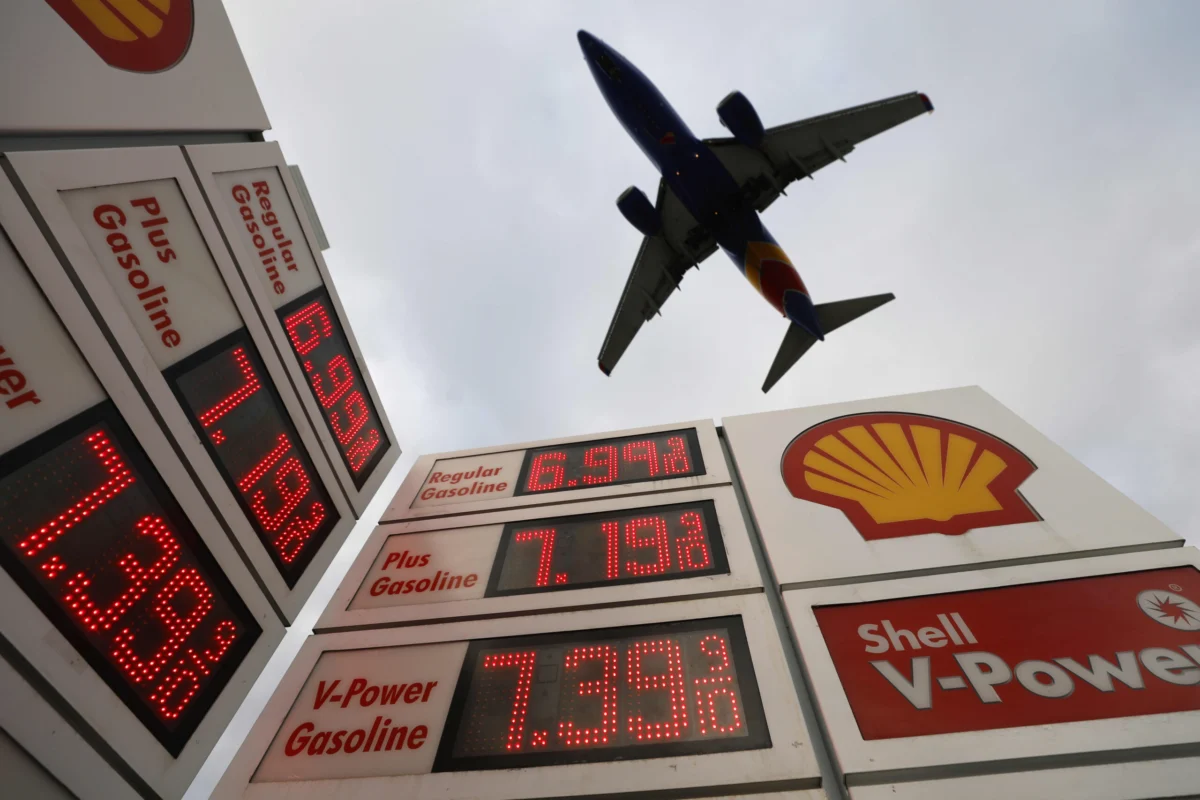
The intersection of escalating geopolitical tensions and remarkably resilient consumer demand for travel is creating an unprecedented environment for the global aviation industry, threatening to sustain elevated airfares throughout the year and beyond, even as airlines grapple with increasingly narrow profit margins. The ripple effects of a significant geopolitical conflict, which commenced in late February, have sent fuel prices — a critical operational expense for carriers — to multi-year or even record highs, directly impacting the cost of flying for millions of passengers worldwide.
The Geopolitical Undercurrent: Iran War and Oil Market Disruption
The catalyst for much of the current market volatility stems from the war involving Iran, which erupted in late February 2026. This conflict swiftly escalated, leading to significant disruptions in the Strait of Hormuz, a critical maritime chokepoint through which approximately one-fifth of the world’s total oil supply, and a substantial portion of its liquefied natural gas, passes daily. The instability in this vital waterway has profoundly impacted global energy markets, propelling the cost of various refined petroleum products, including diesel, gasoline, and crucially, jet fuel, to levels not seen in years.
Unlike previous oil price spikes often driven by crude oil scarcity, the current situation has seen refined product prices, particularly jet fuel, surge even more dramatically than crude oil itself. This divergence is largely attributable to the direct threats to shipping in the Strait of Hormuz, which disrupted the supply chain for refined products and created localized supply scares. Refineries, already operating near capacity globally, faced challenges in sourcing crude and distributing refined fuels, exacerbating the price increases for distillates. The ongoing "on-again-off-again" truce talks between the United States and Iran since the spring have done little to stabilize prices, instead introducing further layers of uncertainty and keeping fuel markets in a constant state of flux.
For airlines, jet fuel represents their second-largest expense, trailing only labor costs. The sustained period of elevated and volatile fuel prices directly erodes profitability, even for carriers that have successfully implemented significant fare increases. Executives across the industry are vocal about the lack of immediate relief. Vanessa Hudson, CEO of Qantas Airways, articulated this sentiment in a recent CNBC interview, stating, "You can’t run the business on the hope that the Strait of Hormuz is going to open at a certain time." Her comments underscore the need for airlines to plan and operate under the assumption of continued high fuel costs, rather than banking on a rapid de-escalation of geopolitical tensions. This strategic realism is particularly pertinent for Qantas, which operates some of the world’s longest flights and is actively planning even more ambitious ultra-long-haul routes between London and Sydney, and New York and Sydney, for 2027 and 2028, where fuel efficiency and cost management are paramount.
Fuel Costs: A Deep Dive into Airline Economics
The magnitude of the fuel cost crisis cannot be overstated. A significant jet fuel hike observed over the summer further compounded the challenges for airlines. While the precise figures vary by region and contract, analysts report jet fuel prices consistently ranging in the $4 to $4.50 per gallon mark, a substantial increase that translates into billions of dollars in additional operating expenses across the industry annually. This financial strain is forcing airlines to re-evaluate their operational strategies, from route planning to fleet management.
Historically, airlines have employed hedging strategies to mitigate fuel price volatility, locking in prices for a portion of their anticipated fuel consumption. However, in an environment of extreme and rapid price surges driven by unforeseen geopolitical events, hedging can offer only partial protection, and in some cases, can even backfire if prices unexpectedly fall. The current scenario highlights the inherent vulnerability of the aviation sector to external shocks, particularly those affecting the global energy supply chain. The difference between the price of crude oil and the price of jet fuel, known as the "crack spread" or refining margin, has also widened significantly. This indicates that refiners are commanding higher premiums for processing crude into distillates like jet fuel, reflecting the increased demand for these products and the supply chain bottlenecks.
Resilient Demand Meets Rising Prices: The Traveler’s Dilemma
Despite the relentless climb in airfares, travel demand has remained surprisingly robust, baffling some economists and providing airlines with the leverage to pass on a significant portion of their increased costs to consumers. This resilience is often attributed to a combination of factors: pent-up "revenge travel" demand post-pandemic, a shift in consumer spending priorities from goods to experiences, and in some segments, strong household balance sheets.
Data from U.S. airports, however, indicates a slight moderation in overall volume. Security screenings at U.S. airports were down 1% through September 20, 2026, compared to the same period in 2025, according to a Bernstein note issued on September 23. While this suggests slightly fewer individuals are flying, the aggregate demand remains strong enough to support higher pricing. This implies that while some discretionary travel might be curtailed, essential and high-value trips are still being undertaken, often at premium prices.
The impact on consumers is tangible and significant. The latest U.S. inflation report revealed that airfare surged by an astonishing 23.4% in August 2026 compared to the previous year. This inflationary pressure is particularly acute for holiday travel, a period traditionally marked by peak demand. Fare-tracking platform Hopper reported on September 24 that domestic, round-trip tickets for Thanksgiving were averaging $402, a substantial 31% increase from the previous year. Similarly, U.S. Christmas fares climbed 23% to an average of $452 for a round-trip ticket.
Hayley Berg, an economist at Hopper, highlighted the necessity of these holiday trips for many families, explaining that while travelers may not be pleased with the fares, they are often compelled to book them regardless. This sentiment is reflected in booking patterns, with many customers locking in their Thanksgiving and Christmas flights earlier than usual to mitigate further price increases. Berg also noted that this intense focus on essential holiday travel might create opportunities for deals during "filler trips" or "fall shoulder-season trips," as consumers prioritize end-of-year travel budgets.
Airline Strategies: Navigating Profitability Headwinds
In response to the dual pressures of soaring fuel costs and resilient demand, airlines have implemented a multi-pronged strategy. The most direct approach has been to pass on higher fuel costs through increased base fares, the introduction of fuel surcharges, or by raising ancillary fees, such as checked baggage charges. American Airlines, for example, adjusted its baggage fees earlier in the year, a move quickly followed by other major carriers.
Beyond pricing adjustments, airlines are strategically reconfiguring their cabins to capitalize on the sustained demand for premium travel. Carriers like American Airlines and United Airlines have been aggressively adding more luxurious and spacious seats – including first-class, business-class, and premium economy options – often at the expense of standard economy seats. Robert Isom, CEO of American Airlines, noted at a Morgan Stanley investor conference last month, "I’ve never seen in my career, outside of recovery after maybe the pandemic or 9/11… seen a revenue environment in terms of year-over-year improvement." This strategy aims to boost revenue per available seat mile (RASM) by attracting high-yield passengers, thereby offsetting some of the increased operational costs.
Capacity management is another critical lever. Qantas CEO Vanessa Hudson emphasized the importance of "making sure that we’ve got our capacity settings right." This involves carefully calibrating flight schedules to match demand while avoiding oversupply that could dilute pricing power. Airlines have been observed trimming unprofitable or underperforming routes, a rationalization process that ensures every flight contributes optimally to the bottom line.
Wall Street’s Verdict: Revenue Surges, Profits Diminish
Despite the double-digit revenue growth forecasts for the third quarter across many carriers, Wall Street analysts have significantly cut their profit estimates for U.S. airlines. This paradoxical situation underscores the immense pressure exerted by fuel costs. While airlines are generating more revenue per passenger due to higher fares, the exponential increase in fuel expenses is consuming a disproportionate share of that additional income, leaving less for the bottom line.
American Airlines, for instance, in July projected an adjusted loss of between 10 and 70 cents per share for the third quarter and subsequently lowered its profit outlook for the entirety of 2026. This downward revision by one of the largest U.S. carriers sent a clear signal to the market about the challenging operating environment.
The upcoming airline earnings season, kicking off on Friday with Delta Air Lines, will provide a fresh perspective on the industry’s health. Delta, often considered the most profitable U.S. carrier, benefits uniquely from its owned refinery, Monroe Energy. This integrated operation provides a degree of insulation from external fuel price volatility, potentially offering a more stable outlook than its peers. Investors and analysts will be keenly focused not just on third-quarter results but, more importantly, on the carriers’ outlooks for the fourth quarter and beyond.
Savanthi Syth, an airline analyst at Raymond James, anticipates that carriers are likely to lower their earnings outlooks for the fourth quarter. She predicts that airlines may not implement as many broad-based fare increases going forward. However, if jet fuel prices remain stubbornly in the $4 to $4.50 per gallon range, airlines are likely to resort to more drastic measures, such as cutting more flights. Such "rationalization in capacity," as Syth termed it, would inevitably lead to fewer available seats, further driving up fares for consumers due to reduced supply.
Capacity Management and Future Outlook
The collapse of budget carrier Spirit Airlines in May 2026 served as a stark reminder of the financial fragility within the industry, particularly for carriers with less robust balance sheets. Spirit’s exit removed an estimated 1% to 2% of total capacity from the U.S. market, according to Barclays, which inadvertently benefited both low-cost and full-service airlines by enhancing their pricing power in a less competitive landscape.
Looking ahead, investors will be closely monitoring airlines’ capacity growth plans. Should oil prices experience a significant and sustained decline, the temptation for airlines to expand capacity aggressively could resurface. However, such a move could quickly reverse the current trend of high fares by increasing supply and stimulating price competition. Barclays airline analyst Brandon Oglenski, in a September 28 note, highlighted elevated domestic capacity growth at American and United (projected at +10% and +9% in current schedules, respectively) as a key metric for investors to watch. Oglenski anticipates that, given the persistent high energy prices and refining margins for jet fuel, most management teams will likely curtail their capacity growth ambitions, potentially even providing early indications for their 2027 planning assumptions.
The current environment represents a delicate balancing act for airline executives. They must navigate geopolitical instability, unprecedented fuel costs, and the complex dynamics of consumer demand, all while striving to maintain investor confidence and ensure long-term profitability. The coming months will be crucial in determining whether the industry can successfully adapt to these profound challenges without alienating a travel-hungry public. The broader economic implications, including sustained inflationary pressures and potential shifts in global trade routes, remain significant concerns for policymakers and consumers alike.
