

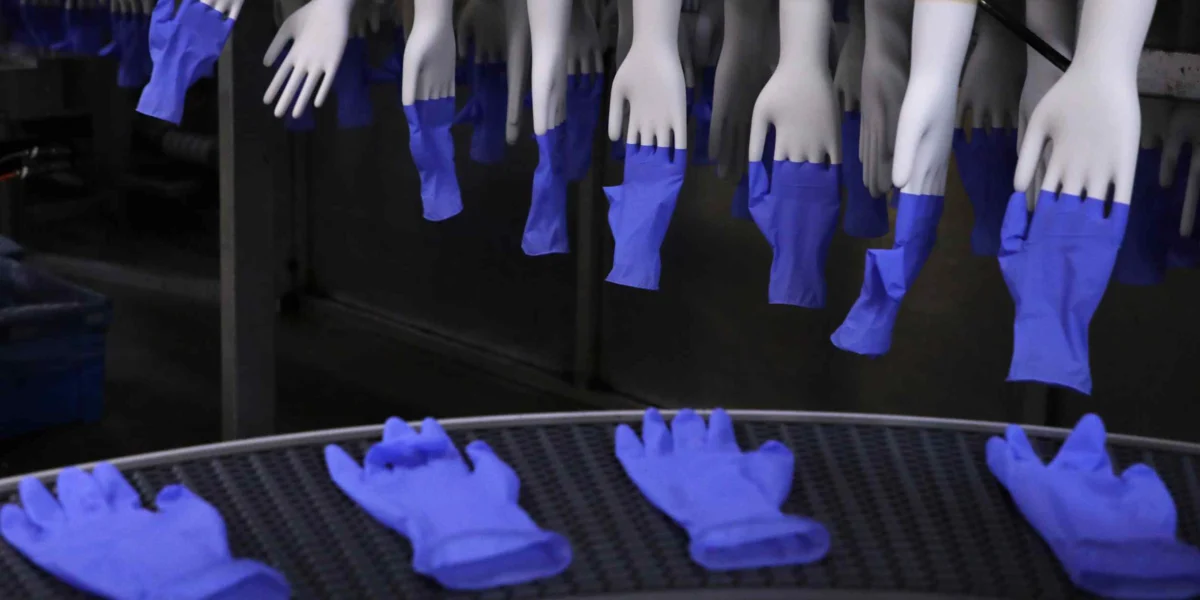
KUALA LUMPUR – Malaysia’s Top Glove, the world’s largest manufacturer of rubber gloves, announced on Tuesday a significant expansion of its production capacity, signaling a strategic move to meet what it anticipates will be sustained and escalating global demand for its products. The company reported a substantial increase in its annual net profit, a performance bolstered by its ability to navigate rising material costs by effectively passing them onto consumers. This strategic foresight and robust financial performance underpin Top Glove’s ambitious plans to further solidify its market dominance in the coming years.
A Chronicle of Growth and Anticipation
The announcement comes at a time when the global healthcare landscape, coupled with an ever-increasing awareness of hygiene standards across various industries, has placed rubber gloves at the forefront of essential protective equipment. Top Glove’s decision to ramp up production is not an isolated event but rather a calculated response to long-term market trends. The company’s management has projected that global demand for rubber gloves is poised to exceed an astonishing 400 billion units by 2026, a figure that underscores the sustained relevance and critical role of these protective barriers.
The roots of this surge in demand can be traced back to several key factors. The COVID-19 pandemic, which began in late 2019 and continued to impact global health and economies throughout subsequent years, undeniably acted as a major catalyst. The unprecedented need for personal protective equipment (PPE), including gloves, in healthcare settings, laboratories, and even for general public use, created a sharp and immediate spike in demand. This initial surge exposed the vulnerabilities in global supply chains and highlighted the critical importance of having robust manufacturing capabilities.
However, Top Glove’s forward-looking strategy recognizes that the demand for gloves is not merely a temporary consequence of a global health crisis. The company’s own internal analyses and market research suggest a more profound and enduring shift in consumer and industrial behavior. Post-pandemic, there has been a heightened and ingrained focus on hygiene and infection control. This translates into increased usage of gloves in sectors beyond traditional healthcare, including food processing, automotive maintenance, and various manufacturing environments where sterile or protective handling is paramount. Furthermore, growing populations in emerging economies are also contributing to a broader base of consumers and industries requiring these essential items.
Financial Performance: A Testament to Resilience
Top Glove’s recent financial results provide a compelling backdrop to its expansion plans. The company’s announcement of a near tripling of its annual net profit is a clear indicator of its operational efficiency and market strength. This impressive financial turnaround is attributed, in part, to the company’s adeptness in managing the volatile costs of raw materials, primarily natural rubber and nitrile. The ability to absorb or pass on these escalating costs to customers without significantly impacting sales volume demonstrates a strong pricing power and a resilient customer base that values the quality and reliability of Top Glove’s products.
This financial buoyancy is crucial for funding the capital-intensive nature of expanding glove manufacturing facilities. Building new plants, acquiring advanced machinery, and optimizing existing operations require substantial investment. Top Glove’s healthy profit margins provide the necessary financial wherewithal to undertake these ambitious projects without undue reliance on external financing, which could otherwise strain its financial health.
Strategic Expansion: Building for the Future
The planned increase in production capacity is expected to be implemented through a multi-pronged approach. This likely involves both the expansion of existing manufacturing sites and the potential establishment of new facilities. Top Glove, with its extensive network of factories, particularly in Malaysia, is well-positioned to leverage its established infrastructure and expertise. The company’s operational footprint is a significant competitive advantage, allowing for economies of scale and efficient distribution channels.
The specifics of the expansion, such as the exact quantum of production increase and the timeline for its realization, are expected to be detailed in subsequent investor briefings and official announcements. However, the underlying strategy is clear: to not only meet current demand but to proactively position Top Glove to capture a larger share of the projected growth in the global glove market. This involves not only increasing the sheer volume of gloves produced but also potentially diversifying the types of gloves manufactured to cater to specialized needs.
Industry Context and Competitive Landscape
The rubber glove industry is characterized by intense competition, with several large players vying for market share. Top Glove has consistently held the position of the world’s largest manufacturer by volume. This dominance is built on decades of experience, continuous investment in research and development, and a relentless focus on cost optimization. The company’s ability to produce gloves at competitive prices without compromising on quality has been a cornerstone of its success.
The recent surge in demand has, however, presented both opportunities and challenges for the entire industry. While profitability has increased for many manufacturers, there have also been significant strains on supply chains, leading to longer lead times and price fluctuations. Top Glove’s proactive approach to increasing capacity suggests a strategy to mitigate these supply chain bottlenecks and to provide a more stable and reliable supply to its global customer base.
The company’s expansion could also have ripple effects on the competitive landscape. By significantly increasing its output, Top Glove could exert further pressure on smaller competitors, potentially leading to market consolidation. Furthermore, its investment in capacity could signal a long-term commitment to the industry, deterring new entrants who might find it challenging to compete with an already dominant player that is actively expanding its scale.
Broader Economic and Social Implications
The expansion plans of a major manufacturer like Top Glove have broader economic implications, particularly for Malaysia, where a significant portion of its operations are based. Increased production translates into more employment opportunities, both directly within its factories and indirectly through its supply chain and ancillary industries. This can contribute to economic growth, job creation, and a boost to the country’s export revenues.
On a global scale, Top Glove’s increased production capacity can contribute to greater accessibility of essential protective equipment. This is particularly relevant for developing nations, where the cost and availability of such items can be critical for public health initiatives. By ensuring a more robust global supply, Top Glove plays a vital role in supporting healthcare systems and promoting hygiene standards worldwide.
However, the increased production of rubber gloves also raises questions about environmental sustainability. The manufacturing process, particularly for synthetic rubber gloves (nitrile), can be energy-intensive and generate waste. As Top Glove expands, there will be an increasing expectation for the company to implement sustainable manufacturing practices, including waste reduction, energy efficiency, and the development of more environmentally friendly materials or recycling programs. The company’s public statements and future actions regarding its environmental footprint will be closely watched by stakeholders, including investors, consumers, and regulatory bodies.
Looking Ahead: A Future Shaped by Demand
Top Glove’s announcement of increased production capacity is a clear indication of its strategic vision and confidence in the long-term trajectory of the rubber glove market. The company’s ability to translate robust financial performance into tangible expansion plans underscores its leadership in the industry. As global demand continues to rise, driven by evolving hygiene standards and an increased awareness of health and safety, Top Glove is positioning itself to be a primary beneficiary and enabler of this critical market.
The coming years will likely see Top Glove not only increasing its output but also potentially innovating in product development and manufacturing processes. The company’s commitment to meeting the projected 400 billion-plus global demand by 2026 suggests a sustained period of growth and investment. This proactive approach is characteristic of a market leader determined to shape the future of its industry, ensuring both its own continued success and the availability of essential protective equipment on a global scale. The challenges of raw material costs and environmental impact will undoubtedly remain, but Top Glove’s current trajectory suggests a company prepared to tackle these complexities head-on as it expands its influence and production capabilities in the vital rubber glove sector.
