

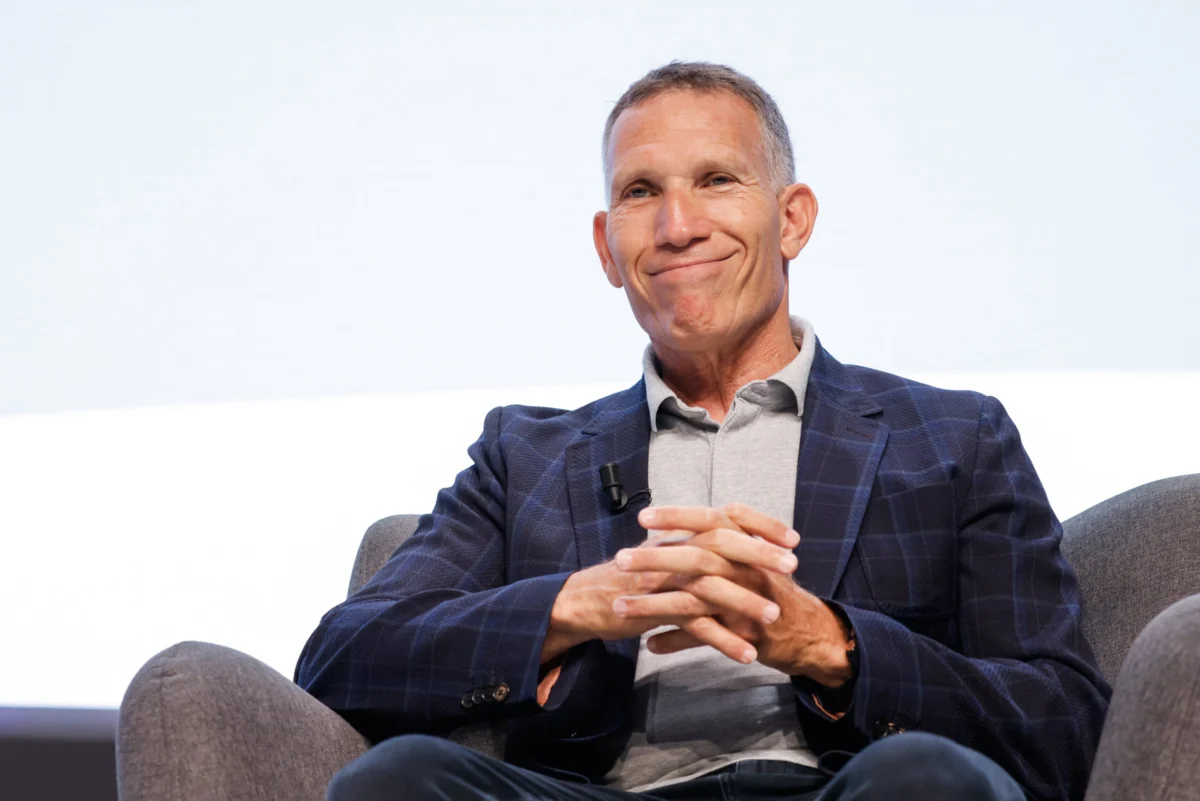
CANNES, France – In a monumental reshaping of the global entertainment landscape, Ynon Kreiz, the outgoing Chairman and CEO of Mattel, has been appointed co-CEO of the newly formed media conglomerate, Skydance. This strategic move, announced just as the colossal $110 billion enterprise value merger of Paramount Global, Skydance Media, and Warner Bros. Discovery (WBD) officially closes on Tuesday, June 25, 2024, positions Kreiz alongside David Ellison, the driving force behind Skydance Media, at the helm of an unprecedented media empire. The appointment, confirmed by Paramount Skydance on Monday, June 24, sees Kreiz assume his co-CEO responsibilities immediately upon the merger’s finalization.
The Birth of a Media Colossus
The unified entity, to be simply named Skydance, represents an ambitious consolidation of some of Hollywood’s most venerable and diverse assets. Under one banner, it will bring together the iconic film studios of Paramount Pictures and Warner Bros., the venerable CBS broadcast network, and a sprawling portfolio of pay-TV channels including news powerhouse CNN, TNT, MTV, Comedy Central, Nickelodeon, and BET. Crucially, the merger also combines the significant streaming platforms Paramount+ and HBO Max, aiming to create a dominant player in the fiercely competitive direct-to-consumer market. This new structure aims to leverage a vast library of intellectual property, a robust content pipeline, and a global distribution network to compete with tech giants and established media behemoths alike.
For David Ellison, the scion of billionaire Larry Ellison and CEO of Skydance Media, this merger culminates a two-year aggressive pursuit to construct a formidable media empire. His journey from leading a film production company with a respectable but limited portfolio—primarily known for the "Mission: Impossible" franchise and "Top Gun: Maverick"—to overseeing an integrated media giant has been swift and decisive. Ellison’s audacious strategy, however, has often been met with a critical governance question from industry observers: Can the tech-savvy executive, despite his financial prowess, effectively lead and integrate such complex legacy media assets? The appointment of Ynon Kreiz, a seasoned media veteran renowned for his operational acumen and turnaround capabilities, directly addresses this pivotal concern.
Ynon Kreiz: The Turnaround Architect Takes the Helm
Ynon Kreiz brings over three decades of diverse experience across the media and entertainment sectors to his new role. His most recent and perhaps most visible achievement was his eight-year tenure as CEO of Mattel, where he is widely credited with orchestrating a significant turnaround for the struggling toy company. Kreiz took the reins at Mattel in 2018, inheriting a company in distress, marked by four CEOs in as many years, declining revenues, and an inability of key brands like Fisher-Price, Barbie, and American Girl to resonate with evolving consumer tastes, further exacerbated by the bankruptcy of Toys R Us.
Under Kreiz’s leadership, Mattel underwent a profound restructuring. He implemented aggressive cost-cutting measures, streamlining operations, rationalizing product lines, and reducing the overall workforce by 2,200 employees. His focus on creating free cash flow and deleveraging the company’s balance sheet was pivotal in stabilizing Mattel’s finances. Analysts such as Gerrick Johnson of Seaport Research Partners lauded Kreiz for these "structural improvements," noting his success in "cutting like $1 billion worth of cost right out of the gate, becoming more flexible, quicker to market."
Beyond financial restructuring, Kreiz prioritized the strategic monetization of Mattel’s vast intellectual property. A key initiative was the launch of an in-house film division in 2018, aimed at leveraging Mattel’s brands for the big screen to drive toy sales. This strategy bore spectacular fruit with the release of the "Barbie" movie in 2023. Directed by Greta Gerwig and starring Margot Robbie and Ryan Gosling, the film became a global cultural phenomenon, generating over $1.4 billion at the box office and revitalizing the Barbie brand. While Mattel itself received a reported $150 million revenue boost in fiscal 2023 from the film, the movie’s broader impact on brand perception and cultural relevance was immeasurable.
Prior to Mattel, Kreiz’s career was deeply rooted in entertainment. He served as chief executive and chairman of Maker Studios, a multi-channel network that was acquired by The Walt Disney Company in 2014. Before that, he was the chairman and CEO of Endemol Group, one of the world’s largest independent television production companies, known for hit formats like "Big Brother" and "Deal or No Deal." Earlier still, Kreiz co-founded Fox Kids Group Europe, a children’s entertainment company that was also acquired by Disney in 2002. This extensive background positions him as a rare executive with experience spanning toys, digital content, television production, and children’s media – a breadth of expertise invaluable for integrating the diverse assets of the new Skydance.
A Strategic Partnership at the Helm: Roles Defined
The co-CEO structure delineates clear responsibilities for Ellison and Kreiz. David Ellison will concentrate on the company’s long-term strategy, creative vision, technological innovation, and capital allocation. This aligns with his history as a producer and his strategic ambition to build a future-proof media entity. Ynon Kreiz, on the other hand, will be responsible for the company’s day-to-day management and, crucially, the complex integration of the combined businesses. This division of labor reflects an acknowledgment of the monumental operational challenge ahead and the need for a seasoned executive to navigate it. As Matthew Dolgin, senior equity analyst at Morningstar, noted, while Kreiz’s title is co-CEO, his role effectively functions as a chief operating officer, filling a critical void in Ellison’s ambitious plans.
Wall Street’s Mixed Reactions and Forward Outlook
The appointment of Kreiz has elicited a range of reactions from Wall Street analysts, largely positive regarding his operational experience but with some caveats about the scale of the task and the ending phase of his Mattel tenure.
Matthew Condon, an analyst at Citizens Bank, expressed a positive view, stating, "We view the appointment of Ynon Kreiz positively, as his operating experience and brand/IP focus uniquely position him to help lead the integration of Paramount Skydance and WBD and build the combined business into a best-in-class content and IP platform." Eric Handler, managing director and senior media and entertainment analyst at Roth Capital Partners, echoed this sentiment, calling it an "excellent choice for Paramount."
However, not all analyses were without caution. While Dolgin of Morningstar acknowledged Kreiz as an "experienced hand who fills a void," he also questioned if Kreiz was "the best conceivable choice to handle this task," hinting at the immense complexities of this specific merger. Some analysts also pointed to the later stages of Kreiz’s Mattel leadership, where despite the "Barbie" success, growth in toy innovation and sales reportedly stagnated. Gerrick Johnson of Seaport Research Partners observed that "Post-Covid, earnings have been very stagnant… Innovation has stalled, and it just seems like a classic, you know, taking the eye off the ball." Jaime Katz, senior analyst at Morningstar, noted that Mattel’s stock "done a round trip under Kreiz’s tenure," indicating that while shares initially doubled, they ultimately retreated to near their starting point, leading Katz to conclude that "Kreiz’s strategy to establish Mattel as an IP-driven, high-performing toy company has largely fallen flat" by the end of his term.
These nuanced perspectives underscore the dual nature of Kreiz’s legacy: a brilliant turnaround artist in the early phases, but one whose long-term strategy at Mattel eventually faced headwinds. The challenge for Skydance will be to harness his integration expertise while mitigating any potential downsides observed in his past roles.
The Herculean Task Ahead: Integration, Synergies, and Debt
The integration of Paramount, Skydance, and Warner Bros. Discovery into the new Skydance entity is projected to be a multi-year undertaking, with Needham analyst Laura Martin estimating it could take between two and three years. The combined company faces an ambitious target of realizing $6 billion in cost savings within three years of closing, a significant portion of which Paramount Skydance executives indicate will come from non-labor costs. Simultaneously, the new entity will shoulder an estimated $79 billion in debt, a substantial burden that will dictate future financial flexibility and investment strategies.
One of the most anticipated moves is the consolidation of streaming services. Ellison has publicly stated his intention to merge Paramount+ and HBO Max into a single, unified platform. This will undoubtedly lead to a streamlining of infrastructure, technology, and potentially a reduction in associated workforce. The potential for overlap in various departments, from marketing and content acquisition to technology and back-office functions, presents both opportunities for savings and significant integration challenges.
In the film division, the new Skydance will house three major studios: Warner Bros., Paramount, and its existing DC studio. This consolidation comes with an ambitious production mandate. To settle a lawsuit from a group of state attorneys general seeking to block the deal on antitrust grounds, Paramount Skydance agreed to release at least 30 films per year into theaters in 2027 and 2028, escalating to at least 32 films annually from 2029 through 2031. Meeting these quotas while simultaneously implementing cost-cutting measures across the studios will require masterful resource allocation and strategic planning.
Labor considerations also loom large. While Skydance has committed to prohibiting writer layoffs on the CBS broadcast team for at least five years, a report from the Department of Economic Opportunity in Los Angeles County suggests that approximately 4,500 film and TV jobs in the county are at risk over a three-year period due to combined operations. Managing these workforce transitions while maintaining morale and creative output will be a critical test for the new leadership.
The Road to Skydance: A Chronology of Ambition
David Ellison’s journey to creating this media behemoth has been a whirlwind of aggressive deal-making:
- Early 2024: Ellison, then CEO of Skydance, primarily known for a focused portfolio of hit films like "Mission: Impossible" and "Top Gun: Maverick," embarks on a bold expansion strategy.
- August 2025: Skydance successfully closes an acquisition of Paramount Global, a deal valued at approximately $8 billion, bringing the storied studio and its associated assets under Ellison’s control.
- September 2025: Barely a month after the Paramount acquisition, Ellison launches his campaign for Warner Bros. Discovery, signaling his intent to further consolidate the media landscape.
- February 2026: A back-and-forth bidding war ensues for WBD, involving multiple parties and proposals.
- April 2026: Skydance secures the definitive agreement to merge with Warner Bros. Discovery, a deal with an enterprise value of roughly $110 billion, creating the second-largest media merger in history after AOL-Time Warner. This deal combines two of Hollywood’s biggest media companies.
- September 2026: Paramount reaches a settlement over the Warner Bros. merger, resolving antitrust concerns with state attorneys general. As part of this, Skydance makes specific commitments regarding theatrical film releases and labor practices.
- June 24, 2024: Ynon Kreiz’s appointment as co-CEO is announced, effective upon the merger’s closing.
- June 25, 2024: The merger officially closes, formally establishing the new Skydance entity with Ellison and Kreiz at its helm.
This rapid-fire sequence of acquisitions and negotiations underscores Ellison’s relentless drive and strategic vision, culminating in the creation of a company poised to redefine media and entertainment.
Broader Impact and Implications for the Industry
The formation of Skydance reflects a broader trend within the legacy media industry: the urgent need for scale and diversification to compete in an era dominated by streaming, direct-to-consumer models, and tech-driven content distribution. Companies are grappling with declining linear TV revenues, escalating content costs, and intense competition from global players like Netflix, Amazon, Apple, and Disney. Consolidation is seen as a crucial strategy to achieve the necessary financial muscle, intellectual property breadth, and technological infrastructure to survive and thrive.
The new Skydance, with its combined library of iconic franchises, vast content creation capabilities, and integrated distribution channels, aims to be a formidable force. However, its success will depend not only on achieving its ambitious cost synergy targets but also on fostering a cohesive corporate culture, innovating effectively across its diverse segments, and navigating the evolving consumer landscape. The leadership dynamic between David Ellison’s long-term vision and Ynon Kreiz’s operational prowess will be under intense scrutiny as they embark on this unprecedented integration journey. "He’s got a big task ahead of him," Handler concluded, "You know, there’s a huge amount of debt, a massive integration situation that he’s facing. But I think he’ll do a great job with it." The entertainment world watches keenly as this new chapter unfolds.
