

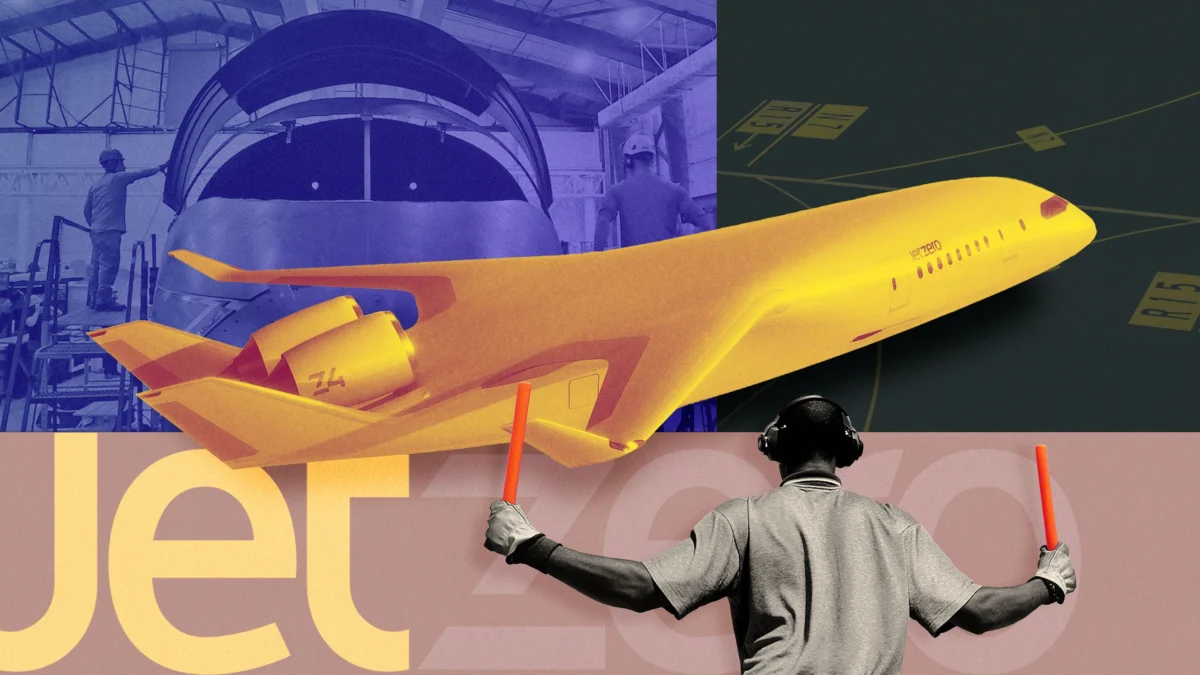
Frankfurt. The aviation industry, long dominated by the familiar tube-and-wing configuration, is on the cusp of a potential paradigm shift with the emergence of radical new aircraft designs. Among the most ambitious is the Z4, a revolutionary passenger jet being developed by California-based Jetzero. This innovative aircraft deviates from conventional aeronautical engineering by adopting a "blended-wing" design, where the fuselage and wings merge seamlessly into a single, continuous lifting surface. If successful, the Z4 could herald a new era of air travel, promising significant improvements in fuel efficiency, passenger comfort, and environmental sustainability, with an ambitious target for market entry in the early 2030s.
A Bold Departure from Tradition
The concept of the blended-wing body (BWB) is not entirely new, having been explored in various forms over decades. Historically, such designs have found their niche primarily in military applications, notably with the U.S. Air Force’s B-2 Spirit stealth bomber, which exemplifies the inherent aerodynamic advantages of this configuration. However, bringing this concept to the commercial passenger market has presented formidable challenges, leading many to dismiss it as technically infeasible or commercially unviable for civilian aviation.
Airbus, a titan of the aerospace industry, had previously investigated the BWB concept as part of its "Zero-e" program, which aimed to develop a zero-emission aircraft for the future. While the European aerospace giant explored the potential of this design, the company eventually shelved the project. Industry insiders suggest that the complexities involved in achieving passenger comfort, cargo loading, and emergency egress within a blended-wing structure, coupled with the sheer engineering hurdles, proved too significant to overcome at that time. The conventional aircraft design, with its distinct fuselage and wings, has a deeply entrenched legacy and an established ecosystem of manufacturing, maintenance, and pilot training, making any radical departure a significant undertaking.
Jetzero’s Vision: Commercial Viability in a Blended Future
Despite the historical hesitations and past setbacks, Jetzero, founded in Long Beach, California, in 2021, is determined to prove that a commercially viable and market-ready blended-wing passenger aircraft is achievable. The company’s focus on the Z4 underscores a belief that the inherent benefits of this design can be harnessed to meet the evolving demands of modern air travel, particularly in an era increasingly defined by environmental consciousness and the pursuit of operational efficiency.
The advantages of a blended-wing design are indeed compelling. Aerodynamically, the smooth integration of the wing and fuselage minimizes drag, which is a primary factor in fuel consumption. This reduction in drag translates directly into significant fuel savings, potentially upwards of 20-30% compared to conventional aircraft of similar capacity. Lower fuel burn not only reduces operating costs for airlines, a critical factor in profitability, but also leads to a proportional decrease in carbon emissions, aligning with global efforts to decarbonize the aviation sector.
Beyond efficiency, the blended-wing architecture offers considerable potential for enhanced passenger experience. The wider, more open interior space, free from the constraints of traditional fuselage sections, could allow for more innovative cabin layouts. This could mean wider seats, more legroom, or even novel seating configurations that redefine the passenger journey. Furthermore, the unique shape of a blended-wing aircraft can contribute to a quieter cabin environment. The engines, often mounted on the upper surface of the rear of the aircraft, can be shielded by the airframe, reducing noise levels for passengers on the ground and in the air. Cargo capacity could also be significantly increased, offering airlines greater flexibility in their operations.
A Growing Global Interest in the Blended-Wing Concept
Jetzero is not alone in its pursuit of the blended-wing future. Competition is already emerging, signaling a broader industry recognition of the design’s potential. Notably, experts in China are also actively working on blended-wing concepts. The China Aerodynamics Research and Development Center (CARDC) is reportedly developing a large-scale blended-wing aircraft, envisioned as a wide-body jet capable of carrying approximately 800 passengers. While this project is currently represented by a small-scale model, it indicates a significant investment of resources and research into this revolutionary design within China’s rapidly advancing aerospace sector. The presence of multiple players exploring this concept suggests a global race to unlock the next generation of aircraft technology.
The Technical Hurdles and the Path Forward
The journey from concept to a certified, operational aircraft is fraught with technical complexities. For Jetzero and its competitors, key challenges include:
- Structural Integrity and Load Distribution: Ensuring the entire airframe can withstand the immense forces of flight, particularly in a unified structure, requires advanced materials and sophisticated engineering. The distribution of weight and stress across the blended wing needs meticulous calculation and validation.
- Cabin Pressurization and Safety: Maintaining consistent cabin pressure and ensuring effective emergency evacuation procedures in a wider, less compartmentalized cabin present unique design considerations. Traditional emergency exits and their placement need re-evaluation.
- Control Systems: The aerodynamic characteristics of a blended-wing aircraft differ significantly from conventional designs, necessitating the development of advanced flight control systems to ensure stability and maneuverability.
- Manufacturing and Certification: Developing new manufacturing processes and navigating the rigorous certification pathways of aviation authorities for such a novel design will be a significant undertaking.
Jetzero is reportedly working with established aerospace partners and has secured significant investment to tackle these challenges. The company’s strategy appears to be focused on iterative development, starting with smaller-scale prototypes and progressively scaling up, while leveraging advanced simulation and testing technologies. The targeted introduction of the Z4 in the early 2030s suggests a phased approach to development and certification, acknowledging the long lead times inherent in bringing new aircraft to market.
Broader Implications for the Aviation Ecosystem
The successful introduction of a blended-wing passenger jet would have profound implications for the entire aviation ecosystem:
- Airline Operations: Airlines could see a substantial reduction in operating costs due to fuel efficiency, potentially leading to more competitive ticket prices or increased profit margins. The enhanced cargo capacity could also open new revenue streams.
- Airport Infrastructure: While the blended-wing design might not drastically alter airport requirements in terms of runways, the unique shape could necessitate adjustments in gate designs and ground handling equipment.
- Environmental Impact: A widespread adoption of blended-wing aircraft could significantly contribute to the aviation industry’s decarbonization goals, helping to meet climate targets and improve air quality around airports.
- Passenger Experience: The potential for a more spacious and comfortable cabin could fundamentally alter passenger expectations and the overall travel experience.
- Technological Advancement: The development of blended-wing aircraft will likely spur innovation in materials science, aerodynamics, propulsion systems, and flight control technologies, benefiting the broader aerospace sector.
The Road Ahead: A Glimpse into the Future of Air Travel
The ambition of Jetzero and other players in the blended-wing space represents more than just an engineering challenge; it signifies a forward-looking vision for air travel. As the world grapples with climate change and the demand for more sustainable and efficient transportation solutions, innovative designs like the blended-wing aircraft offer a compelling pathway forward. While significant hurdles remain, the potential rewards – a more efficient, environmentally friendly, and passenger-centric form of air travel – make the pursuit of this radical new design an exciting and critical endeavor for the future of aviation. The early 2030s may indeed witness the dawn of a new, blended era in the skies.
