

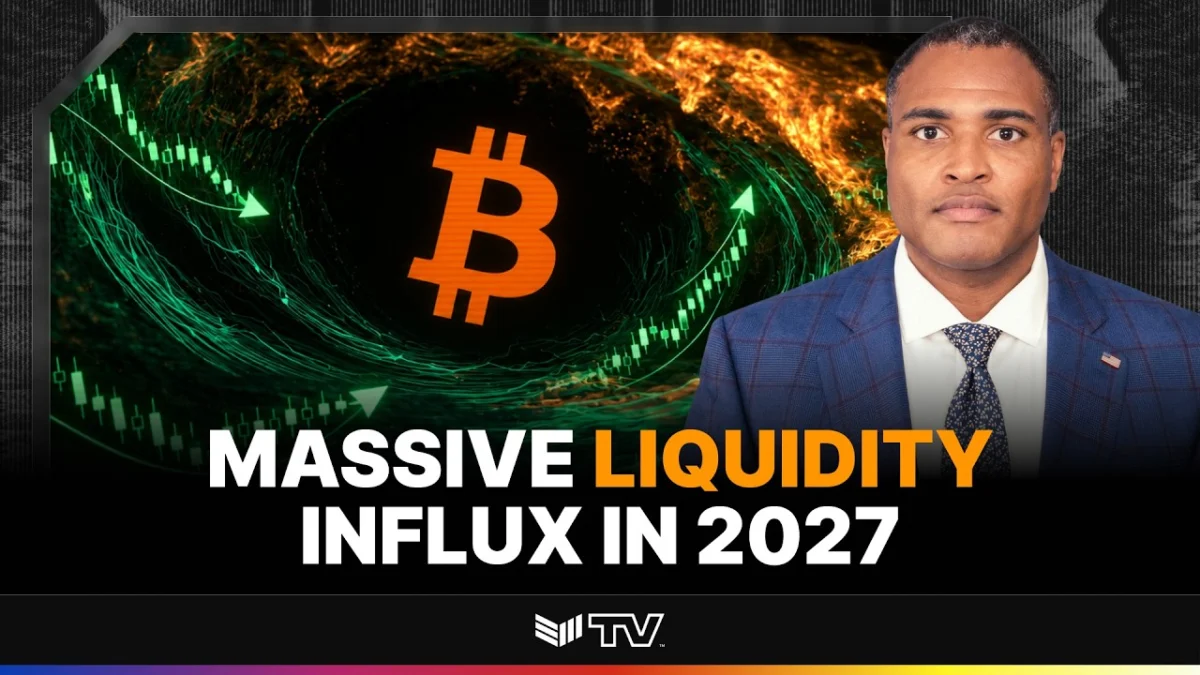
The cryptocurrency market, particularly Bitcoin, may be on the cusp of a period characterized by increased choppiness before potentially embarking on a more significant upward trajectory. This outlook is presented by Darius Dale, founder of 42 Macro, who points to a projected decline in funding liquidity as a key driver of near-term volatility. However, Dale posits that a resurgence in liquidity, which he considers a likely scenario by 2027, could pave the way for Bitcoin to appreciate considerably over the subsequent 12 to 18 months. Furthermore, he elaborates on the strategic rationale for including Bitcoin in investment portfolios as a distinct asset class, offering diversification benefits that differ from traditional holdings like stocks and gold.
The Macroeconomic Landscape and Bitcoin’s Potential Trajectory
Dale’s analysis hinges on the intricate relationship between macroeconomic factors, particularly funding liquidity, and the performance of digital assets like Bitcoin. Funding liquidity, in essence, refers to the ease with which financial institutions and corporations can access capital. A contraction in this liquidity typically implies tighter credit conditions, reduced risk appetite among investors, and a general deleveraging process across financial markets. This environment often translates into increased volatility for riskier assets, including cryptocurrencies.
The current economic climate is marked by a complex interplay of factors, including persistent inflation, elevated interest rates, and geopolitical uncertainties. Central banks globally have been engaged in monetary tightening cycles to combat inflation, which has led to a significant increase in the cost of borrowing. This has, in turn, impacted the availability of capital for various investment avenues.
Historical Context of Liquidity and Asset Performance:
Historically, periods of abundant liquidity have often coincided with asset price inflation across various markets, including equities, real estate, and, more recently, digital assets. Conversely, tightening liquidity has tended to precede asset price corrections or periods of consolidation. The Federal Reserve’s quantitative easing programs following the 2008 financial crisis, for instance, injected substantial liquidity into the financial system, contributing to a prolonged bull market in equities and the nascent growth of the cryptocurrency market. The subsequent unwinding of these balance sheets and the current interest rate hikes represent a reversal of this trend.
The AI Capex Boom and its Influence on Economic Resilience
Dale’s commentary also touches upon the phenomenon of the Artificial Intelligence (AI) capital expenditure (capex) boom. This surge in investment by corporations into AI technologies and infrastructure has, in part, acted as a buffer against the immediate economic impact of higher interest rates. Companies are channeling significant capital into AI development, data centers, and related hardware, creating demand for labor and materials, and thereby sustaining economic activity to some extent.
This AI-driven capex boom presents a unique dynamic. While higher rates generally dampen investment, the transformative potential and competitive pressures associated with AI have compelled businesses to continue investing, even at a higher cost of capital. This can create a disconnect between traditional economic indicators and the underlying drivers of growth in specific sectors.
Navigating the Debt Conundrum: Paths and Preferences
A significant portion of Dale’s analysis delves into the pressing issue of national debt and the potential pathways for its management. He outlines five distinct paths out of the debt problem, categorizing them into those that are "acceptable" and those that are not. While the specifics of these five paths are not detailed in the provided excerpt, the implication is that certain solutions carry less economic and social disruption than others.
The concept of "debasement" suggests a potential pathway involving the devaluation of currency. This could occur through inflationary policies that erode the purchasing power of money, effectively reducing the real value of outstanding debt. Another potential scenario discussed is a "Fed-Treasury Accord 2.0," hinting at a coordinated effort between the central bank and the government to manage debt levels, possibly through novel monetary or fiscal tools.
The broader implication of these debt management strategies is their direct impact on financial markets. Policies that lead to currency debasement, for instance, could significantly boost the appeal of hard assets and inflation hedges like Bitcoin. Conversely, aggressive fiscal consolidation could lead to economic contraction, impacting corporate earnings and equity valuations.
Risk Management and Portfolio Allocation: The Case for Bitcoin
Dale emphasizes the importance of robust risk management and strategic asset allocation. His perspective suggests a departure from traditional portfolio construction, particularly concerning fixed-income assets. The explicit mention of "Why No Bonds" indicates a cautious or outright negative stance on conventional bonds in the current environment, likely due to concerns about inflation eroding their real returns and the potential for rising interest rates to cause capital losses.
In this context, Bitcoin emerges as a compelling alternative for portfolio diversification. Dale argues that Bitcoin offers exposure that is fundamentally different from stocks and gold. While gold is often viewed as a store of value and an inflation hedge, its price movements can be influenced by factors distinct from those driving Bitcoin. Stocks, representing ownership in businesses, are subject to corporate performance, economic cycles, and market sentiment.
Bitcoin, on the other hand, is a digital asset with a fixed supply, decentralized nature, and a growing ecosystem of use cases, including payments, store of value, and as a hedge against currency debasement. Its correlation with traditional asset classes has historically been variable, presenting an opportunity for investors to reduce overall portfolio risk and enhance returns.
The "Wealth Pump" and the Influence of Money in Politics
The discussion extends to the concept of the "Wealth Pump" and the role of money in politics. This suggests an examination of how financial flows and political influence can shape economic outcomes and asset valuations. The term "wealth pump" could refer to mechanisms that disproportionately benefit certain segments of society or financial actors, potentially exacerbating wealth inequality.
The intersection of money and politics is a perennial concern. Campaign finance, lobbying efforts, and policy decisions can all be influenced by financial interests, leading to outcomes that may not always align with the broader public good. Understanding these dynamics is crucial for investors seeking to navigate complex market environments.
The Enduring Significance of AI and Potential Downside Scenarios
The pervasive influence of AI is further underscored by Dale’s assertion that "AI Is Too Big to Fail." This statement implies that the development and widespread adoption of AI have reached a critical mass, making its continued progress essential for future economic growth and innovation. The potential consequences of an AI "bust" are also considered, suggesting a scenario where the anticipated benefits of AI fail to materialize, leading to significant economic dislocations and market downturns.
The current AI investment cycle is characterized by immense optimism and a race among technology giants to capture market share. However, historical parallels with other technological revolutions suggest that not all investments will yield the expected returns, and some ventures may ultimately prove unsustainable. A significant downturn in the AI sector could have ripple effects across various industries and financial markets.
A Broader Perspective: Political Aspirations and Ideological Stances
The inclusion of topics such as "Running for Office," "Why He’s Not a Socialist," and "Jackie Robinson" suggests that the interview with Darius Dale extends beyond purely financial analysis to encompass broader societal and political perspectives. These elements, while seemingly disparate, can offer insights into an individual’s worldview and their approach to complex issues, which can indirectly inform their economic and investment philosophies.
Dale’s clarification on not being a socialist, for example, situates his economic viewpoints within a particular ideological framework, potentially highlighting a preference for free markets and limited government intervention, albeit with a nuanced understanding of market failures and the need for strategic policy. The reference to Jackie Robinson, a pivotal figure in American civil rights, might allude to themes of breaking barriers, challenging the status quo, and pursuing progress, which can resonate with the disruptive nature of technologies like Bitcoin.
The Bitcoin Outlook: Awaiting the Liquidity Rebound
In summary, Darius Dale’s perspective on Bitcoin presents a dual outlook. The near-term is anticipated to be characterized by volatility, a consequence of contracting funding liquidity. This period may involve price fluctuations as the market digests tighter financial conditions and reassesses risk. However, the medium to long-term outlook is more optimistic, contingent on a recovery in funding liquidity, which Dale projects to be likely by 2027.
This anticipated return of liquidity could provide a powerful tailwind for Bitcoin, enabling it to break through existing price ceilings and establish new highs over the subsequent 12 to 18 months. The narrative of Bitcoin as a unique asset class, offering diversification away from traditional stocks and gold, is central to this optimistic view. As investors continue to seek uncorrelated assets and hedges against inflation and currency debasement, Bitcoin’s distinct characteristics position it favorably in evolving portfolio strategies. The interplay of macroeconomic forces, technological innovation, and evolving investor sentiment will undoubtedly shape Bitcoin’s trajectory in the years to come.
