

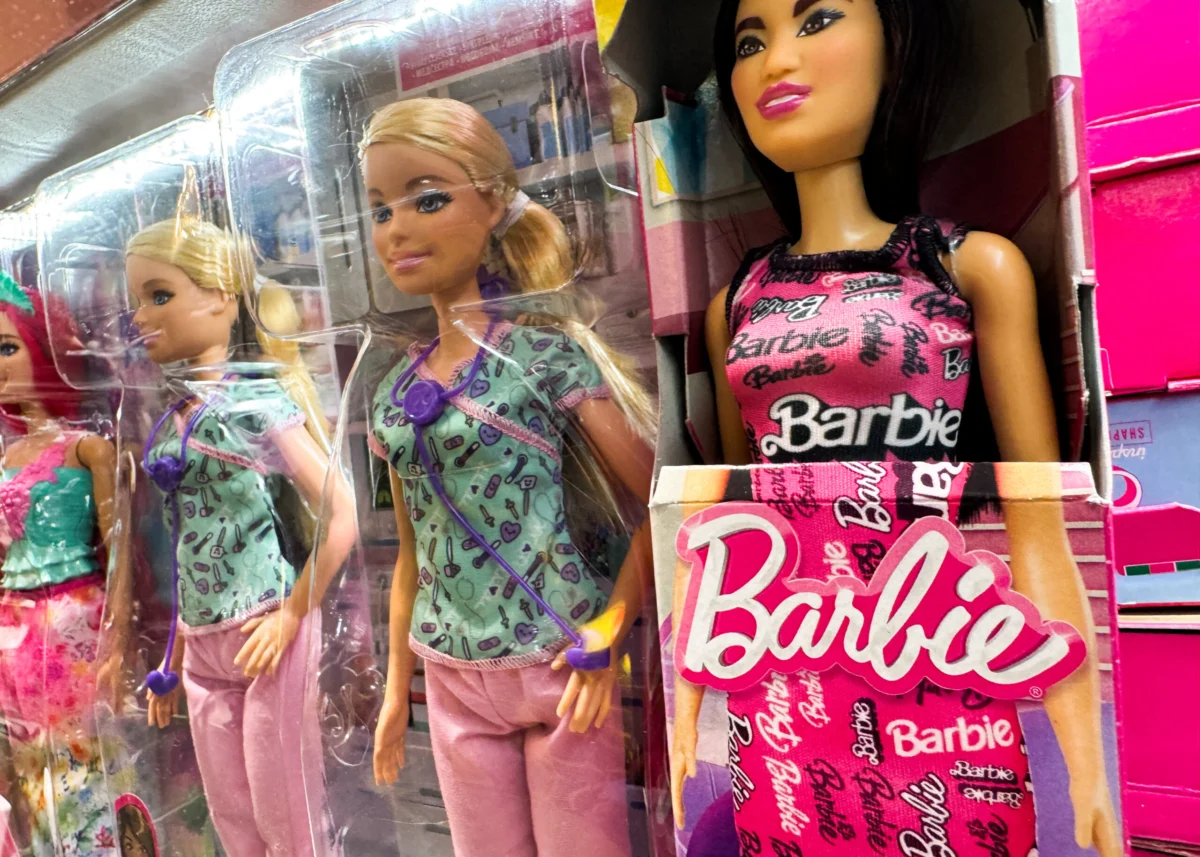
Shares of Mattel, the iconic toymaker behind global brands like Barbie and Hot Wheels, experienced a dramatic surge of nearly 20% on Thursday, following reports that it had become a target of takeover interest from Authentic Brands Group (ABG). This significant market movement places Mattel at a pivotal juncture, unfolding simultaneously with the company’s recent announcement of a major leadership transition, underscoring a period of profound strategic reevaluation for the century-old enterprise.
The catalyst for Thursday’s stock market excitement was a report by the Wall Street Journal, which indicated that Authentic Brands Group, a prominent brand licensing and development company, had engaged in private discussions regarding a potential acquisition of Mattel. The proposed offer, according to sources familiar with the matter, could value Mattel at more than $20 per share, translating to an approximate total valuation of $6 billion. This potential offer represents a substantial premium over Mattel’s trading price, which hovered just above $15 per share on Thursday afternoon prior to the news breaking fully.
CNBC subsequently corroborated the existence of these preliminary discussions through a person familiar with the talks, who, requesting anonymity due to the private nature of the negotiations, emphasized their nascent stage. This source further elaborated on the strategic rationale behind ABG’s overture, noting its strong interest in entertainment properties, particularly those with a significant appeal to children. This alignment highlights the growing convergence of the toy industry with broader entertainment and media sectors, a trend Mattel itself has actively pursued in recent years.
The Authentic Brands Group Playbook: A Deep Dive into Strategic Acquisitions
Authentic Brands Group has carved out a formidable niche in the global marketplace by specializing in the acquisition, management, and licensing of a diverse portfolio of consumer brands, entertainment properties, and celebrity estates. Founded in 2010 by Jamie Salter, ABG’s business model revolves around purchasing intellectual property (IP) from struggling, bankrupt, or underperforming brands and then revitalizing them through strategic licensing agreements, brand extensions, and marketing initiatives. The company typically does not engage in manufacturing or retail operations directly, instead partnering with a vast network of licensees to produce and distribute products across various categories, from apparel and footwear to home goods and media content.
ABG’s expansive portfolio is a testament to its aggressive acquisition strategy. It includes well-known names such as Reebok, Forever 21, Ted Baker, Brooks Brothers, Eddie Bauer, and Nautica. Beyond fashion and retail, ABG has also ventured into the entertainment and media space, owning properties like Sports Illustrated and celebrity estates including Marilyn Monroe, Elvis Presley, and Muhammad Ali. The potential acquisition of Mattel would represent a significant expansion into the toy and children’s entertainment sector, bringing with it a treasure trove of globally recognized brands.
For ABG, Mattel presents an incredibly attractive prospect. The toymaker boasts an unparalleled portfolio of iconic brands with deep cultural resonance, including Barbie, Hot Wheels, Fisher-Price, American Girl, UNO, and Thomas & Friends. These brands possess immense licensing potential that extends far beyond traditional toys, encompassing apparel, video games, theme park attractions, and digital content. ABG’s expertise lies precisely in unlocking and maximizing such latent brand value through a disciplined licensing approach. The success of the "Barbie" movie in 2023, for instance, offered a powerful demonstration of the inherent and untapped entertainment value within Mattel’s IP, aligning perfectly with ABG’s stated interest in entertainment properties, especially those tailored for children. Acquiring Mattel would provide ABG with immediate access to a stable of evergreen brands, offering long-term revenue streams through diversified licensing agreements across multiple product categories and geographical markets.
Mattel’s Journey: From Toy Giant to IP Powerhouse
Mattel’s history spans over 75 years, establishing it as a dominant force in the global toy industry. From its origins with household products in 1945 to the introduction of the Barbie doll in 1959, Mattel has consistently shaped childhoods across generations. However, like many traditional manufacturers, Mattel has faced significant challenges in recent decades. The rise of digital entertainment, increased competition from video games and mobile apps, and shifts in consumer preferences away from physical toys have put immense pressure on its core business.
Under the leadership of its outgoing CEO, Ynon Kreiz, Mattel embarked on a strategic pivot aimed at transforming the company from a pure-play toymaker into an intellectual property-driven entertainment company. This strategy involved leveraging Mattel’s vast catalog of brands into films, television shows, video games, and digital experiences. The crowning achievement of this strategy was undoubtedly the "Barbie" movie, released in July 2023. The film, directed by Greta Gerwig and starring Margot Robbie, was not just a critical darling but a colossal commercial success, grossing over $1.4 billion worldwide and becoming the highest-grossing film of 2023. Its impact on Mattel was immediate and profound, driving renewed interest in the Barbie brand, boosting toy sales, and significantly enhancing the company’s valuation and market perception. Beyond Barbie, Mattel has numerous other film and television projects in various stages of development, including adaptations of Hot Wheels, American Girl, and UNO.
Financially, Mattel has been on a recovery path. While facing headwinds from inflationary pressures and cautious consumer spending in certain markets, the company has shown resilience. Its third-quarter 2023 results, for instance, exceeded analyst expectations, with net sales up 9% year-over-year. The success of the Barbie movie was a significant contributor, bolstering toy sales and licensing revenues. However, the company has also been grappling with managing inventory levels and optimizing its supply chain, common challenges for large-scale manufacturers in the post-pandemic era. A potential acquisition by ABG could significantly alter Mattel’s operational structure, potentially shifting its focus away from direct manufacturing and distribution towards a more asset-light, IP-centric licensing model, aligning more closely with ABG’s core competencies.
A Critical Leadership Transition Amidst Acquisition Rumors
The reports of ABG’s takeover interest emerged just a day after Mattel announced a significant change in its executive leadership. On Wednesday, the company revealed that Roger Lynch, the current CEO of Condé Nast, would take over as Mattel’s next Chief Executive Officer. Lynch, who has been an independent member of Mattel’s board of directors since 2018, is slated to assume the role of chairman on October 2 and officially become CEO by November 2.
Lynch brings a wealth of experience from the media and digital sectors, having previously served as CEO of Condé Nast, a global media company known for its iconic magazine brands like Vogue and Vanity Fair, and before that, as CEO of Pandora Media and Sling TV. His background in digital transformation, content monetization, and brand management is highly relevant to Mattel’s strategic trajectory, particularly its efforts to expand its intellectual property into diverse entertainment formats. His appointment was widely seen as a reinforcement of Mattel’s commitment to its entertainment-driven strategy, aiming to further leverage its beloved brands across multiple platforms.
Lynch will succeed Ynon Kreiz, who, after a transformative tenure at Mattel, is set to become co-CEO of Paramount and Warner Bros. Discovery. Kreiz’s departure marks the end of an era during which he successfully steered Mattel through challenging times, revitalized key brands, and, most notably, championed the "Barbie" movie project that redefined the company’s public image and financial prospects. His move to a major media conglomerate underscores the deep connections forged between Mattel and Hollywood under his leadership, validating the company’s pivot towards entertainment IP.
The timing of these two major developments – a new CEO taking the helm and a prominent brand licensing group expressing takeover interest – places Mattel in a uniquely dynamic and potentially transformative period. The convergence of a leadership change, which often brings a fresh strategic outlook, with the possibility of a complete change in ownership, creates a complex landscape for the company’s future direction. Mattel’s shares had initially closed down 4% on Wednesday following the CEO announcement, a reaction that some analysts attributed to uncertainty surrounding the transition or the market’s initial assessment of the new leadership. The subsequent surge on Thursday due to the takeover news completely overshadowed this initial dip, highlighting the market’s sensitivity to potential M&A activities.
Official Responses and Market Dynamics
In response to the Wall Street Journal report and the subsequent market activity, both Mattel and Authentic Brands Group maintained a customary silence. A Mattel spokesperson reiterated the company’s long-standing policy: "As a matter of company policy, we do not comment on market rumors or speculation." Similarly, Authentic Brands Group declined to offer any comment on the matter. This standard corporate response, while expected, leaves investors and industry observers to interpret the situation based on the available information and market signals.
The market’s reaction, however, was unequivocal. The nearly 20% jump in Mattel’s stock price reflects strong investor confidence in the potential for a lucrative acquisition deal. Such a surge indicates that shareholders perceive the reported $20+ per share valuation as a significant upside, particularly given the stock’s trading history. The trading volume for Mattel shares also saw a substantial increase, further signaling intense market activity and speculative interest. Analysts, while refraining from definitive statements without official confirmation, are likely to be evaluating the potential synergies between ABG’s licensing prowess and Mattel’s brand portfolio, as well as the financial implications for both companies. The preliminary nature of the discussions, as cautioned by sources, suggests that a deal is far from certain, and negotiations could be complex, involving due diligence, valuation disagreements, and potential regulatory reviews, although the latter is less likely to be a major hurdle given the complementary nature of the businesses.
Broader Implications for the Toy and Licensing Industries
A potential acquisition of Mattel by Authentic Brands Group would send significant ripples across both the toy and brand licensing industries. For the toy sector, it could signal a further acceleration of the trend towards IP monetization and diversification beyond traditional manufacturing. Toy companies, facing pressure from evolving consumer habits and digital competition, are increasingly looking to transform their brands into multi-platform entertainment franchises. An ABG-owned Mattel might lean even more heavily into licensing its brands for films, games, and merchandise, potentially reducing its direct manufacturing footprint. This could influence other major toy companies to explore similar strategies or consider their own strategic partnerships.
For the brand licensing industry, acquiring Mattel would represent a landmark deal, solidifying ABG’s position as a dominant force in the global IP landscape. It would significantly expand ABG’s reach into the children’s market, providing a robust platform for growth and cross-licensing opportunities within its existing portfolio. Imagine the potential for crossover merchandise between Barbie and other ABG-owned fashion brands, or integration of Hot Wheels into sports-themed properties. This deal would underscore the immense value of enduring brand equity in an increasingly fragmented media and retail environment.
Furthermore, the saga highlights the strategic importance of intellectual property in the modern economy. Companies are increasingly valued not just for their physical assets or manufacturing capabilities, but for the intangible power of their brands and the stories they can tell. Mattel’s journey, from a traditional toy manufacturer to a company actively pursuing Hollywood deals, perfectly illustrates this shift. An acquisition by ABG would be a logical culmination of this trend, placing Mattel’s formidable IP under the stewardship of a company solely focused on maximizing brand value through licensing.
Challenges and Opportunities Ahead
While the prospect of an ABG acquisition presents numerous opportunities, it also comes with potential challenges. For ABG, integrating a company with Mattel’s operational complexity, including its vast manufacturing, distribution, and product development infrastructure, could be a significant undertaking, even if the long-term plan is to streamline or outsource much of this. Maintaining the creative integrity and innovation pipeline for Mattel’s beloved brands would also be crucial, ensuring they continue to resonate with new generations of consumers.
For Mattel, navigating a potential acquisition while simultaneously implementing a new CEO’s vision creates an intricate management challenge. Roger Lynch, who is expected to bring a fresh perspective focused on digital and media growth, would find his strategic mandate potentially altered by a change in ownership. The leadership transition, already a complex process, would be further complicated by the uncertainty of corporate control. However, it also presents an opportunity for Mattel’s brands to gain unparalleled exposure and growth through ABG’s extensive global licensing network, potentially accelerating its transformation into a pure-play IP company.
In conclusion, Mattel stands at a fascinating crossroads, caught between a significant leadership transition and the allure of a major corporate acquisition. The dual narrative of internal strategic evolution and external corporate interest underscores the immense value of its iconic brands in an entertainment-driven world. As the discussions between Mattel and Authentic Brands Group unfold, and as Roger Lynch prepares to take the helm, the coming months will undoubtedly shape the future trajectory of one of the world’s most enduring toymakers, potentially redefining its role in the global marketplace.
