

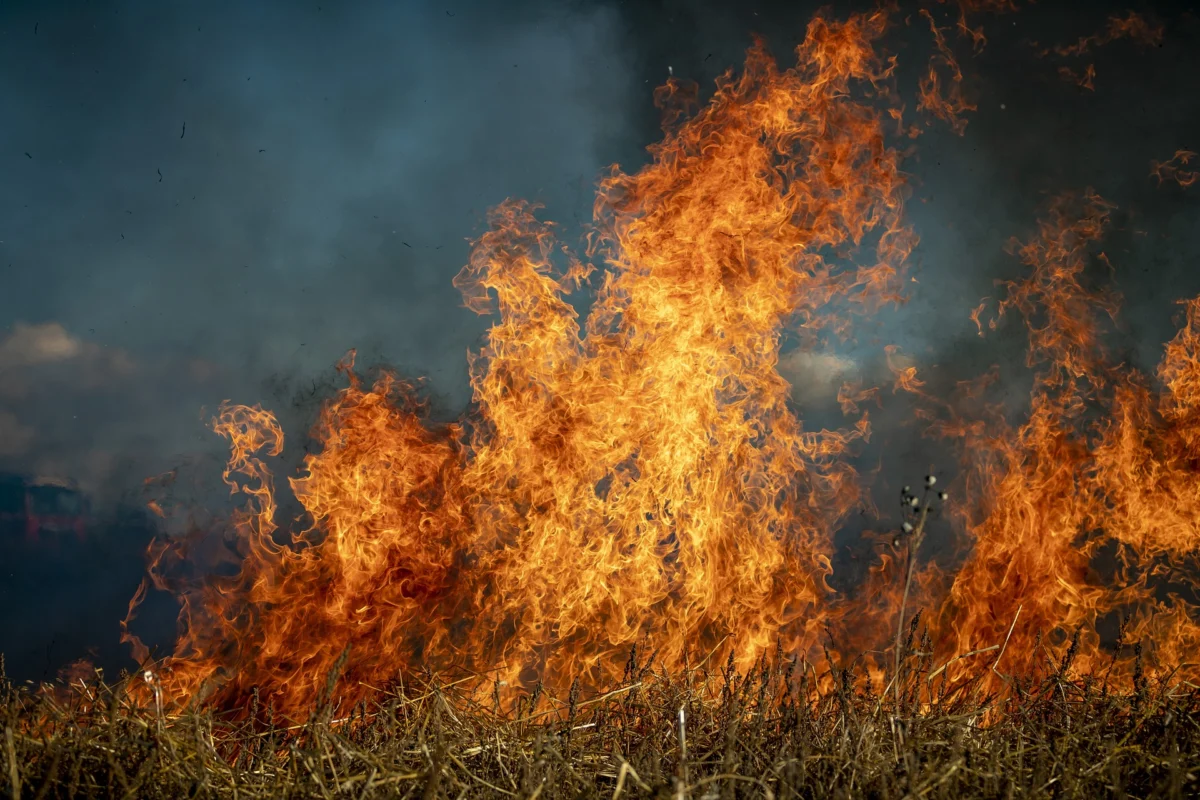
XPRIZE, the global leader in designing and operating large-scale incentive competitions to solve humanity’s most pressing challenges, has announced the first major wave of awardees in its $11 million XPRIZE Wildfire competition. Launched in 2023, this multi-year global initiative aims to catalyze the development of transformative technologies capable of detecting and suppressing wildfires before they escalate into catastrophic "megafires." The announcement marks a pivotal milestone in the competition, which is divided into two distinct but complementary tracks: Space-Based Wildfire Detection & Intelligence and Autonomous Wildfire Response.
The competition is bolstered by a high-profile coalition of sponsors, including the Pacific Gas and Electric Company (PG&E), the Gordon and Betty Moore Foundation, the Minderoo Foundation, and Lockheed Martin. By incentivizing private-sector innovation, the program seeks to bridge the technological gap that currently leaves many fire-prone regions vulnerable to rapidly spreading blazes. As climate change continues to drive more frequent and intense fire seasons globally, the urgency for automated, scalable solutions has never been higher.
The Global Crisis and the Need for Innovation
The XPRIZE Wildfire competition arrives at a critical juncture in environmental history. According to data from the National Interagency Fire Center (NIFC), the United States alone sees an average of 70,000 wildfires annually, which consume millions of acres of land. The economic toll is equally staggering; a recent report from the Joint Economic Committee suggests that the total annual cost of wildfires in the U.S. ranges between $394 billion and $893 billion when accounting for property damage, health impacts from smoke, and lost economic productivity.
Traditional wildfire management relies heavily on human lookouts, aerial reconnaissance, and public reporting, methods that often result in delayed response times. In many instances, by the time a fire is reported and crews are dispatched, the blaze has already surpassed the "initial attack" phase, making it significantly harder to contain. XPRIZE Wildfire was designed specifically to shorten this window, utilizing advancements in satellite imagery, artificial intelligence (AI), and robotics to create a 24/7 autonomous shield against ignition.
Track A: Redefining Space-Based Surveillance
Track A of the competition focuses on the "eye in the sky" approach, challenging teams to utilize space-based observation data synthesized with AI and machine learning to detect, characterize, and report wildfires with unprecedented speed and accuracy. In this phase, XPRIZE awarded a total of $1.05 million across five selected teams.
The judging panel, composed of experts in remote sensing and fire science, recognized these teams for their progress in multi-sensor system integration and the development of sophisticated detection methodologies. The challenge for these innovators is not merely seeing a fire from orbit but distinguishing between a nascent wildfire and other heat signatures, such as industrial activity or controlled agricultural burns, through dense cloud cover or smoke.
Andrea Santy, the XPRIZE Wildfire Executive Program Director, emphasized the importance of these advancements. "Destructive wildfires are becoming more extreme, costly, and difficult to manage, making faster, more effective approaches increasingly urgent," Santy stated. "These teams pushed the boundaries of what is possible today, demonstrating meaningful advances in wildfire detection and response while helping identify where continued innovation is needed to move these technologies toward real-world deployment at scale."
The results of Track A have also highlighted critical technical gaps. Current satellite "refresh rates"—the time it takes for a satellite to return to the same spot on Earth—are often too slow for early detection. The winning teams are working toward "persistent surveillance," utilizing constellations of small satellites (CubeSats) that can provide near-constant monitoring of high-risk areas.
Track B: The Dawn of Autonomous Aerial Firefighting
While Track A focuses on detection, Track B addresses the physical response. This track challenges teams to autonomously detect and completely suppress a high-risk fire within 10 minutes of ignition across a vast 1,000 km² area of terrain. The difficulty of this task is compounded by the requirement that the technology must operate without human intervention and avoid "decoy" fires—controlled heat sources designed to test the system’s ability to differentiate between real threats and false positives.
In a rigorous testing environment, three finalist teams were awarded a total of $3.5 million for their performance in the Alaskan wilderness. These teams demonstrated the capability of autonomous Unmanned Aerial Systems (UAS) to navigate complex topography, identify an ignition point, and deploy suppression agents—such as water or specialized retardants—with precision.
A standout performer in this category was Anduril Industries, which was awarded the $1 million Lockheed Martin Accurate Detection Intelligence Bonus Prize. Anduril’s multi-sensor detector performance was cited as a benchmark for how AI-driven hardware can operate in the chaotic conditions of a live fire zone. The integration of "edge computing," where data is processed on the drone itself rather than being sent back to a central server, allows for the millisecond-level decision-making required for autonomous suppression.

Strategic Partnerships and Utility Involvement
The involvement of PG&E as an "Impact Phase Partner" underscores the direct utility application of these technologies. For utilities, wildfires represent a dual threat: they can destroy critical infrastructure and, in some cases, be ignited by equipment failure during high-wind events.
Mark Quinlan, Chief Safety Officer and Senior Vice President of Wildfire, Emergency, and Operations at PG&E, highlighted the company’s commitment to these innovations. "Protecting our customers and the hometowns we serve from wildfire risk is one of PG&E’s most important responsibilities," Quinlan said. "Over the past several years, we have strengthened our wildfire prevention approach through multiple layers of protection and mitigation, but we know there is always more work to do. Together, we can help bridge the gap between innovation and deployment."
The partnership with the Minderoo Foundation also brings a global perspective to the competition. Based in Australia—a nation that faced the catastrophic "Black Summer" fires of 2019-2020—the foundation views rapid detection as a humanitarian necessity. Dr. Andrew Forrest AO, of the Minderoo Foundation, noted that the finalist teams recently tested their technologies in real-world conditions alongside the New South Wales (NSW) Rural Fire Service. "Innovation only makes a difference when it works where lives, livelihoods, and landscapes are on the line," Forrest remarked.
The Wildfire & Resilience Strategy Summit
The announcement of the XPRIZE awardees coincides with increased industry focus on grid hardening and emergency preparedness. This is exemplified by the Wildfire & Resilience Strategy Summit at DTECH (Distributech International). Formerly a standalone event known as "Reliability & Resiliency," the summit has been integrated into the broader DTECH experience to bring together utility leaders, technology providers, and emergency professionals.
The summit serves as a concentrated forum for discussing the long-term implementation of the technologies seen in the XPRIZE competition. Topics often include infrastructure hardening, situational awareness through IoT sensors, and the regulatory hurdles of deploying autonomous drones in national airspace. For the award-winning teams, such summits represent the next step in the commercialization pipeline, connecting innovators with the stakeholders who will ultimately purchase and deploy their systems.
Analysis: The Path to Real-World Deployment
While the technological leaps demonstrated by the XPRIZE teams are significant, the path to global deployment remains complex. The competition is now entering a 12-to-15-month "Impact Phase." This period is designed to transition the winning prototypes from experimental successes to "field-ready" solutions that can be integrated into the existing command-and-control structures of agencies like CAL FIRE or the U.S. Forest Service.
Key challenges remaining include:
- Regulatory Approval: Autonomous flight in the U.S. is strictly regulated by the FAA. Operating large-scale suppression drones "beyond visual line of sight" (BVLOS) requires new frameworks for airspace management.
- Scalability: Detecting a fire in a 1,000 km² test area is a feat, but monitoring entire continents requires massive capital investment in satellite constellations and drone fleets.
- Suppression Logistics: Carrying enough payload to suppress a fire without frequent refilling remains a hurdle for battery-powered or small-scale autonomous aircraft.
However, the "10-minute suppression" goal targeted by XPRIZE is based on the "Golden Hour" principle of emergency response. If a fire can be held in check during its first few minutes, the probability of it becoming a major conflagration drops by orders of magnitude.
Conclusion: A Future of Fire-Resilient Communities
The XPRIZE Wildfire competition is more than a contest; it is a catalyst for a new industry. By shifting the focus from reactive firefighting to proactive, autonomous detection and response, the foundation is attempting to fundamentally change how humanity interacts with fire.
Anousheh Ansari, Chief Executive Officer of XPRIZE, summarized the vision for the coming years: "The progress we are celebrating now is an important step, but the true impact of this competition will be measured by what happens next. We hope to see these innovations utilized by communities and responders to detect and address fires sooner, creating a future where fires can be detected and addressed before they become destructive."
As the competition moves into its final impact phase, the global community watches closely. If these technologies succeed, the image of the "megafire" may one day become a relic of the past, replaced by a sophisticated, autonomous network that stops the flame before it can ever reach the forest edge.
