

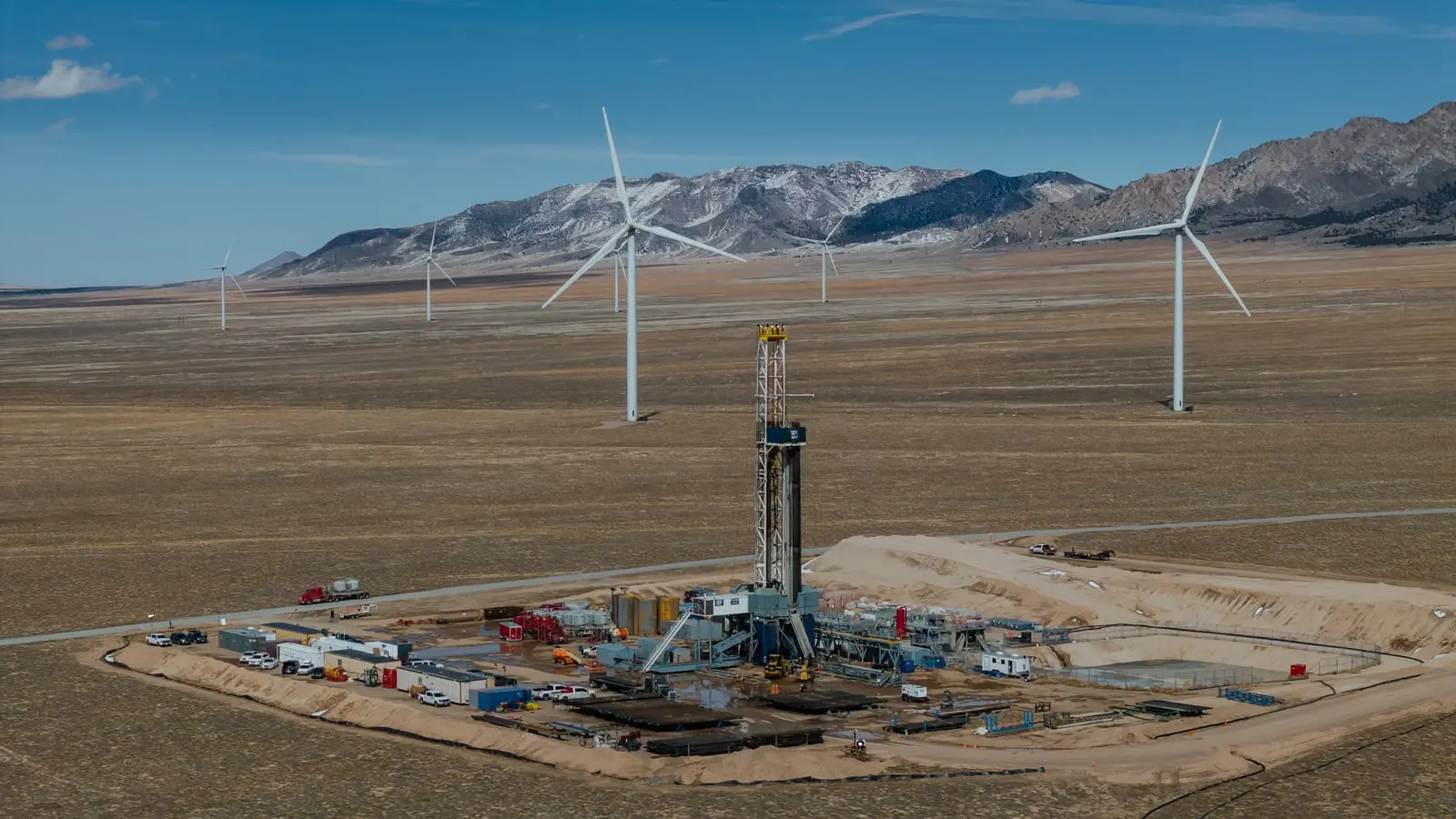
The United States Department of Energy (DOE) has officially unveiled a significant financial commitment of more than $99 million aimed at accelerating the development and deployment of geothermal energy across the nation. This funding will support 21 selected projects designed to push the boundaries of current geothermal capabilities, ranging from field-scale testing of next-generation technologies to high-risk exploration drilling intended to identify and confirm new domestic energy resources. By targeting the vast, untapped heat reservoirs beneath the Earth’s surface, the federal government aims to transition geothermal power from a niche regional resource into a cornerstone of the national energy portfolio.
The initiative is bifurcated into two primary operational tracks. Five of the selected projects are dedicated to conducting field-scale tests of Enhanced Geothermal Systems (EGS). These tests are designed to validate EGS technologies under real-world conditions, simulating the pressures and temperatures required for commercial-scale power production. The remaining 16 projects will focus on exploration drilling, a critical phase in the geothermal lifecycle that involves gathering subsurface data to characterize and potentially confirm the presence of "promising" hydrothermal and next-generation resources. This dual-pronged approach is intended to mitigate the high upfront technical and financial risks that have historically hindered the expansion of the geothermal sector.
Strategic Vision and Federal Leadership
The announcement underscores a strategic pivot toward leveraging American geological assets to ensure long-term energy security. DOE Under Secretary of Energy Kyle Haustveit emphasized the administration’s focus on domestic resource utilization and technological innovation. "These projects will empower American innovators to unlock the tremendous geothermal resources beneath our feet," Haustveit stated. He further noted that under the current leadership, the federal government is prioritizing next-generation geothermal technologies that can simultaneously lower consumer costs, strengthen American energy dominance, and convert domestic heat into a reliable, affordable source of "always-on" power.
This investment follows a broader federal effort to modernize the American power grid and reduce dependence on foreign energy supply chains. Unlike solar and wind energy, which are variable and dependent on weather conditions, geothermal energy provides a consistent baseload of electricity. This "firm" power capability makes it an essential component for grid stability as the nation integrates more intermittent renewable sources. The DOE’s argument for this funding is rooted in the belief that these pilot programs will provide the necessary empirical data to support future commercial-scale projects, thereby attracting private investment and fostering a self-sustaining industry.
The Evolution of Geothermal Technology: From Hydrothermal to EGS
To understand the significance of this $99 million investment, it is necessary to distinguish between traditional hydrothermal energy and the next-generation Enhanced Geothermal Systems (EGS) that the DOE is now championing. For decades, geothermal energy in the U.S. has been largely confined to the western states, where naturally occurring "hydrothermal" reservoirs—pockets of hot water and steam—are easily accessible near the surface. However, these natural reservoirs are geographically limited.
In contrast, EGS technology seeks to create "man-made" reservoirs. By injecting fluid into hot, impermeable rock deep underground, engineers can create fractures that allow water to circulate and pick up heat. This heated water is then pumped back to the surface to drive turbines. The potential for EGS is theoretically limitless; if the technology can be scaled and the costs reduced, geothermal energy could be harvested almost anywhere in the United States.
The five pilot projects receiving a portion of the $99 million are specifically tasked with operating at depths and temperatures appropriate for full-scale development. These pilots are expected to bridge the "valley of death" between laboratory research and commercial viability. By demonstrating that EGS can function reliably over long periods, the DOE hopes to lower the cost of geothermal energy by 90% by 2035—a goal known as the "Enhanced Geothermal Shot."
Chronology of Geothermal Development and Policy
The path to this latest funding round has been built over several years of legislative and scientific milestones. The history of geothermal energy in the U.S. dates back to the 1960s with the development of "The Geysers" in California, which remains the world’s largest geothermal complex. However, growth stagnated for decades due to the high cost of drilling and the discovery of abundant natural gas.
The timeline of the current resurgence can be traced back to the early 2020s:

- 2021-2022: The DOE launched the Geothermal Earthshot, setting an ambitious target to reduce the cost of EGS to $45 per megawatt-hour.
- 2023: Significant breakthroughs were reported by private firms like Fervo Energy, which successfully demonstrated that horizontal drilling techniques from the oil and gas industry could be adapted for geothermal applications.
- 2024: The federal government increased its focus on permitting reform, aiming to shorten the years-long approval process for drilling on federal lands, where the vast majority of high-quality geothermal resources are located.
- 2025-2026: The current $99 million announcement represents the implementation phase of these earlier strategic plans, moving from theoretical modeling to active field-scale deployment.
Supporting Data and Economic Projections
The economic implications of a widespread geothermal rollout are substantial. According to DOE estimates, the United States has the potential to generate at least 90 gigawatts of electricity from geothermal sources by 2050—enough to power the equivalent of more than 65 million homes. This would represent a nearly twenty-fold increase from current capacity.
The data generated by the 21 newly funded projects will be instrumental in reaching these targets. The DOE has mandated that all findings, subsurface data, and technical reports be made publicly available through the Geothermal Data Repository (GDR). This open-access approach is intended to foster a collaborative environment where industry competitors, academic researchers, and independent stakeholders can learn from the successes and failures of the pilot programs.
From a workforce perspective, geothermal energy offers a unique opportunity for "energy transition" labor. The skills required for geothermal exploration—such as seismic imaging, reservoir engineering, and deep-well drilling—are almost identical to those used in the oil and gas industry. This allows for a seamless transfer of high-wage jobs from fossil fuel sectors to the renewable energy sector, particularly in states like Texas, Nevada, and Utah.
Implications for the National Power Grid
The broader impact of these 21 projects extends beyond mere electricity generation; it touches on the fundamental architecture of the American power grid. As coal and nuclear plants are retired, the grid faces a "reliability gap." Geothermal energy is uniquely positioned to fill this gap because of its high capacity factor—the ratio of actual energy produced to the maximum possible. Geothermal plants often operate with capacity factors exceeding 90%, significantly higher than solar (25%) or wind (35%).
Furthermore, geothermal energy occupies a very small physical footprint compared to other renewables. A geothermal plant requires roughly 1% of the land area needed for a wind farm and 12% of the land needed for a solar array to produce the same amount of energy. This makes it an attractive option for regions where land use is a contentious issue.
However, the path forward is not without obstacles. The primary challenge remains the "exploration risk." Unlike wind or solar, where the resource is visible and measurable from the surface, geothermal developers must spend millions of dollars drilling "blind" into the Earth before they can confirm if a site is viable. The 16 exploration projects funded in this round are specifically designed to tackle this "dry hole" risk by refining the tools used to "see" underground before a single drill bit touches the soil.
Future Outlook and Industry Reactions
The industry reaction to the DOE’s announcement has been largely positive, with many experts viewing it as a validation of geothermal’s "renaissance." Industry leaders have noted that while $99 million is a fraction of the total capital required to transform the grid, it serves as a critical "catalytic" investment that signals to Wall Street that geothermal is a serious, government-backed asset class.
Looking ahead, the success of these projects will likely depend on the synergy between public funding and private innovation. Companies like Fervo Energy, whose Cape Station project has become a flagship for modern geothermal, demonstrate that when federal support meets private-sector agility, the results can be transformative.
As these 21 projects move from the planning phase to active drilling, the eyes of the energy world will be on the American West. If these field tests can prove that EGS is not only technically possible but also economically competitive, it could trigger a global shift in energy strategy. The "heat beneath our feet" may finally provide the clean, constant, and domestic power source that the United States has sought for decades, marking a new chapter in the pursuit of energy independence and technological dominance.
