

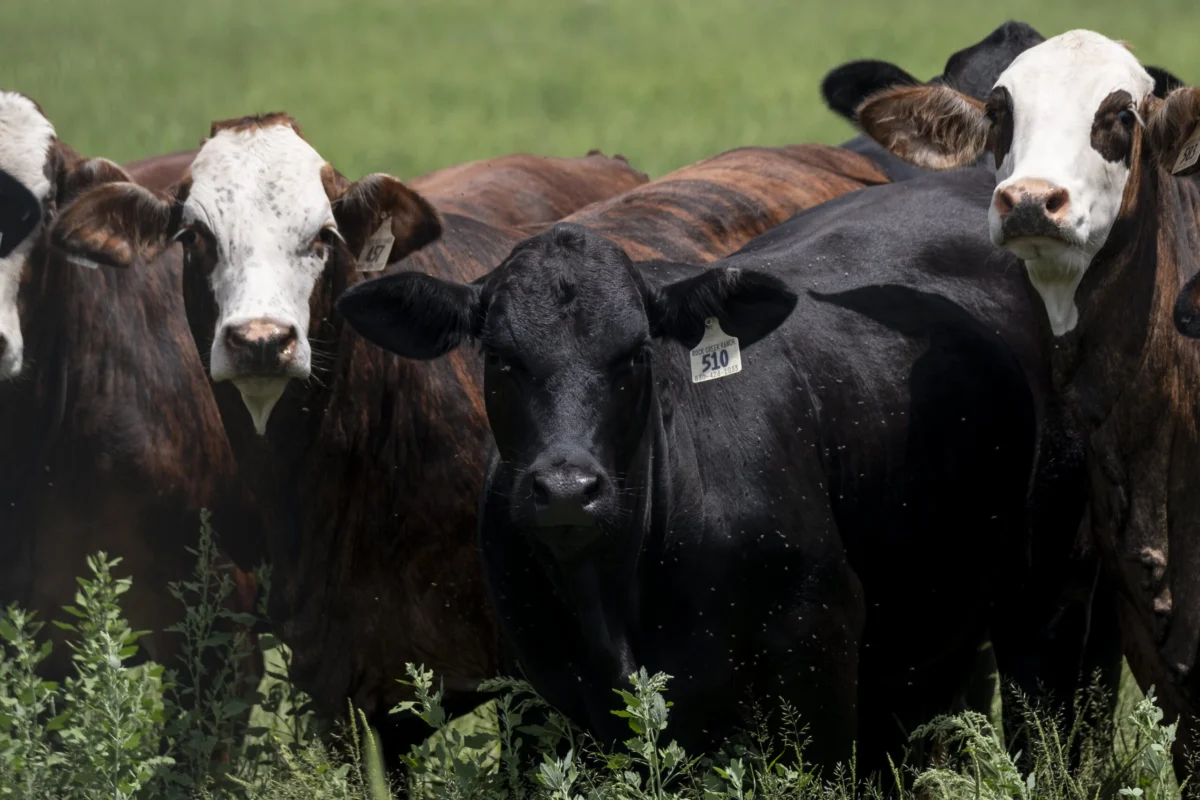
The United States Department of Agriculture (USDA) is assuring the public that the nation’s food supply remains secure despite the confirmed resurgence of the New World screwworm, a flesh-eating parasite, in Texas. Secretary of Agriculture Brooke Rollins emphatically stated on Monday that the situation, while serious, does not pose a risk to the integrity of the U.S. food chain. This declaration comes as the USDA confirms a growing number of cases, marking the first instances of the pest in the country since its successful eradication over five decades ago.
Secretary Rollins, speaking on CNBC’s "Squawk Box," downplayed the nature of the threat, characterizing it as a manageable pest rather than a widespread disease. "This is not a virus, it’s not a disease, it’s just a little pest, a larva that lands in a calf’s wound, for example, and it can be treated," Rollins explained. She underscored the USDA’s proactive measures, affirming, "We have boots on the ground… we’ll be able to beat this back, but we’re going to do everything we can, investing over a billion dollars to push this pest back into Mexico, then to eradicate, as we did about 50 years ago." The significant financial commitment highlights the seriousness with which federal agencies are approaching this re-emergent threat, aiming to replicate the historic success of the mid-20th century eradication program.
The Troubling Resurgence: A Chronology of Cases
The initial confirmation of a New World screwworm case in Texas on Wednesday sent ripples of concern through agricultural communities and federal agencies. This pivotal discovery in Zavala County, specifically in the rural area of La Pryor, immediately triggered a rapid response from the USDA and state officials. The screwworm, scientifically known as Cochliomyia hominivorax, is a parasitic fly whose larvae infest the open wounds of warm-blooded animals, including livestock, wildlife, pets, and, in rare instances, humans. Untreated infestations can lead to severe pain, secondary infections, and ultimately, death.
Shortly after Secretary Rollins’ televised remarks, the USDA confirmed two additional cases, bringing the total to four. One of the newly identified infestations was found in a calf in La Salle County, Texas, further indicating a localized spread within the state. The other involved a dog in Andrews County, though the animal reportedly resides in New Mexico, leading the USDA to classify it as a New Mexico case. This interstate connection prompted New Mexico officials to announce increased monitoring and outreach efforts in the affected area, emphasizing the cross-border nature of the threat, even within U.S. states.
In response to the escalating situation, President Donald Trump underscored the federal government’s commitment by appointing John Bellinger as a senior advisor for New World screwworm preparedness on Monday. Bellinger, a seasoned executive with extensive experience in food safety and distribution firms, is expected to bring crucial expertise to the coordination of eradication efforts and strategic planning. His appointment signals a high-level recognition of the potential disruption the parasite could cause if left unchecked, despite assurances about the food supply.
Historical Context: A Decades-Long Battle and Triumph
The return of the New World screwworm is particularly alarming given its historical impact and the monumental effort previously undertaken to eradicate it from the United States. Prior to the mid-20th century, the screwworm was a devastating pest for American agriculture, particularly in the Southern states. It caused immense economic losses, estimated to be hundreds of millions of dollars annually in today’s currency, by inflicting severe damage and fatalities among cattle, sheep, goats, and other livestock. Ranchers faced constant vigilance, frequent inspections, and costly treatments to protect their herds. The parasite’s lifecycle, where adult flies lay eggs in open wounds, and the hatched larvae burrow into the flesh, made it notoriously difficult to control through traditional methods.
The breakthrough in combating the screwworm came with the development of the Sterile Insect Technique (SIT) by USDA scientists Edward F. Knipling and Raymond C. Bushland in the 1930s and 40s. This innovative biological control method involves mass-rearing screwworm flies, sterilizing the males using radiation, and then releasing vast numbers of these sterile males into infested areas. When a sterile male mates with a wild female, her eggs are infertile, preventing the production of viable offspring. Over successive generations, as sterile males outnumber wild males, the wild population declines dramatically.
The U.S. launched its ambitious screwworm eradication program in the late 1950s, successfully clearing the pest from Florida and the southeastern U.S. The program then expanded westward, culminating in the official declaration of eradication from the entire United States in 1966. This success was hailed as one of the greatest triumphs in entomology and pest management history. The strategy involved establishing a continuous "barrier zone" of sterile fly releases across the U.S.-Mexico border to prevent reinfestation from populations further south. This cooperative effort eventually extended through Mexico and Central America, pushing the screwworm’s range significantly southward and safeguarding U.S. livestock for decades.
The Current Eradication Playbook: Re-engaging SIT

Faced with this unwelcome return, the USDA is quickly re-activating the very playbook that proved so effective in the 1960s. Secretary Rollins confirmed that the Sterile Insect Technique (SIT) is central to the current strategy. "We’ve beaten it before, we’ve got to beat it again," she stated, emphasizing the historical precedent of success. The process involves dropping millions of sterile screwworm flies from both aerial and ground vehicles over the affected regions. Currently, approximately 10 million sterile flies are being released weekly in the targeted areas of Texas.
This intensive aerial and ground assault aims to flood the environment with sterile males, effectively disrupting the reproductive cycle of any wild screwworm populations. The success of SIT relies on sustained, widespread releases to ensure that wild females primarily encounter sterile mates. Simultaneously, enhanced surveillance, trapping, and public outreach are crucial components of the strategy. Ranchers, veterinarians, and the general public are being urged to report any suspected cases of screwworm infestation immediately, allowing for rapid containment and targeted sterile fly releases. The "over a billion dollars" commitment mentioned by Secretary Rollins is a testament to the comprehensive and long-term nature of this re-eradication campaign, which will likely involve continued research, infrastructure for sterile fly production, and extensive logistical operations.
Stakeholder Reactions and Inter-agency Dynamics
While federal officials express confidence in the eradication strategy, the return of the screwworm has sparked criticism and concern at the state level. Texas Agriculture Commissioner Sid Miller publicly criticized the USDA for what he perceived as a slow and inadequate initial response that failed to prevent the parasite from re-establishing itself across the border. Such criticisms often arise during outbreaks, reflecting the immediate anxieties of local agricultural communities and the political pressures involved in rapid response.
Secretary Rollins swiftly dismissed Miller’s accusations, defending the USDA’s actions and emphasizing the speed and coordination of federal efforts. "He knows that we have been moving at Trump speed," Rollins retorted, using a politically charged phrase to indicate rapid and decisive action. She stressed the importance of unity in confronting the pest, stating that Miller’s comments were "disturbing and disruptive and so harmful to what we’re trying to achieve." This exchange highlights the inherent tension that can emerge between federal and state agencies during crisis management, even as both aim for the same objective: eradication.
Beyond official statements, the ranching community in Texas, a state renowned for its vast cattle industry, is undoubtedly on high alert. Texas is the leading state in cattle and calf production in the U.S., with millions of head of livestock. The potential for screwworm infestations to impact herd health, productivity, and economic viability is a significant concern for individual producers. Veterinarians in the affected counties will also bear a substantial burden, being at the forefront of diagnosis, treatment, and reporting. Wildlife conservation groups are also vigilant, as native wildlife populations, especially those with open wounds or injuries, are susceptible to infestation.
Potential Economic and Ecological Implications
The re-emergence of the New World screwworm, despite federal assurances, carries significant potential economic and ecological implications. Economically, even if the food supply itself is not directly contaminated, the costs associated with monitoring, treating, and preventing infestations for individual ranchers could be substantial. These costs include increased labor for animal inspections, veterinary expenses, and potential losses from animal morbidity or mortality. For a state like Texas, where agriculture is a cornerstone of the economy, a prolonged screwworm presence could disrupt trade, impose additional regulatory burdens, and create uncertainty within the livestock sector. The $1 billion federal investment underscores the preventative measures being taken to mitigate these wider economic ramifications.
Ecologically, the threat extends beyond domestic animals to native wildlife. Many species, from deer to smaller mammals and even birds, can become hosts for screwworm larvae. Vulnerable or endangered species could face heightened risks if their populations are already stressed by habitat loss or other environmental factors. While the original article did not specify which wildlife species are currently affected, the parasite’s broad host range means vigilance is required across diverse ecosystems. The previous outbreak of screwworms in Florida in 2016, for instance, devastated the endangered Key deer population, serving as a stark reminder of the ecological fragility in the face of this pest.
Furthermore, the cross-border nature of the initial eradication efforts and the current re-emergence emphasize the critical importance of international cooperation. Sustained collaboration with Mexico will be essential to ensure that a robust barrier zone is maintained, preventing future reinfestations from populations existing south of the U.S. border. This requires shared resources, coordinated surveillance, and consistent diplomatic engagement.
In conclusion, the re-emergence of the New World screwworm in Texas represents a significant challenge, reviving a threat that the U.S. successfully eliminated decades ago. While the USDA assures the public that the food supply is not at risk and has committed substantial resources to a comprehensive eradication strategy, the situation demands continuous vigilance, robust inter-agency cooperation, and a unified response from all stakeholders. Drawing upon the successful playbook of the past, federal and state agencies are working to "beat back" this pest once again, aiming to safeguard the nation’s livestock, wildlife, and agricultural economy from a costly and painful parasite.
