

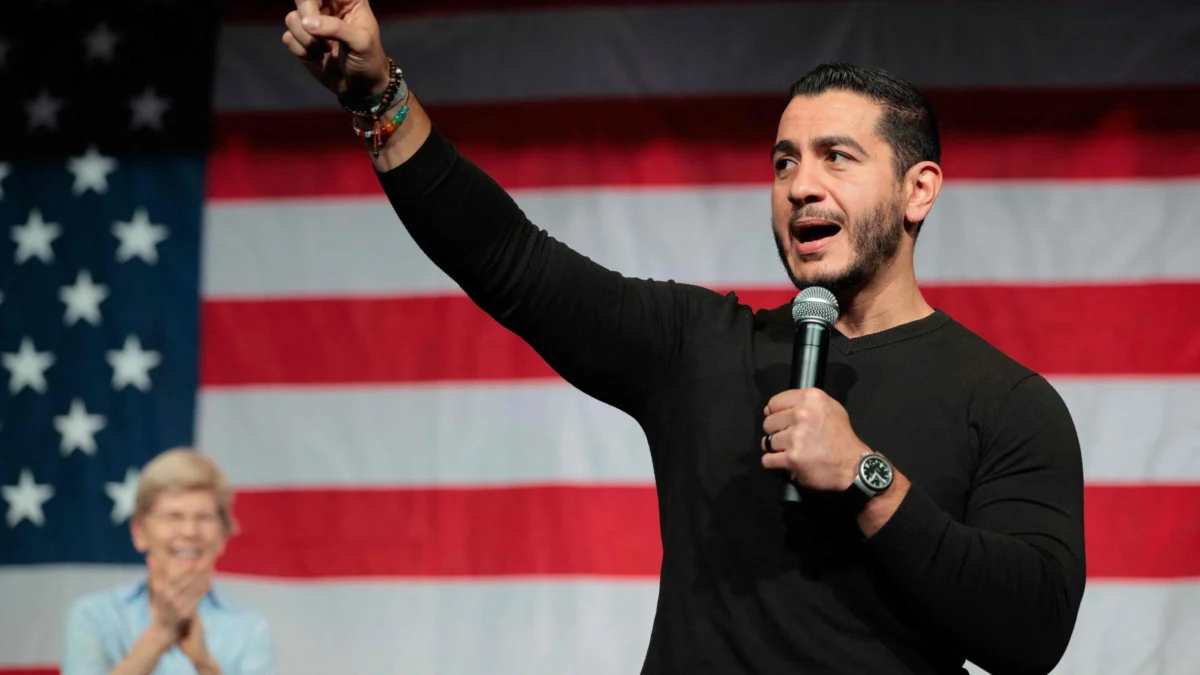
The upcoming midterm elections in the United States are increasingly characterized by internal party conflicts, with a notable dispute emerging within the Democratic Party in Michigan. This intra-party friction, occurring just days before voters head to the polls, involves a prominent Senate candidate and a former rival, raising concerns about party unity and electoral strategy. The situation highlights the complex dynamics at play as Democrats strive to maintain and expand their influence across crucial states.
Internal Divisions Surface in Michigan’s Senate Race
The heart of the contention lies in the Democratic Senate race in Michigan, where candidate Abdul El-Sayed is facing unexpected opposition from within his own party. Haley Stevens, a congresswoman who narrowly lost to El-Sayed in the August Democratic primary, has publicly aligned herself with El-Sayed’s Republican opponent, Mike Rogers. This endorsement, delivered at a church event in Detroit, signifies a significant and potentially damaging rift within the Democratic ranks as the election looms.
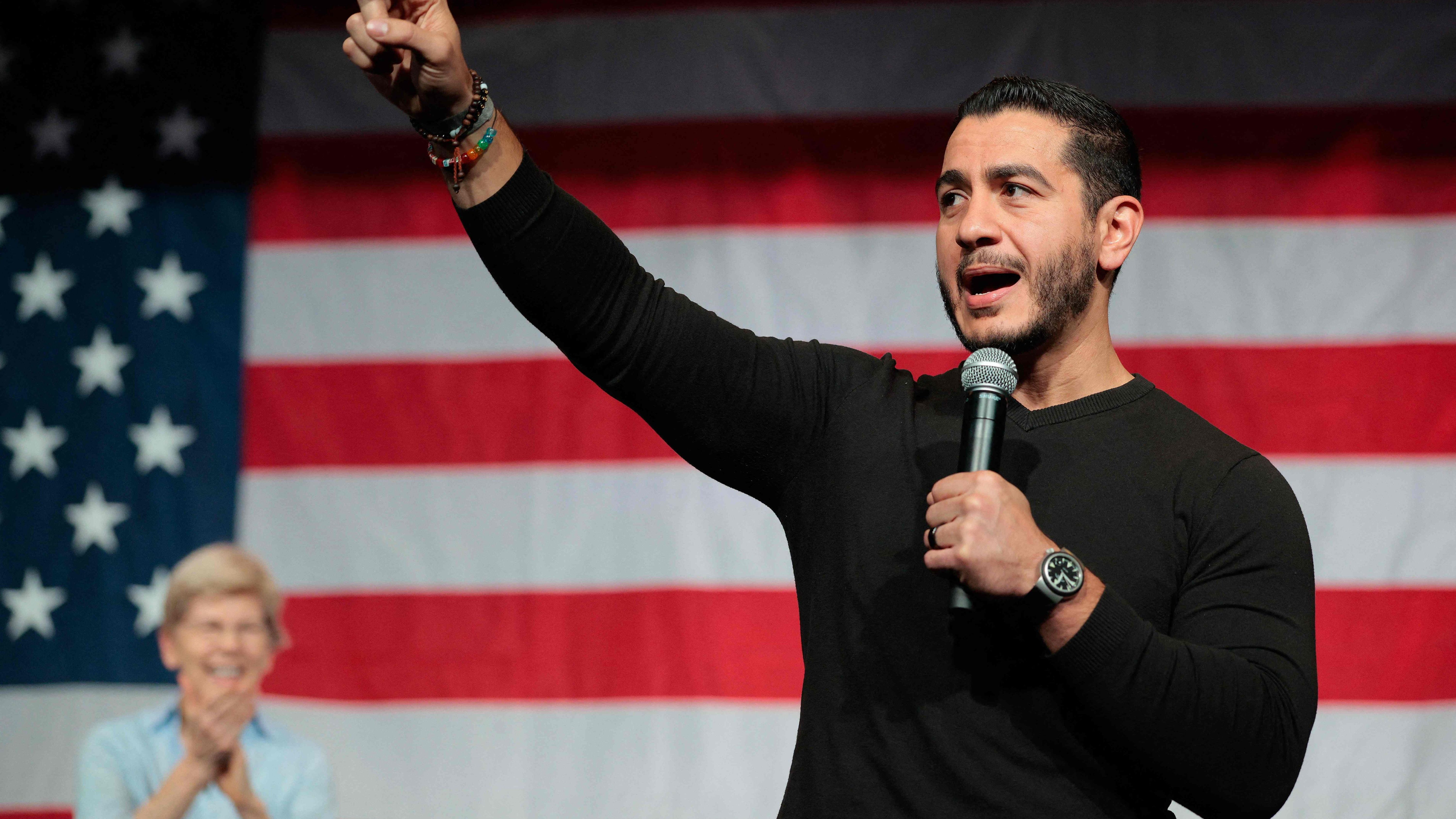
Stevens’s decision to appear alongside a Republican candidate is a stark indicator of the depth of her disagreement with El-Sayed’s platform and rhetoric. Prior to this public display, Stevens had already been disinvited from a joint campaign event with El-Sayed. This cancellation was reportedly due to Stevens’s critical stance on El-Sayed’s statements regarding Israel. Her fiancé further solidified this position by announcing his intention to vote for Rogers against El-Sayed in the upcoming congressional elections, citing El-Sayed’s perceived failure to adequately address the concerns of the Jewish community.
Stevens articulated her concerns in a statement, asserting, "Abdul promises to take money out of politics. He can start by taking Israel out of his declaration for everything that Michigan cannot afford." She specifically urged El-Sayed to condemn campaign advertisements from an independent left-wing group that attributed rising food prices to U.S. support for Israel. El-Sayed, in response, reiterated that the advertisement was not produced by his campaign team and stated, "I do not agree with the content of this advertisement."
This internal conflict not only highlights policy disagreements but also touches upon sensitive geopolitical issues that resonate deeply within various communities, including the Jewish population in Michigan. The willingness of a prominent Democrat to publicly endorse a Republican against her party’s nominee underscores the gravity of these divisions.

Broader Context: Trump’s Use of Federal Aid as Leverage
The developments in Michigan are occurring against a backdrop of broader political maneuvering by President Donald Trump. In the lead-up to the midterm elections, Trump has repeatedly employed the threat of withholding federal aid as a coercive tool to influence electoral outcomes in key states. This strategy has been evident in his campaign rallies across Georgia, North Carolina, Ohio, and Kansas, where he has explicitly suggested that states favoring Democrats in the upcoming elections would receive less support from his administration.
During these rallies, Trump has dangled attractive incentives, such as new investments in the semiconductor industry, submarine repair facilities, and relaxed regulations on a specific type of diesel fuel. He has framed these potential benefits as direct consequences of Republican control of the Senate and House of Representatives beyond November 3rd. This tactic aims to link federal resources directly to electoral choices, creating a powerful incentive for voters to support Republican candidates.
For example, in Georgia, Trump stated that the Republican Senate candidate, Mike Collins, could call him anytime for federal assistance if he wins. However, he contrasted this with the possibility of Georgia electing the Democrat Jon Ossoff. In such a scenario, Trump declared, if Ossoff were to call seeking money, his response would be, "I don’t care what he wants." He even used a derogatory nickname for the Democratic candidate, demonstrating his dismissive attitude towards states that might not align with his party’s electoral goals.
This strategy of using federal resources as political leverage is a contentious one, raising questions about the fair distribution of public funds and the potential for undue influence on democratic processes.
Legal Battles and Electoral Integrity Concerns
Beyond the partisan disputes, the period leading up to the midterms has been marked by numerous legal challenges and concerns surrounding electoral integrity.
Court Rejects Trump’s Lawsuit in Alaska
In a significant legal development, a court has dismissed a lawsuit filed by the Trump administration aimed at influencing the midterm elections in Alaska. The court denied motions to dismiss the case, further diminishing the likelihood of Trump’s administration successfully intervening in the elections. The core of the government’s lawsuit sought to prevent the certification of a potential electoral defeat for Republican Senator Dan S. Sullivan.

The case gained prominence due to the unusual situation of two candidates with the same name, Dan S. Sullivan and Dan J. Sullivan, appearing on the ballot. The Trump administration and the Republican Party expressed concern that voters might mistakenly cast their ballots for the wrong candidate due to the name similarity, potentially costing the incumbent Senator Sullivan his seat. The court’s decision to reject the lawsuit suggests a move towards upholding standard electoral procedures.
Justice Department’s Actions and Voter Roll Scrutiny
The Justice Department, under the Trump administration, has also been actively involved in scrutinizing voter rolls, leading to accusations of voter suppression. In California, the Justice Department issued subpoenas to local election officials as part of an effort to substantiate claims that thousands of non-citizens were registered to vote in the state. This action was met with strong opposition, with a judge ultimately rejecting a request for an injunction. The judge argued that such a measure would have "devastating consequences" for the integrity of the election and noted that no U.S. administration had previously attempted to strip states of their electoral rights in such a manner shortly before an election.
Furthermore, the Justice Department has sought court orders to store certain ballots separately following a contested Senate election in Alaska. This request pertains to votes cast for Dan J. Sullivan, whom Republicans allegedly consider a proxy for Democrats. The stated goal is to investigate whether voters were confused by the identical names of the candidates.

In a separate but related development, a U.S. court prohibited the Trump administration from threatening election workers with prosecution. This ruling, issued in response to a lawsuit filed by election worker unions, specifically barred the Justice Department from demanding local authorities remove voters from rolls or reject ballots based on lists of suspected non-citizens. This decision, delivered just days before the election, addressed concerns about potential federal overreach and intimidation tactics.
Trump’s Lawsuit Against Media Outlet Fails
President Donald Trump’s attempt to sue The Wall Street Journal and its owner, Rupert Murdoch, for $10 billion over a report concerning his ties to convicted sex offender Jeffrey Epstein has also been unsuccessful. A federal judge in Miami dismissed the lawsuit, ruling that Trump had failed to prove that the media outlets had made defamatory statements with malicious intent. The judge stated that the lawsuit sought to "invent" flaws in the reporting, representing another setback for the administration’s efforts to challenge news organizations. Trump has consistently labeled critical media coverage as "fake news" and has engaged in numerous legal disputes with various media outlets.
Broader Electoral Landscape and Campaign Activities
The internal Democratic friction in Michigan and the various legal challenges are unfolding within a broader electoral context where control of the House of Representatives and the Senate is at stake.

Trump’s Shifting Campaign Schedule
President Trump’s campaign schedule has also seen notable changes. After initially canceling planned campaign events in Iowa and Kansas, he later reversed this decision. This shift caused some consternation within the Republican Party. Trump’s explanation for the cancellations was reportedly related to his voice, though he dismissed suggestions of health concerns. He stated to reporters, "You’ve been following me for two weeks. I feel great." He also announced plans for "phone rallies" to reach voters nationwide, aiming to support Republican candidates in tight races.
International Implications and Trade Disputes
The pre-election period has also seen foreign policy and trade issues surface. The U.S. government has been involved in discussions regarding potential U.S. companies returning to the Russian oil market post-conflict in Ukraine. Reports indicate that discussions have included the possibility of a joint venture involving major U.S. and Russian oil corporations off the coast of Sakhalin Island.
In trade, President Trump has identified imports of robots and industrial machinery as a national security risk. While initially refraining from imposing further tariffs, he directed the U.S. Department of Commerce and the U.S. Trade Representative to negotiate import volumes with trading partners. The administration has also taken action against Chinese robots and inverters, citing concerns about data collection and potential espionage.

Analysis and Implications
The internal dispute within the Michigan Democratic Party, while localized, reflects broader challenges faced by the party in maintaining a united front. The public alignment of a former primary contender with a Republican opponent underscores the deep ideological divides that can emerge, particularly on foreign policy issues. For El-Sayed, securing the support of all Democratic factions is crucial for his electoral success. The involvement of his former rival could alienate some segments of the Democratic base, potentially benefiting his Republican opponent.
President Trump’s strategy of leveraging federal aid as a political tool is a bold and potentially effective tactic, but it also draws criticism for potentially politicizing the distribution of essential resources. The numerous legal challenges and investigations surrounding electoral processes, from voter roll scrutiny to claims of election manipulation, highlight ongoing debates about the fairness and security of the U.S. electoral system. These issues can erode public trust and further polarize the electorate.
The midterm elections are widely seen as a referendum on President Trump’s administration and his policies. The outcomes in key Senate and House races will determine the legislative agenda for the remainder of his term and will shape the political landscape for future elections. The intensity of partisan conflict, the legal battles, and the internal party divisions all contribute to a highly charged and unpredictable electoral environment. The focus on Michigan serves as a microcosm of the broader struggles for political power and ideological alignment occurring across the United States.
