

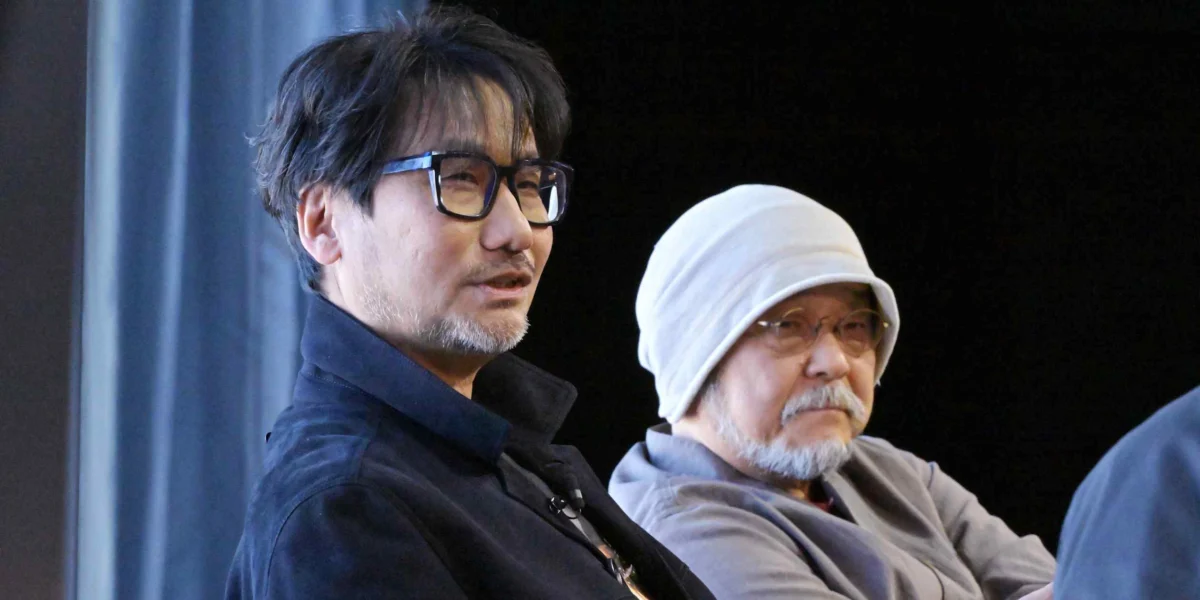
TOKYO – Hideo Kojima, the visionary game designer renowned for his genre-bending titles, and Mamoru Oshii, the celebrated filmmaker behind iconic anime such as Ghost in the Shell, have sounded a note of caution regarding the escalating influence of artificial intelligence on creative industries. Speaking at a prominent event in Tokyo on November 20, 2026, commemorating the 150th anniversary of Nikkei, Japan’s leading financial media company, both creators acknowledged AI’s potential benefits for business operations but expressed concerns about its implications for human creativity and the passive consumption of entertainment.
The discussion, held at a distinguished Nikkei forum, brought together two titans of Japanese popular culture, whose respective careers have consistently challenged conventions and captivated global audiences. Kojima, known for his cinematic storytelling and intricate game mechanics in franchises like Metal Gear and Death Stranding, and Oshii, whose philosophical and visually striking films delve into themes of identity, technology, and humanity, found common ground in their apprehension about AI’s role in shaping future entertainment.
The AI Conundrum: Efficiency vs. Engagement
Kojima articulated a nuanced perspective, recognizing the undeniable efficiency AI can bring to various aspects of content creation. He pointed to potential applications in streamlining development processes, generating assets, and even assisting in scriptwriting or character design. However, his primary concern lies in the potential for AI-generated content to foster a more passive audience. "While AI might be incredibly effective in producing content at scale and potentially reducing costs, there’s a risk that it could lead to a more desensitized audience," Kojima remarked during the panel. "If entertainment becomes too readily available, too perfectly tailored, and requires less active engagement from the viewer or player, we might lose the very spark that makes creative works meaningful."
This sentiment was echoed by Oshii, who has long explored the intersection of technology and human consciousness in his cinematic works. Oshii, whose films often grapple with the blurring lines between reality and simulation, suggested that AI’s ability to perfectly mimic and generate content could dilute the unique human element that imbues art with its soul. "The essence of art, whether in games or films, often lies in the imperfections, the unexpected leaps of imagination, and the emotional resonance that comes from a human creator’s intent and experience," Oshii stated. "If AI can replicate these elements flawlessly, what then becomes the unique value proposition of human creativity? Will audiences still seek out the artist’s journey, or simply consume the end product?"
Context of the Nikkei Anniversary Event
The Nikkei 150th Anniversary Forum, held over several days in Tokyo, aimed to foster discussions on the future of industry, technology, and culture in Japan and globally. The inclusion of Kojima and Oshii in a dialogue about AI underscores the media company’s recognition of the profound impact emerging technologies are having on sectors that were once considered exclusively the domain of human ingenuity. Nikkei, established in 1876, has a long history of reporting on technological advancements and their economic and societal ramifications. This year’s anniversary provided a fitting backdrop for a forward-looking conversation that touched upon the very definition of creativity in an increasingly automated world.
The event drew significant attention from industry professionals, academics, and media representatives, highlighting the widespread interest in understanding the implications of AI across various creative fields. The choice of Kojima and Oshii, both figures who have independently pushed the boundaries of their respective mediums and command considerable international respect, lent considerable weight to the discussion. Their shared platform for this specific topic suggested a consensus forming among leading creatives about the need for careful consideration as AI integration accelerates.
A Timeline of AI in Creative Industries
The integration of AI into creative processes is not a new phenomenon, but its pace and sophistication have accelerated dramatically in recent years.
- Early Stages (Pre-2010s): Basic AI algorithms were used for tasks like procedural content generation in video games and early forms of automated music composition. These were largely seen as tools to assist human creators.
- Deep Learning Revolution (2010s): Advancements in deep learning and neural networks led to more sophisticated AI capabilities. Image recognition, natural language processing, and generative adversarial networks (GANs) began to emerge, hinting at the potential for AI to create content.
- Generative AI Boom (Late 2010s – Present): Large language models (LLMs) like GPT-3 and image generation models such as DALL-E and Midjourney gained public prominence, demonstrating AI’s ability to produce text, images, and even rudimentary video and audio that could be mistaken for human-created work. This period has seen a surge in AI-powered tools for writers, artists, musicians, and game developers.
- Current Discussions (2020s): The increasing capabilities of generative AI have prompted widespread debate about intellectual property, the definition of authorship, the economic impact on creative professions, and the ethical considerations surrounding AI-generated content. The remarks by Kojima and Oshii fall squarely within this ongoing discourse.
The rapid evolution of these technologies means that the concerns raised by Kojima and Oshii are not hypothetical but are becoming increasingly relevant to the present and near future of entertainment.
Supporting Data and Industry Trends
The concerns voiced by Kojima and Oshii are supported by observable trends within the creative industries.
- Market Growth in AI Tools: The global market for AI in creative industries is projected to experience significant growth. Reports from market research firms indicate a compound annual growth rate (CAGR) exceeding 20% for AI-powered creative tools and services over the next five to seven years. This suggests a strong business incentive for adopting AI in content creation.
- AI in Game Development: Major game development studios are actively experimenting with and integrating AI into their pipelines. This includes AI for asset generation (textures, 3D models), level design, NPC behavior, and even scriptwriting assistance. Companies like NVIDIA have been at the forefront of developing AI tools for game developers, showcasing AI-generated environments and character animations.
- AI in Film and Animation: AI is being used for tasks such as automating rotoscoping, generating background characters, assisting with color grading, and even creating synthetic voices. The potential for AI to accelerate animation pipelines, which are notoriously labor-intensive, is a significant driver of adoption.
- Content Volume and Personalization: The proliferation of streaming services and digital platforms has led to an insatiable demand for content. AI offers a scalable solution to meet this demand. Furthermore, AI algorithms are increasingly used to personalize content recommendations, which, while enhancing user experience, also contributes to a curated and potentially less exploratory consumption pattern.
While these advancements promise efficiency and new creative possibilities, they also raise questions about the long-term value of human artistic input and the potential for audiences to become overly reliant on algorithmically driven content.
Implications for the Future of Entertainment
The discourse initiated by Kojima and Oshii touches upon several critical implications for the future of entertainment:
- The Role of the Human Creator: If AI can generate compelling narratives, visuals, and gameplay, what will be the defining role of human creators? It is likely that the emphasis will shift from pure content generation to curation, conceptualization, and imbuing work with unique emotional depth and authorial intent. The "visionary" aspect of creation may become even more paramount.
- Audience Engagement and Passivity: Kojima’s concern about passive consumption is a significant point. As AI becomes adept at predicting and catering to audience preferences, there is a risk of creating echo chambers of predictable content, potentially stifling critical thinking and the appreciation for challenging or unconventional art. The "serendipity" of discovering something new and unexpected might diminish.
- Economic Disruption: The widespread adoption of AI tools could lead to significant economic shifts within creative industries. While some roles might be augmented, others could be automated, raising questions about job displacement and the need for reskilling and upskilling of creative professionals. The cost-effectiveness of AI could also drive down the perceived value of human-created work.
- Defining Authorship and Intellectual Property: As AI becomes a more integral part of the creative process, questions of authorship and intellectual property will become increasingly complex. Who owns the copyright to AI-generated content? How is the contribution of human collaborators to be recognized? These legal and ethical quandaries are already being debated and will likely intensify.
- The "Soul" of Art: Oshii’s emphasis on the "soul" of art points to a deeper philosophical debate. Can AI truly replicate the human experience, the pain, joy, love, and loss that often fuel profound artistic expression? Or will AI-generated art, however technically proficient, ultimately lack the genuine emotional resonance that connects with audiences on a deeper level?
The conversation between Hideo Kojima and Mamoru Oshii serves as a crucial intervention in the ongoing dialogue about AI’s place in our creative landscape. Their warnings, rooted in their extensive experience and profound understanding of art and technology, highlight the necessity of a balanced approach. As AI continues its rapid integration, it is imperative that creators, industry leaders, and audiences alike consider not just the efficiency and potential of these tools, but also their impact on the very essence of human creativity and the meaningful engagement we derive from it. The future of entertainment hinges on finding a harmonious synergy between artificial intelligence and the irreplaceable spark of human imagination.
