

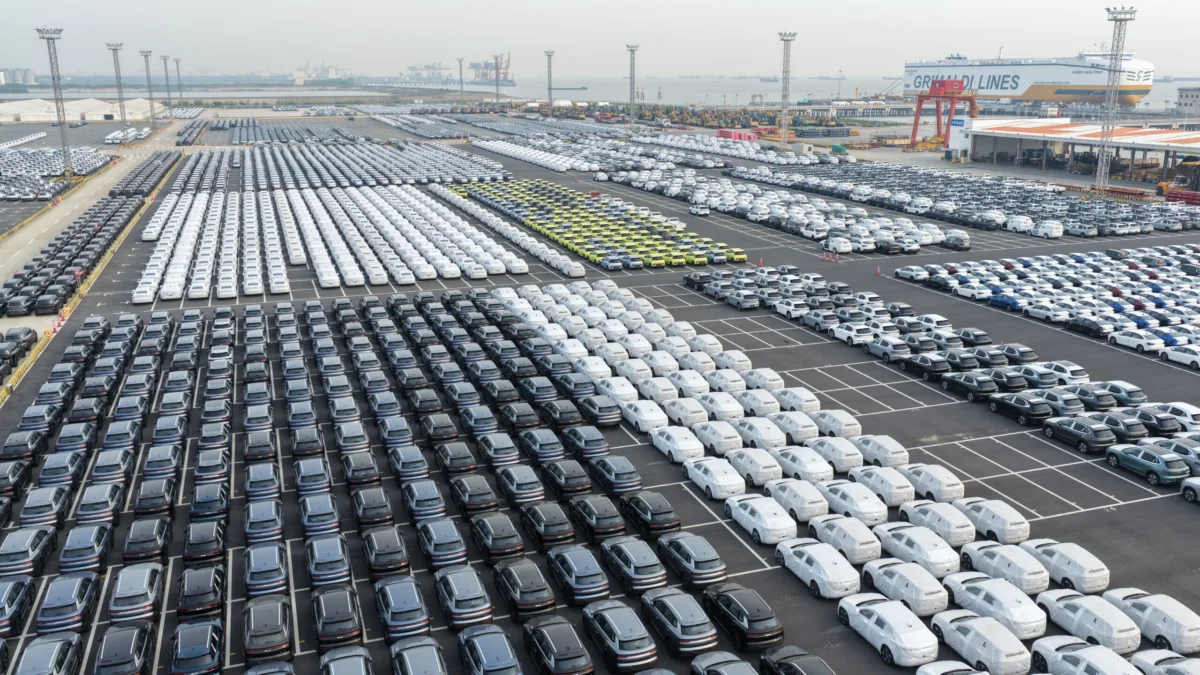
DETROIT – As President Donald Trump prepares for a critical meeting with Chinese President Xi Jinping this week, the prospect of Chinese automakers gaining greater access to the U.S. market has ignited a fierce debate among American politicians and across the global automotive industry. Warnings echo from Washington D.C. to Detroit that such a move could unleash a "Pandora’s box" of economic and strategic challenges, potentially disrupting the domestic manufacturing base and altering the competitive landscape for decades.
The Catalyst: Trump’s Stance and Industry Backlash
The current alarm was triggered earlier this month when President Trump, signaling a potential shift in policy, indicated he might be "OK" with Chinese automakers entering the U.S. market, provided they committed to domestic vehicle production. This statement, perceived by many as an opening, immediately galvanized a broad coalition of American auto industry stakeholders. A consortium comprising virtually every major facet of the U.S. automotive sector – including manufacturers, franchised dealers, and suppliers – issued a rare, unified plea to the President, urging him to reconsider his position. Their message underscored the profound anxieties within an industry that forms the backbone of American manufacturing.
This industry-wide push was swiftly followed by a bipartisan chorus from Capitol Hill. More than two dozen Democratic lawmakers, including Michigan Senator Elissa Slotkin, echoed the industry’s concerns in their own letter to President Trump. Their collective message emphasized the imperative of maintaining existing U.S. restrictions against Chinese automakers. Senator Slotkin articulated the sentiment succinctly to reporters on Wednesday: "It’s not at this point a partisan issue. It’s about whether we want to make cars in America and whether we want a manufacturing base that can pivot when we need it. If we want that, we shouldn’t let them in our country." This confluence of opposition from both industry and political aisles highlights the deep-seated apprehension regarding China’s automotive ambitions.
The High-Stakes Summit: Attendees and Implications
President Trump is scheduled to host President Xi Jinping and a high-profile Chinese delegation for discussions on Thursday and Friday. The guest list for the accompanying state dinner is a testament to the economic gravity of the discussions, particularly for the automotive sector. Reports suggest the Chinese delegation could include Wang Chuanfu, the formidable founder of BYD, China’s largest automaker, and Robin Zeng, the visionary founder of CATL, the world’s leading manufacturer of electric vehicle batteries. The potential presence of these two titans underscores the strategic importance of this visit for the U.S. auto industry, as noted by Michael Dunne, a renowned expert on China’s automotive landscape and a former General Motors executive.
The American side is also expected to be well-represented. Mary Barra, CEO of General Motors, is slated to attend Trump’s state dinner for Xi, as confirmed by Reuters. Other prominent U.S. executives, including Tesla CEO Elon Musk, are also anticipated to be present, signaling the broad interest and potential implications of the summit for American innovation and industry. Notably absent, however, may be some other major U.S. auto leaders. Ford Motor declined to confirm the attendance of its CEO, Jim Farley, particularly after the Department of Transportation recently criticized the company for its ties to China, specifically a licensing deal with CATL. Similarly, Stellantis, the parent company of Chrysler, stated that CEO Antonio Filosa is out of the country and not planning to attend, perhaps reflecting a cautious stance amidst the heated debate.
The "Pandora’s Box" Warning: Subsidies, Market Flooding, and Price Wars
The concerns raised by industry insiders and lawmakers are not without precedent. Bipartisan bills seeking to outright ban Chinese automakers from the U.S. market are actively moving through Congress, reflecting a legislative desire to preemptively address what many view as an existential threat. This pressure campaign intensifies as China-made vehicles have demonstrated an aggressive and rapid expansion beyond their domestic borders, particularly into European, Central, and South American markets.
A prevailing fear among global automakers is that Chinese rivals, such as BYD and Geely, benefit from substantial government subsidies, enabling them to flood international markets with aggressively priced vehicles. This practice, often described as "dumping," could severely undercut domestic production and vehicle prices in target markets, leading to factory closures, job losses, and a significant erosion of market share for established players.
Michael Dunne, an authoritative voice on the subject, does not mince words, stating that these concerns are far from overblown. He warns that Chinese automakers would "quickly overwhelm America’s auto industry, just as it is now ravaging Europe." The data supports this stark assessment: Global market share for Chinese brands surged by nearly 70% between 2020 and 2025, according to market research and consulting firm GlobalData. The impact has been particularly pronounced in the European Union, where Chinese automakers’ market share, virtually nonexistent in 2020, rocketed to 12% by August of the current year, as reported by Germany-based Dataforce. This rapid infiltration serves as a potent cautionary tale for the U.S. market.
Dunne further elaborated on the dire situation within China itself, where "China’s scores of automakers are currently engaged in a fight-to-the-death price war at home. There’s red ink everywhere." For these companies, he argues, "Access to the U.S., by far the most lucrative car market in the world, is like a giant tank of life-saving oxygen." This perspective suggests that Chinese automakers are not merely seeking new markets for growth, but potentially a lifeline for survival, making their potential entry into the U.S. market an even more formidable and aggressive endeavor.
China’s Automotive Ascent: From Insular to Global Dominator

For much of the 21st century, China represented one of the largest and most rapidly expanding automotive markets globally. Non-Chinese automakers, including American giants like General Motors, flocked to this historically enclosed country, drawn by the promise of massive sales volumes and lucrative profits through joint ventures. However, after years of significant success for these international players, the Chinese automotive sector has undergone a profound transformation. What was once an insular industry primarily focused on domestic consumption and attracting foreign investment has rapidly evolved into the world’s biggest exporter of vehicles.
This meteoric rise has been fueled by a multi-pronged strategy. Central to China’s success has been extensive government funding and industrial policies that have fostered the growth of domestic champions, particularly in the electric vehicle (EV) and battery sectors. These subsidies have enabled Chinese firms to invest heavily in research and development, scale production rapidly, and offer competitive pricing. Beyond financial support, China has cultivated a culture of innovation and speed within its manufacturing base, allowing its companies to rapidly adapt to market trends and bring new technologies to market. The decision to aggressively ramp up exports has also been driven by pragmatic factors, including a slowing domestic Chinese market and significant plant underutilization, making global expansion a strategic necessity.
Geopolitical and Economic Dimensions: "Attacking Very Aggressively"
The competition against Chinese automakers is described as a "hell of a challenge" by Christian Meunier, Nissan Motor chairman of the Americas, who has firsthand experience in markets outside the U.S. He observes that while Chinese products are often decent, their pricing often borders on "dumping" – selling goods at unfairly low prices. "We know we’re not competing with [automakers], we’re competing against the governments," Meunier told CNBC, highlighting the state-backed nature of Chinese competition. "They’re attacking very aggressively." Nissan, he explained, is attempting to counter this by expanding its global scale to lower costs and enhance efficiency, acknowledging the inevitability of this challenge reaching American shores. "We need to get ready for the day when they come to the U.S. because it will happen one day. Hopefully not tomorrow, but it will happen one day," he conceded.
Michael Dunne further distinguishes China’s ambitions and business practices from those of traditional U.S. allies like Japan or South Korea. He emphasizes a core tenet of Chinese foreign policy: "As Xi Jinping has alluded to many times, the goal for China is to ‘make other countries more dependent on China and China less dependent on other countries.’ That’s not a friendly posture." This perspective elevates the debate beyond mere economic competition to one of geopolitical strategy, where market access can be leveraged for broader national objectives.
The implications for the U.S. extend beyond direct auto manufacturing. A flood of heavily subsidized Chinese vehicles could destabilize the entire automotive supply chain, from raw materials and components to dealerships and after-market services. It could lead to widespread job displacement in manufacturing, sales, and related industries, impacting communities that have long relied on the auto sector. Furthermore, the rapid advancement of Chinese companies in critical technologies like EV batteries raises national security concerns regarding supply chain vulnerabilities and reliance on a geopolitical rival for essential components of future mobility. The potential for Chinese vehicles to collect vast amounts of data on American consumers, and the implications for data privacy and national security, also weigh heavily on policymakers’ minds.
Policy Responses and Congressional Action
The current U.S. policy framework includes a 27.5% tariff on Chinese-made vehicles, a legacy of previous administrations aimed at protecting domestic industries. However, the industry and lawmakers argue that this tariff alone may not be sufficient to stem the tide, especially if Chinese automakers establish production facilities within the U.S. – the scenario President Trump indicated he might be "OK" with. Such a move would bypass existing import tariffs, potentially opening the door to the very market disruption currently feared.
Consequently, there is growing momentum in Congress for more stringent measures. Bipartisan legislation is being introduced that seeks not just to impose tariffs, but to enact outright bans on Chinese automakers, particularly those with significant state backing or those deemed to pose national security risks. These legislative efforts aim to create a more robust firewall, acknowledging the unique nature of competition from state-backed entities. The debate over these bills reflects a broader consensus across the political spectrum that the U.S. must protect its industrial base and technological leadership in critical sectors like automotive.
Stakeholder Perspectives and the Road Ahead
The unified stance of U.S. automakers, franchised dealers, and suppliers, alongside bipartisan congressional support, underscores the gravity of the situation. For domestic manufacturers like Ford and General Motors, who have significant investments in transitioning to electric vehicles and revitalizing American manufacturing, the threat of subsidized Chinese competition is particularly acute. Labor unions, such as the United Auto Workers (UAW), implicitly share these concerns, understanding that unchecked foreign competition could jeopardize union jobs and hard-won wages and benefits. The discussions during the Trump-Xi summit, therefore, are not merely about trade balances but about the future trajectory of American industry, innovation, and employment.
As President Trump engages with President Xi, the stakes for the global automotive industry, and for American economic sovereignty, could not be higher. The outcome of these discussions, and the subsequent policy decisions, will determine whether the U.S. market remains a sanctuary for domestic innovation and manufacturing, or whether it becomes the next battleground in a global automotive price war, potentially spearheaded by heavily subsidized Chinese rivals. The "Pandora’s box" of Chinese auto entry looms large, and the decisions made in the coming days and weeks will cast a long shadow over the future of mobility and industrial strength in the United States.
— CNBC’s Justin Papp contributed to this report.
