

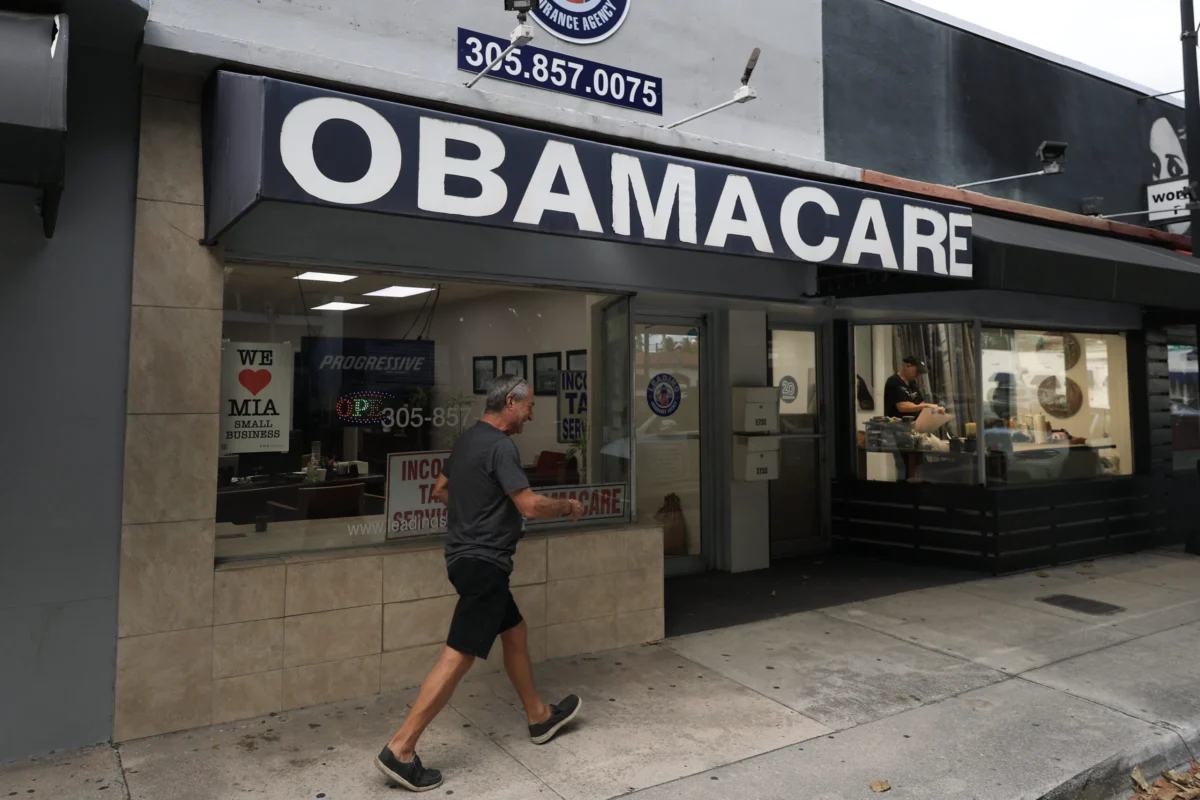
The Centers for Medicare and Medicaid Services (CMS) announced a significant enforcement action on Tuesday, canceling approximately 315,000 Affordable Care Act (ACA) marketplace enrollments, impacting an estimated 760,000 individuals. This sweeping move, characterized by Vice President JD Vance as addressing "rampant fraud," also involves a rigorous verification process for an additional 419,000 people to confirm their legal U.S. residency and compliance with income thresholds required for ACA benefits. The White House Task Force to Eliminate Fraud, spearheaded by Vice President Vance, is leading this initiative, projecting an estimated savings of $2.2 billion in taxpayer-funded subsidies. The announcement comes amidst a broader push by the current administration to identify and eliminate waste, fraud, and abuse across federal health programs, signaling a potentially transformative shift in the oversight and administration of the ACA, commonly known as Obamacare.
The Enforcement Action Unveiled: Scope and Rationale
The scale of the cancellations and verifications underscores a concentrated effort to address perceived systemic vulnerabilities within the ACA marketplaces. The 315,000 canceled enrollments represent a substantial portion of the overall ACA beneficiary pool, raising immediate questions about the specific nature of the alleged unauthorized enrollments and the processes that allowed them to occur. Similarly, the ongoing verification of nearly half a million individuals highlights a renewed focus on eligibility criteria, particularly regarding legal residency and accurate income reporting—two critical factors determining subsidy eligibility and the cost burden on federal coffers.
Speaking at a press briefing, Vice President Vance delivered a scathing critique of what he described as a flawed system, directly attributing the alleged fraud to structural issues and a lack of oversight. "You have a system where, on the one hand, brokers are paid money to feed patients into the system, while on the other hand, the government isn’t even checking whether the people enrolled are actually eligible for the program. What do you have? Of course, rampant, rampant fraud," Vance asserted. His remarks suggested a deliberate design flaw or a significant administrative lapse that incentivized improper enrollments without adequate safeguards. This perspective frames the current enforcement as a necessary corrective measure following years of what the administration views as lax oversight.
Further bolstering the administration’s claims, CMS Administrator Dr. Mehmet Oz presented data suggesting a significant portion of enrollees might not be utilizing their benefits. Dr. Oz claimed that approximately 35% of individuals currently enrolled in the Obamacare system "have never used the program," specifying that these individuals had not filled a prescription or seen a doctor. This statistic, if validated, could point to "phantom enrollments" where individuals might be enrolled on paper to improperly claim subsidies without genuinely seeking healthcare services, or perhaps to other issues such as enrollment for speculative purposes or through identity theft. The precise breakdown of the 315,000 canceled enrollments—how many were due to ineligibility versus alleged fraudulent intent—remains to be fully clarified by CMS, but the administration’s narrative strongly emphasizes fraudulent activity.
Historical Context and the Evolution of the Affordable Care Act
To fully grasp the significance of this enforcement action, it is essential to understand the historical context of the Affordable Care Act itself. Signed into law by President Barack Obama in 2010, the ACA aimed to expand health insurance coverage to millions of uninsured Americans, primarily through a combination of state Medicaid expansion, federal subsidies to help low and middle-income individuals purchase private insurance on new marketplaces, and regulations prohibiting insurers from denying coverage based on pre-existing conditions.
The ACA marketplace, which officially launched in 2013, became a cornerstone of this expansion. It provides a platform where individuals and small businesses can compare and purchase health insurance plans, with financial assistance (subsidies) available to those earning between 100% and 400% of the federal poverty level. These subsidies, which directly reduce monthly premium costs, are calculated based on household size and estimated yearly income, requiring applicants to accurately report their financial situation.
A key component of the ACA’s original design was the individual mandate, a requirement that most Americans obtain health insurance or pay a penalty. This mandate was intended to ensure a broad risk pool, including healthier individuals who use less care, thereby helping to keep premiums affordable for everyone. However, the federal penalty for going without coverage was effectively reduced to $0 beginning in 2019, under a previous administration. This change, while alleviating a financial burden for some, raised concerns among healthcare economists about its potential impact on the risk pool, possibly leading to a sicker, more expensive insured population and subsequently higher premiums. The current administration’s focus on "phantom" enrollees who don’t use services could be interpreted as a different angle on the risk pool issue, albeit one tied to alleged fraud rather than mandate enforcement.
Throughout its existence, the ACA has been a focal point of intense political debate. The Trump administration, during its first term, made numerous attempts to repeal and replace the legislation, arguing that it was too costly, inefficient, and imposed undue burdens on individuals and businesses. While these efforts ultimately failed to overturn the law entirely, proposals were advanced to modify the ACA, often suggesting changes that would make insurance plans less comprehensive, potentially reducing coverage mandates and allowing for a wider array of lower-cost, less robust options. The current enforcement action, led by Vice President Vance and CMS Administrator Oz, aligns with a broader philosophy of scrutinizing and re-evaluating federal programs for efficiency and fiscal responsibility, echoing past criticisms of the ACA’s economic impact.
A Timeline of Enrollment Growth and Policy Shifts
The trajectory of ACA enrollment has been anything but static, experiencing significant fluctuations influenced by policy changes and external events. Prior to the COVID-19 pandemic, ACA marketplace enrollment hovered around 10 million people. The onset of the pandemic in early 2020 triggered an unprecedented public health and economic crisis, leading to widespread job losses and a heightened awareness of the importance of health insurance.
In response to these extraordinary circumstances, the American Rescue Plan (ARP), a massive COVID-19 relief bill passed in 2021, significantly enhanced the available ACA subsidies. These expanded credits made healthcare dramatically more affordable for millions of Americans, extending eligibility to more middle-income individuals and substantially reducing premiums for many existing enrollees. This policy intervention was designed to ensure that more people could access affordable healthcare during a time of national emergency.
The impact of the ARP was immediate and dramatic. Following its implementation, ACA marketplace enrollment experienced what has been described as "unprecedented enrollment growth from 2021 to 2024," according to a June report from the Office of the Assistant Secretary for Planning and Evaluation (ASPE), the principal policy advisor to the Secretary of the Department of Health and Human Services. This surge saw enrollment numbers swell from roughly 10 million before the pandemic to approximately 22 million after the enhanced subsidies took effect.
However, the same ASPE report introduced a critical caveat: "nearly half [of this enrollment growth] was suspected to be improper, phantom, or fraudulent." The report defined improper or fraudulent enrollment as instances where individuals misstated their income to gain access to free plans or higher subsidies than they were legitimately entitled to. This stark finding from a government agency provides a significant foundation for the current administration’s claims and actions. It suggests that while the ARP successfully expanded access, it may have inadvertently created vulnerabilities that bad actors exploited.
The enhanced subsidies, initially a temporary measure, were extended but ultimately expired at the end of 2025. This expiration subsequently led to an increase in premiums for many individuals covered by ACA exchanges, creating financial challenges for some who had become reliant on the more generous assistance. As of the ASPE report, an estimated 19.2 million Americans are currently enrolled in Obamacare plans, reflecting a slight dip from the peak but still significantly higher than pre-pandemic levels. This backdrop of rapid expansion followed by subsidy adjustments sets the stage for the current crackdown, with officials arguing that the rapid growth under the previous administration, coupled with weakened safeguards, contributed to the alleged widespread fraud.
Mechanisms of Vulnerability: Brokers, Self-Attestation, and Verification Challenges
The specific mechanisms through which alleged fraud and improper enrollments could occur within the ACA system are complex and multifaceted. Vice President Vance’s remarks pointed directly to the role of insurance brokers, who are compensated for enrolling individuals into ACA plans. While brokers play a crucial role in helping consumers navigate the often-complex insurance landscape, a system that solely incentivizes enrollment without robust verification checks could, in theory, create an environment susceptible to abuse. Some brokers, under pressure to meet enrollment targets, might inadvertently or even intentionally facilitate improper enrollments if oversight is insufficient.
Another key area of vulnerability lies in the enrollment process itself, which heavily relies on self-attestation, particularly for income and household size. While CMS does conduct data matching with other federal agencies (like the IRS and Social Security Administration) to verify information, these checks are not always instantaneous or comprehensive, especially during periods of high enrollment volume. The rapid expansion facilitated by the American Rescue Plan’s enhanced subsidies likely put immense pressure on existing verification systems, potentially leading to a backlog or a less rigorous review of applications. This could create windows of opportunity for individuals to misrepresent their income or other eligibility criteria to qualify for higher subsidies or even free plans they would otherwise not be entitled to.
Furthermore, verifying legal U.S. residency for millions of applicants presents its own set of administrative challenges. While systems are in place to check immigration status, the sheer volume of applications and the complexities of immigration documentation can make real-time, ironclad verification difficult. The verification process for the additional 419,000 individuals specifically targets these two critical areas: legal residency and income thresholds, indicating that these are perceived as primary points of weakness where improper enrollments may have occurred.
Broader Implications and Political Ramifications
The current enforcement action carries profound implications across several fronts, from individual enrollees to the future of federal healthcare policy.
Impact on Affected Individuals: For the 760,000 individuals whose enrollments have been canceled, the immediate consequence is a loss of health insurance coverage. This could be devastating for those relying on these plans for critical medical care. While some may have been genuinely ineligible, others might have made honest mistakes in their applications or fallen victim to unscrupulous third parties. The process for these individuals to regain coverage, if they are indeed eligible, will likely involve re-applying and undergoing a more stringent verification process, potentially leading to gaps in coverage and significant stress. For those found to have intentionally defrauded the system, there could be legal repercussions or demands for repayment of past subsidies.
Fiscal Impact: The projected savings of $2.2 billion, if realized, would represent a significant win for an administration focused on fiscal conservatism and reducing government waste. This figure, however, must be contextualized within the broader landscape of federal healthcare spending, which runs into trillions of dollars annually. Nevertheless, it underscores a commitment to program integrity and could set a precedent for similar crackdowns in other federal benefit programs.
Political Ramifications: The enforcement action is inherently political, framed by Vice President Vance as rectifying failures of the "Biden administration" that enabled widespread fraud. This narrative serves to highlight perceived administrative inefficiencies and lax oversight by the previous administration, aligning with the current administration’s broader agenda of government reform and accountability. It also reinforces the administration’s long-standing criticisms of the ACA’s design and cost-effectiveness, potentially paving the way for future legislative proposals aimed at fundamentally altering the law. Healthcare advocacy groups, typically supportive of expanded access, are likely to voice concerns about the potential for eligible individuals to lose coverage due to administrative errors or overly aggressive enforcement, thus creating a renewed public debate about balancing fraud prevention with access to care.
Impact on the Healthcare Industry: Insurance carriers operating within the ACA marketplaces may face adjustments as their enrollment numbers shift. The crackdown could lead to increased scrutiny of broker practices and a demand for more robust verification tools from CMS, potentially changing how plans are marketed and sold. For insurance brokers, there might be new regulations or heightened accountability measures imposed to prevent future instances of alleged fraud.
Looking Ahead: The Future of ACA and Federal Oversight
This enforcement action marks a pivotal moment for the Affordable Care Act. It signals a new era of heightened scrutiny and potentially more stringent eligibility requirements for federal healthcare subsidies. The White House Task Force to Eliminate Fraud is likely to continue its investigations, potentially leading to further cancellations, verifications, or even criminal prosecutions in cases of egregious fraud.
The broader implications suggest that the current administration is committed to a more conservative approach to federal healthcare programs, prioritizing program integrity and fiscal discipline. This could manifest in legislative proposals aimed at modifying the ACA’s subsidy structure, eligibility criteria, or even the scope of covered benefits. The ongoing tension between ensuring broad access to affordable healthcare and safeguarding taxpayer dollars from fraud will undoubtedly remain a central theme in the national discourse surrounding health policy. The effectiveness of these measures in reducing fraud without unduly burdening eligible beneficiaries will be a critical metric by which this initiative is ultimately judged.
