

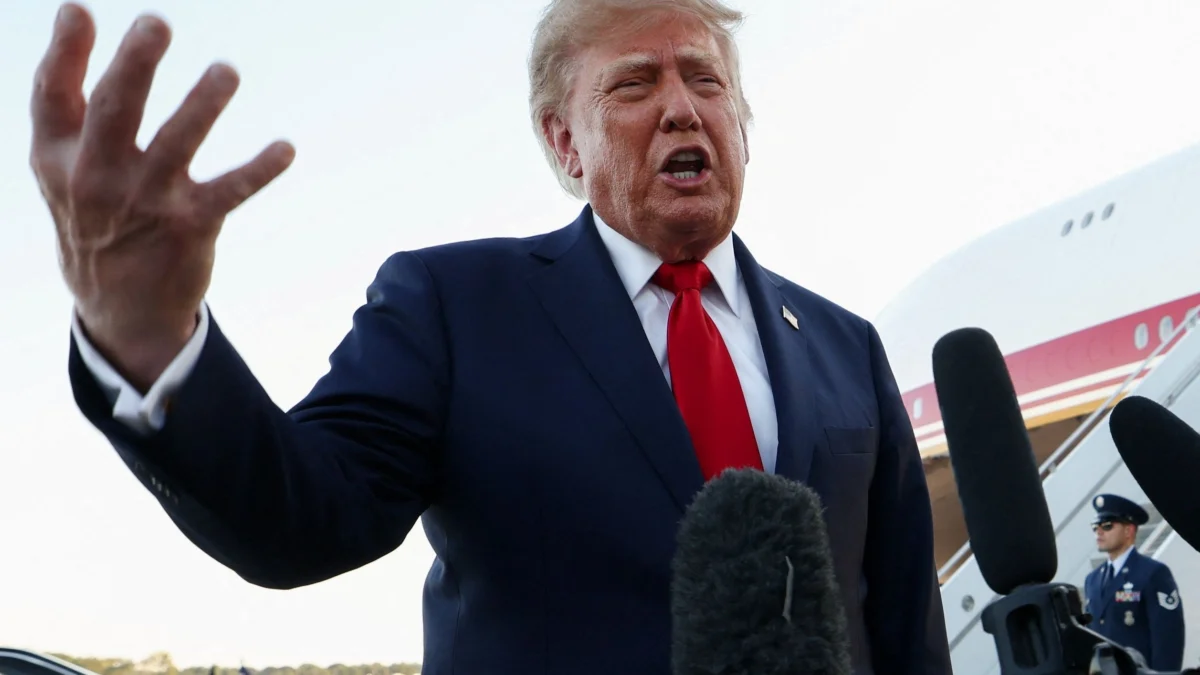
The escalating trade dispute between the United States and Canada has reached a critical juncture, with President Donald Trump issuing a stern warning to the European Union. Trump stated that he would impose significant tariffs on European goods and potentially halt trade if the EU pursues a proposal to grant Canada "associated member" status. This declaration comes as Canada prepares to implement retaliatory tariffs on U.S. imports, further intensifying the trans-Atlantic trade friction.

The root of this increasingly complex geopolitical and economic standoff lies in the broader trade policies championed by the Trump administration, which have prioritized bilateral deals and national economic interests, often at the expense of established multilateral trade agreements. The proposed EU-Canada association, championed by European Commission President Ursula von der Leyen, appears to have been interpreted by President Trump as a strategic move that could undermine U.S. trade leverage, particularly in the context of ongoing negotiations with both Canada and China.
A Chronicle of Escalating Trade Tensions
The current trade spat did not emerge overnight. It is the culmination of a series of actions and reactions that have characterized the U.S. trade policy under the Trump administration.

- Early 2020s: The administration began imposing tariffs on various goods, citing national security concerns and unfair trade practices by allies and adversaries alike. Steel and aluminum tariffs, in particular, targeted key Canadian exports.
- Mid-2020s: Negotiations for a new North American trade agreement (USMCA, replacing NAFTA) were fraught with tension, with the U.S. employing aggressive tactics to secure concessions from Canada and Mexico.
- Specific Canadian Retaliation: In response to U.S. tariffs, Canada announced its own retaliatory measures, targeting a wide range of American products. This tit-for-tat exchange has been a recurring theme.
- The EU-Canada Proposal: The recent proposal by the European Union to elevate its relationship with Canada, ostensibly to foster closer economic and political ties, appears to have been the catalyst for Trump’s latest threat. While the specifics of this "associated member" status are not fully detailed in the initial reports, the U.S. President’s interpretation of it as a hostile act has immediate implications.
Trump’s Directive: A Broad Threat with Specific Targets
President Trump’s pronouncements, made to reporters, indicate a willingness to employ broad economic sanctions if he perceives the EU’s move as an "act of hostility." He explicitly stated that "very high tariffs against Europe" would be levied, and that trade with Europe in "many areas" could be halted. This suggests a comprehensive strategy aimed at leveraging U.S. economic power to influence the geopolitical decisions of its allies.
The U.S. President’s reaction to Canada’s trade practices was also critical, describing the neighbor as a "terrible trade partner" recently. This sentiment echoes his long-standing critique of the trade balance between the two nations, which he has frequently characterized as unfavorable to the United States.
Canada’s Countermeasures: A Significant Economic Response
Canada’s response to U.S. trade actions has been substantial. The Canadian government confirmed that retaliatory tariffs on U.S. imports would take effect on a specific date, impacting goods valued at billions of dollars. These measures, detailed in a comprehensive list published by the Canadian Department of Finance, encompass a wide array of sectors, including:
- Steel and Aluminum: Directly targeting products affected by earlier U.S. tariffs.
- Household Appliances: Affecting consumer goods.
- Agricultural Equipment: Impacting a key sector for both economies.
- Pulp and Paper: A significant export commodity for Canada.
- Electronics: Reflecting the interconnectedness of North American manufacturing.
The Canadian government, through its Finance Minister, stated its commitment to defending its industries and workers. The retaliatory tariffs, some reaching up to 50 percent, are designed to mirror the impact of U.S. tariffs on Canadian exports, creating a direct economic consequence for American businesses. The total value of goods subjected to these Canadian counter-tariffs is estimated to be in the tens of billions of dollars, highlighting the scale of the economic warfare.

China’s Position: Navigating the Trade Wars
Amidst the escalating tensions between the U.S. and its North American and European partners, China has also been a focal point of U.S. trade policy. Reports suggest that China and the United States are actively seeking a reduction in import tariffs. This pursuit of tariff reductions, according to the Chinese government, is aimed at reaching an agreement that could be announced when the leaders of both nations meet in two weeks.
The Chinese Ministry of Commerce, through its spokesperson, indicated that negotiators are working towards "timely" mutual tariff reductions on goods valued at $30 billion each. This suggests a potential de-escalation in the U.S.-China trade war, though the broader implications of these negotiations remain to be seen, especially in the context of the U.S. administration’s overall trade strategy.

Tourism Sector: A Surprising Front in the Trade Dispute
Beyond the direct economic impacts of tariffs, the trade dispute has also had ripple effects on sectors like tourism. Despite the heightened tensions, U.S. tourism officials are actively working to attract Canadian visitors. States like New York have launched promotional campaigns, offering discounts on hotels and attractions. Las Vegas has even matched the Canadian dollar with the U.S. dollar to incentivize Canadian travelers.
However, these efforts are occurring against a backdrop of declining Canadian spending on travel to the U.S. Data from Statistics Canada indicates a significant decrease in expenditures by Canadians on U.S. travel compared to the previous year. This highlights how geopolitical and economic friction can influence consumer behavior and impact key service industries.

The Automotive Industry: A Key Vulnerability
The automotive sector, a cornerstone of the North American economy, is particularly vulnerable to these trade disputes. German automakers, with significant investments and production facilities in Canada that supply the U.S. market, have expressed deep concern. These companies rely on seamless cross-border trade for both components and finished vehicles.
The threat of escalating tariffs on vehicles, parts, and steel from Canada creates substantial uncertainty for the industry. German manufacturers are also investing in advanced technologies like battery production in Canada, further entangling their operations with the bilateral trade relationship. The industry’s dependence on stable and predictable trade flows makes it highly susceptible to the volatility of trade policy.

Broader Economic Implications and Analysis
The escalating trade conflicts have far-reaching implications beyond the immediate participants.
- Supply Chain Disruptions: Tariffs and trade restrictions can disrupt complex global supply chains, leading to increased costs for businesses and consumers alike. The automotive industry’s reliance on integrated North American supply chains makes it a prime example.
- Reduced Investment: Uncertainty surrounding trade policy can deter foreign and domestic investment. Businesses may postpone or cancel expansion plans due to the unpredictable nature of tariffs and trade regulations.
- Inflationary Pressures: Tariffs effectively act as taxes on imported goods, which can lead to higher prices for consumers, contributing to inflationary pressures.
- Geopolitical Realignment: The U.S. administration’s "America First" approach has strained relationships with traditional allies. The threat against the EU over its potential partnership with Canada underscores a broader trend of transactional diplomacy, where alliances are increasingly viewed through the lens of immediate economic benefit.
- Impact on Global Trade Governance: The U.S. administration’s willingness to challenge established trade norms and institutions, such as the World Trade Organization, raises questions about the future of global trade governance and the stability of the international economic order.
The current situation reflects a significant departure from decades of increasing global trade integration. The U.S. administration’s focus on bilateral negotiations and the perceived weaponization of trade policy present a challenging environment for international commerce and diplomacy. The outcomes of these ongoing disputes will likely shape the global economic landscape for years to come, influencing trade flows, investment decisions, and geopolitical alliances. The interconnectedness of the global economy means that conflicts in one region can have cascading effects worldwide, underscoring the need for stable and predictable trade relations.
