

The U.S. Federal Reserve has signaled a resolute stance on combating inflation, indicating that its battle against rising prices is far from over and will likely extend longer than many market participants had anticipated. This decisive communication, delivered through its latest monetary policy statement and accompanying economic projections, underscores the central bank’s commitment to achieving its two percent inflation target, a level deemed essential for sustainable economic growth and price stability. The urgency of this mission is further highlighted by a recent survey of Fed officials, revealing a consensus that price stability may not be fully restored until 2029, a timeline that underscores the persistent nature of the current inflationary pressures.
The Dot Plot Projections: A Long Road to Two Percent Inflation
The Federal Reserve’s meticulously watched "Dot Plots," released quarterly, offer a unique window into the collective outlook of its policymakers regarding the future path of interest rates and economic conditions. The latest projections reveal a significant recalibration of expectations, with Fed members now anticipating that the annual inflation rate will not return to the central bank’s target of two percent until 2029. This projection signifies a considerable shift from previous assessments and suggests that the Fed is preparing for a prolonged period of elevated inflation, necessitating a sustained period of restrictive monetary policy.
For over five years, the U.S. economy has grappled with inflation exceeding the Federal Reserve’s target. In August, the annual inflation rate stood at 3.4 percent. A closely watched subset of this figure, the core inflation rate – which excludes the volatile components of energy and food prices – registered at 2.4 percent. While this core figure represents a moderation from previous peaks, it remains stubbornly above the Fed’s objective, fueling concerns about embedded inflationary pressures within the broader economy.
A "Hawkish" Stance: Fed Chair’s Assertive Communication
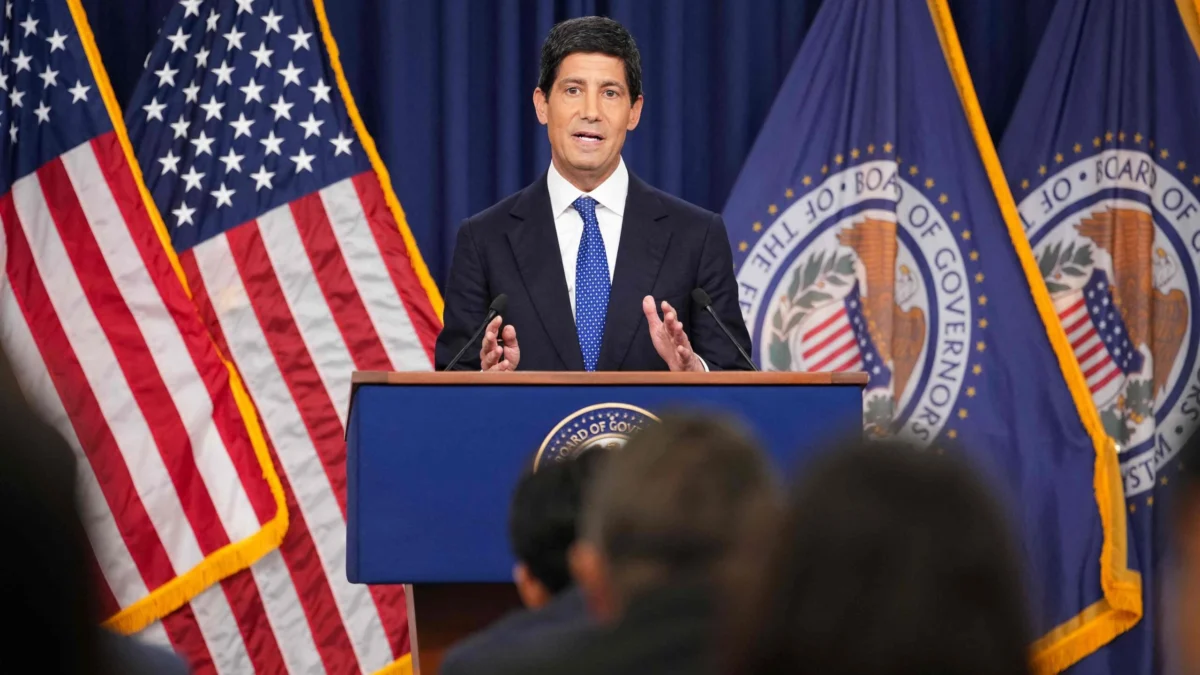
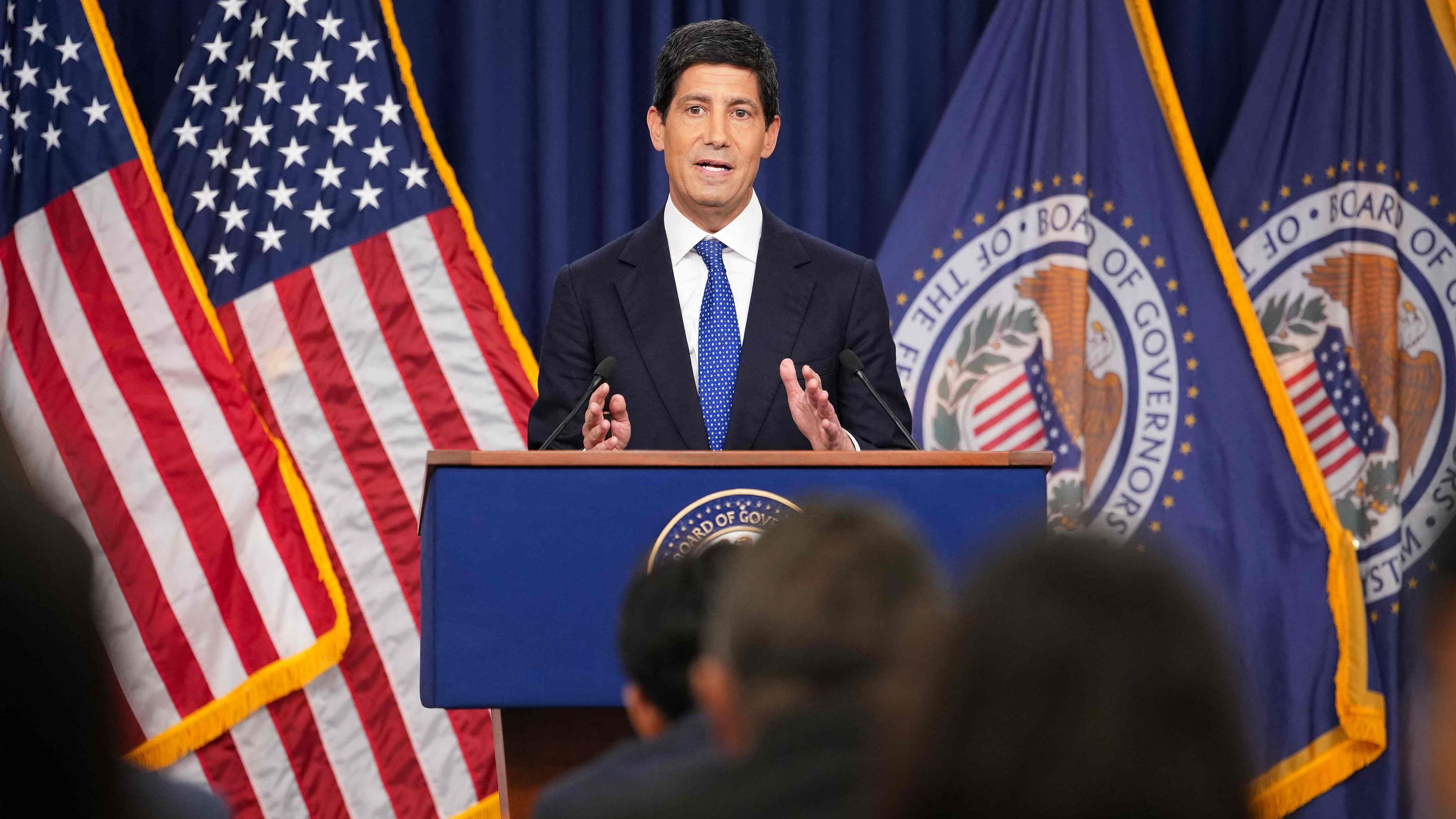
In the press conference following the latest interest rate decision, Fed Chair Kevin Warsh articulated a clear and forceful message, leaving little room for doubt about the central bank’s priorities. "The problem is inflation," Warsh stated, directly addressing the primary challenge facing the U.S. economy. He reiterated his earlier commitment to delivering price stability, asserting that the day’s policy actions were consistent with that promise.
Warsh emphasized the Fed’s success in "delivering" on its mandate, a phrase he repeated eight times during the conference. This repetition underscored the Fed’s determination to project confidence and resolve in its anti-inflationary efforts. Andrzej Skiba, a bond expert at asset manager RBC Bluebay in London, observed that Warsh’s communication was particularly effective. "Kevin Warsh appeared more credible in his communication today and conveyed a consistent message," Skiba noted, suggesting that the Fed Chair’s performance bolstered market confidence in the central bank’s resolve.

Navigating Political Pressures: Warsh’s Test of Leadership
The recent interest rate decision was widely seen as a crucial test for Warsh, who assumed leadership of the Federal Reserve in May, succeeding Jerome Powell. Warsh, a former nominee of U.S. President Donald Trump, has faced persistent pressure from the White House to enact interest rate cuts, a stance that Trump has consistently advocated for, including recent public statements on social media. However, economists widely consider such calls for rate reductions to be premature and counterproductive given the prevailing inflationary environment.
The surprisingly robust August jobs report served as a key piece of data supporting the Fed’s cautious approach. The strong employment figures indicated that the U.S. economy possesses the resilience to withstand higher interest rates without experiencing a significant downturn. This resilience provides the Federal Reserve with the necessary room to maintain a tighter monetary policy stance to curb inflation, a strategy that directly contrasts with the administration’s calls for stimulus.
Market Surprise: The Fed’s "Hawkish" Pivot
The market had largely priced in a more dovish outcome, with interest rate traders indicating a 90 percent probability of a rate hike prior to the Fed’s announcement, according to data from the Chicago Mercantile Exchange. Bond yields had already reflected this expectation, climbing in anticipation of further monetary tightening. Michael Pfister, an analyst at Commerzbank, explained the potential market impact: "Anything other than a rate hike would have been a severe blow to the markets."

In a move that surprised many, the Federal Reserve implemented a 0.25 percentage point interest rate increase, bringing the federal funds rate into the range of 3.75% to 4.0%. This action, coupled with the updated "Dot Plots," signaled a more restrictive monetary policy path than previously anticipated by market participants. The projections indicated that the median forecast among policymakers pointed towards another rate hike by the end of the year, pushing the federal funds rate to between 4.0% and 4.25%. Furthermore, the projections suggested that this elevated interest rate level would likely be maintained throughout 2027.
This outlook can be summarized by the mantra of "higher for longer," rather than a swift reversal of monetary policy. Economist Hartmann noted that the projections only showed a gradual reduction in the federal funds rate beginning in 2028 and 2029. Pfister from Commerzbank believes that the Fed’s actions on Wednesday were a deliberate effort to dispel any lingering doubts about its independence.
Bond Market Reactions: Already Priced In?
The immediate impact on the bond market was muted. Yields on U.S. Treasury bonds had already risen significantly in the preceding weeks due to a confluence of factors, including persistent inflation fears, questions surrounding the Fed’s independence, substantial U.S. government debt, and an increased supply of corporate bonds. Two-year U.S. Treasury notes were already yielding approximately 4.7 percent before the Fed’s decision, while ten-year and longer-term bonds were trading at yields of five percent and higher.

Michael Heise, an economist at asset manager HQ Trust, commented on the market’s reaction. "With the interest rate hike and an upward revision of the interest rate forecast until the end of 2027, this discrepancy between the market and the central bank has now diminished," he stated. This suggests that the market had already largely incorporated the prospect of further rate hikes.
RBC expert Skiba anticipates a stabilization in the prices and yields of U.S. Treasury bonds. "As the market is already pricing in four rate hikes by the end of 2027 – compared to the two indicated by the Dot Plots – a significant portion of the tightening has already been priced into the short end of the curve," Skiba explained.
Economic Outlook: A Robust Foundation for Higher Rates
Despite the prospect of sustained higher interest rates, the equity market has shown remarkable resilience. This buoyancy is attributed to strong corporate earnings expectations, which have continued to rise. The Federal Reserve’s own economic projections further support this optimistic outlook. The central bank revised its growth forecast slightly upward and lowered its projected unemployment rate to a low of 4.1 percent. These projections suggest that the U.S. economy is expected to demonstrate continued strength, capable of absorbing higher borrowing costs without derailing economic expansion.

Supporting Data and Context: Inflationary Headwinds and Labor Market Strength
The current economic landscape is characterized by a delicate balance between persistent inflationary pressures and a remarkably robust labor market. For years, the Federal Reserve has operated under a dual mandate of achieving maximum employment and stable prices. While the employment situation has remained strong, inflation has proven to be a more formidable challenge.
The Consumer Price Index (CPI), a key measure of inflation, has shown persistent upward trends, driven by a complex interplay of factors including supply chain disruptions, pent-up consumer demand, and the effects of fiscal stimulus measures. While there have been periods of moderation, the underlying inflationary impulse has remained. The core inflation rate, which strips out volatile food and energy prices, is particularly closely watched by the Fed as it provides a clearer picture of underlying price pressures. The fact that this metric remains above the Fed’s 2% target signals that inflationary pressures are not solely confined to volatile commodity markets.
In contrast, the U.S. labor market has demonstrated exceptional resilience. Unemployment rates have remained historically low, and wage growth, while contributing to inflationary pressures, has also supported consumer spending. The strong job creation figures observed in recent months indicate a dynamic and healthy labor market that can withstand the tightening effects of higher interest rates. This strength provides the Federal Reserve with the confidence to pursue its inflation-fighting objectives without triggering a severe economic downturn.

Chronology of Recent Fed Actions and Projections:
- Recent Quarters: Inflation consistently exceeds the Federal Reserve’s 2% target.
- August: Annual inflation rate reported at 3.4%; core inflation at 2.4%.
- Prior to Decision: Market widely anticipates a rate hike; 90% probability priced in.
- Latest Meeting: Federal Reserve raises the federal funds rate by 0.25 percentage points to a range of 3.75% to 4.0%.
- Updated "Dot Plots": Policymakers project inflation to reach the 2% target in 2029. Median forecast indicates another rate hike by year-end to 4.0%-4.25%. Interest rates expected to remain at this level through 2027.
- Economic Projections: Growth forecast slightly revised upward; unemployment rate projected at 4.1%.
Broader Implications and Future Outlook:
The Federal Reserve’s firm stance on inflation has significant implications for various sectors of the economy. For consumers, higher interest rates translate into increased borrowing costs for mortgages, auto loans, and credit cards, potentially dampening consumer spending. Businesses will face higher costs of capital, which could influence investment decisions and hiring plans.
For investors, the prospect of sustained higher interest rates suggests a potentially challenging environment for both bond and equity markets. While bond yields have risen, offering more attractive returns, the prospect of further rate hikes could lead to further price declines in existing bonds. The equity market, which has shown resilience, may face headwinds if corporate earnings growth falters or if the higher interest rate environment begins to significantly impact consumer demand.
The Federal Reserve’s commitment to price stability, as evidenced by its recent communications and policy actions, signals a determination to avoid the mistakes of past inflationary periods. The "higher for longer" approach, while potentially painful in the short term, is aimed at anchoring inflation expectations and ensuring a more sustainable path to economic prosperity. The coming months will be critical in observing how inflation responds to these measures and whether the U.S. economy can navigate this period of monetary tightening without succumbing to a significant slowdown. The Fed’s ability to maintain its credibility and independence will be paramount in achieving its economic objectives.
