

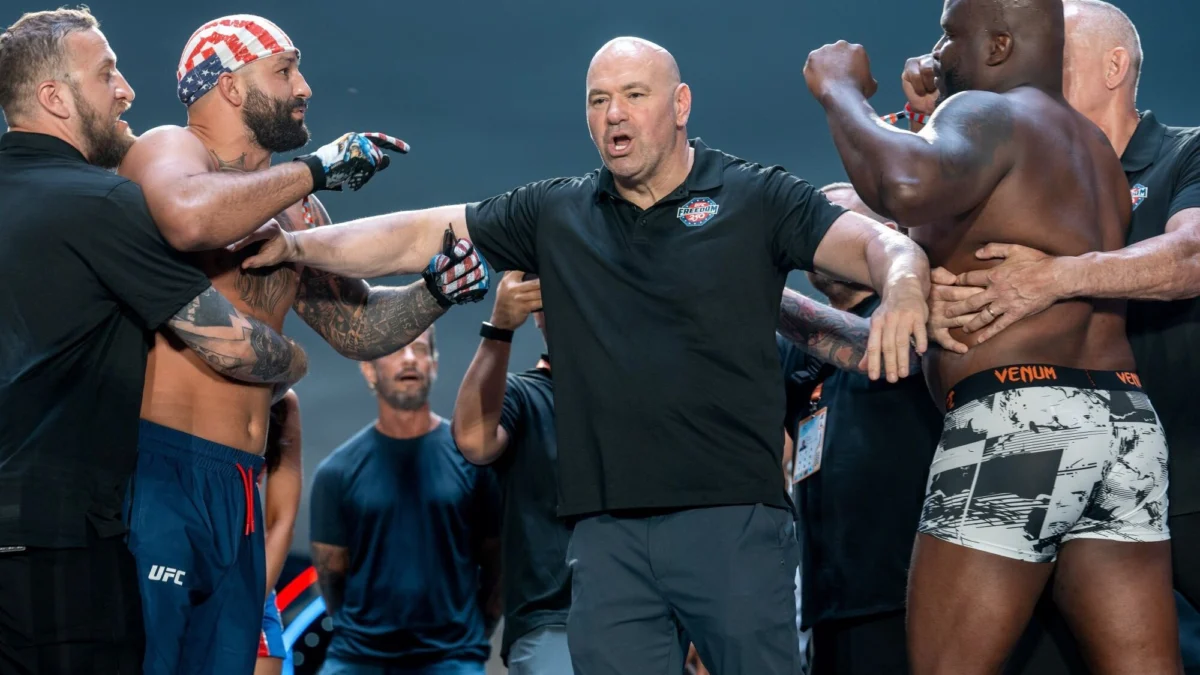
Washington D.C. – In a surprising announcement made via his social media platform Truth Social, former President Donald Trump revealed on Saturday that he has asked Ultimate Fighting Championship (UFC) President Dana White to assume the role of White House spokesperson. Trump further elaborated on his request, suggesting that White bring along some fighters to assist in the capacity, even if some are not American citizens. The former President described White as a "violent fighter and warrior," asserting, "We need these people to defend us against the crazy left."
This unconventional proposal, emerging from a former President who has frequently utilized his social media presence to communicate directly with his supporters and the public, has ignited a flurry of discussion and analysis regarding its potential implications and the underlying motivations. The statement itself, brief and direct, offers a glimpse into Trump’s ongoing engagement with political discourse and his distinctive approach to communication.
Background and Context
The announcement comes at a time when the political landscape in the United States remains highly polarized, and the rhetoric surrounding political opposition has often been described as aggressive. Donald Trump, a prominent figure in American politics for years, has consistently employed strong language to describe his political adversaries, frequently labeling them as "radical," "socialist," or "crazy." This latest statement, suggesting the need for "violent fighters and warriors" to counter the "crazy left," aligns with this established pattern of his public pronouncements.
Dana White, as the president of the UFC, is a well-known figure in the world of combat sports. The UFC is the largest mixed martial arts promotion company globally, boasting a roster of highly skilled athletes who engage in physically demanding and often intense competitions. White himself has cultivated an image as a tough, no-nonsense businessman, known for his direct communication style and his ability to navigate the often-controversial landscape of professional fighting. His association with the UFC, a sport that inherently involves physical confrontation, appears to be a key factor in Trump’s consideration of him for this role.
The concept of a White House spokesperson is typically a formal position within the executive branch, responsible for communicating the administration’s policies, decisions, and positions to the media and the public. This role requires a high degree of political acumen, communication skills, and an understanding of governmental operations. The suggestion of bringing in fighters, some potentially non-citizens, adds a layer of unprecedentedness to the proposal, raising questions about the practicalities and the symbolic meaning behind such a proposition.
Chronology of the Statement
The announcement was made on Saturday, a day typically characterized by lower levels of formal political activity in Washington. However, former President Trump has maintained a consistent and active presence on his social media platform, Truth Social, often using weekends to disseminate his thoughts and pronouncements. The statement regarding Dana White was posted on this platform, a direct channel that bypasses traditional media gatekeepers and allows for immediate dissemination to his followers.
The exact timing of Trump’s conversation with White, or the precise moment he made the request, is not detailed in the initial announcement. However, the phrasing "has asked" suggests a recent interaction or decision. The statement was then made public on Saturday, indicating the timeframe within which this proposal was communicated.
Supporting Data and Analysis
The selection of Dana White and the inclusion of fighters as potential White House personnel can be analyzed through several lenses:
1. Trump’s Communication Style: Trump’s presidency and his post-presidency have been marked by a distinctive communication strategy. He often favors direct, unfiltered messaging, frequently employing hyperbole and confrontational language. The proposition of a spokesperson and aides who are "violent fighters and warriors" directly reflects this penchant for invoking strength and conflict in his rhetoric. It suggests a desire to project an image of aggressive defense against political opposition.
2. Symbolic Representation: The choice of a combat sports promoter and athletes can be seen as a symbolic gesture. In the context of Trump’s political narrative, the "crazy left" is often portrayed as a force that needs to be confronted and overcome. By selecting individuals associated with physical combat, Trump may be aiming to symbolize a willingness to engage in a perceived "fight" for his political vision. The inclusion of fighters from outside the U.S. could also be interpreted in various ways, potentially alluding to a broader network of support or a willingness to draw on diverse strengths, though this aspect remains highly speculative without further clarification.
3. Political Messaging: The statement serves as a clear message to Trump’s base. It reinforces his image as a strong leader who is prepared to fight for his beliefs and is willing to surround himself with individuals who embody that spirit. For his supporters, this may be seen as a sign of resilience and determination in the face of perceived political threats.
4. The Role of the White House Spokesperson: The traditional role of a White House spokesperson involves diplomacy, nuanced communication, and adherence to established protocols. The idea of a spokesperson and aides drawn from the combat sports world, particularly with the emphasis on "violent fighters," stands in stark contrast to these norms. This juxtaposition raises questions about how such a role would function in practice and what kind of messaging would be prioritized. It could signal a departure from traditional political discourse towards a more combative and less diplomatic approach.
5. Potential Legal and Ethical Considerations: The suggestion of bringing in non-citizens to assist in a White House role, particularly one involving communication and potentially security, would likely encounter significant legal and ethical hurdles. The specifics of immigration laws, security clearances, and the definition of roles within the executive branch would need to be rigorously examined.
Reactions and Potential Implications
While the initial announcement came directly from Donald Trump, it is highly probable that such a proposal would elicit a range of reactions from various stakeholders.
1. From the Political Opposition: It is anticipated that Democratic leaders and political opponents would likely condemn the proposal. They would probably view it as an endorsement of violence and a further sign of Trump’s disregard for democratic norms and institutions. The rhetoric of needing "violent fighters" would likely be interpreted as a dangerous escalation of political tensions.
2. From within the Republican Party: Reactions within the Republican Party could be more varied. Some staunch Trump loyalists might embrace the statement as a bold and necessary assertion of strength. Others, particularly those seeking a more traditional political approach, might express reservations or privately distance themselves from such an unconventional proposition.
3. From the Media: The media would likely focus on the unprecedented nature of the proposal and its potential implications for the functioning of the White House and political discourse. Questions about the practicality, legality, and symbolic meaning of such a move would dominate coverage.
4. From Dana White and the UFC: As of the initial reporting, there has been no direct statement from Dana White or the UFC regarding Trump’s announcement. It remains to be seen how White, who has a significant business to run, would respond to such a request, and whether he would consider such a role, even hypothetically. The UFC’s brand is built on athletic competition, and any association with political conflict would require careful consideration.
Broader Impact and Implications:
The implications of such a proposal, if it were to materialize in any form, extend beyond the immediate political sphere. It could:
- Further Normalize Aggressive Political Rhetoric: By suggesting the use of "violent fighters" to counter political opponents, Trump’s statement could contribute to the ongoing trend of aggressive and confrontational political language in the United States. This could lead to increased polarization and a decline in civil discourse.
- Blur Lines Between Entertainment and Politics: The involvement of figures from the world of professional fighting in a governmental role could further blur the lines between entertainment and serious political engagement. This might appeal to a segment of the population that responds to strong, confrontational imagery, but it could also trivialize the responsibilities of governance.
- Challenge Traditional Notions of Public Service: The concept of public service has historically been associated with a commitment to civic duty, reasoned debate, and the pursuit of the common good. The introduction of "violent fighters" into this sphere challenges these traditional notions and could redefine expectations of those who serve in government.
- Raise Security and Operational Concerns: The practicalities of integrating individuals with backgrounds in combat sports into the complex operational and security environment of the White House would undoubtedly present significant challenges.
In conclusion, Donald Trump’s announcement that he has asked Dana White to serve as White House spokesperson, accompanied by the suggestion of bringing in fighters, is a highly unconventional and provocative statement. It reflects Trump’s characteristic communication style and his ongoing engagement with political discourse. While the practical realization of such a proposal remains uncertain, its symbolic implications and potential impact on political rhetoric and the perception of public service warrant careful consideration and analysis. The coming days and weeks will likely see further reactions and discussions surrounding this extraordinary development.
