

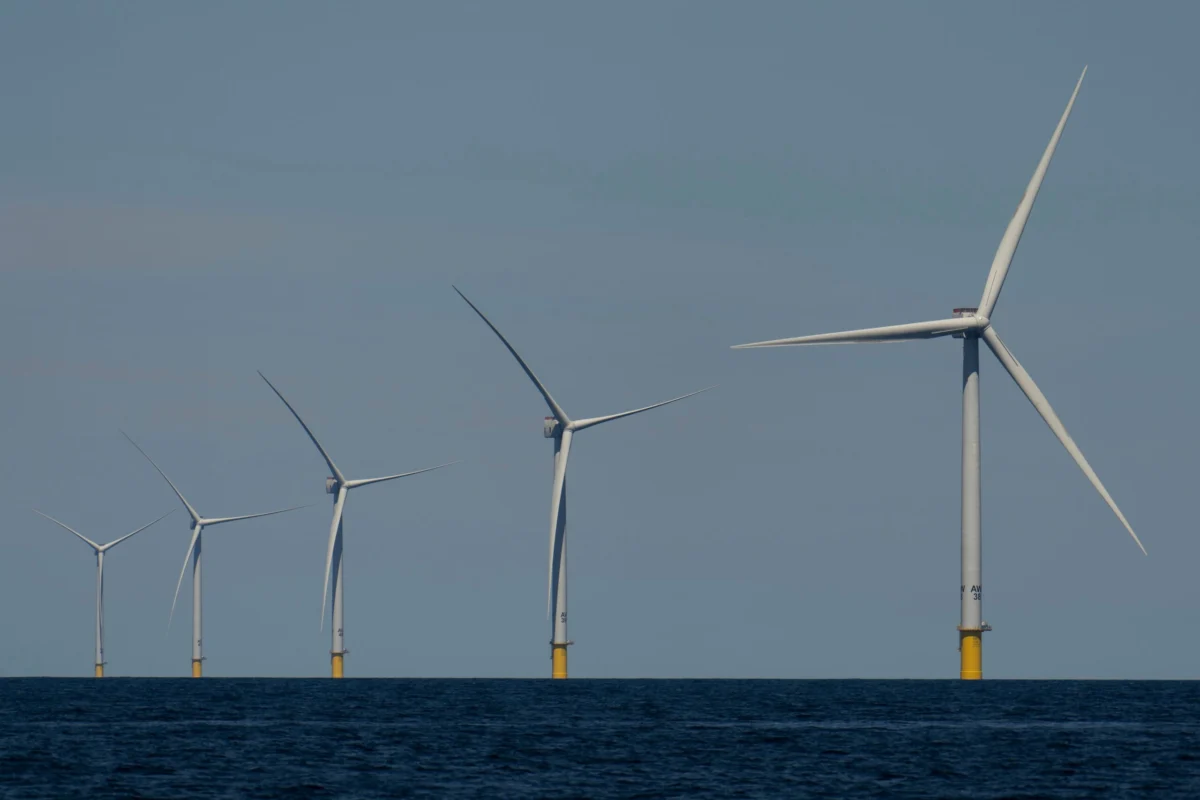
The United States Department of the Interior has formally requested that a federal judge allow the agency to reconsider a critical federal permit granted for the New England Wind project, a massive offshore wind development situated off the coast of Massachusetts. This move marks the fourth such project targeted for regulatory reversal by the Trump administration in recent months, signaling a systematic effort to dismantle the previous administration’s renewable energy legacy. In a legal filing submitted by the Department of Justice on Tuesday, officials argued that the court should remand the permit—specifically the approval of the project’s "construction and operations plan"—to the Interior Department for further review. The government contends that the plan, which was authorized in 2024 during the Biden administration, was approved despite what the current leadership characterizes as major adverse impacts that require a more rigorous re-evaluation.
The New England Wind project, spearheaded by the developer Avangrid, represents a cornerstone of New England’s clean energy strategy. The proposed development includes plans for up to 129 wind turbines with a total generating capacity of approximately 2,600 megawatts. This volume of energy is estimated to be sufficient to power more than 900,000 homes annually. Despite the project’s potential to significantly reduce carbon emissions and bolster regional energy security, it has become a focal point of the administration’s broader pivot back toward fossil fuels, such as coal and natural gas.
Chronology of Federal Action and Regulatory Reversals
The trajectory of the offshore wind industry in the United States has undergone a dramatic shift over the past four years. To understand the current legal standing of the New England Wind project, it is necessary to examine the timeline of federal oversight and the subsequent administrative pivot.
In 2021, the federal government set an ambitious target to deploy 30 gigawatts of offshore wind energy by 2030. This goal led to a flurry of lease sales and permit approvals along the Atlantic Coast. The New England Wind project received its federal green light in early 2024 after a multi-year environmental review process. However, the return of the Trump administration brought a starkly different philosophy regarding maritime energy development.
Since early 2025, the administration has utilized executive orders and agency-level interventions to stall or terminate several high-profile projects. The chronology of these interventions includes:
- SouthCoast Wind (Massachusetts): In early 2025, a federal judge granted the administration’s request to reconsider permits for SouthCoast Wind, which had been approved in the final days of the preceding administration.
- Atlantic Shores (New Jersey): In August 2025, the administration successfully petitioned a judge to reconsider the permit for Atlantic Shores. This project had already faced headwinds after its co-owner, Shell, withdrew its support, citing economic feasibility concerns and a shifting regulatory landscape.
- Revolution Wind (Rhode Island/Connecticut) and Maryland Offshore Wind: The Interior Department recently announced its intent to reconsider the construction and operations plans for these two projects. Notably, Revolution Wind has already completed construction, making the move to reconsider its permit a rare and legally complex maneuver.
- New England Wind (Massachusetts): The latest filing on Tuesday brings this project into the same category of "active reconsideration," despite the developer’s previous progress toward a final investment decision.
Legislative Friction and the Permitting Reform Debate
The administration’s aggressive stance on offshore wind has created a significant rift in Congress, particularly regarding the future of energy infrastructure legislation. Senator Sheldon Whitehouse, a Democrat from Rhode Island and a prominent advocate for renewable energy, issued a stern warning on Wednesday, suggesting that these executive actions could jeopardize a bipartisan effort to streamline the federal permitting process.
In September, the Senate reached a bipartisan agreement on a permitting reform bill designed to accelerate the approval of both renewable energy and fossil fuel projects. Proponents of the bill argue that the current federal review process is too slow and unpredictable, hindering the nation’s ability to modernize its energy grid. However, Senator Whitehouse noted that the administration’s decision to retroactively challenge already-approved permits undermines the very "certainty" that the legislation seeks to provide.
"This is how you blow up a permitting deal," Whitehouse said in a public statement. He argued that if developers cannot rely on the finality of a federal permit, the incentive to invest in large-scale American infrastructure will evaporate, regardless of whether the project involves wind, solar, or natural gas.
Industry Concerns and Economic Data
The offshore wind sector involves massive capital investments, often totaling billions of dollars per project. The New England Wind project alone represents a multi-billion-dollar investment in the Massachusetts maritime economy. According to data from the National Ocean Industries Association (NOIA), the offshore wind supply chain has the potential to support tens of thousands of jobs in manufacturing, construction, and port operations.
Erik Milito, president of NOIA—an organization that represents both the oil and gas and offshore wind sectors—expressed deep concern over the precedent being set by the Department of the Interior. Milito emphasized that the industry requires a stable regulatory environment to thrive. "The Senate has made meaningful progress on deep reforms that would provide greater certainty for energy projects across the board," Milito stated. He added that the administration’s recent actions "underscore why Congress needs to get this done" to prevent political shifts from disrupting long-term industrial planning.

Furthermore, environmental advocacy groups have highlighted the potential impact on consumer costs. Pasha Feinberg, an offshore wind strategist at the Natural Resources Defense Council (NRDC), pointed out that the move against clean energy comes at a time when many Americans are facing rising utility costs. Feinberg characterized the administration’s actions as a "war on clean energy" that is likely to "backfire" by limiting energy supply and keeping prices high for ratepayers.
Legal Challenges and Local Opposition
The Interior Department’s request for a remand is tied to an existing lawsuit filed by "ACK for Whales," a group of residents from Nantucket, Massachusetts. The group has long opposed offshore wind development, citing concerns over the visual impact of the turbines, potential harm to the endangered North Atlantic right whale, and the industrialization of the ocean.
The lawsuit, filed in the District Court for the District of Columbia, alleges that the federal government failed to comply with several statutes, including the National Environmental Policy Act (NEPA) and the Endangered Species Act, when it approved the New England Wind project. By asking for a remand, the Trump administration is essentially siding with the plaintiffs’ procedural complaints, allowing the Interior Department to "correct" what it now claims were deficiencies in the original approval process.
In its Wednesday statement, the Interior Department defended the filing as a procedural necessity rather than a sudden policy shift. The agency claimed the filing complied with a pre-established briefing schedule and that its skepticism regarding the environmental and national security impacts of offshore wind has remained consistent since the president took office.
Regional Energy Implications and the Success of Vineyard Wind
The battle over New England Wind is unfolding against the backdrop of the successful completion of Vineyard Wind 1, another major project off the Massachusetts coast. A joint venture between Avangrid and Copenhagen Infrastructure Partners, Vineyard Wind 1 finished construction in March 2025. It stands as the first utility-scale offshore wind farm to reach completion in U.S. waters, despite the administration’s attempts to halt its construction on the grounds of national security and maritime safety.
The completion of Vineyard Wind 1 proved that large-scale offshore wind is technologically and logistically feasible in the United States. However, the administration’s subsequent actions against New England Wind and SouthCoast Wind suggest that Vineyard Wind may remain an outlier rather than a trendsetter if federal permits continue to be rescinded.
For Massachusetts and the broader New England region, the loss or delay of the New England Wind project would create a significant gap in meeting state-mandated renewable energy targets. Massachusetts law requires the state to achieve net-zero greenhouse gas emissions by 2050, a goal that many energy analysts believe is unattainable without a robust offshore wind portfolio.
Analysis of Regulatory Risk and Future Outlook
The Trump administration’s strategy of "buying back" leases and requesting permit remands introduces a new level of "regulatory risk" into the American energy market. In the context of project finance, regulatory risk refers to the possibility that a change in laws or regulations will significantly impact the profitability or viability of an investment.
By targeting projects like Revolution Wind—which is already constructed—the administration is signaling that no stage of development is safe from federal re-evaluation. This could lead to a "chilling effect" on international investment. Many of the primary developers in the U.S. offshore wind market are European-based firms with global portfolios. If the U.S. market is perceived as too volatile or politically sensitive, these firms may pivot their capital toward more stable markets in Europe or Asia.
While the administration maintains that its actions are necessary to protect the environment from "ugly" and "unreliable" technology and to bolster traditional energy sectors, the legal and legislative battles are far from over. The federal court must still decide whether to grant the remand for the New England Wind permit. If the court denies the request, the administration may be forced to continue defending a permit it no longer supports. If the court grants it, the project faces an indefinite delay as the Interior Department conducts a new, and likely more critical, review.
As the 2025 legislative session continues, the fate of the bipartisan permitting reform bill and the future of the East Coast’s energy grid remain intertwined with the legal maneuvers surrounding the New England Wind project. For now, the developer, Avangrid, has declined to comment on the ongoing litigation, while construction on what was meant to be one of the nation’s largest clean energy sites remains at a complete standstill.
