

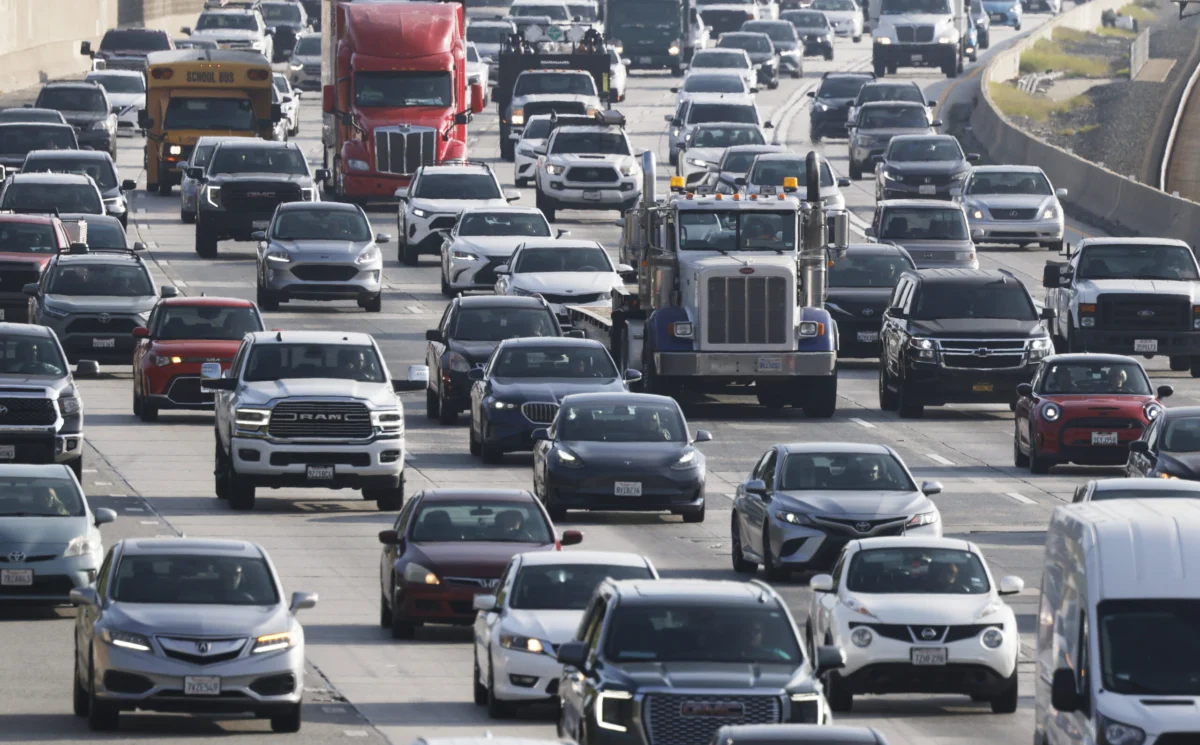
President Donald Trump on Saturday confirmed his administration’s approval of new, less stringent fuel economy standards, a move that directly reverses the previous policies implemented under former President Joe Biden. This significant regulatory shift aims to reshape the American automotive landscape, with profound implications for vehicle manufacturing, consumer choices, energy consumption, and environmental objectives. The announcement, made via the Truth Social platform, underscores a core tenet of Trump’s economic and regulatory philosophy, prioritizing perceived cost reductions for manufacturers and consumers over aggressive environmental targets and the accelerated adoption of electric vehicles (EVs).
The Evolution of CAFE Standards: A Historical Overview
The Corporate Average Fuel Economy (CAFE) standards were first established by Congress in 1975 in the wake of the 1973 oil crisis. Their primary objective was to improve the average fuel economy of cars and light trucks sold in the United States, thereby reducing national energy consumption and reliance on foreign oil. Since their inception, these standards have been periodically updated, often reflecting prevailing economic conditions, technological advancements, and shifting environmental priorities.
Historically, administrations have approached CAFE regulations with varying degrees of stringency. During the George W. Bush administration, efforts were made to modernize the standards, though significant increases in efficiency targets largely came under President Barack Obama. The Obama administration, in collaboration with the Environmental Protection Agency (EPA) and the Department of Transportation (DOT), introduced aggressive targets in 2012, aiming for a fleet-wide average of 54.5 miles per gallon (MPG) by 2025. These standards were designed to drive innovation in fuel-efficient technologies, including hybrid and electric powertrains, and were projected to save billions of barrels of oil and reduce greenhouse gas emissions substantially.
However, this trajectory was altered during Trump’s first term. Citing concerns about the economic burden on automakers and potential negative impacts on consumer choice, his administration initiated a rollback of the Obama-era targets. In 2020, the Safer Affordable Fuel-Efficient (SAFE) Vehicles Rule was finalized, significantly weakening the previously established standards and reducing the required annual fuel efficiency improvements. This move sparked considerable controversy, with environmental groups and several states challenging the decision in court.
The Biden-Era Framework: A Push Towards Electrification
Upon taking office, President Biden swiftly moved to reverse the Trump administration’s deregulatory actions regarding vehicle emissions and fuel economy. His administration emphasized the urgency of addressing climate change and promoting American leadership in the burgeoning EV market. In April 2022, the Biden administration finalized new, tougher fuel economy standards. These regulations mandated that automakers increase the fuel efficiency of their passenger cars and light trucks to an estimated average of 50 miles per gallon by 2031. This target represented a substantial increase from the Trump-era rules and was specifically crafted to accelerate the transition away from internal combustion engine (ICE) vehicles towards electric vehicles.
The Biden administration’s strategy was multifaceted. Beyond the direct fuel economy mandates, it included significant investments in EV charging infrastructure, consumer tax credits for EV purchases, and federal procurement policies favoring zero-emission vehicles. The goal was not only to reduce tailpipe emissions, a major contributor to greenhouse gases and urban air pollution, but also to bolster American manufacturing competitiveness in the global EV market, creating jobs and reducing dependence on fossil fuels. Proponents argued that these standards would ultimately save consumers money at the pump over the lifetime of a vehicle, despite potentially higher upfront costs for more efficient or electric models. The administration projected that its standards would prevent billions of tons of carbon dioxide emissions and save consumers hundreds of billions of dollars in fuel costs.
President Trump’s Rationale and Vision for the Automotive Sector
President Trump’s recent announcement signals a decisive break from the Biden administration’s climate and automotive agenda. In his Truth Social post, Trump articulated his rationale, framing the policy change as a direct benefit for both the automotive industry and American consumers. "These new Standards will take the waste out of building cars in America. That means LOWER PRICES, saving families thousands on a new, beautiful, and safe car – Far better than the Environmental Monsters that we were building heretofore," he wrote. He further claimed widespread support from major automakers, stating, "Every Manufacturer, from General Motors to Ford to Stellantis, has called me wanting to build here, and now they can!"
The core of Trump’s argument rests on the premise that stricter fuel economy and emissions standards impose undue costs on manufacturers, which are then passed on to consumers, resulting in higher vehicle prices. By relaxing these regulations, he suggests, automakers will have greater flexibility to produce vehicles that are more affordable and align more closely with current consumer preferences, particularly for larger, more profitable SUVs and pickup trucks. This perspective often posits that market forces, rather than government mandates, should primarily drive technological innovation and consumer choice. The term "Environmental Monsters" used by Trump reflects a broader skepticism towards aggressive environmental regulations, often portraying them as burdensome and economically detrimental.
While the specific details of the newly approved standards have not yet been publicly released, Transportation Secretary Sean Duffy had previously indicated that they would be significantly less stringent than the Biden-era policies. This suggests a potential return to, or even further relaxation from, the standards implemented during Trump’s first term.
Automaker Perspectives: Navigating Regulatory Shifts
The automotive industry’s reaction to such regulatory shifts is often complex and varied. On one hand, weaker fuel economy standards offer automakers greater flexibility. Producing large SUVs and pickup trucks typically yields higher profit margins compared to smaller passenger cars or even electric vehicles, which often require substantial upfront investment in research, development, and manufacturing infrastructure. The ability to continue focusing on these profitable segments without facing aggressive penalties for lower fuel efficiency could be seen as a short-term financial relief for some companies.
However, the industry is also grappling with a global push towards electrification and sustainability. Many major automakers, including General Motors (GM), Ford, and Stellantis, have already committed billions of dollars to developing and manufacturing electric vehicles, recognizing the long-term global market trends and regulatory environments in other major markets like Europe and China. GM, for instance, has publicly stated its ambition to achieve an all-electric lineup by 2035, a commitment CEO Mary Barra reiterated even after the initial discussions of potential rollbacks. This suggests that while regulatory relief in the U.S. might offer some breathing room, it is unlikely to fundamentally alter the strategic direction of companies that have already invested heavily in an electric future. They may choose to differentiate their product offerings for the U.S. market versus other global markets, or simply slow down their EV transition within the U.S. to focus on more profitable ICE vehicles. The challenge for automakers will be to balance short-term profitability from traditional vehicles with long-term strategic investments in EVs, all while navigating a potentially volatile regulatory landscape that could change again with future administrations.

Environmental and Consumer Advocacy Reactions
Environmental organizations are expected to vociferously oppose the rollback of fuel economy standards. Groups like the Sierra Club, Natural Resources Defense Council (NRDC), and Environmental Defense Fund (EDF) have consistently advocated for stronger emissions and fuel efficiency rules, citing the urgent need to combat climate change, reduce air pollution, and protect public health. They would likely argue that weakening these standards represents a significant step backward in the fight against global warming, jeopardizing the U.S.’s ability to meet its climate commitments under the Paris Agreement. They would also point to the long-term costs to consumers in the form of higher fuel bills and the health impacts of increased tailpipe emissions. Their statements would likely highlight scientific consensus on climate change and the economic opportunities presented by a robust domestic EV industry.
Consumer advocacy groups might present a more nuanced view. While some would echo environmental concerns about long-term fuel costs and environmental impact, others might focus on the immediate affordability of vehicles. If weaker standards indeed lead to lower upfront purchase prices for new cars, this could be seen as a benefit for some consumers, particularly those with tighter budgets. However, this immediate saving would need to be weighed against potentially higher lifetime fuel costs for less efficient vehicles. The debate often revolves around whether consumers truly save money in the long run with higher efficiency vehicles, or if the upfront cost premium deters them from making the "greener" choice.
Economic Implications: Costs, Choices, and Competitiveness
The economic implications of this policy shift are far-reaching. For automakers, the immediate impact could be increased profitability, particularly from their highly popular and lucrative SUV and pickup truck segments. Less stringent regulations mean fewer engineering challenges and potentially lower manufacturing costs associated with meeting ambitious efficiency targets. This could allow them to allocate R&D budgets differently, perhaps focusing more on incremental improvements to ICE technology rather than solely on accelerating EV development for the U.S. market.
For consumers, the claim of "LOWER PRICES" for new cars is a key selling point of the new policy. If automakers can produce vehicles more cheaply due to relaxed standards, these savings could theoretically be passed on. However, this must be balanced against the potential for higher fuel costs over the vehicle’s lifetime. The average American driver travels thousands of miles annually, and even a slight decrease in MPG can translate into hundreds or thousands of dollars in additional fuel expenses over several years. Furthermore, a slower transition to EVs in the U.S. could mean that American consumers miss out on the long-term benefits of electric vehicles, such as lower maintenance costs, stable "fuel" prices (electricity), and potentially advanced technology features.
From a broader economic perspective, the rollback could impact the U.S.’s competitiveness in the global automotive sector. As other major economies, including China and the European Union, double down on EV mandates and incentives, a divergence in regulatory policy could leave U.S. manufacturers lagging in EV technology and production capacity. This could potentially cede market share and technological leadership to foreign competitors in what is widely considered the future of transportation. It could also influence foreign direct investment in EV manufacturing facilities within the U.S.
Environmental Impact: A Step Back or a New Path?
The environmental consequences of weakening fuel economy standards are a primary concern for critics. Less stringent standards would likely lead to a slower decrease, or even an increase, in overall fleet-wide fuel consumption and, consequently, tailpipe emissions. Transportation is the largest source of greenhouse gas emissions in the United States, and rolling back efficiency rules would directly undermine efforts to achieve climate targets, such as those outlined in the Paris Agreement.
Increased emissions contribute to global warming, exacerbating extreme weather events, sea-level rise, and other climate-related challenges. Beyond climate change, tailpipe emissions contribute to local air pollution, including particulate matter and nitrogen oxides, which are linked to respiratory illnesses, heart disease, and other public health problems. A slower transition to EVs means continued reliance on fossil fuels, with associated environmental risks from extraction, refining, and transportation.
Proponents of the rollback might argue that the environmental impact is overstated or that economic growth should take precedence. They might also suggest that market forces and technological innovation will eventually lead to cleaner vehicles, regardless of strict mandates. However, historical data often shows that regulatory pressure has been a significant driver of technological advancement in the automotive sector.
The Broader Geopolitical and Technological Landscape
This policy decision does not occur in a vacuum. The global automotive industry is undergoing a transformative shift towards electrification, driven by both environmental concerns and technological innovation. China, for instance, has aggressively promoted EVs through subsidies and mandates, establishing itself as the world’s largest EV market and a major player in battery technology. European nations are also implementing strict emissions targets and phasing out the sale of new ICE vehicles in the coming decades.
If the U.S. significantly slows its transition to EVs by relaxing domestic standards, it risks becoming an outlier in this global trend. This could have geopolitical implications, affecting trade relations, technological partnerships, and the U.S.’s influence on international climate policy. Furthermore, a less robust domestic EV market could reduce the incentive for battery manufacturing and other critical supply chain components to be localized in the U.S., potentially increasing reliance on foreign sources for these key technologies.
Looking Ahead: The Road to Implementation and Beyond
The timeline for the implementation of these new, less stringent fuel economy standards remains somewhat unclear. Regulatory changes typically involve a period of public comment and review before finalization. However, if expedited, these standards could come into effect relatively quickly. The lasting impact of this decision, however, will largely depend on future political developments. Regulatory frameworks are often subject to reversal with changes in presidential administrations. A future administration could once again seek to tighten fuel economy standards, creating a cycle of regulatory uncertainty for automakers.
This policy shift represents a significant divergence in the nation’s approach to energy, environment, and industrial policy. It prioritizes immediate economic flexibility and consumer affordability as perceived by the current administration, potentially at the expense of long-term environmental goals and leadership in emerging green technologies. The coming months will reveal the specific contours of these new regulations and the full extent of their anticipated impact on the American automotive industry, the environment, and the daily lives of consumers.
