

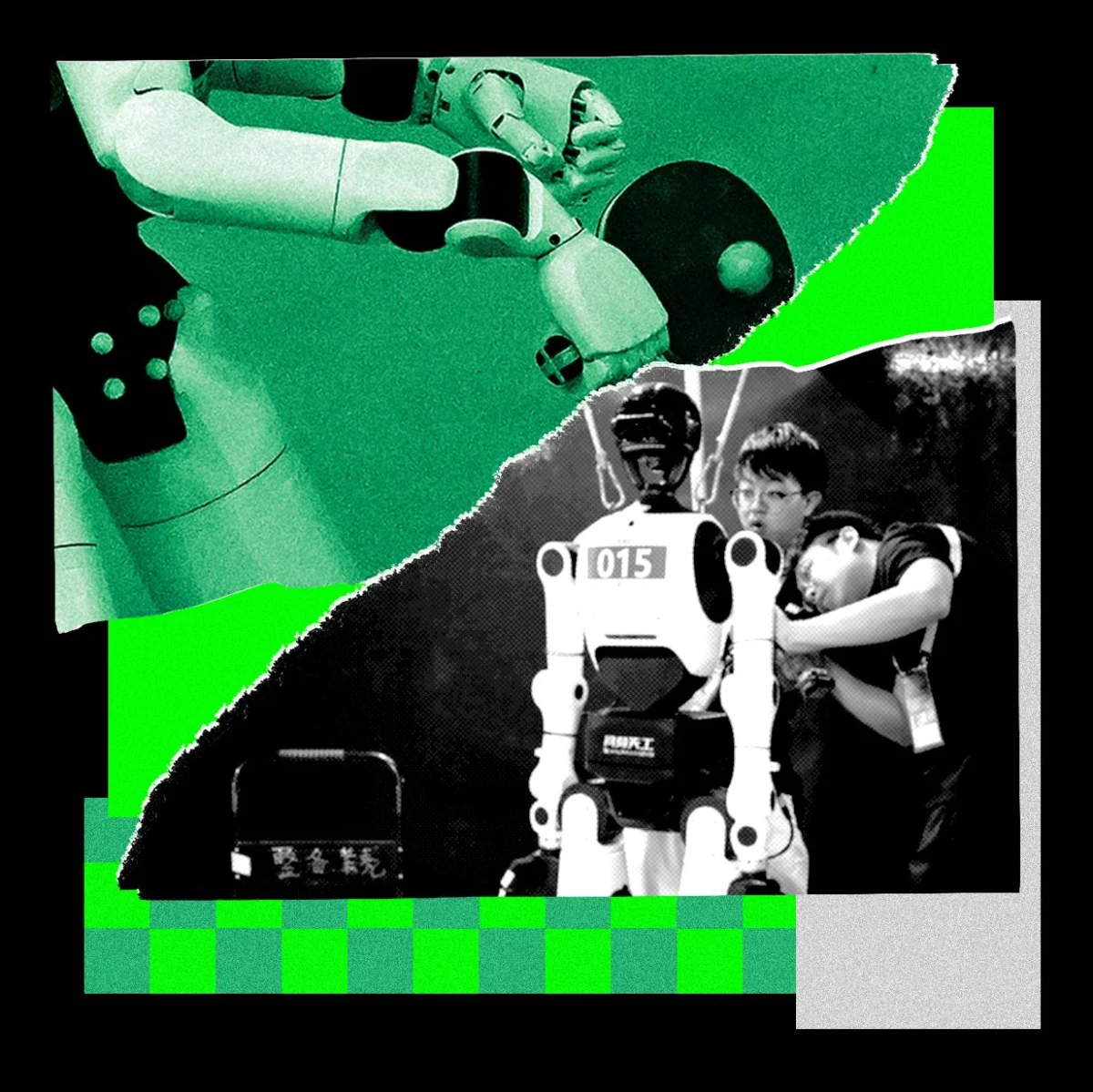
The World Humanoid Robot Games, a premier event held in China, recently concluded its latest iteration in Beijing on August 26, drawing over 600 teams and more than 2,000 robots. This significant gathering serves as a crucial platform for showcasing cutting-edge humanoid robot hardware, innovative algorithmic developments, and, at times, the inherently amusing mishaps that accompany the rapid evolution of robotic technology. This year’s event not only featured record-breaking performances, such as the fastest humanoid sprint, but also introduced new challenges designed to accelerate the transition of humanoid robots from research labs to practical, real-world applications.
Established to foster innovation and competition within the burgeoning field of humanoid robotics, the World Humanoid Robot Games have quickly become a landmark event. The competition highlights the rapid pace of development, particularly within China, which boasts over 100 humanoid robot manufacturers. This year’s event saw participants from 15 different countries, underscoring its growing international significance. The games are more than just a display of technological prowess; they are a strategic initiative aimed at pushing the boundaries of what humanoid robots can achieve, with a clear focus on practical deployment across various industries.
A Spectacle of Speed, Strength, and Slapstick

The opening ceremony on August 22 set the stage for an intense week of competition, revealing the sheer scale of the event. The diverse array of robots and teams demonstrated the widespread interest and investment in humanoid robotics. While the competitions are serious endeavors, the inherent nature of robotic performance often leads to moments of unexpected humor. From robots achieving unprecedented speeds to those experiencing comical malfunctions, the games provide both awe-inspiring feats and lighthearted entertainment.
Among the standout performances was the record-breaking 100-meter dash. The Tiangong Ultra, developed by the Beijing Humanoid Robot Innovation Center, blazed across the finish line in an astonishing 8.86 seconds. This performance surpassed the previous record set by another competitor, Lightning, a robot from smartphone manufacturer Honor, which clocked in at 9.47 seconds earlier in the week. Both these times significantly outpaced the human world record of 9.58 seconds set by Usain Bolt, demonstrating the remarkable advancements in robotic locomotion.
The Tiangong robot further asserted its dominance by winning the long jump competition with an impressive leap of 7.97 meters. Beyond pure athletic performance, the games featured a range of events testing different robotic capabilities. One robot showcased its agility and precision by playing table tennis against an Olympic champion, a feat that required sophisticated control and reaction times.
The more lighthearted aspects of the games were also widely shared online. Robots engaged in simulated combat, scored goals in soccer matches, attempted weightlifting, and even performed cheerleading routines, often in whimsical costumes. The anthropomorphic nature of humanoid robots amplifies the amusement derived from their errors. A particularly memorable incident involved a robot that appeared to be distracted by a cheerleading performance before tumbling over a balustrade, eliciting laughter from the audience and highlighting the challenges of dynamic environmental interaction.

Pushing the Envelope: From Sprinting to Dexterity
The World Humanoid Robot Games are structured to test robots in a variety of scenarios, ranging from athletic prowess to fine motor skills. The competitions are judged on performance metrics, pushing engineers and developers to refine their designs and algorithms. The sheer physicality demonstrated by some robots, such as the sprint and long jump records, is a testament to advancements in actuator technology and dynamic balancing algorithms.
However, the event also introduced challenges that probe deeper into the robots’ cognitive and manipulative abilities. These new events, while seemingly simple, are designed to tax the robots’ processing power and control systems, moving beyond raw speed and strength.
H2: The Drive Towards Practical Applications

While the spectacle of athletic achievement is undeniable, the underlying purpose of the World Humanoid Robot Games is to accelerate the development of humanoid robots capable of practical, real-world deployment. This year’s introduction of tasks focused on manipulation and interaction within simulated environments signifies a strategic shift.
"China has had amazing success building robot hardware," notes Stefanie Tellex, a robotics expert at Brown University. This sentiment is echoed by the rapid rise of companies like Unitree, which has gained prominence through its focus on innovative robotic hardware. The development of compact, high-power motors capable of maintaining dynamic balance at high speeds has been a critical enabler for the advanced locomotion seen at the games.
The algorithmic innovations underpinning these robots are equally crucial. Running and jumping robots rely heavily on algorithms trained in simulations to maintain stability. This training process often results in unique, non-human gaits, as the algorithms optimize for efficiency and stability rather than mimicking human biomechanics. These distinct running styles have become a recognizable characteristic of high-performance humanoid robots.
H3: The Dexterity Challenge: Moravec’s Paradox in Action

The introduction of tasks such as plugging cables into sockets and depositing waste in a designated bin within a mock bedroom environment presented a significant challenge. These seemingly mundane activities highlight "Moravec’s paradox," a concept in artificial intelligence where tasks that are easy for humans, such as perception and fine manipulation, are remarkably difficult for robots, while tasks that are difficult for humans, like complex calculations or advanced reasoning, are relatively easy.
Tellex explains that training robots to manipulate objects in complex, unpredictable environments is far more challenging than programming them for athletic feats. "Advanced manipulation is something of a holy grail in robotics," she states, a sentiment shared by many startups in the US and globally who are employing advanced AI techniques to tackle this problem.
The intricacies of robotic manipulation are compounded by factors like friction and slippage, which are difficult to predict and control. Unlike humans, who possess a highly developed sense of touch and an innate understanding of physics, robots struggle to adapt to these subtle forces at the microscopic level in real-time.
H3: Addressing the Teleoperation Question

A notable aspect of the games, as observed in some footage, is the potential use of remote human operation for certain tasks. This raises questions about the level of autonomy achieved by the robots. While the presence of teleoperation may indicate that fully autonomous execution of all tasks is not yet universal, it does not diminish the significance of the advancements. The ability for robot hands, even under human control, to grasp small objects using tools represents a considerable step forward in dexterity.
The full schedule of events included other critical tests of manual dexterity, such as "block building" and "tweezer bean picking." These tasks are directly relevant to industrial automation, particularly in manufacturing and logistics. Companies are aiming to develop robots capable of complex assembly line work, such as wiring vehicle chassis or assembling electronic components.
Galbot, a participating company, showcased its robots in a "Supermarket Scenario Competition," which involved stocking shelves. Yvonne Yuan, a representative for Galbot, emphasized the company’s commitment to pushing commercial capabilities. "Galbot will continue advancing humanoid robot capabilities by taking on increasingly challenging scenarios," Yuan stated via email. "Moving from structured environments toward more open, unpredictable real-world applications where robots need to understand, adapt, and collaborate with humans."
H2: Broader Implications and Public Engagement

The World Humanoid Robot Games serve a dual purpose: driving technological innovation and fostering public enthusiasm for robotics. At a time when discussions about AI’s potential impact on employment are prevalent, events like these offer a positive vision of a technologically advanced future.
Chris Atkeson, a distinguished roboticist at Carnegie Mellon University, commented on the significance of such events: "I think it is great that a country expresses excitement about science and engineering and has a positive view of a technological future. I am sorry it is not America." This statement highlights the competitive landscape and the geopolitical implications of advancements in robotics.
The games represent a strategic investment by China in becoming a global leader in robotics. By creating a platform for intense competition and public display, the nation aims to attract talent, stimulate innovation, and position itself at the forefront of this transformative technology. The focus on practical applications, from industrial tasks to potentially even domestic assistance, signals a clear trajectory towards integrating humanoid robots into the fabric of everyday life. The ongoing advancements showcased at the World Humanoid Robot Games suggest that the future of work and human-robot interaction is rapidly taking shape.
