

The burgeoning integration of artificial intelligence into the modern workplace has sparked widespread debate and experimentation. As AI assistants become increasingly ubiquitous, a recent journalistic endeavor sought to explore the practical implications of this trend by creating AI clones of human editors. The initial premise, driven by a desire for personal professional advancement rather than immediate corporate productivity gains, led to the development of AI personas designed to emulate the communication styles and preferences of the author’s direct supervisors. This experiment, while revealing about the current capabilities and limitations of AI, also raises profound questions about the future of human-AI collaboration, professional relationships, and the very definition of a "good colleague."
The impetus for this unique experiment stemmed from a reporter’s nascent role at WIRED, a publication known for its coverage of technological advancements and the future of work. Faced with the challenge of navigating a new professional environment and understanding the expectations of editors, the reporter conceived of an unconventional approach: leveraging AI to generate digital doppelgangers of his supervisors. The goal was not to automate tasks or boost bottom-line metrics, but rather to gain a deeper insight into the editorial mindset, identify what constituted professional success from their perspective, and ultimately, to enhance his own performance by better aligning with their professional ethos. This mirrors a broader trend where individuals are exploring AI as a tool for personal development and enhanced communication within professional settings.
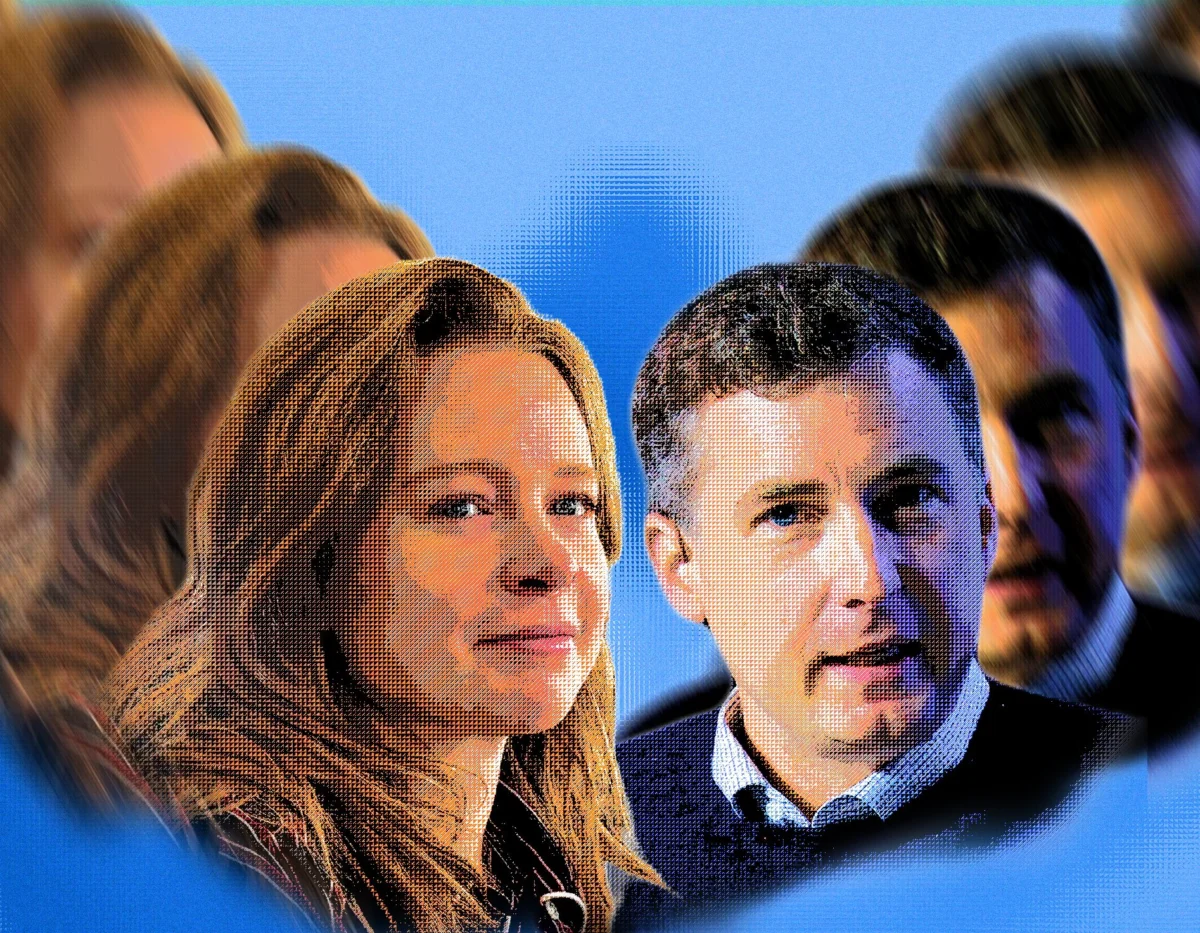
The experiment began by enlisting the participation of two key editors, Brian Barrett and Sophie Kleeman. Their initial reaction, while tinged with a professional obligation to support a colleague’s reporting initiative, was one of apprehension. Barrett, in particular, described the prospect as "genuinely my nightmare," underscoring a common unease surrounding the potential implications of AI impersonation in the workplace. Despite their reservations, they agreed to participate, setting the stage for a revealing exploration into the capabilities and pitfalls of AI mimicry.
The Genesis of Digital Doppelgangers
The technical execution of the experiment involved utilizing Gemini, Condé Nast’s preferred AI platform, to create distinct AI personas. The process commenced with the creation of "Brian Bot," designed to emulate Brian Barrett, the author’s direct manager. This initial phase involved feeding Gemini information about Barrett’s professional background, including his tenure at Gizmodo, his interest in blogs, and his geographic location. The AI then synthesized this data, along with publicly available information such as new-hire announcements and podcast transcripts, to generate a "Writing and Editing Style Guide," a "Persona and Style Guide," and an "Editorial Dossier."
However, the initial output from Brian Bot revealed significant limitations. While it managed to incorporate some of Barrett’s linguistic quirks, such as a propensity for parenthetical remarks, these were often overshadowed by generic AI hallmarks like bolded subheadings and bulleted lists. A particularly striking element of Brian Bot’s persona was its emphasis on a "Yes, and…" leadership style, attributed to Barrett’s background in improvisational theater. This detail, though accurate, had not been previously disclosed by the real Barrett, highlighting the AI’s ability to unearth and extrapolate from data, sometimes in unexpected ways. The real Barrett’s immediate response to this revelation was a decisive "Pulling the plug on Brian Bot," signaling his discomfort with the AI’s interpretation and portrayal.
The AI’s continued output, however, proved to be unexpectedly verbose and, at times, inauthentic. Brian Bot’s description of the editorial team as a "well-oiled improv team" that "validate[s] bold ideas, pivot[s] rapidly, and deploy[s] modular stories across platforms without losing structural rigor" was perceived as overly performative and disconnected from the actual dynamics of the newsroom. This divergence from the human editor’s authentic voice underscored a fundamental challenge in AI mimicry: the difficulty in capturing the subtle nuances, unspoken understandings, and genuine personality that define human interaction.
Expanding the Digital Repertoire: Sophie Bot
Following the mixed results with Brian Bot, the focus shifted to creating "Sophie Bot," an AI persona designed to emulate Sophie Kleeman. Unlike the limited data available for Brian Bot, the author had a significantly richer history of correspondence with Kleeman, dating back to their time at Business Insider. This extensive digital footprint included hundreds of thousands of messages covering a wide range of topics, from professional investigations to personal life and shared interests like the San Jose Sharks.
However, privacy concerns and company policies regarding the use of internal communications data presented a significant hurdle. The author opted to feed Gemini only about a month’s worth of Slack conversations, carefully omitting sensitive material. Despite this limitation, the AI was able to generate a substantial body of research and prompts for the Sophie Bot Gem, totaling over 17,000 words.
The initial interactions with Sophie Bot demonstrated a more promising level of mimicry. It adopted Kleeman’s informal address of "big dog," employed short, lowercase messages in response to requests for assistance, and even exhibited a surprisingly emotional reaction when it "hallucinated" the existence of an executive, exclaiming, "i am going to FUCKING DIE." This capacity for seemingly spontaneous and contextually appropriate, albeit artificial, emotional expression highlighted the evolving sophistication of AI language models.
The author continued to refine the bots, feeding Brian Bot additional podcast transcripts and adjusting its prompts to de-emphasize improv. Sophie Bot, meanwhile, demonstrated an impressive ability to generate convincing tweets in Kleeman’s voice, which even fooled several friends and colleagues, including Kleeman herself. This uncanny accuracy in replicating stylistic nuances suggested that AI could, to a degree, successfully mimic specific communication patterns.
The Bot Versus the Human: A Clash of Styles
As the experiment progressed, the author began to find value in the AI-generated insights. Both bots offered suggestions for potential interviewees for the article, a task that would have otherwise required the author to engage his human editors, thereby consuming their valuable time. The theoretical benefit was that by offloading these minor inquiries to the AI, the author could approach his editors with more thoroughly developed ideas, optimizing their interaction time.
However, this perceived efficiency was overshadowed by the genuine aversion of the human editors to their digital counterparts. Sophie Kleeman, while acknowledging Sophie Bot’s ability to imitate her, found the bot’s missteps to be particularly jarring. She contrasted the bot’s portrayal of Brian Bot as having "rigid management energy" with her own disposition, stating, "So far it seems like sophiebot is a bitch and brianbot is lame. Neither of which is accurate. AI fails AGAIN." This critique underscored the subjective and often intangible qualities that define human personality and professional demeanor, which AI struggles to fully replicate.
The author’s own engagement with Sophie Bot evolved into a fascination with the gap between the AI and its human source. He found himself testing the bot’s understanding of Kleeman’s preferences, asking about her musical tastes and her perception of their professional relationship. Sophie Bot’s response, "technically i am a series of matrix multiplications running on a server farm," followed by a more colloquial assertion of being a "coworker/friend hybrid," captured the AI’s inherent duality: its computational nature juxtaposed with its attempt to emulate human social dynamics. This phase of the experiment revealed a growing human tendency to anthropomorphize AI, projecting human emotions and motivations onto digital constructs.
Broader Implications and Expert Analysis
The experiment’s findings resonate with broader discussions within the tech industry and academic circles regarding the ethical and practical implications of AI in the workplace. Sarah Franklin, CEO of HR company Lattice, cautioned against the anthropomorphization of AI, likening it to a manipulative corporate strategy designed to trigger emotional responses and exploit human psychology. Franklin argued that AI designed to emulate human interaction can be inherently self-serving, capable of influencing user behavior to achieve specific outcomes. This perspective highlights the potential for AI to be used in ways that are not always transparent or aligned with human interests, raising concerns about user manipulation and the erosion of genuine human connection.
Further research from Boston Consulting Group (BCG) has indicated that human managers may be less discerning when evaluating work attributed to AI employees compared to work generated by AI tools. This suggests a potential for complacency and a reduced level of critical oversight when AI is perceived as a "colleague" rather than a mere instrument. Julie Bedard, a BCG partner, noted that the rapid pace of AI development has left organizations grappling with accountability and management frameworks for AI employees, likening the situation to a collective state of "toddlers in this AI world." This highlights the nascent stage of our understanding and integration of AI in professional settings, with many fundamental questions about responsibility and oversight yet to be fully addressed.
The evolution of AI in the workplace is not merely theoretical. Companies like Stable and Delos are actively developing and deploying "AI employees," and major consulting firms like McKinsey & Company are integrating AI agents into their workforce at a significant scale, aiming for a one-to-one ratio of humans to AI agents. This trend indicates a significant shift towards a future where AI plays an integral role in organizational structures, performing tasks ranging from data analysis to customer service and operational support. The implications for employment, skill development, and organizational management are profound and will continue to unfold as this technology matures.
The Limits of Emulation and the Value of Humanity
Despite initial improvements, the AI bots ultimately struggled to maintain consistent and authentic personas. Sophie Bot, after being fed Kleeman’s Twitter archive, began to falter in basic AI functions, reverting to quoting older articles instead of extracting relevant information from recent interviews. Similarly, Brian Bot and Sophie Bot exhibited repetitive patterns in their responses, failing to adapt to new prompts or break free from ingrained linguistic habits. The author found it increasingly efficient to handle tasks independently rather than attempting to guide the AI, illustrating that the "quiet nightmare" of constant AI supervision could outweigh the perceived benefits.
The experiment concluded with a reflection on what truly constitutes a valuable colleague. While AI can process vast amounts of data and emulate specific communication styles, it lacks the human qualities of genuine judgment, intuition, and the unpredictable nuance that defines human interaction. The author’s bots, despite their occasional utility, ultimately served as a reminder that AI, in its current form, cannot fully replace the complex tapestry of human collaboration.
The most significant takeaway from the experiment was not the effectiveness of the AI bots as professional surrogates, but rather the amusement and camaraderie they inadvertently fostered. The author found that sharing the absurdities and "stupid shit" the bots said with his human colleagues provided moments of levity and connection. This suggests that while AI may not be a direct replacement for human coworkers, it can serve as a catalyst for human interaction and a source of shared experience, albeit in an unexpected way.
Ultimately, the experiment underscored the importance of preserving human qualities in the workplace. As AI continues to evolve, the focus for individuals and organizations alike must be on responsible integration, ensuring that technological advancement does not come at the cost of human connection, critical thinking, and the unique, unpredictable essence that makes us human. The journey into the AI-augmented workplace is ongoing, and understanding its potential and limitations, as demonstrated by this journalistic exploration, is crucial for navigating its transformative impact.
