

In a significant leap for the burgeoning field of biological computing, The Biological Computing Company (TBC), a startup leveraging neural patterns from rat brain cells to develop artificial intelligence, has announced a strategic partnership with Amazon Web Services (AWS). This collaboration will provide select AWS customers with early access to TBC’s innovative "rat brain" AI model, specifically engineered to enhance video generation capabilities. The move signifies a growing industry interest in bio-inspired AI and its potential to revolutionize current technological paradigms.
The Genesis of Biological AI and TBC’s Approach
The concept of biological computing, where computational processes mimic or are directly derived from biological systems, has long been a subject of scientific fascination. The human brain, with its intricate neural networks and unparalleled efficiency, serves as a prime model for artificial intelligence researchers. However, translating this biological complexity into functional computational systems presents formidable challenges, requiring not only advanced computational infrastructure but also sophisticated biological laboratory capabilities.
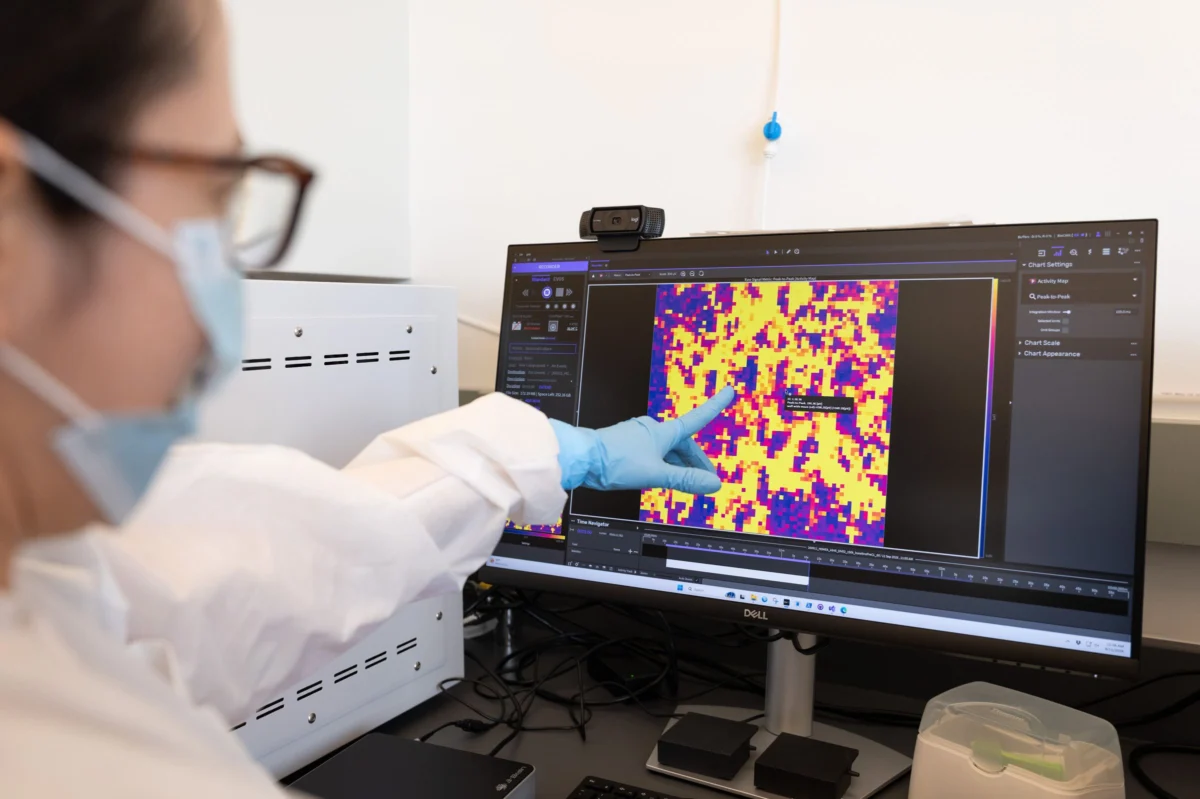
TBC, founded four years ago in Baltimore, Maryland, by neuroscientists and neurosurgeons Alexander Ksendzovsky (CEO) and Jon Pomeraniec (President and COO), has emerged as a key player in this domain. The company’s core technology involves culturing living brain cells, primarily from rats and human stem cells, and interfacing them with advanced microelectrode arrays. These arrays, developed by Swiss biotech company 3Brain, are instrumental in stimulating the neurons electrically and meticulously recording their responses.
"We’ve developed a method to encode information, such as images, into biological material," explained Ksendzovsky. "We then observe how this biological substrate processes that information, and subsequently, we engineer tools that emulate these biological processing pathways. This allows us to build AI models that learn and operate with a fundamentally different, and potentially more efficient, architecture."

A Strategic Alliance with Amazon Web Services
The partnership with AWS marks a pivotal moment for TBC, granting its technology a broader platform and increased market visibility. Starting Tuesday, a limited preview will allow select AWS customers to integrate TBC’s AI model into their workflows, with an anticipated rollout to all AWS enterprise clients in the near future. This strategic integration aims to accelerate the adoption of biologically-inspired AI solutions within the enterprise sector.
Deap Ubhi, Global Director of Technology for Startups at AWS, highlighted the significance of this collaboration. "This isn’t the first biologically-derived computing platform we’ve made available. We also work with companies like Cortical Labs, which integrates lab-grown neurons with silicon chips to enhance data processing. TBC’s approach, however, is particularly pragmatic," Ubhi noted. "Instead of attempting a complete overhaul of existing AI architectures like transformers, they are focusing on optimizing current generative AI models, specifically in visual generation, by leveraging biological insights. This practical, targeted approach is what makes them so compelling."
Funding Milestones and Operational Expansion
TBC’s journey has been marked by significant financial backing, underscoring investor confidence in its unique technological approach. Earlier this year, the company successfully raised $25 million in a funding round led by Primary Venture Partners. This was followed by an additional $25 million in capital, bringing TBC’s total funding to over $50 million – a figure that has not been previously disclosed.
This substantial influx of capital has fueled the company’s operational expansion. Last year, TBC established offices and a dedicated research and development lab in San Francisco. This facility, staffed by 35 employees, is at the forefront of TBC’s experimental work, housing the live biological cultures and the sophisticated equipment required for their research.
The Science Behind the "Rat Brain" AI: Focus on Video Generation
The decision to initially focus TBC’s AI development on video generation is a strategic one, rooted in both scientific practicality and market opportunity. Co-founder Jon Pomeraniec elaborated on this decision, citing advice from prominent AI researcher and TBC investor, Jeff Dean. "Jeff suggested that we first focus on fine-tuning video generation models before attempting broader applications of our neural technology," Pomeraniec stated. "This was a pragmatic choice because established industry benchmarks exist for video models. By demonstrating tangible scientific advancements in this area, we can validate our approach and build confidence for more complex applications down the line."

The physical architecture of the multi-electrode silicon arrays plays a crucial role in TBC’s methodology. The precise placement of each electrode influences its interaction with the cultured neurons. This spatial arrangement makes mapping visual information, such as images, onto the array more intuitive than processing text or language. This initial focus on visual data naturally led to the development of AI models capable of generating video, a process that requires understanding and sequencing visual information over time.
"The spatial configuration of our arrays makes images a natural starting point," Ksendzovsky explained. "We can map visual data onto the grid more readily. From there, we identified a clear business use case: by modeling how neurons process images, we could derive insights to significantly improve AI models for video generation."
Performance Claims and Competitive Edge
TBC claims its AI model offers substantial performance improvements compared to existing open-source AI models used for video generation. While the specific open-source model used for comparison remains undisclosed, TBC asserts that its biologically-enhanced AI is up to five times faster in video generation. Furthermore, it significantly reduces the cost of "inference," the computational process of an AI model generating an output after its training phase. This efficiency gain is particularly critical in the current AI landscape, where the computational demands and associated costs of running large models are a significant concern.
The company’s technology was previously accessible only through a niche cloud provider, Bluesky Compute. The partnership with AWS signifies a major expansion of its reach, potentially bringing this novel AI technology to a much wider array of developers and businesses.
Broader Implications and Future Prospects
The integration of biological computing into mainstream AI platforms like AWS has far-reaching implications. It suggests a potential paradigm shift away from purely silicon-based computation towards hybrid systems that leverage the inherent efficiencies and learning capabilities of biological neural networks. This could lead to AI models that are not only more powerful but also significantly more energy-efficient and cost-effective to operate.

However, challenges remain. Scaling biological computing presents unique hurdles, including the meticulous maintenance of living cell cultures, ensuring their long-term viability, and reliably translating their complex electrochemical signals into usable digital data. The fidelity and consistency of biologically-derived AI models, especially when applied to complex, long-form content generation, will be a key area for continued research and development.
Ubhi from AWS articulated these considerations: "While we are excited about The Biological Computing Company’s potential, the true test will be in its scalability. We need to understand how these models perform when pushed to their limits. For instance, for customers requiring the generation of extended video content, maintaining fidelity and temporal consistency over longer durations is paramount. As TBC enters this new phase, its ability to address these challenges and demonstrate sustained performance will be critical."
The collaboration between TBC and AWS represents a significant step forward in bridging the gap between biological intelligence and artificial intelligence. As this field continues to mature, we can anticipate the emergence of AI systems that are more akin to natural cognition, offering unprecedented capabilities and driving innovation across numerous industries. The success of TBC’s "rat brain" AI within the vast AWS ecosystem will be closely watched as a barometer for the future of biologically-inspired computing.
