

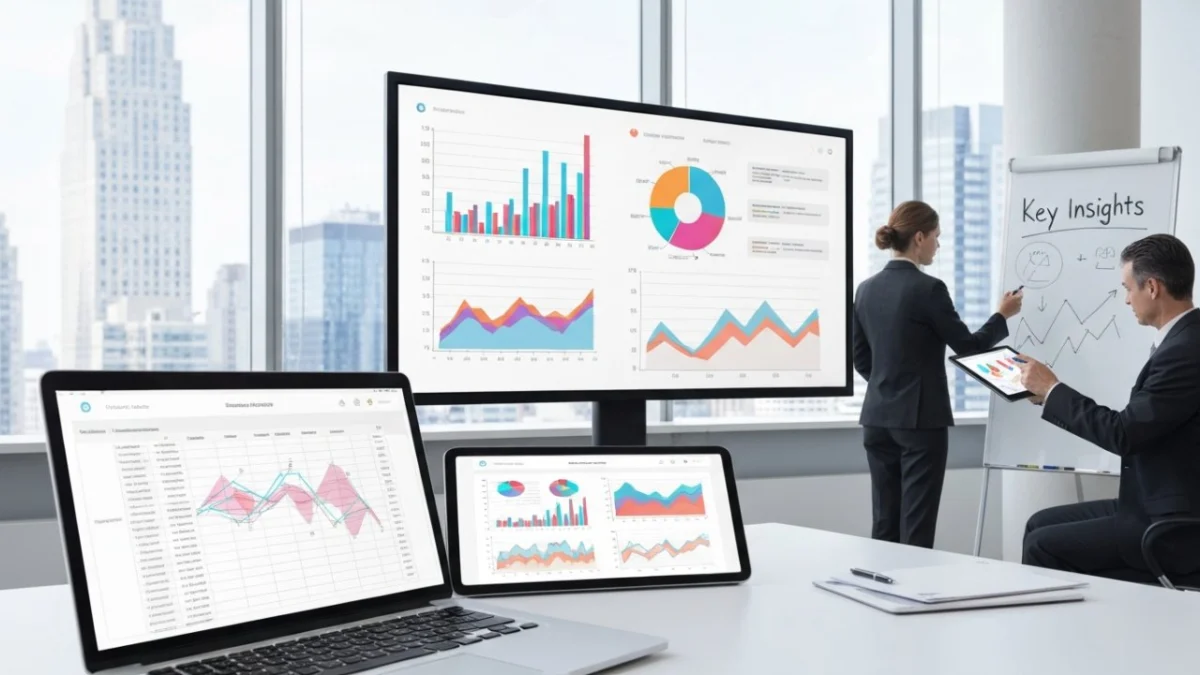
The landscape of corporate decision-making has undergone a radical transformation leading into 2026, driven by the convergence of generative artificial intelligence, cloud-native architectures, and the increasing democratization of data. As organizations move away from retrospective reporting toward predictive and prescriptive modeling, the selection of a Business Intelligence (BI) platform has become a foundational pillar of enterprise strategy. In 2026, five primary platforms—Microsoft Power BI, Tableau, Qlik Sense, Looker, and Sisense—have emerged as the definitive leaders, each catering to specific organizational archetypes and technical requirements. These tools no longer function merely as visualization engines; they are now comprehensive data ecosystems that facilitate real-time insights and automated workflows across every level of the modern workforce.
The Evolution of Business Intelligence: A Five-Year Chronology
To understand the dominance of these five platforms in 2026, it is necessary to examine the technological shifts that occurred over the preceding half-decade. In 2021 and 2022, the primary focus of BI was on accessibility and the migration of legacy on-premise systems to the cloud. By 2023, the integration of Large Language Models (LLMs) began to redefine user interfaces, allowing non-technical staff to query databases using natural language rather than SQL or specialized code.

By 2024, the "Data Mesh" and "Data Fabric" architectures became standard, requiring BI tools to connect seamlessly with decentralized data sources without the need for constant, expensive data movement. In 2025, the industry saw a massive consolidation phase where major providers integrated advanced automated machine learning (AutoML) directly into their BI suites. This evolution culminates in 2026, where the "Top 5" platforms are distinguished not just by their ability to create charts, but by their capacity to provide "Active Intelligence"—a state where data insights are delivered in real-time to trigger immediate business actions.
Microsoft Power BI: The Ecosystem Powerhouse
Microsoft Power BI remains the most widely adopted BI tool in 2026, largely due to its inextricable link with the Microsoft 365 and Azure ecosystems. For organizations already utilizing the Microsoft stack, the integration is seamless, offering a low barrier to entry for departments ranging from finance to human resources.
In 2026, Power BI’s primary strength lies in its "Fabric" integration, a unified analytics platform that combines data engineering, data science, and real-time analytics. This allows users to transition from raw data ingestion to high-level executive dashboards within a single environment. However, the platform’s licensing structure remains a point of complexity. While the entry-level "Pro" versions are affordable, enterprise-scale features often require "Premium" capacities that can significantly escalate costs as data volumes grow. Despite this, the ubiquity of Power BI makes it the default choice for the majority of global enterprises.

Tableau: The Gold Standard for Visual Analytics
Tableau, owned by Salesforce, continues to hold its position as the premier tool for advanced data visualization and exploratory analysis. In 2026, Tableau has successfully integrated "Tableau Pulse," an AI-driven insight engine that proactively surfaces trends and anomalies to users without requiring them to build manual reports.
Industry analysts note that Tableau’s primary appeal is its artistic and intuitive approach to data. It allows for a level of granular customization that competitors struggle to match, making it the preferred choice for data scientists and professional analysts who require high-fidelity storytelling. While the cost of Tableau can be higher than its competitors on a per-user basis, its robust community—the "Tableau Public" ecosystem—provides a repository of knowledge and templates that accelerates the deployment of complex analytics projects.
Qlik Sense: Leading the Way in Associative Data Modeling
Qlik Sense distinguishes itself in 2026 through its unique associative engine. Unlike traditional query-based tools that limit users to pre-defined paths, Qlik allows users to explore all the relationships in their data, across all sources, simultaneously. This "associative" approach is particularly valuable for discovering "hidden" insights that might be missed by standard SQL queries.

Following its acquisition of Talend, Qlik has evolved into a full-spectrum data integration and analytics provider. This enables companies to manage the entire data lifecycle—from ingestion and transformation to visualization—within a single framework. In 2026, Qlik is frequently cited by manufacturing and logistics firms as the superior tool for supply chain visibility, where the ability to see data relationships in real-time is critical for operational efficiency.
Looker: The Architect’s Choice for Data Governance
Looker, a core component of the Google Cloud Platform (GCP), has revolutionized the way modern data teams manage metrics. By utilizing LookML, a centralized modeling language, Looker ensures that a single definition of a metric—such as "Gross Revenue" or "Churn Rate"—is applied across the entire organization.
In 2026, Looker is the tool of choice for organizations with sophisticated data engineering teams who prioritize "Headless BI." This approach allows companies to define their data models once and then serve that data to any application or interface, whether it be a standard dashboard, a mobile app, or an internal operational tool. While LookML requires a steeper learning curve and a more technical background, the consistency and governance it provides are unmatched, effectively eliminating the "multiple versions of the truth" problem that plagues many large corporations.

Sisense: Excellence in Embedded Analytics
Sisense has carved out a dominant niche in 2026 by focusing on embedded analytics and API-first design. For software-as-a-service (SaaS) companies looking to offer analytics features within their own products, Sisense provides a highly customizable, white-label solution.
The platform’s "In-Chip" technology allows it to process massive datasets with high performance, even on standard hardware. In 2026, Sisense’s AI capabilities are heavily focused on "Knowledge Graphs," which help users understand the context of their data. While Sisense can be more complex to customize for internal use cases compared to Power BI, its flexibility for external-facing applications makes it an essential tool for the digital product economy.
Supporting Data and Market Projections
The global business intelligence and analytics market is projected to reach an estimated valuation of $54.9 billion by the end of 2026, representing a compound annual growth rate (CAGR) of 10.2% since 2021. This growth is driven by several key factors:

- AI Integration: Over 85% of new BI deployments in 2026 feature integrated AI assistants that automate data preparation and insight generation.
- Cloud Dominance: Cloud-based BI solutions now account for 78% of the total market share, as on-premise legacy systems are phased out in favor of scalable SaaS models.
- Data Democratization: The ratio of "data consumers" to "data creators" has shifted from 10:1 in 2020 to 50:1 in 2026, reflecting the increased accessibility of these tools for non-technical employees.
Implementation Strategy: Ensuring Organizational Success
The successful implementation of a BI tool in 2026 requires more than just technical deployment; it requires a culture of data literacy. Expert consultants emphasize that the "Proof of Concept" (PoC) phase is the most critical stage of the lifecycle. During this phase, organizations must validate not only the tool’s performance but also its usability among the target audience.
A common pitfall identified by industry leaders is the "dashboard graveyard"—a phenomenon where organizations build hundreds of reports that are never used. To combat this, the leading strategy in 2026 involves assigning "Data Product Owners" who are responsible for the maintenance, accuracy, and relevance of specific datasets and dashboards. This ensures accountability and maintains high levels of user trust in the data.
Security, Privacy, and Ethical Considerations
As BI tools become more powerful, the risks associated with data privacy have intensified. In 2026, the top five BI providers have integrated advanced security features, including automated PII (Personally Identifiable Information) masking and row-level security (RLS) that adapts based on the user’s geographic location and role.

With the tightening of global regulations such as the GDPR in Europe and various state-level privacy laws in the United States, BI platforms must now provide comprehensive audit trails. These trails track every instance of data access and modification, ensuring that organizations can demonstrate compliance during regulatory reviews. Furthermore, the ethical use of AI in BI—specifically ensuring that predictive models do not perpetuate biases—has become a major focus for corporate governance boards.
The Broader Impact: BI as a Catalyst for Change
The proliferation of these top-tier BI tools in 2026 has fundamentally altered the competitive landscape. Small and medium-sized enterprises (SMEs) now have access to the same analytical power that was once reserved for Fortune 500 companies. This leveling of the playing field has accelerated innovation and allowed for more agile responses to market fluctuations.
In the public sector, BI tools are being used to optimize urban planning, healthcare delivery, and environmental monitoring. By 2026, the ability to turn raw data into actionable intelligence is no longer a luxury; it is a prerequisite for survival in a data-saturated world. Whether an organization chooses the ecosystem integration of Power BI, the visual depth of Tableau, the associative power of Qlik, the governed metrics of Looker, or the embedded flexibility of Sisense, the goal remains the same: to move from intuition-based management to evidence-based leadership.
