

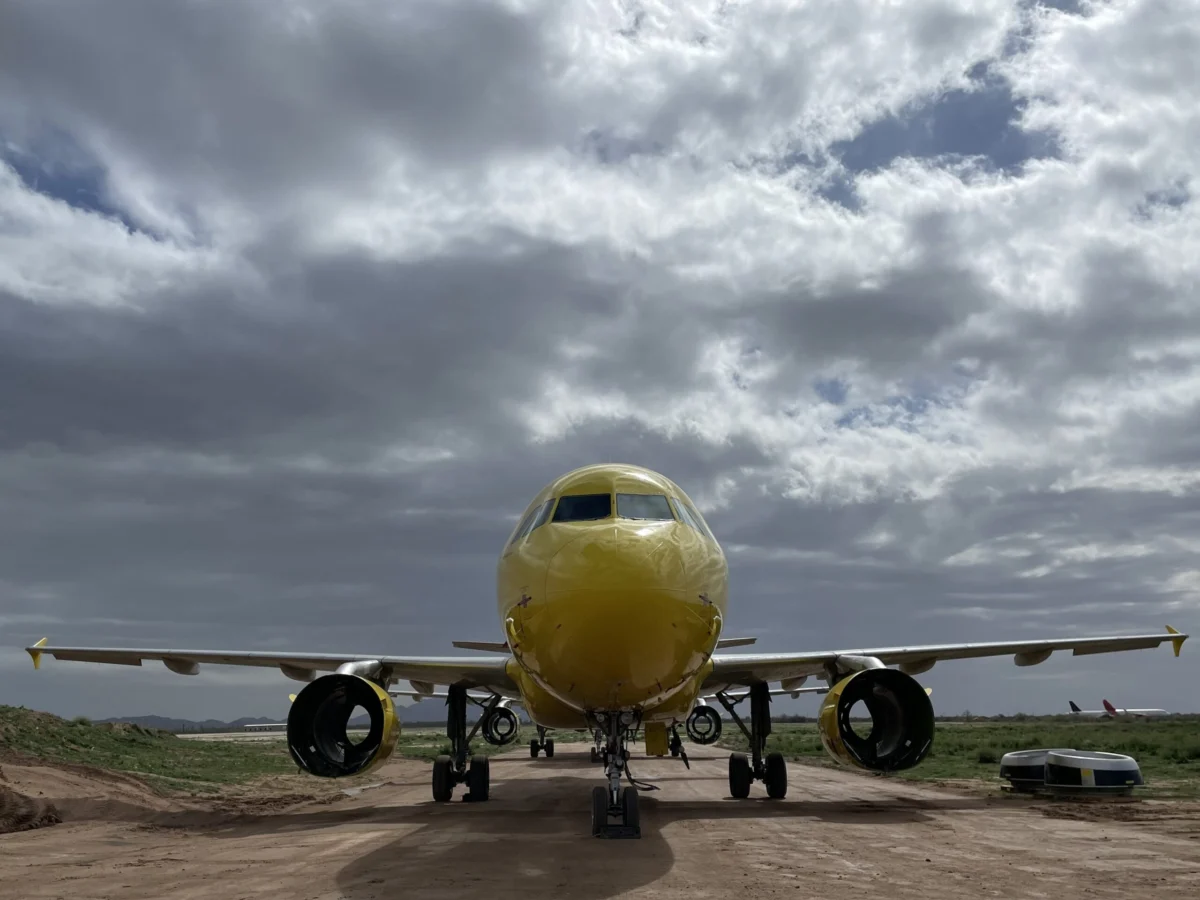
When Spirit Airlines ceased all operations before dawn on May 2, the sudden silence in its typically bustling hubs marked not an end, but a new beginning for a specialized cadre of aviation professionals. For pilot Steve Giordano, managing partner of Nomadic Aviation Group, the airline’s final moments signaled the activation of a meticulously planned, high-stakes logistical operation: the repossession of more than two dozen of Spirit’s bright yellow Airbus jets by lessors keen to reclaim their assets. In a rapid, week-long effort, Giordano and his dedicated team ferried 23 of these aircraft from various airports across the nation to the arid expanse of the Arizona desert, a silent graveyard for grounded giants. Just hours before these planes were meticulously prepared for their final, passenger-less flights, they had been crisscrossing the skies, carrying Spirit’s customers on their distinctive ultra-low-cost journeys.
The intricate ballet of aviation asset recovery began to coalesce on the afternoon of May 1. Giordano, who co-founded Nomadic Aviation with Bob Allen, recalled receiving the crucial signal. "We finally got the trigger pulled to start moving crews at 6 p.m." on May 1, he stated, anticipating Spirit’s scheduled shutdown at 3 a.m. ET the following morning. This narrow window underscored the urgency and precision required. Nomadic Aviation, leveraging its network of seasoned pilots—some of whom had recently flown for Spirit itself—swiftly mobilized. Their mission: to transport the now-idle aircraft westward to specialized storage facilities outside of Phoenix and Tucson, Arizona. These desert locales, renowned for their dry climate, offer optimal conditions for preserving retired or unused aircraft, mitigating the risks of corrosion and other environmental damage, a practice famously employed by airlines during the peak of the Covid-19 pandemic when thousands of jets were temporarily grounded.
The Demise of Spirit Airlines: A Chronology of Challenges
The collapse of Spirit Airlines, once a trailblazer in the ultra-low-cost carrier (ULCC) model, represents the largest U.S. airline shutdown in decades, sending ripples through the industry. Its demise was not a sudden event but the culmination of several years of mounting financial pressures, operational hurdles, and strategic missteps.
Early Struggles and the Failed Merger: Spirit’s troubles began to visibly escalate long before May 2. The airline had been grappling with persistent losses, aggressive competition, and the lingering effects of the post-pandemic travel landscape. A critical turning point arrived with the protracted and ultimately unsuccessful attempt to merge with JetBlue Airways. The proposed $3.8 billion acquisition, first announced in 2022, was intended to create a formidable fifth-largest U.S. airline. However, it faced intense scrutiny from antitrust regulators who argued that the merger would harm competition and lead to higher fares for consumers, particularly impacting the budget travel segment. Despite a lengthy legal battle, including an appeal to the First Circuit Court of Appeals, a federal judge ultimately blocked the deal in January 2024, citing concerns over market concentration. This ruling left Spirit in a precarious financial position, having exhausted significant resources on the merger effort while its standalone viability continued to erode.
The Pratt & Whitney Engine Crisis: Adding to its woes, Spirit was disproportionately affected by a widespread issue with Pratt & Whitney PW1100G engines. These engines, critical to many of Spirit’s Airbus A320neo family aircraft, were found to have a rare manufacturing defect in the high-pressure turbine disks, necessitating extensive inspections and replacements. This led to the grounding of a substantial portion of Spirit’s fleet, sometimes dozens of aircraft at a time, for extended periods. This operational disruption severely curtailed its capacity, leading to flight cancellations, reduced revenue, and increased maintenance costs, further bleeding the airline financially. Analysts estimated that the engine issues alone could cost Spirit hundreds of millions of dollars in lost revenue and increased expenses. By October 2025, the airline’s CFO had already announced plans to cut nearly 100 aircraft from its fleet and reduce routes in an effort to conserve cash, signaling the depth of its distress.
Market Dynamics and Competitive Pressures: Spirit operated in a highly competitive segment of the airline industry, facing pressure from both legacy carriers expanding their basic economy offerings and other ULCCs. Its business model, heavily reliant on ancillary fees for everything from seat selection to carry-on bags, faced increasing consumer scrutiny and evolving expectations. With fuel costs fluctuating and labor costs rising, maintaining profitability became an uphill battle. By the time of its shutdown, Spirit had accumulated substantial debt and was struggling to secure additional financing. Its stock price had plummeted, reflecting investor concerns about its long-term prospects.
In the final weeks leading up to the shutdown, Spirit initiated bankruptcy proceedings, a stark admission of its inability to continue as a going concern. Court filings revealed the scale of its fleet: 114 Airbus A320 family aircraft, of which 66 were leased. The bankruptcy process, initiated on May 5, began the methodical dismantling of the discount carrier, with the immediate priority being the orderly return of leased aircraft to their owners.
The Repossession Operation Unveiled: A Specialist’s Task
The task of repossessing an airline’s fleet is far from a routine flight. Nomadic Aviation Group specializes in the complex logistics of aircraft ferry flights, typically transporting planes to new customers around the globe. However, repossessions, while less frequent, are arguably the most demanding facet of their work. "It’s certainly the least frequent type of operation that we do," Giordano acknowledged, underscoring the rarity and unique challenges involved in liquidating a major airline’s assets.
The complexity of a repossession goes far beyond simply piloting an aircraft. "Unlike with an airline that has a large staff of dispatchers, mechanics, and pilots," Giordano explained, "when you’re out on a mission like this, there’s a lot more responsibility as far as getting the mission accomplished. To be honest, the easy part of this is the flying part of it." Nomadic’s teams manage every detail, from sourcing fuel at various airports and coordinating ground handling to ensuring all necessary maintenance checks and regulatory inspections are completed before each flight. This involves a delicate dance of permits, paperwork, and precise timing, all while operating under immense pressure to meet lessor demands.
The human element of this operation also presented unique dynamics. Some of the pilots recruited by Nomadic for these ferry flights were, ironically, former Spirit Airlines employees. This brought a "surreal" quality to the work, as Giordano described it, particularly for those flying out of airports they once considered their home base with Spirit. For Giordano himself, flying the last Spirit plane out of Philadelphia International Airport, an airport not far from his home, was a poignant experience. "This is the last time this will ever happen, and I happen to be flying it," he reflected, capturing the weight of the moment.

Amidst the intensity, there were also unexpected, almost humorous, moments. Giordano recounted a particular repossession flight where, due to the whirlwind of preparations, he forgot to eat. "By the time I got to the airplane, I’m like, ‘Oh no, I’m really hungry and there’s not going to be any options until we get to Arizona,’" he recalled. A mechanic on board, however, had a solution: "Hey, all the galley carts are full." Much to Giordano’s surprise and relief, the aircraft’s galleys were stocked with the usual Spirit snacks – Milano cookies, snack boxes with cheese. "It was basically free and unlimited," he quipped, a small, unexpected perk in an otherwise solemn mission. Even the Wi-Fi on board worked, though he noted, "I had to pay for it." This glimpse into the operational minutiae underscores the almost immediate transition of these aircraft from passenger service to specialized cargo.
The Fate of the Fleet: Market Dynamics and Asset Value
The ultimate destination and future utility of Spirit’s former fleet remain a subject of intense interest within the aviation industry. With 114 Airbus A320 family aircraft, including A319s, A320s, and A321s, the influx of these planes onto the market could significantly impact aircraft leasing and sales. The choice of the Arizona desert as a temporary storage facility is strategic, as the arid climate minimizes the risk of corrosion and degradation, preserving the aircraft for potential resale or lease to other carriers.
Demand for Engines and Parts: A significant driver of value in these repossessed aircraft lies in their components, particularly the engines. The Pratt & Whitney PW1127G engines, despite their past issues, remain highly sought after. Supply chain shortfalls, exacerbated by the Covid-19 pandemic and ongoing manufacturing challenges, have dramatically inflated the value of secondhand aircraft parts. Engines, as the most complex and expensive components, are particularly in demand. According to aviation consulting firm IBA Group, the value of a PW1127G engine surged from approximately $11.3 million three years prior to $14.5 million by January.
Stuart Hatcher, IBA’s chief economist, emphasized the critical need for operational engines. "The engines that were operational will be very welcomed," he stated. The extended turnaround times at maintenance shops, often double what they should be, further amplify the value of readily available, serviceable engines. Beyond engines, hundreds of other components, from landing gear and avionics to interior fittings, can be salvaged and sold, fueling a robust aircraft recycling market. The specialized nature of the A320 family, a workhorse for many airlines globally, means that its parts will likely find eager buyers.
Potential for Re-leasing and New Operators: While some aircraft might be dismantled for parts, others, particularly the younger models in good condition, are likely to be re-leased to other airlines. The global demand for narrow-body aircraft remains strong, especially in emerging markets or for carriers looking to expand their fleets without the long lead times associated with new aircraft orders. Lessors will work to remarket these planes, potentially after livery changes and interior refurbishments, to a new set of operators, possibly even other ULCCs seeking to capitalize on Spirit’s former routes or market share.
Broader Industry Implications and the Future of ULCCs
Spirit Airlines’ collapse serves as a stark reminder of the brutal realities of the aviation industry, particularly for ultra-low-cost carriers. While the ULCC model has democratized air travel for millions, it operates on razor-thin margins, making it highly vulnerable to external shocks such as fuel price volatility, economic downturns, regulatory changes, and unforeseen operational crises like the engine issues that plagued Spirit.
Impact on the ULCC Market: The departure of Spirit leaves a significant void in the budget travel segment. While competitors like Frontier Airlines, Allegiant Air, and even legacy carriers with their basic economy offerings will undoubtedly vie for Spirit’s former market share, the absence of such a major player could lead to reduced competition on certain routes and potentially higher fares for consumers in some markets. It also highlights the challenges of scaling a ULCC operation while maintaining profitability and customer satisfaction.
Lessons for the Industry: Spirit’s journey offers critical lessons for airlines and regulators alike. The failed merger with JetBlue underscores the complexities of antitrust enforcement in a consolidating industry. The engine issues highlight the systemic risks associated with relying on single-source suppliers for critical components and the need for robust contingency planning. Furthermore, the rapid repossession operation itself demonstrates the efficiency and specialization of the aviation leasing market, which acts as a vital safety net for aircraft assets during airline failures.
The Human Cost: Beyond the financial and operational implications, the shutdown had a profound human cost. Thousands of Spirit employees – pilots, flight attendants, mechanics, ground staff – faced job losses, a stark personal consequence of the airline’s demise. While some pilots found immediate work with companies like Nomadic Aviation, the broader employment impact remains a significant concern for the communities where Spirit operated.
Looking Ahead
The silence of Spirit’s bright yellow jets in the Arizona desert is a powerful symbol of an era concluded. Yet, it also marks the beginning of a new chapter for these aircraft, their engines, and their components. As Nomadic Aviation Group and other specialists meticulously dismantle, refurbish, or remarket these assets, the aviation industry will continue to adapt and evolve. The space left by Spirit will not remain empty for long, as other carriers step in to fill the void, perhaps learning from the challenges that ultimately grounded the pioneering ultra-low-cost airline. The swift, silent repossession is not merely an operational feat; it is a tangible manifestation of the relentless, dynamic forces that shape the global aviation landscape.
