

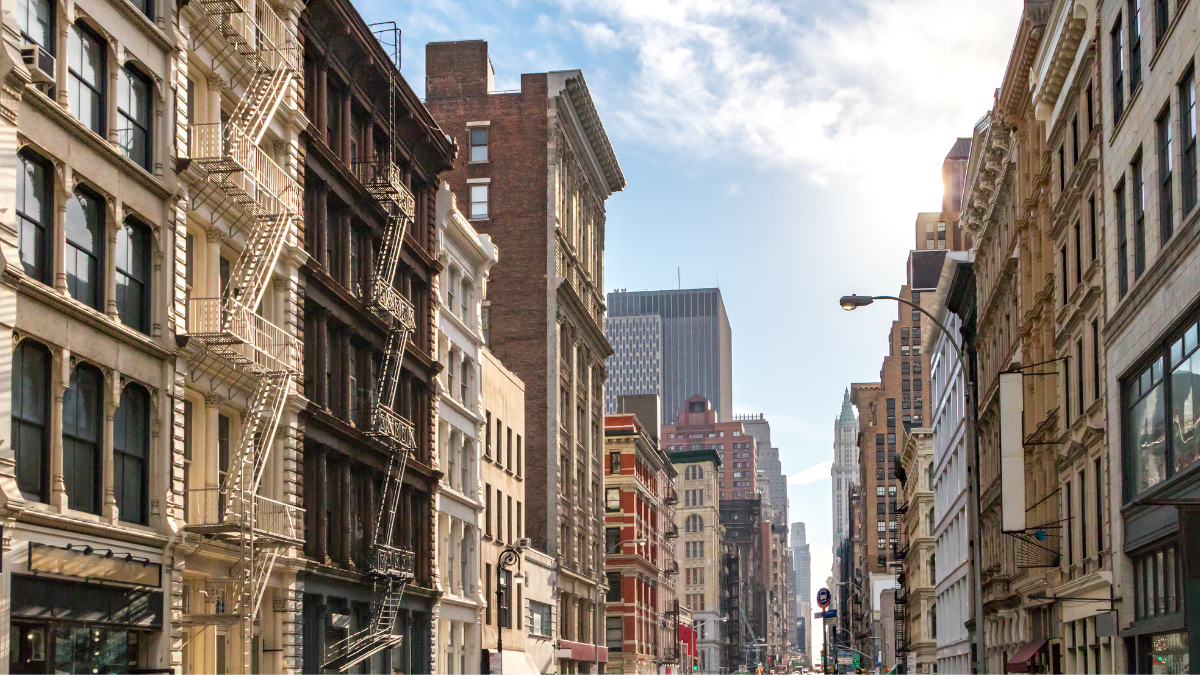
New York City faces a housing shortage of historic proportions, with current estimates suggesting the municipality requires approximately 700,000 new homes over the next decade to stabilize its market and accommodate projected growth. This figure serves as the cornerstone of the city’s recently released Fair Housing Growth Strategy, a comprehensive framework designed by the Department of Housing Preservation and Development (HPD) and the Department of City Planning (DCP). The strategy outlines a multifaceted approach to easing the ongoing affordability crisis, setting ambitious five-year targets that include the production of 350,000 new homes and the preservation of 100,000 existing units. While the focus of public discourse often gravitates toward new construction and "City of Yes" zoning reforms, economic data and recent project completions suggest that the preservation of existing assets may offer a more cost-effective and immediate pathway to maintaining the city’s housing stock.
The Economic Reality of Preservation Versus New Construction
The financial logic underpinning housing preservation is rooted in the efficient use of capital. Protecting and rehabilitating an existing asset typically requires significantly less funding than the total replacement of that asset through ground-up development. In New York City, where land costs, labor, and materials are among the highest in the world, this disparity is particularly pronounced.
According to a 2026 analysis from the Association for Neighborhood & Housing Development (ANHD), the city’s affordable housing inventory is currently facing a period of heightened vulnerability. The report identifies more than 63,700 subsidized affordable apartments that are experiencing varying degrees of financial distress, characterized by rising operating deficits, deferred maintenance, or the impending expiration of affordability covenants. The ANHD estimates that if these units were lost to the market and required replacement through new construction, the necessary public subsidies would range from $10.2 billion to $26.8 billion.
These projections underscore the potential fiscal consequences of failing to sustain existing affordable housing. While not every distressed property can be economically salvaged, the broader implication for city planners is that every viable unit preserved represents a saved opportunity. By maintaining current capacity, the city avoids the "staggering" premium associated with modern development costs, which have been exacerbated by post-pandemic inflation and high interest rates.
A Comparative Analysis of Recent Housing Developments
A detailed examination of recent housing projects in Brooklyn provides a clear illustration of the cost differences between preservation and new construction. The Reid Park Rock development in East New York serves as a primary case study for large-scale preservation. This project involved the acquisition, restructuring, and modernization of 1,696 units across 87 buildings. Managed by a partnership including Fairstead, BRB, LDCENY, and the New York City Housing Authority (NYCHA), the total cost to modernize the development for the next generation of tenants was approximately $375,000 per unit.
In contrast, two nearby ground-up developments demonstrate the high barrier to entry for new supply. The Innovative Urban Village, also located in East New York, recently reported a total development cost of $270 million for 385 units, resulting in an average cost of approximately $700,000 per unit. Similarly, Phase I of the Alafia development, a 576-unit affordable property in the same neighborhood, was delivered at a cost of $387 million, or roughly $672,000 per unit.
The data indicates that the new construction projects cost approximately 80% more per unit than the preservation of Reid Park Rock. While new developments are essential for increasing the total "net" inventory of the city, the preservation model demonstrates a far more efficient utilization of public and private capital to secure long-term affordability for the same number of families.
The Evolution of Public-Private Capital Structures
The preservation of affordable housing in a high-cost environment like New York City requires sophisticated financial engineering. Conventional real estate financing is typically predicated on the expectation of rental growth and asset appreciation. However, affordable housing operates under a constrained economic dynamic where income restrictions limit revenue potential while operating expenses—including insurance, utilities, and mandatory capital improvements—continue to climb.
This mismatch creates financing gaps that private lenders are often unable to bridge independently. To address this, the city has increasingly relied on public-private capital structures. These arrangements combine several layers of funding:
- Public Subsidies: Low-interest loans or grants from city and state agencies.
- Tax Incentives: Programs such as the Low-Income Housing Tax Credit (LIHTC) and local property tax exemptions.
- Subordinate Financing: Debt that sits behind primary loans to reduce the overall cost of capital.
- Private Investment: Equity from "impact capital" firms and institutional investors seeking long-term, stable returns rather than rapid appreciation.
The Reid Park Rock project utilized this blended approach, drawing on impact capital from firms like Vistria, financing from Merchants Bank, and subordinate subsidy financing from the City of New York. By expanding HUD rental subsidies alongside private capital, the partnership was able to fund a complete modernization that would have been unfeasible under a traditional market-rate financing model.
Timeline of New York City’s Housing Strategy
The current focus on preservation is the result of several years of escalating housing pressure and legislative response:
- 2022: The Mayor’s Office releases "Housing Our Neighbors," a blueprint for housing and homelessness that emphasizes the need for faster processing of affordable housing applications.
- 2023: The "City of Yes" initiative is introduced, proposing sweeping zoning changes to allow for more residential density across the five boroughs.
- 2024: The release of the Fair Housing Growth Strategy formally establishes the 700,000-unit goal and highlights the specific 100,000-unit preservation target.
- 2024-2025: Large-scale projects like Reid Park Rock and Alafia reach critical completion milestones, providing real-world data on the cost of housing delivery.
- 2026 (Projected): Industry experts and organizations like the ANHD project a "crisis point" for thousands of subsidized units if reinvestment strategies are not accelerated.
Safeguarding Past Investments through Stewardship
Beyond the immediate need for beds, preservation serves as a mechanism for investment stewardship. Over the past several decades, billions of dollars in public funds have been deployed to build New York’s affordable housing stock. When a property falls into disrepair or its affordability requirements expire, that initial public investment is effectively at risk of being neutralized.
Strategic reinvestment allows the city to protect the "equity" it has already built into the community. Rather than viewing preservation as merely spending money on aging structures, housing advocates argue it is an exercise in extending the useful life of community infrastructure. When a building is preserved, it is often updated with modern energy-efficient systems, which lowers long-term operating costs and aligns with the city’s carbon emission reduction goals under Local Law 97.
Broader Impact and Policy Implications
The success of New York’s housing policy will likely depend on the city’s ability to run these two tracks—new construction and preservation—simultaneously. While new construction is the only way to address the absolute supply-demand imbalance that drives up market rents, preservation is the most effective tool for preventing the displacement of existing low-income residents.
Industry leaders, including Victoria Gousse, Principal and Chief Investment Officer at A. Walker & Co., have noted that preservation must receive the same level of intellectual and financial attention as new development. The challenge for the coming decade will be ensuring that the 100,000-unit preservation target is backed by sufficient execution capacity. This includes streamlining the regulatory hurdles that often delay rehabilitation projects and ensuring that the city’s Department of Housing Preservation and Development is adequately staffed to manage the complex underwriting required for these transactions.
Furthermore, the environmental impact of preservation cannot be overlooked. The "embodied carbon" of existing buildings—the emissions already generated during their original construction—is preserved when a building is renovated rather than demolished. In a city striving to meet ambitious climate targets, the adaptive reuse and modernization of the existing built environment offer a greener alternative to the carbon-intensive process of new steel and concrete construction.
Ultimately, the Fair Housing Growth Strategy signals a recognition that New York City’s housing crisis is a multi-generational problem requiring a diversified portfolio of solutions. The data suggests that while the city must build upward and outward to meet future demand, the most practical and cost-effective strategy for maintaining the current social fabric lies in the diligent preservation of the affordable housing already standing. The true measure of the city’s progress will not only be the number of ribbons cut on new towers but the number of existing homes secured for the decades to come.
