

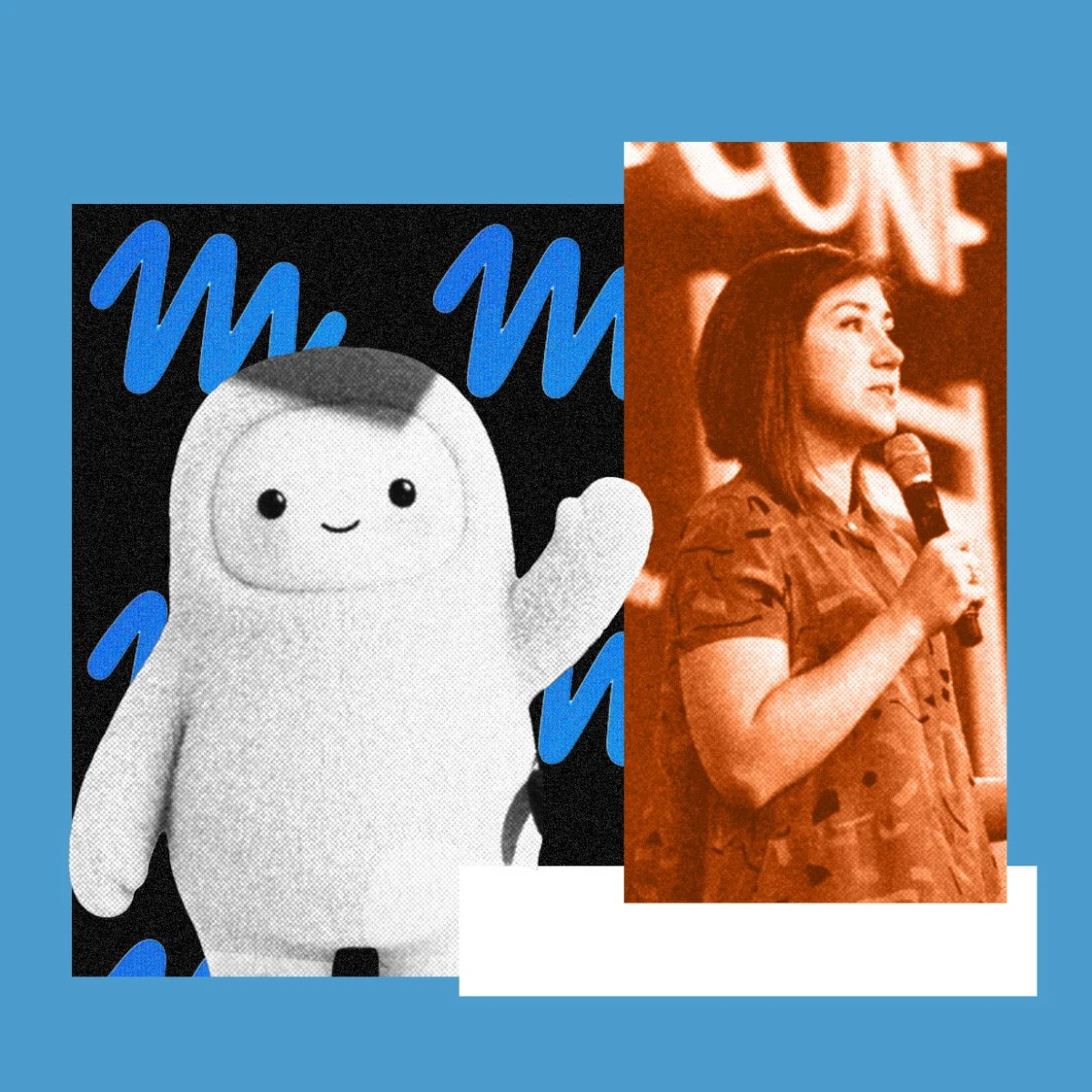
Bay Area lettering artist Jessica Hische found herself at the center of a digital firestorm after taking on a freelance project to design the "M" logo for Meta’s new AI assistant, Muse. The assignment, which she accepted out of financial necessity to support her small businesses, quickly became a flashpoint for the contentious debate surrounding artificial intelligence and its integration into the tech landscape, particularly concerning Meta’s prominent role. Hische, a recognized figure in the lettering and design community, acknowledged the inherent sensitivity of the project, stating, "AI is such a third rail, and Meta is such a third rail."
Hische, who owns two brick-and-mortar art and stationery shops in Oakland, California, explained her decision to accept the Meta commission in her newsletter. She candidly admitted the financial pressures she faced, noting that her client work had been slow, and her physical stores, while cherished, operated on razor-thin margins, contributing only about $10,000 in profit the previous year. This financial reality, coupled with significant investments in Studioworks, an administrative platform for creatives, and Drawling, her children’s art shop, necessitated the pursuit of larger projects. "New Work! (Don’t be mad at me)," she cautioned her subscribers, before detailing her involvement in designing the icon and logotype for Muse, Meta’s new AI agent. She expressed enthusiasm for the project, despite anticipating "big feelings about both AI and Meta."
The announcement of Hische’s collaboration with Meta rapidly gained traction on Threads, a social media platform owned by Meta. Within hours, dozens of her peers, fellow designers, voiced sharp criticism, accusing her of "selling out." The backlash centered on ethical considerations, with one user expressing disgust and stating, "It’s not about money, it’s about ethics." Another commenter drew a stark parallel, comparing the situation to "doing a hit for the mob, and being surprised later when the mob takes you out too." The intensity of the online discourse escalated to the point where some users reportedly shared personal details about Hische’s home and speculated about her wealth, fueling a narrative of professional compromise driven by financial gain.
Hische had anticipated some level of pushback from the design community, given the prevailing anxieties surrounding AI. However, the sheer vitriol and personal attacks took her by surprise. She had hoped that her contribution would be viewed positively, as Meta’s decision to hire an independent artist rather than solely relying on generative AI for the Muse logo could be seen as a commendable move. Yet, the overwhelming negative reaction underscored the deep-seated opposition to generative AI within certain artistic circles, to the extent that any involvement with AI-related projects, regardless of capacity, was perceived as a betrayal of artistic principles.
The Financial Imperative and Artistic Philosophy
In an interview conducted subsequent to the online uproar, Hische elaborated on the circumstances surrounding her decision. She highlighted the precariousness of managing payroll for her small business, which includes four employees. "For the past year, I pretty much have 2-4 payrolls in my account at any given time, which if you own a small business, you know is pretty precarious," she stated. Her financial disclosures, including a $100,000 investment in Studioworks and $30,000 in Drawling, underscored the considerable financial commitments she had undertaken. These details, however, failed to assuade her critics.
Her engagement with Meta involved a logo refresh, a specialization she has cultivated over her career. Hische is known for her work on redesigns for established brands such as Squier (from Fender), Jeni’s Ice Cream, and Southern Living magazine. Her design philosophy, as she described it, is about breathing new life into existing identities, akin to a revitalizing spa weekend for a brand, rather than drastic, artificial alterations. "I want them to look like they went to the spa for a weekend—not that they went and got a ton of plastic surgery, you know? Just fresh and new, where you’re like, ‘Oh, something’s different. I can’t tell what, but I like it.’"
The Muse project presented a specific challenge: refining Meta’s internal exploration of the "M" logo. Hische explained that the initial design by product designers and engineers, while functional, lacked the nuanced subtleties of professional typography. The core request from the Meta team was to imbue the logo with a sense of inspiration and creativity, positioning Muse as an engaging and playful assistant rather than a rigid, engineered entity. Hische tackled the logo sprint with intense focus, completing the M in a remarkable two days, producing 32 distinct variations. The subsequent logotype development spanned an additional two weeks.
Compensation and the "Butthole Logo" Discourse
Regarding compensation, Hische revealed that she charged $12,500 for the two-day sprint, a fee she considered substantial for the rapid turnaround time, though not "life-changing." This figure provides context for the perceived financial motivations behind her decision, which critics often conflated with excessive wealth.
The interview also touched upon a peculiar detail mentioned by Meta’s Chief AI Officer, Alexandr Wang, who reportedly expressed satisfaction that the Muse logo did not resemble a "butthole," a characteristic he attributed to some competitors’ AI assistant branding. Hische confirmed that while this internal directive might have been a consideration for Meta, her own design discussions were more focused on aligning the Muse logo with the visual language of the existing Meta infinity loop.
The Decision to Publicize and the Aftermath
Hische’s decision to publicly announce her involvement stemmed from her general practice of sharing her professional endeavors with her audience, many of whom were aware of her husband’s long tenure at Meta. She aimed to address the sensitive nature of AI and Meta directly with an audience familiar with her personal and professional connections.
Her attempts to engage with critics on Threads were characterized by an open and conversational approach, aiming to foster understanding rather than persuade. However, a comment about potentially alleviating credit card debt for her shop’s holiday inventory purchases was misconstrued and amplified as evidence of ostentatious spending. This misrepresentation fueled the narrative of a "rich girl" prioritizing personal luxury over ethical considerations, a portrayal Hische found antithetical to her values.
The emotional toll of the backlash was significant. Hische described feeling "hit by a truck," spending days in bed and experiencing profound sadness and a sense of being misunderstood. She believed she was making a positive statement for artists by endorsing a company that hired human talent over AI. The widespread condemnation, however, made her question the impact of her previous efforts to support the artistic community.
The Role of AI and Artistic Integrity
Hische did not express regret for taking the job, particularly because she felt she was advocating for the value of human artists in an increasingly automated creative landscape. She argued that by commissioning her, Meta demonstrated a commitment to human creativity, a stance she felt was worth publicizing.
The intense reaction from designers, Hische suggested, is rooted in genuine fear about AI’s potential impact on commercial art. She recounted a personal evolution in her views on AI, initially being "vehemently anti-AI" before understanding its utility in administrative tasks and coding. This nuanced perspective, she believes, is crucial for navigating the technological shifts.
The broader debate, she observed, often pits AI advocates who claim AI enhances creativity by increasing the value of human-made art against purists who view AI as inherently built on unethical data scraping. Hische acknowledged the validity of the latter concern, noting that her own work may have been used without permission in AI training data, referencing the Anthropic settlement. While she uses AI for administrative purposes and coding assistance, she draws a firm line when AI replaces human creative labor.
The controversy surrounding Jessica Hische’s design for Meta’s Muse AI assistant serves as a potent case study in the complex ethical, financial, and emotional dimensions of art and technology in the 21st century. It highlights the deep divisions within the creative community regarding artificial intelligence and the significant pressures faced by independent artists and small business owners navigating a rapidly evolving economic and technological landscape. The incident underscores the ongoing struggle to balance artistic integrity with financial sustainability, particularly when engaging with the powerful, and often polarizing, entities shaping the future of digital interaction.
