

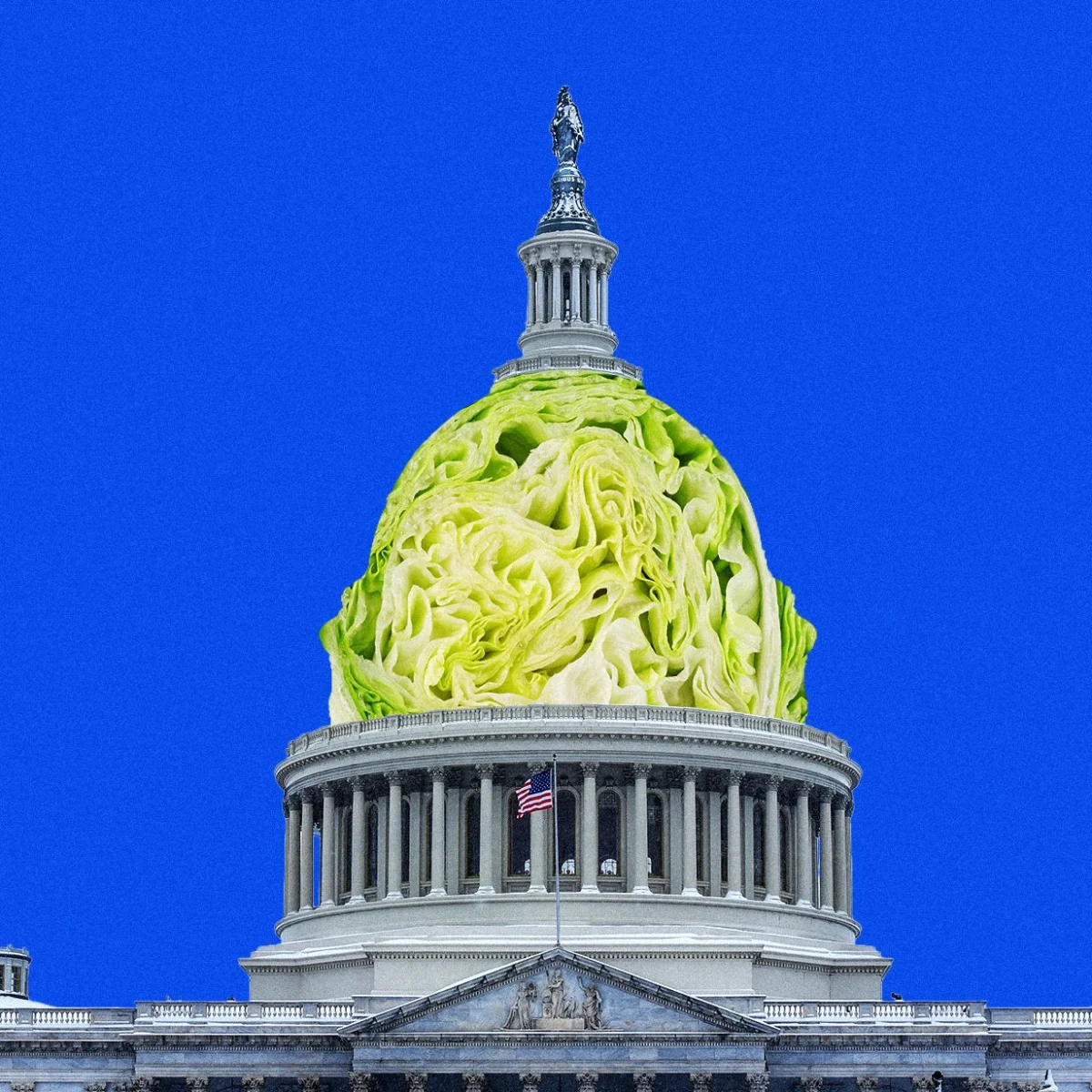
The recent widespread gastrointestinal illness, colloquially termed "turbo diarrhea," linked to a cyclospora outbreak, has brought into sharp focus the extensive political spending of Taylor Farms, the lettuce supplier at the epicenter of the contamination. Publicly available filings reveal that the agricultural giant has invested millions of dollars aimed at shaping food safety regulations and bolstering the campaigns of Donald Trump and other MAGA Republicans. This revelation raises critical questions about the influence of corporate money in public health policy and the potential for regulatory capture within the food industry.
Taylor Farms’ political engagement, as documented in Federal Election Commission filings, paints a picture of a company actively seeking to influence the political landscape in favor of its business interests. In 2025 alone, the company channeled over $2 million into conservative political groups. This significant financial commitment included a substantial $1 million donation to MAGA Inc., a super political action committee (PAC) closely aligned with former President Donald Trump’s political agenda. An additional $1.1 million was distributed to other super PACs dedicated to electing Republican candidates, underscoring a strategic effort to align with a specific political ideology and its associated policy objectives.
The company’s engagement with conservative political causes is not a recent phenomenon. From 2020 through the end of 2024, Taylor Farms contributed more than $1.6 million to conservative PACs. Among these recipients was AFP Action, an influential anti-regulation super PAC with well-documented ties to the Koch network. This pattern of consistent and substantial financial support suggests a long-term strategy to advocate for policies that may favor reduced regulatory oversight for agricultural businesses.
Beyond the corporate entity, Bruce Taylor, the chairman and CEO of Taylor Farms, has also been a significant personal donor to Republican causes. Since 2020, his individual contributions to Republican PACs and candidates have exceeded $900,000. Noteworthy among these personal donations are contributions made to prominent Republican senators, including John Cornyn of Texas and Marsha Blackburn of Tennessee. This dual approach – corporate and personal – amplifies the company’s reach and influence in political circles.
Lobbying Efforts: A Direct Push for Regulatory Influence
In parallel with its political donations, Taylor Farms has also strategically invested in lobbying efforts to directly influence food safety regulations. In early 2025, the company retained the services of the prominent law and lobbying firm Sidley Austin. Disclosure documents indicate that this firm was tasked with advocating on behalf of Taylor Farms regarding "regulation of food safety." Since engaging Sidley Austin, the company has reportedly spent $810,000 on these lobbying endeavors, demonstrating a direct and ongoing effort to shape the regulatory environment surrounding its operations.
Marion Nestle, a distinguished professor of food policy, emeritus, at New York University, contextualizes Taylor Farms’ financial activities within a broader concern in the American food industry. She observes that multibillion-dollar corporations frequently leverage their considerable financial resources to promote policies that could weaken food safety regulations and diminish accountability in the event of public health crises. "The FDA has regulations in place for what food producers are supposed to be doing, but nobody wants to do it—because it’s expensive and difficult," Nestle told WIRED, highlighting the inherent tension between regulatory compliance and corporate cost-effectiveness.
Official Responses and Denials
In the wake of growing public concern and media scrutiny, the U.S. Department of Health and Human Services (HHS) issued a statement on X (formerly Twitter) to address the perceived implications of Taylor Farms’ political spending. The HHS account emphatically stated that the company’s political donations did not influence the Trump administration’s response to the cyclospora outbreak. "This is how the FAKE NEWS works: imply collusion, ignore the facts," the HHS account posted, asserting that "Nothing influences our decisions except science and the safety of the American people." This public denial aimed to decouple the company’s political activities from the government’s public health response.
Taylor Farms’ Stance and FDA Interactions
Taylor Farms has publicly expressed dissatisfaction with the handling of the current cyclospora outbreak investigation by the Centers for Disease Control and Prevention (CDC) and the Food and Drug Administration (FDA). The outbreak has sickened thousands of individuals across multiple states, making it a significant public health concern. The company recently asserted that the FDA had issued an "apology" after a test of a Taylor Farms lettuce sample yielded a false-positive result. However, the FDA has publicly refuted this claim, stating to reporters that an official apology was never issued. Taylor Farms has not responded to requests for comment from WIRED regarding this discrepancy.
Prior to the dispute over the alleged "apology," executives from Taylor Farms met with White House and FDA officials. According to a company spokesperson, these meetings were intended to discuss perceived "shortfalls" in the government agencies’ response to the outbreak. The New York Times reported that this meeting occurred shortly after Taylor Farms hired Trent Morse, a former deputy director of the White House Presidential Personnel Office, who subsequently established a government relations firm after leaving the Trump administration in September. This strategic hiring further suggests a deliberate effort to engage with government agencies at the highest levels.
A History of Regulatory Scrutiny
The current cyclospora outbreak is not the first instance in which Taylor Farms, a company with an estimated $7 billion in annual revenue, has attracted the attention of federal regulators. A review of past incidents reveals a recurring pattern of regulatory scrutiny:
-
2013 Cyclospora Outbreak: The FDA identified Taylor Farms as a source of a cyclospora outbreak that led to hundreds of illnesses. This marked an early instance of the company’s products being linked to widespread gastrointestinal illness.
-
2015 E. coli Recall: In 2015, Taylor Farms voluntarily recalled several products containing celery due to potential contamination with E. coli. This precautionary measure highlighted ongoing concerns about potential pathogens in their supply chain.
-
2024 E. coli Outbreak: Most recently, in 2024, the company recalled certain yellow onions as part of an E. coli outbreak linked to McDonald’s Quarter Pounders. Following this outbreak, CBS News reported that FDA inspectors documented numerous violations at a Colorado Taylor Farms facility connected to the contamination. These violations reportedly included inadequate handwashing practices and the use of unclean equipment, raising serious questions about operational hygiene.
FDA Inspections and Workplace Safety Concerns
Since 2025, the FDA has conducted inspections at 18 American facilities affiliated with Taylor Farms. While three of these inspections resulted in "voluntary action indicated" findings – signifying that violations were noted but not deemed severe enough to warrant mandatory enforcement – the overall picture suggests persistent areas of concern.
Beyond food safety, Taylor Farms has also faced scrutiny from the Occupational Safety and Health Administration (OSHA). Since the beginning of 2025, OSHA has cited the company for at least 21 violations across its facilities in the United States. A particularly grave incident occurred in May 2025, when an employee died after sustaining injuries while cleaning an industrial blancher at a New Jersey facility. In response to this fatality and related violations, the Department of Labor fined the facility $1.1 million, underscoring significant workplace safety deficiencies.
Broader Implications for Food Safety and Public Trust
The confluence of extensive political spending, aggressive lobbying, and recurring food safety issues raises significant concerns about the integrity of the U.S. food regulatory system. The ability of large corporations to wield substantial financial influence in the political arena, potentially shaping regulations that govern their own industries, creates a risk of regulatory capture. This phenomenon occurs when regulatory agencies, intended to protect the public interest, become unduly influenced by the industries they are tasked with overseeing.
The "turbo diarrhea" outbreak, amplified by Taylor Farms’ past and present political activities, serves as a stark reminder of the delicate balance between agricultural productivity and public health. As consumers increasingly demand transparency and accountability in their food supply, the role of corporate political spending in influencing food safety standards will likely remain a critical area of public discourse and regulatory oversight. The long-term implications of these financial strategies could impact consumer confidence, the effectiveness of regulatory bodies, and ultimately, the health and well-being of the American public. The ongoing investigations and public discussions surrounding this outbreak are expected to shed further light on the intricate relationship between corporate influence and food safety in the United States.
