

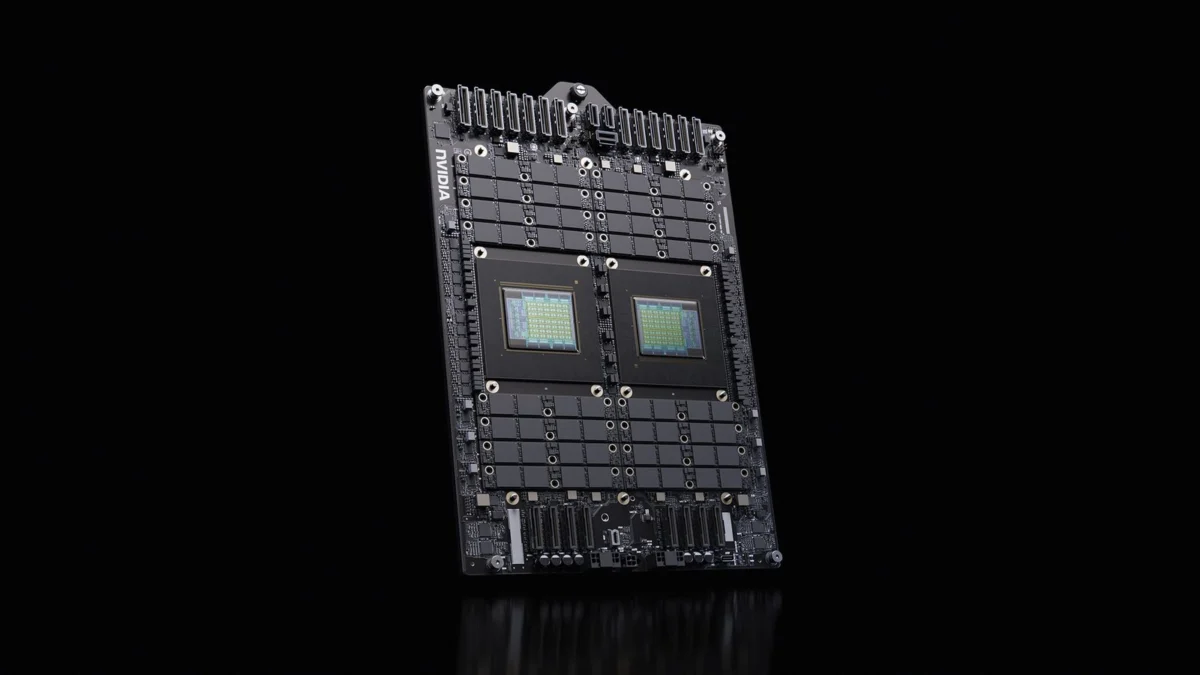
Nvidia is aggressively amplifying its marketing efforts for its forthcoming Vera Rubin chip system, releasing new performance benchmarks for its integrated GPU and CPU architecture. This strategic unveiling occurs just days before its primary rival, AMD, is set to host its annual product event in San Francisco. The heightened promotional activity underscores Nvidia’s ambition to solidify its position not only as a leading GPU manufacturer but also as a comprehensive provider of AI processing solutions, a significant strategic pivot driven by the evolving demands of artificial intelligence.
A Strategic Shift Towards Integrated AI Solutions
Nvidia executives recently convened a technical workshop at the company’s Santa Clara, California headquarters to showcase the enhanced power and efficiency of the Vera Rubin system. The core message from the briefings was clear: Nvidia, long renowned for its graphical processing units (GPUs), is increasingly positioning itself as a critical supplier of central processing units (CPUs) designed to power sophisticated AI agents. This move acknowledges the industry’s trajectory towards more complex, agentic AI systems, which necessitate robust CPUs to orchestrate data flows, manage networking, and handle a multitude of software tasks. While GPUs remain the foundational hardware for training and running AI models, the growing demand for CPUs capable of advanced coordination is reshaping the competitive landscape.
Vera Rubin represents Nvidia’s next-generation hybrid superchip, succeeding the highly capable Grace Blackwell system. It is engineered to be the cornerstone of Nvidia’s near-term strategy for powering the AI industry. The design principle of Vera Rubin emphasizes a balanced architecture, featuring one CPU for every two GPUs. Specifically, a single Vera Rubin NVL72 superchip system integrates 36 Vera CPUs alongside 72 Rubin GPUs. Nvidia is also making the Vera CPU available as a standalone product. Reports indicate that the company has already begun pitching these standalone CPUs to Chinese clients, with availability potentially as early as August. This strategic diversification in product offerings signals Nvidia’s intent to capture a broader segment of the AI hardware market.
Performance Claims and Competitive Positioning
During the technical workshop, Nvidia executives highlighted the significant advancements in the Vera Rubin NVL72 racks, which are pre-integrated, liquid-cooled platforms designed for ease of deployment. The company claims these systems are substantially more "plug-and-play" than their predecessors. During a demonstration at an Nvidia data center lab in Silicon Valley, executives revealed that OpenAI, a leading AI research organization, is already utilizing a Vera Rubin rack.
Nvidia CEO Jensen Huang, though not present at the Santa Clara workshop, was simultaneously engaged in announcing new AI robotics partnerships with Japanese firms in Japan. The technical briefings were instead led by Ian Buck, Nvidia’s long-serving vice president of accelerated computing and a key architect of the company’s CUDA software platform. Buck emphasized Nvidia’s commitment to continuous innovation, stating, "We’re on a roadmap to crank out new architectures, not just GPUs but CPUs. We’re going to keep innovating, because it’s do this or die in Silicon Valley." This declaration underscores the high-stakes nature of the AI hardware market and Nvidia’s aggressive approach to maintaining its leadership.
The workshops were held in Huang’s executive briefing center, a space reportedly adorned with Taiwanese snacks from his recent visit to Computex, a major semiconductor trade show in Taipei, according to an Nvidia spokesperson. This detail, while anecdotal, offers a glimpse into the company’s culture and the CEO’s engagement with global semiconductor events.
.jpg)
Technical Superiority and Deployment Advantages
Nvidia asserts that the Vera Rubin NVL72 system will deliver a tenfold increase in tokens processed per watt compared to its Grace Blackwell predecessor. Furthermore, the company claims its Vera CPU outperforms rival CPUs from AMD and Intel in agentic AI tasks. While these benchmarks are based on tests conducted by Nvidia, it is worth noting that the company’s comparisons may have utilized slightly older generations of its competitors’ processors. Nevertheless, the reported performance gains are significant.
A key innovation in the Vera Rubin system lies in its localized memory subsystems, which are designed to provide nearly three times the memory bandwidth of Blackwell. This enhancement is particularly relevant amid an ongoing global shortage of high-bandwidth memory (HBM), a critical component for AI workloads. Companies facing memory constraints may find this increased on-chip memory bandwidth a compelling feature.
Nvidia has also made substantial strides in simplifying connectivity. The company has significantly reduced the number of cables required to connect chips within multi-rack server systems. This has led to the marketing of Vera Rubin as "cable-free compute" and "hot-swappable," a claim that, if fully realized, could drastically reduce installation times. Executives suggested that rack installation time could be reduced from several hours to mere minutes. This operational efficiency is a significant selling point for data center operators looking to scale their AI infrastructure rapidly.
Moreover, the new chip system is entirely liquid-cooled, a departure from traditional air-cooling methods. Liquid cooling is generally more energy-efficient for high-performance computing, potentially leading to substantial energy savings in large-scale AI data centers.
A Carefully Orchestrated Product Rollout
Since its initial unveiling in the spring of 2025, Nvidia has strategically managed the release of information about the Vera Rubin chip system, consistently maintaining that it will adhere to its release schedule. CEO Jensen Huang has repeatedly affirmed that Vera Rubin is ramping up to "full production" and is slated for shipment in the second half of the current year. Prominent early customers reportedly include industry giants such as Microsoft, OpenAI, and Oracle, indicating strong market confidence in the new architecture.
Nvidia’s meticulous scheduling and promotional cadence are likely influenced by past challenges. The company faced reported overheating issues with its previous-generation Blackwell chips when integrated into its custom server racks, necessitating design modifications and shipment delays. This experience has evidently instilled a heightened awareness of the importance of a smooth and timely product launch for Vera Rubin.
The Competitive Arena: AMD’s Counteroffensive
Nvidia’s intensified marketing push for Vera Rubin directly precedes AMD’s annual conference, a pivotal event where AMD is expected to unveil its own next-generation AI and data center chips. Just days prior to this article’s publication, AMD revealed further details about its Helios AI chip rack, a direct competitor designed to challenge Nvidia’s new offerings. This strategic timing highlights the fierce competition between the two semiconductor titans for lucrative, multiyear contracts with major AI hyperscalers like Meta and Amazon, as well as leading AI labs such as OpenAI, Anthropic, and SpaceXAI.
.jpg)
Over the past two years, AMD has made significant inroads in the data center CPU market, steadily increasing its market share. The company is widely recognized for its pioneering work in chiplet architecture for x86 processors, a design that continues to dominate the revenue landscape for data center CPUs. Nvidia, in contrast, builds its data center CPUs on ARM architecture, which is known for its superior power efficiency.
Nvidia executives, including Ian Buck and Hannah Coutand, head of Nvidia’s CPU product marketing, have underscored Vera Rubin’s departure from the prevalent chiplet architecture. They advocate for a monolithic chip design, arguing that chiplet integration incurs a significant "tax on memory bandwidth and data movement." The monolithic design of Vera Rubin, they contend, facilitates more rapid data transfer across a single, integrated circuit, thereby enhancing overall performance. This technical divergence could prove to be a critical differentiator in the increasingly competitive AI hardware market.
Broader Implications for the AI Ecosystem
The introduction of Vera Rubin signifies more than just a new hardware product; it represents a strategic evolution for Nvidia. By integrating high-performance CPUs with its industry-leading GPUs, Nvidia is aiming to offer a more complete, end-to-end solution for AI development and deployment. This approach allows the company to capture more value in the AI supply chain and cater to the growing complexity of AI workloads.
The emphasis on ease of deployment, reduced cabling, and liquid cooling addresses critical operational challenges faced by large-scale AI deployments. These features are designed to lower the total cost of ownership and accelerate the time-to-market for AI applications, making Nvidia’s solutions more attractive to enterprises and research institutions alike.
The intense competition between Nvidia and AMD is a net positive for the broader AI industry. It drives innovation, encourages technological advancement, and can potentially lead to more competitive pricing for essential AI hardware. As AI continues to permeate various sectors, the availability of powerful, efficient, and accessible hardware will be paramount to its continued growth and adoption. The Vera Rubin system, with its ambitious performance claims and integrated design, is Nvidia’s latest bid to maintain its dominant position in this rapidly evolving technological frontier. The coming months will be crucial as both Nvidia and AMD vie for the attention and investment of the world’s leading AI developers and deployers, shaping the future of artificial intelligence hardware.
