

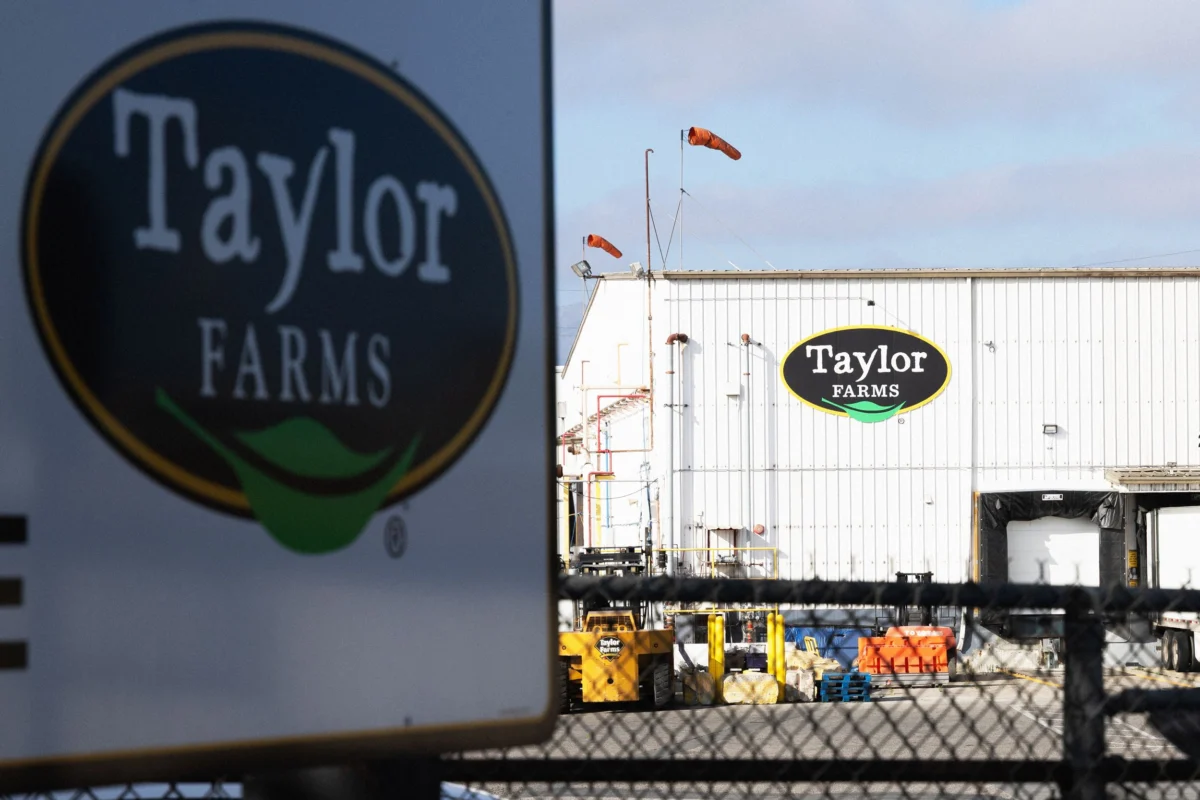
The ongoing investigation into a widespread Cyclospora outbreak, which has sickened thousands across the United States, has taken a complex turn as the Food and Drug Administration (FDA) and prominent lettuce supplier Taylor Farms find themselves at odds over laboratory findings and official communications. The dispute centers on a positive test result for Cyclospora in a sample of Taylor Farms lettuce that was not part of the company’s voluntary recall, a development that has led to a public disagreement regarding the accuracy of the test and the subsequent interpretations.
Escalating Health Concerns and a Voluntary Recall
The public health crisis began to escalate earlier in the summer, with reports of Cyclospora infections surfacing in multiple states. This parasitic infection, characterized by severe gastrointestinal distress including prolonged and explosive diarrhea, fever, and fatigue, prompted health officials to launch extensive investigations. By July 17, the gravity of the situation led Taylor Farms, a California-based agricultural company, to issue a voluntary recall for iceberg lettuce products originating from Central Mexico. This proactive measure encompassed a broad geographical distribution, affecting consumers in at least five states initially identified as having reported cases. The recall was a significant step, signaling a potential link between the widespread illnesses and a specific product line.
A Conflicting Laboratory Result and its Aftermath
The day following Taylor Farms’ voluntary recall, the FDA announced a significant development: the agency had detected the Cyclospora parasite in a sample of Taylor Farms lettuce. Crucially, this particular sample was not included in the initial recall. This discovery intensified the scrutiny on the company and its supply chain. However, the situation took another unexpected turn just twenty-four hours later. Both Taylor Farms and the FDA jointly stated that the positive test result was, in fact, a false positive.
Taylor Farms publicly declared on its X (formerly Twitter) account on July 19, "Today, the FDA apologized to us." This statement positioned the company as a recipient of an apology from the regulatory body, suggesting a misstep on the FDA’s part.
The FDA, however, presented a different narrative. On July 20, an agency official communicated to reporters that the FDA had not issued an "official apology." Instead, the official characterized the interaction as "mostly we were providing factual information" regarding the inherent difficulties in accurately testing for and tracing the origins of Cyclospora outbreaks. This distinction suggests a nuanced interpretation of the communication, with the FDA emphasizing its role in explaining scientific complexities rather than admitting a direct error.
The FDA Reaffirms Recall Basis Amidst Communication Discrepancies
Despite the contention over the false-positive test result, the FDA was unequivocal in its stance on the ongoing recall. The agency stressed that the recall, which now spans 27 states and includes lettuce supplied to major fast-food chains like Taco Bell and large retailers such as Walmart, remains valid. In a subsequent post on X, the FDA clarified, "To clarify, this false-positive lab sample DOES NOT change the basis for FDA’s ongoing outbreak investigation or the overwhelming epidemiological data supporting the current voluntary recall by Taylor Farms." This statement underscores the agency’s reliance on a broader range of evidence, including epidemiological data, which often plays a pivotal role in identifying outbreak sources even in the absence of definitive product testing.
Taylor Farms, in its July 19 statement, also highlighted that "the FDA has not identified a single positive product test result for Cyclospora." While factually accurate regarding direct product testing, this assertion, as noted by some observers, sidesteps the well-documented challenges in accurately detecting Cyclospora in food matrices.
The Intricacies of Parasite Detection and Epidemiological Evidence
The scientific and investigative community acknowledges that pinpointing the source of foodborne illnesses, particularly those caused by microscopic parasites like Cyclospora, can be a complex and arduous process. Foodborne illness investigators frequently rely on a combination of methods. While direct product testing is a crucial component, epidemiological evidence often forms the backbone of these investigations. This involves meticulous interviews with affected individuals to identify commonalities in their food consumption, travel history, and other potential exposure pathways. The CDC and FDA often leverage this data to build a compelling case for the source of an outbreak, even if a definitive positive test on a specific food item remains elusive.
Cyclospora cayetanensis, the parasite responsible for this outbreak, is known for its challenging detection. The organism is microscopic and requires specific laboratory conditions and expertise for identification. Furthermore, the time elapsed between consumption of contaminated food and the onset of symptoms can be substantial, complicating the process of tracing the original source. This inherent difficulty in detection and traceback is a recurring theme in Cyclospora outbreaks and is a significant factor that public health agencies must contend with.
Taylor Farms’ Concerns and Government Response
Reports indicate that Taylor Farms has expressed concerns regarding the methodologies employed by the FDA and the Centers for Disease Control and Prevention (CDC) in their investigation. A spokesperson for Taylor Farms reportedly informed The New York Times that the company had met with White House and FDA officials on July 16, the day before its voluntary recall, to discuss what it described as "shortfalls" in the government agencies’ response protocols. During this meeting, Taylor Farms executives allegedly sought to question the conclusions drawn by the FDA and CDC concerning the outbreak’s origins.
These discussions highlight a potential friction point between the industry’s perspective on investigation procedures and the regulatory bodies’ established protocols. While the specific details of these "shortfalls" remain undisclosed, the meeting suggests a proactive effort by Taylor Farms to engage with authorities and articulate its concerns about the investigative process.
Taylor Farms has not responded to WIRED’s requests for comment regarding these developments.
The Broader Impact and Public Health Implications
The current Cyclospora outbreak represents a significant public health challenge. Since May, thousands of individuals have fallen ill, straining healthcare resources and causing considerable discomfort and disruption to those affected. Authorities in Michigan, for instance, have reported a substantial number of cases, with over 6,148 infections documented in that state alone. Experts have consistently warned that the actual number of cases nationwide is likely much higher than officially reported, due to underreporting and milder cases that may not seek medical attention.
This outbreak has profound implications for the food industry and consumer confidence. It underscores the critical importance of robust food safety protocols, rigorous supply chain management, and effective collaboration between regulatory agencies and food producers. The ongoing dispute between the FDA and Taylor Farms, while focused on a specific laboratory result, also brings to the fore the complexities of foodborne illness investigations and the challenges of ensuring public safety in a globalized food system.
The extended timeline of the outbreak and the difficulties in definitively pinpointing the source raise questions about the effectiveness of current surveillance and tracing mechanisms. As health officials continue their work to identify the definitive source and prevent further illnesses, the exchange between the FDA and Taylor Farms serves as a stark reminder of the intricate interplay between scientific evidence, regulatory oversight, and corporate responsibility in safeguarding public health. The ultimate resolution of this dispute and the lessons learned will be crucial in shaping future responses to similar public health crises.
