

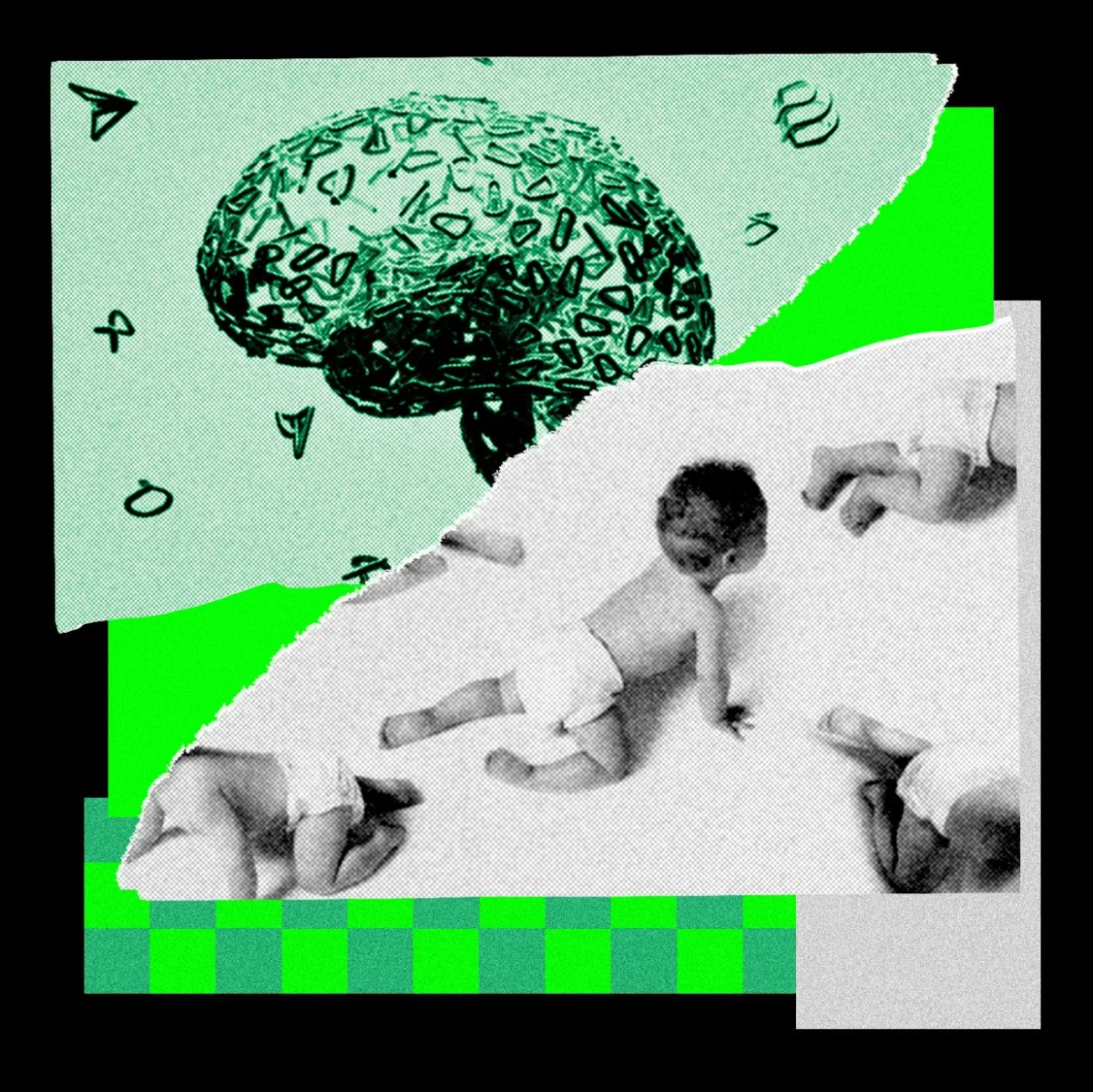
The concept of a one-year-old child may offer a profound paradigm shift in the development of artificial intelligence, presenting a stark contrast to the immense computational power and energy consumption of current large-scale AI models. While today’s advanced AI systems, powered by thousands of cutting-edge computer chips, excel at complex tasks like writing code and solving intricate mathematical problems, they do so by absorbing vast quantities of training data and expending energy comparable to that of a small nation. In contrast, human infants achieve an astonishing level of understanding of their environment with remarkable efficiency, learning to identify new objects after minimal exposure and acquiring knowledge through fleeting observations and direct physical interaction. This inherent efficiency and adaptability of the infant learning process hold crucial insights for the future of AI development. By emulating the architecture and learning mechanisms of a baby’s brain, researchers aim to create AI models that are not only more cost-effective and energy-efficient but also capable of interacting with the world in a more natural and intuitive manner, particularly for AI-powered robots.
To rigorously explore this ambitious new avenue, a collaborative effort involving researchers from Meta, Stanford University, the University of Tokyo, and France’s École Normale Supérieure has introduced a novel test designed to highlight and quantify the sophisticated learning capabilities of infants. This initiative aims to challenge AI researchers to develop algorithms that can replicate these human-like learning skills.
The EgoBabyVLM Challenge: A Baby’s-Eye View of AI
The newly developed EgoBabyVLM Challenge specifically evaluates the performance of Vision-Language Models (VLMs), which are AI systems designed to learn from both textual and visual information. The challenge measures how effectively these models can interpret and understand the world from a perspective akin to that of a baby. This is achieved by requiring the AI models to describe their environment after processing approximately a thousand hours of video footage. This unique dataset was meticulously collected from cameras worn on the heads of infants and toddlers, offering a raw, unfiltered, and often chaotic view of their daily experiences.
Initial results from the EgoBabyVLM Challenge have revealed a significant shortfall in the capabilities of even the most advanced AI models when confronted with this realistic and unstructured visual data. This outcome strongly suggests that there are fundamental differences in the design and operation of the infant brain that enable such rapid and efficient learning from comparatively limited information.
Unlike the highly curated and organized datasets typically used to train AI models, babies learn from a dynamic and multifaceted stream of sensory input. This includes observing parents discussing objects that may no longer be in view, understanding indications through gestures and gaze, and processing conversations about past or future events that are not immediately present. According to Michael Frank, a cognitive scientist at Stanford University specializing in language learning and a key participant in the development of EgoBabyVLM, babies learn not solely through language but also through a rich, multimodal, and tactile experience. This underscores the inadequacy of purely language-based or visual-based learning for AI when aiming for human-level comprehension. The EgoBabyVLM test, therefore, serves as a critical benchmark, demonstrating that "it’s clear that there’s more [than just language] that’s needed" for AI to truly grasp the complexities of the world.
Echoes of BabyLM: Advancing Language and Beyond
The EgoBabyVLM Challenge is not an isolated endeavor but rather represents a continuation of a broader scientific trend: the application of AI to unravel the intricacies of human intelligence. A precursor to this work was the BabyLM challenge, launched in 2023. BabyLM tasked AI models with mastering the syntax of language using a dataset equivalent to what a ten-year-old child would absorb – tens of millions of words. This stands in stark contrast to the trillions of words typically processed by contemporary AI models.
Remarkably, transformer-based AI models, which excel at identifying relationships between words across sentences through an attention mechanism, performed quite well on the BabyLM challenge. This finding has sparked significant debate, challenging established linguistic theories, such as those proposed by Noam Chomsky, which posited that the understanding of syntax might be an innate, hardwired component of the human brain. Ryan Cotterell, a linguist at ETH Zurich and the originator of BabyLM, notes that while AI has made strides in language acquisition, the challenge of understanding the physical world presents a different set of hurdles. "There isn’t going to be a large corpus of human interactions – there’s no internet of human interactions," he observes, highlighting the unique nature of embodied, real-world learning.
Joshua Tenenbaum, a cognitive scientist at the Massachusetts Institute of Technology, further elaborates on the limitations revealed by BabyLM. He points out that these models, while adept at linguistic patterns, fail to acquire "common sense" regarding the physical world, social dynamics, or the ability to infer the mental states of others (theory of mind). Tenenbaum’s analysis suggests that "Transformers are very good at finding patterns in data. But it does seem that just pure pattern learning systems are not able to take the kind of data that a baby or a child receives and learn all the things that they do." This implies that current AI architectures may be fundamentally missing key components that facilitate intuitive reasoning and understanding of the world.
The Evolutionary Puzzle: Innate Structures vs. Learning Algorithms
A persistent question at the intersection of cognitive science and neuroscience is whether human learning capabilities are a result of evolutionary optimization for specific skills or if simpler, more generalized learning algorithms can account for the full spectrum of human cognitive abilities. Tenenbaum notes that "There is a lot of debate in cognitive science and neuroscience about how much is built into the brain evolutionarily. The brain is incredibly complex, and there’s a lot of built-in structure and architecture." This suggests that the human brain may possess inherent biases and structures that pre-dispose it to learn certain concepts and relationships more effectively than a blank slate approach.
Recent research in 2024 has demonstrated that a basic VLM can acquire rudimentary understanding of objects, such as identifying a ball, by processing data from a single infant’s perspective. However, this capability falls far short of the sophisticated reasoning and world understanding exhibited by even young children. Brendan Lake, a cognitive scientist at Princeton University who was involved in a related project, articulates this gap: "The mystery is how children get to the full capabilities that they have even at the age of 2." The transition from basic object recognition to complex problem-solving and abstract thought remains a significant area of inquiry.
The authors of the EgoBabyVLM paper propose that incorporating principles from cognitive science and neuroscience could be instrumental in developing more humanlike learning algorithms. This could involve designing AI models that exhibit sustained attention over extended periods and are capable of interpreting subtle social cues, aspects that are fundamental to infant learning and social development.
Pioneering New Approaches: Causality, Dynamics, and Beyond
Michael Frank’s research at Stanford has already yielded promising results in bridging the gap between current AI and baby-like learning. Earlier this year, he and his colleagues tested a novel model designed to excel at learning causality and visual and temporal relationships – essentially, how objects interact and influence each other over time. Utilizing the same infant-head video data as the EgoBabyVLM challenge, this new model demonstrated a significantly enhanced ability to understand the dynamics of various objects. This foundational understanding of physical interactions is a crucial precursor to developing robust physical reasoning capabilities in AI.
The implications of this research are profound. It suggests a tantalizing possibility: that AI models specifically designed to prioritize learning about fundamental concepts like physics and social relationships might become more efficient learners across a broader range of tasks. By embedding prior knowledge or learning biases that reflect these core aspects of the real world, AI could potentially bypass the need for exhaustive data consumption.
Brendan Lake views the EgoBabyVLM challenge as a catalyst for innovation. "EgoBabyVLM is a wonderful challenge," he states, expressing optimism about the future. "I’m excited to see what kinds of new architectures, approaches, and ingredients researchers come up with." The development of more sophisticated and efficient AI systems, inspired by the remarkable learning abilities of infants, holds the potential to revolutionize fields ranging from robotics and education to healthcare and scientific discovery, ushering in an era of more intelligent, adaptable, and resource-conscious artificial intelligence. The journey to replicate the learning prowess of a one-year-old is a complex but ultimately rewarding pursuit, promising a future where AI can understand and interact with the world in ways we are only beginning to imagine.
