

The escalating tensions in the Gulf region have precipitated a significant and unwelcome surge in fuel prices across Germany, presenting a considerable challenge for the federal government. With crucial elections looming in Mecklenburg-Vorpommern and Berlin, the rising cost of gasoline and diesel is intensifying political pressure, forcing policymakers to confront the urgent need for intervention.
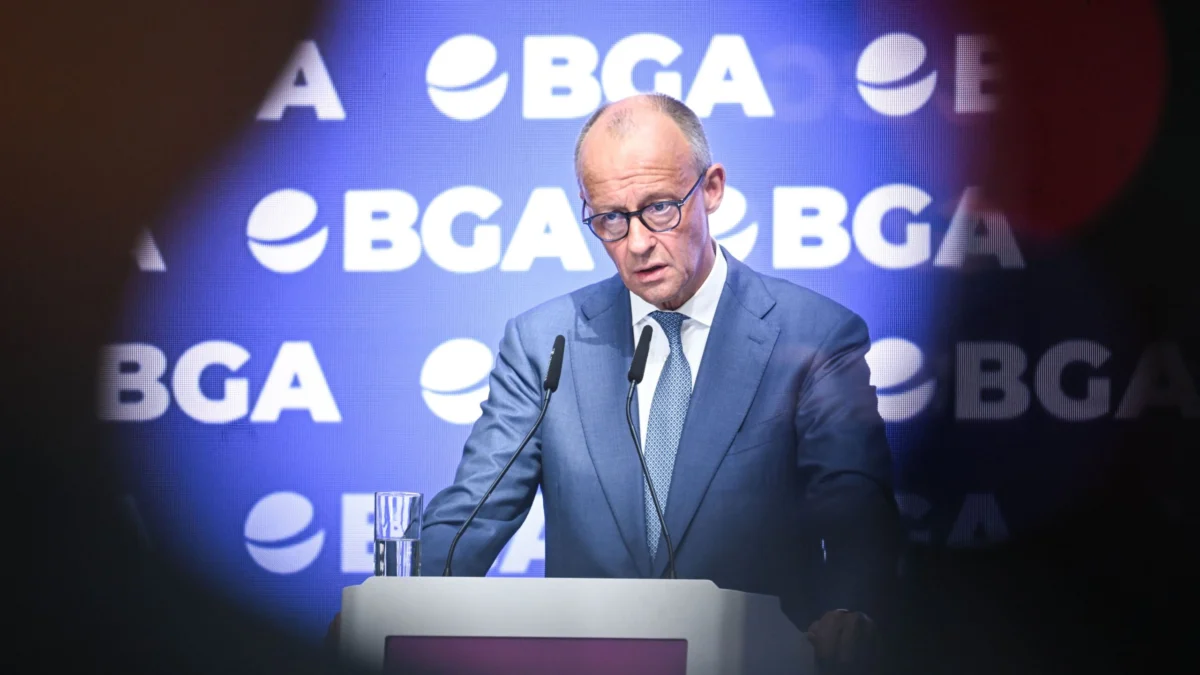
Chancellor Friedrich Merz (CDU) acknowledged the gravity of the situation during the BGA Trade Association’s Entrepreneurs’ Day, stating his firm conviction that "we must act." He emphasized that for a vast segment of the population who rely on their vehicles for daily commutes and essential travel, a critical threshold of financial strain has been reached. The current price levels for premium gasoline (E10) have hit unprecedented highs, while diesel is nearing its own record, with prices hovering around €2.412 per liter.
While the precise mechanisms for alleviating this burden remain under discussion, Chancellor Merz assured that the federal government is engaged in close dialogue with the federal states (Länder). A proposal addressing the issue is expected "very soon."
The Political Divide on Fuel Relief Measures
Despite the shared recognition of the problem, the ruling coalition, specifically the CDU and the SPD, remains divided on the most effective strategies to provide relief to motorists. The SPD advocates for measures such as a price cap and an excess profit tax on oil companies, aiming to directly curb inflated prices and recoup perceived excessive gains. In contrast, the CDU is leaning towards direct financial assistance to individuals.
Economists, however, have voiced concerns about the potential efficacy and unintended consequences of direct market interventions. The Handelsblatt has undertaken an analysis to evaluate the potential effectiveness of various proposed solutions against the current fuel price shock, while also cautioning against policies that might prove counterproductive.
Evaluating Proposed Solutions: A Deeper Dive
The Tankrabatt (Fuel Discount): A Double-Edged Sword
One of the most immediate potential solutions is the reintroduction of a fuel discount, similar to the one implemented from May to June of the previous year. This measure, which effectively reduced gasoline prices by approximately 17 cents per liter, was a response to the geopolitical uncertainties surrounding the conflict in Iran at the time.
The previous fuel discount, while often criticized, did demonstrate certain merits. It offered a swift and easily implementable mechanism that reached every filling station. An analysis by the ifo Institute indicated that the discount was fully passed on to consumers for gasoline and by 73% for diesel. However, a significant drawback of the fuel discount lies in its lack of targeted relief.
The current system disproportionately benefits individuals with larger vehicles and those who drive extensive distances annually. For instance, someone owning two large cars and commuting 30,000 kilometers per year would receive a greater financial benefit than a low-income individual with a small, fuel-efficient car. Furthermore, critics argue that such subsidies implicitly encourage the consumption of fossil fuels, contradicting broader climate policy objectives.

Klaus-Jürgen Gern from the Kiel Institute for the World Economy cautioned against a repeat of the broad-based "swig from the taxpayer’s bottle" seen in the spring, stating, "It supports people who don’t need it." The financial burden of the previous two-month discount was substantial, costing the state an estimated €1.6 billion. Given the current strained budgetary situation, Federal Minister for Economic Affairs Katherina Reiche (CDU) has expressed skepticism about the feasibility of its reintroduction.
Excess Profit Tax: Limited Revenue Potential
The SPD’s proposal for an excess profit tax aims to siphon off "exorbitantly high profits" from oil corporations and redistribute them to the public. SPD leader Lars Klingbeil asserted, "The rip-off at the expense of car drivers must stop."
Germany did implement an excess profit tax during the energy crisis of 2022/2023, affecting 13 companies and generating approximately €2.5 billion for the treasury. However, these revenues fell short of initial expectations. Projections for a renewed excess profit tax suggest that revenue generation could be even lower. Internal assessments cited by the Handelsblatt indicate that the additional revenue from such a tax might only amount to €400 million.

A significant hurdle for the SPD’s proposal is the lack of a unified stance within the European Union. Klingbeil’s initiative, which has been presented at the European level, has not yet garnered majority support from EU member states.
Price Cap: Belgian Model and Market Intervention Concerns
The SPD is also championing a price cap, citing the Belgian model as a potential template. Belgium has, since the oil crisis of the 1970s, maintained a system of price control for fuel. Under this proposed model, a maximum price for diesel and gasoline would be established, calculated based on global oil prices, refining costs, and distribution expenses.
However, the CDU has voiced strong opposition to a price cap, deeming it too significant an intervention into market mechanisms. Minister of Economics Reiche has instead pointed towards direct payments to citizens as a more viable alternative, a stance that could create fiscal challenges for the Finance Minister.

Direct Payments: Efficiency vs. Bureaucracy
The concept of direct payments, reminiscent of the €300 one-off payment distributed during the 2022 energy crisis, is being considered. While intended to provide swift relief, the previous distribution method, which involved employers processing payments through salaries, proved administratively burdensome. The government had intended to establish a new "direct payment mechanism" to streamline this process.
The Federal Ministry of Finance announced towards the end of 2024 that such a system was indeed ready. Minister Reiche confirmed the existence of a "corresponding tool" that could facilitate rapid and targeted relief, particularly for income groups with low or no tax liabilities.
However, internal assessments suggest that the direct payment mechanism is not yet fully operational. A key obstacle is the limited availability of banking data from citizens, with the state currently possessing information from only 19% of the population. To effectively manage the anticipated volume of citizen inquiries, the Federal Central Tax Office would require an estimated 600 new staff positions.

Given these logistical challenges, it is likely that direct payments would, similar to the previous instance, be administered through the payroll tax system. Nevertheless, this approach would still necessitate the clarification of funding sources.
Mobility Allowance: Targeted Support for Lower-Income Commuters
A further proposal gaining traction is a "mobility allowance" that could potentially replace or supplement the existing commuter tax allowance (Pendlerpauschale). The current commuter tax allowance primarily benefits higher-income earners with longer commutes. A mobility allowance, by contrast, could offer a more equitable solution. It could be implemented as a fixed amount per kilometer traveled, either offset against taxes or paid out directly, irrespective of income or mode of transportation.
However, a significant limitation of a mobility allowance is its primary benefit to employed individuals with established commutes. Retirees, the unemployed, or households reliant on vehicles for essential trips like grocery shopping, doctor’s appointments, or caring for relatives, due to inadequate public transport infrastructure, would likely receive little to no benefit.

Suspending the CO2 Price: Climate Policy Conflict
The escalating CO2 price on fuels, a cornerstone of Germany’s climate policy, is also a contributing factor to the higher energy costs. Some politicians are advocating for the suspension of this carbon tax on fuels. Sebastian Steineke, a CDU politician, emphasized the need to ensure that climate protection measures do not lead to "social overburdening."
Leif-Erik Holm, the lead candidate for the AfD in Mecklenburg-Vorpommern, has called for the complete abolition of the CO2 tax on fuels. The carbon price on fuels, which ranges between 15 and 17 cents per liter depending on the fuel type, is intended to incentivize reduced energy consumption.
The carbon price on fuels increased at the beginning of 2026, moving from €55 per ton to a corridor of €55 to €65 per ton. While a temporary suspension could offer short-term relief during a price crisis, many policymakers view a prolonged suspension as counterproductive to climate goals, as the carbon price is specifically designed to encourage a shift towards lower energy consumption.

Broader Implications and the Road Ahead
The current fuel price surge is not merely an economic inconvenience; it carries significant socio-political implications. The impending elections in Mecklenburg-Vorpommern and Berlin add a layer of urgency to the government’s response. Any proposed solution will need to be perceived as both effective and fair by the electorate.
The debate highlights a fundamental tension between short-term economic relief and long-term policy objectives, particularly concerning climate change mitigation. The effectiveness and fairness of various interventionist measures remain subjects of intense scrutiny, with economists and policymakers grappling to find a balance that addresses immediate concerns without undermining future sustainability goals. The coming weeks will be critical as the federal government seeks to navigate this complex landscape and present a viable path forward.
