

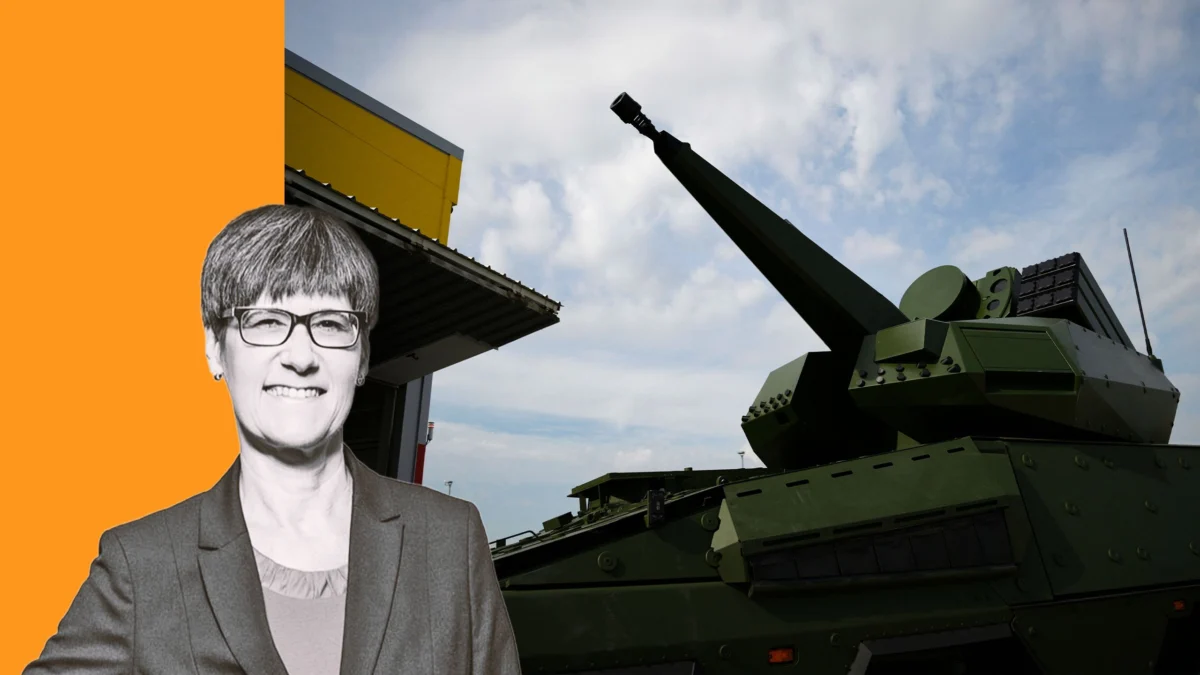
The adage "what goes up must come down" is currently resonating with particular force within the defense industry’s stock market. Following the full-scale invasion of Ukraine by Russia in February 2022, European defense stocks experienced an unprecedented surge, with average share prices climbing by an astonishing 260% by mid-January of the current year. In Germany, the ascent of Rheinmetall’s stock was even more dramatic, skyrocketing by an almost unbelievable 1800%. However, this meteoric rise has been followed by a significant correction. Measured by the relevant industry index, the Stoxx Europe 600, defense stocks have seen their peak value diminish by as much as 17%. The Rheinmetall share, a bellwether for the sector, has lost 60% of its value since mid-January, making it the weakest performer in Germany’s leading DAX index. This sharp downturn signals the apparent end of the fervent investor hype surrounding defense stocks, yet many analysts argue that the sector remains a compelling investment.
The Genesis of the Defense Stock Boom
The dramatic escalation of geopolitical tensions and the outbreak of the war in Ukraine fundamentally reshaped the global security landscape. For years, many European nations had been reducing their defense spending, a trend exacerbated by a period of relative peace following the end of the Cold War. The invasion of Ukraine, however, served as a stark and immediate wake-up call, exposing the vulnerabilities of underfunded military capabilities across the continent.
This realization triggered a swift and significant policy shift among NATO members and other allied nations. Governments began to re-evaluate their defense strategies, with a renewed emphasis on bolstering military readiness, modernizing aging equipment, and increasing overall defense budgets. This pivot was not merely rhetorical; it translated into substantial financial commitments and the initiation of long-term investment programs aimed at revitalizing national defense industries. The "Zeitenwende" (turning point) declared by German Chancellor Olaf Scholz, which included a €100 billion special fund for the German armed forces, exemplified this broad continental recalibration. Similar initiatives were launched across Europe, creating a surge in demand for military hardware, services, and technological advancements.

The Market’s Euphoric Response
The stock market, ever a forward-looking mechanism, reacted with alacrity to these fundamental shifts. Investors, anticipating a sustained increase in defense spending and a corresponding boost in company revenues and profits, poured capital into defense-related equities. Companies specializing in everything from armored vehicles and artillery to missile systems and advanced communication technology saw their valuations soar.
Rheinmetall, a German manufacturer of artillery, ammunition, and automotive components, became a poster child for this boom. Its stock price, propelled by a combination of increased orders and investor optimism, experienced exponential growth. This surge was not an isolated incident; many other European defense contractors, including BAE Systems in the UK, Thales in France, and Leonardo in Italy, also witnessed significant gains in their market capitalization. The narrative was clear: increased global instability was directly translating into a booming market for the companies that provide the tools of war.
The Current Correction: Why the Downturn?
Despite the underlying drivers of increased defense spending remaining firmly in place, the stock market has begun to reprice defense equities. Several factors appear to be contributing to this correction:
- Investor Patience Wears Thin: While the long-term trend of increased defense spending is evident, the immediate delivery of contracts and the realization of revenue can be a slower process. Investors, initially driven by speculative fervor, may be growing impatient waiting for these large-scale orders to fully translate into bottom-line profits.
- Order Delays and Revisions: Recent news, such as Rheinmetall’s downward revision of its revenue forecast due to the postponement of a major order from the German Bundeswehr, highlights the logistical and bureaucratic hurdles that can affect contract fulfillment. Such delays, while not necessarily indicating a permanent loss of business, can spook investors who are accustomed to more immediate and predictable revenue streams. The market’s reaction to Rheinmetall’s revised forecast, which saw its stock plunge by up to 17% in a single day, underscores the sensitivity of the sector to news flow.
- Exaggerated Initial Valuations: The sheer magnitude of the initial gains in defense stocks may have outpaced their fundamental value. In periods of intense market excitement, valuations can become detached from reality, leading to a subsequent correction when more sober analysis prevails. The rapid 1800% surge in Rheinmetall’s stock, for instance, suggests a level of market euphoria that was unlikely to be sustained indefinitely.
- Market Rotation and Profit-Taking: As with any sector that experiences a significant run-up, there’s a natural tendency for investors to take profits and reallocate capital to other areas of the market that may appear more attractive or undervalued. This can exacerbate downward price movements.
Underlying Strengths: Why Defense Stocks May Still Be Attractive
Despite the recent market turbulence, industry experts maintain that the fundamental drivers for the defense sector remain robust. The geopolitical landscape, characterized by ongoing conflicts and heightened global tensions, suggests a sustained period of increased defense expenditure.

Sustained European Defense Investment:
The commitment to enhanced defense capabilities across the European Union is substantial and long-term. Data from the EU Council indicates that member states are projected to invest €454 billion in defense this year alone, a nearly 9% increase from the previous year. Projections further suggest that these defense expenditures will continue to rise in the coming years. This consistent flow of government funding provides a stable and growing revenue base for defense contractors.
The Broadening Definition of Defense:
Investment strategies are increasingly encompassing a wider definition of the defense sector. As Güntz Albert, Chief Investment Strategist at Lupus Alpha, points out, the "political tailwind for European defense capability and long-term investment programs clearly speak for the industry." This perspective extends beyond traditional arms manufacturers to include companies specializing in critical enabling technologies. This includes:
- Satellite Communications: Essential for modern military operations and intelligence gathering.
- Robotics and Autonomous Systems: Increasingly vital for reconnaissance, logistics, and combat roles.
- Advanced Electronics and Sensors: Crucial for target acquisition, navigation, and electronic warfare.
- Cybersecurity: A paramount concern in contemporary conflicts, protecting critical infrastructure and sensitive data.
This broader scope allows investors to tap into the growth of the defense sector through a more diversified portfolio of companies.
Expert Opinions on the Current Market:
Matthias Beil, Head of Private Banking at Sutor Bank, offers a pragmatic view: "The orders have not disappeared; they are coming later." This perspective suggests that the recent price drops are more a reflection of timing and market sentiment than a fundamental decline in demand. For investors looking to capitalize on the long-term growth trajectory of the defense industry, Beil emphasizes the need for "a long breath," indicating that patience is a key virtue for those invested in this sector.

A Look at Key Players and Their Challenges
Rheinmetall: As previously noted, Rheinmetall’s stock has experienced a significant correction following a lowered revenue forecast. The delay in a substantial order from the German Bundeswehr, while a short-term setback, underscores the complexity of large government procurement processes. However, Rheinmetall remains a crucial supplier of artillery, ammunition, and armored vehicles, areas of significant demand in the current geopolitical climate. The company’s diversification into automotive components also provides a degree of resilience. The market’s reaction to the order delay highlights how sensitive investor sentiment can be, potentially overshooting on the downside.
Hensoldt: This German company, specializing in sensors and electronic warfare systems, is another key player in the European defense landscape. Its technologies are critical for modern military capabilities, including radar systems, optronics, and electronic intelligence gathering. As defense forces prioritize advanced surveillance and protection, Hensoldt is well-positioned to benefit from increased demand.
Renk: A manufacturer of high-performance gear units and transmissions for various applications, including military vehicles and naval vessels, Renk is also a significant entity. The demand for robust and reliable drivetrain systems for military equipment is expected to remain strong.
The Broader Market Implications
The recent volatility in defense stocks raises important questions about market behavior during periods of geopolitical uncertainty.

- Overreaction and Underreaction: The initial euphoric rise suggests an overreaction to the perceived opportunity, while the subsequent sharp decline might indicate an underreaction to the underlying, sustained demand. The market appears to be grappling with the long-term structural shifts in defense spending versus the short-term fluctuations in order fulfillment and investor sentiment.
- Fundamental vs. Speculative Investing: The current phase encourages a shift from purely speculative investing towards a more fundamental analysis of defense companies. Investors need to assess not just the immediate order books but also the long-term strategic positioning, technological innovation, and financial stability of these companies.
- The "New Normal" for Defense: As Güntz Albert suggests, defense stocks are "arriving at normality." This implies that the era of hyper-growth fueled by exceptional circumstances may be over, replaced by a more sustained, albeit still significant, growth trajectory. Investors should now evaluate defense companies as they would any other mature industrial sector, focusing on their ability to execute on contracts, innovate, and deliver consistent returns.
Conclusion: A Balanced Outlook
The recent correction in defense stocks does not negate the fundamental reality of increased global defense spending. The war in Ukraine has irrevocably altered the security calculus for many nations, leading to a sustained commitment to bolstering military capabilities. While the initial speculative frenzy may have subsided, the underlying demand for defense products and services remains strong and is projected to continue growing.
Companies like Rheinmetall, Hensoldt, and Renk are integral to this ongoing defense build-up. Investors who approach this sector with a long-term perspective, focusing on the fundamental strengths and strategic positioning of individual companies, may find opportunities amidst the current market adjustments. The key will be to differentiate between the transient hype and the enduring geopolitical drivers that are reshaping the defense industry and, consequently, its market valuation. The current market movements serve as a reminder that even in sectors driven by global events, traditional investment principles of valuation and patience remain paramount.
