

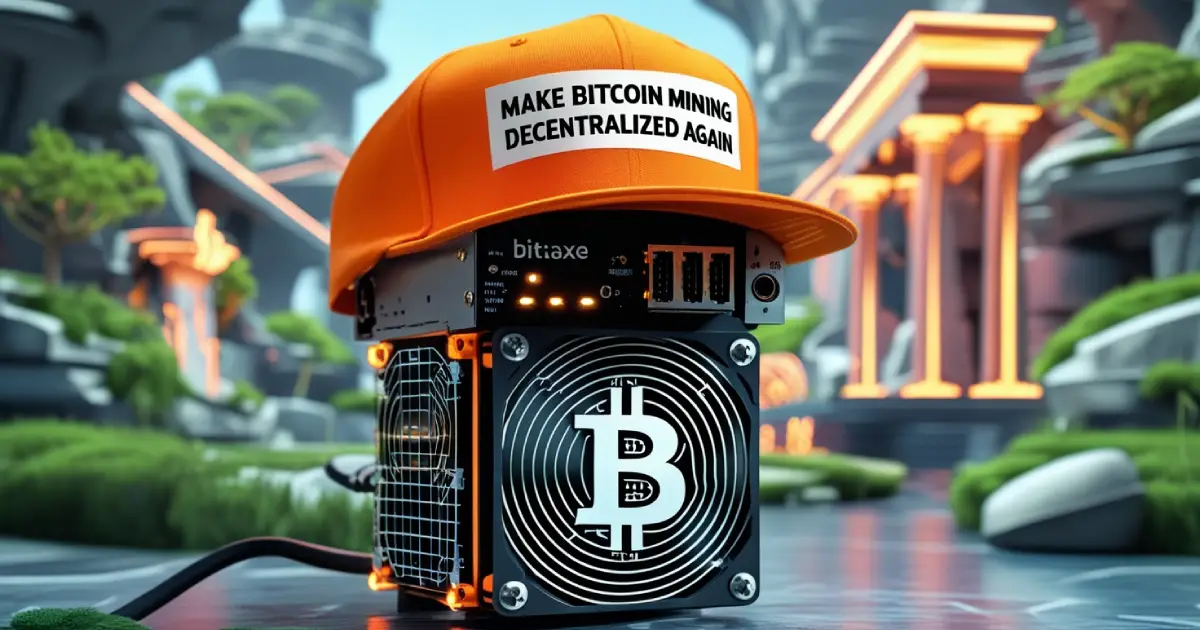
The Bitcoin mining ecosystem is poised for significant advancements in efficiency, security, and decentralization with the announcement that ANTPOOL, Block Inc., F2Pool, Foundry, Spiderpool, MARA Foundation, and DMND have officially joined the Stratum v2 Working Group. This influx of prominent entities signifies a pivotal moment in the adoption of the Stratum v2 protocol, a next-generation communication standard designed to revolutionize how mining pools interact with individual mining operations. The expansion of the working group underscores a growing industry consensus that Stratum v2 represents the future of Bitcoin mining infrastructure.
Foundations and Objectives of the Stratum v2 Working Group
Established in 2022 by Braiins and Spiral, the Stratum v2 Working Group was founded with a clear mission: to develop and maintain the Stratum v2 protocol as an open, vendor-neutral specification. This initiative aims to provide a robust and adaptable framework that can be readily integrated across the diverse Bitcoin mining landscape. Stratum v2 is not merely an incremental update to the original Stratum protocol; it is a comprehensive overhaul engineered to deliver substantial improvements in several key areas critical to the health and sustainability of Bitcoin mining.
The original Stratum protocol, while foundational to the early growth of Bitcoin mining, has limitations that have become increasingly apparent as the industry has scaled. These limitations include a lack of inherent encryption, which can expose sensitive communication between miners and pools, and a less efficient method for transmitting mining job information. Stratum v2 directly addresses these shortcomings by introducing end-to-end encryption, thereby enhancing security and privacy. Furthermore, it optimizes the data transfer process, leading to significant efficiency gains, particularly for large-scale mining operations.
A cornerstone of Stratum v2’s design is its ability to enable miners to construct their own block templates. This feature, a significant departure from the previous model where pools dictated the entire block structure, empowers miners with greater autonomy. By allowing miners to select which transactions to include in a block (subject to pool rules and network consensus), Stratum v2 fosters a more decentralized approach to block production. This capability is especially beneficial for miners operating in environments with limited bandwidth, as it allows for more compact and efficient data transmission.
A Convergence of Industry Leaders
The addition of ANTPOOL, Block Inc., F2Pool, Foundry, Spiderpool, MARA Foundation, and DMND to the Stratum v2 Working Group marks a substantial endorsement from key stakeholders in the Bitcoin mining sector. These organizations represent a significant portion of the global hashrate and play a crucial role in the operational infrastructure of Bitcoin mining. Their collective commitment to the working group demonstrates a shared vision for a more secure, efficient, and decentralized mining future.
This broad participation is essential for ensuring the proper functioning and compatibility of Stratum v2 across a wide array of real-world mining operations at scale. As these leading entities integrate and test the protocol within their existing infrastructure, they contribute invaluable feedback and practical insights that are vital for refining the specification and facilitating widespread adoption. The unified front presented by these diverse mining entities signals a strong consensus that Stratum v2 is the strategic direction for the industry moving forward.
Industry Reactions and the Vision for Stratum v2
The sentiment among the newly joined members is overwhelmingly positive, highlighting the collaborative spirit and shared objectives driving the Stratum v2 initiative.
Andy Zhou, CEO of ANTPOOL, expressed his enthusiasm: "We’re proud to support the broader adoption of Stratum V2. Aligning around an open, interoperable standard enables the industry to collaborate more effectively and drive improvements in efficiency, security and decentralization." This statement encapsulates the core benefits of Stratum v2, emphasizing the power of open standards in fostering industry-wide progress.
Kenway Wang, CTO of Spiderpool, further elaborated on the protocol’s alignment with fundamental Bitcoin principles: "Decentralization is core to our mission. Stratum V2 supports this by enabling miner-constructed templates, while also improving efficiency, especially for miners in bandwidth-constrained environments." Wang’s comments underscore the dual benefits of Stratum v2: enhancing decentralization through miner empowerment and delivering tangible efficiency improvements that can democratize access to mining for a wider range of participants.
The implications of these features are profound. For instance, end-to-end encryption offers a significant security upgrade by protecting the communication channels between mining pools and their clients from potential eavesdropping or manipulation. This is particularly important in an industry where the integrity of data transmission is paramount.
Moreover, the efficiency gains promised by Stratum v2 can have a tangible impact on operational costs. By reducing the overhead associated with data transfer, mining operations can potentially achieve higher uptime and throughput. For miners in regions with expensive or unreliable internet connectivity, the optimized data payloads and intelligent job distribution mechanisms within Stratum v2 can make the difference between profitable operation and economic unfeasibility.
The ability for miners to produce their own block templates also introduces a new dimension of flexibility and potential innovation. While the pool still validates and broadcasts the block, the miner’s input in selecting transactions can lead to more sophisticated strategies and potentially new economic models within the mining landscape. This shift decentralizes a crucial aspect of block production, moving it closer to the individual miner rather than solely residing with the pool operator.
The Technical Underpinnings and Benefits of Stratum v2
Stratum v2 is designed with several key technical advancements that differentiate it from its predecessor:
- End-to-End Encryption: Unlike the original Stratum protocol, which often transmitted data in plain text, Stratum v2 incorporates robust encryption. This ensures that the communication between mining pools and miners is secure and confidential, mitigating risks associated with man-in-the-middle attacks and unauthorized access to sensitive operational data.
- Efficient Job Handling: Stratum v2 introduces a more streamlined method for distributing mining jobs from the pool to the miners. This includes mechanisms for negotiating job parameters and transmitting only necessary updates, significantly reducing the amount of data that needs to be transferred. This is particularly beneficial for large mining farms with thousands of ASICs, where network bandwidth can be a bottleneck.
- Compact Job Representation: The protocol allows for more compact representations of mining jobs, further reducing bandwidth requirements. This is achieved through techniques like template diffs, where only changes from a previous job are sent, rather than the entire job specification.
- Miner-Constructed Block Templates: This is perhaps the most transformative feature. Stratum v2 enables miners to receive a template of a block from the pool, which includes a list of transactions and other block header information. The miner can then select which transactions to include in the block they will attempt to mine, subject to the pool’s rules and network consensus requirements. This shifts some control from the pool to the miner, fostering greater decentralization.
- Extended Capabilities: The protocol is designed to be extensible, allowing for future enhancements and new features to be added without requiring a complete overhaul. This future-proofing is crucial for a rapidly evolving industry.
Broader Impact on the Bitcoin Mining Landscape
The widespread adoption of Stratum v2, propelled by the commitment of these industry leaders, has the potential to reshape the Bitcoin mining landscape in several significant ways:
- Enhanced Decentralization: By empowering individual miners with more control over block construction and optimizing communication for smaller miners, Stratum v2 directly addresses concerns about hashrate centralization. This can lead to a more robust and resilient Bitcoin network.
- Improved Security and Privacy: The built-in encryption provides a crucial layer of security, protecting mining operations from various forms of cyber threats. This fosters greater trust and stability within the mining ecosystem.
- Increased Efficiency and Reduced Costs: The optimized data transfer and job handling mechanisms can lead to substantial reductions in bandwidth usage and operational overhead. This can lower the barrier to entry for new miners and improve profitability for existing ones, especially those in bandwidth-constrained regions.
- Interoperability and Vendor Neutrality: The open and vendor-neutral nature of the Stratum v2 specification ensures that all participants can collaborate and innovate on a level playing field. This prevents vendor lock-in and promotes healthy competition.
- Facilitation of Future Innovations: The extensible design of Stratum v2 provides a platform for future developments in mining technology, allowing for the seamless integration of new features and protocols.
Timeline and Future Outlook
The journey of Stratum v2 began with its conception and development by Braiins and Spiral in 2022. Since then, the protocol has undergone iterative refinement, testing, and has seen early implementations by various mining entities. The formation of the Stratum v2 Working Group provided a formal structure for broader industry collaboration. The recent announcement of major mining pools and infrastructure providers joining the working group marks a significant acceleration in the adoption curve.
The continued integration and testing by ANTPOOL, Block Inc., F2Pool, Foundry, Spiderpool, MARA Foundation, and DMND will be critical in the coming months. Their experience will inform further development and help iron out any compatibility issues that may arise in large-scale deployments. As these prominent players move towards full implementation, it is expected that other mining operations will follow suit, creating a network effect that solidifies Stratum v2 as the new industry standard.
The working group’s commitment to maintaining a public specification and acting as a coordination layer between developers and industry stakeholders is vital for this transition. This transparency and collaborative approach are hallmarks of successful open-source initiatives and are essential for building trust and driving widespread adoption.
The implications of this collective endorsement extend beyond mere technical upgrades. It signifies a unified strategic direction for a critical component of the Bitcoin network. As the industry navigates the complexities of scaling and decentralization, Stratum v2 offers a compelling solution, and the broad participation in its development working group suggests a future where Bitcoin mining is more secure, efficient, and decentralized than ever before. The coming year is likely to see substantial progress in the rollout and widespread adoption of Stratum v2, ushering in a new era for Bitcoin mining operations globally.
