

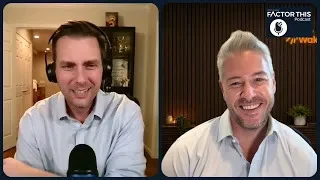
The landscape of the American renewable energy sector is undergoing a period of profound transformation, driven by massive legislative incentives, technological advancements in energy storage, and an evolving political climate. At the center of this dialogue is Yann Brandt, a veteran executive and the founder of the influential SolarWakeup newsletter, who recently joined Paul Gerke, content director for the Factor This podcast, to dissect the current state of the industry. Their conversation, recorded on the eve of the RE+ conference in Las Vegas and following the significant shifts of the U.S. midterm elections, provides a comprehensive look at how information, leadership, and policy intersect to shape the future of solar and storage.
The Evolution of SolarWakeup and the Digital Information Ecosystem
For over 14 years, SolarWakeup has served as a cornerstone of the renewable energy information economy. Founded by Yann Brandt, the daily digital digest was established at a time when the solar industry was still navigating its infancy in the United States. Since its inception, the newsletter has evolved from a passion project into a vital resource for executives, investors, and policymakers. Brandt’s ability to maintain the publication’s consistency—even while serving in high-pressure executive roles—highlights the critical role that specialized media plays in a sector characterized by rapid regulatory changes and technical innovation.
The longevity of SolarWakeup reflects the broader professionalization of the solar industry. In the early 2010s, the sector was often viewed as a niche market dependent on volatile state-level incentives. Today, solar energy accounts for a significant portion of new generating capacity in the U.S. according to data from the Solar Energy Industries Association (SEIA) and Wood Mackenzie. The need for a daily "digest" stems from the sheer volume of data points that industry leaders must now track, ranging from global supply chain disruptions and Department of Commerce tariff rulings to local interconnection bottlenecks and the implementation of the Inflation Reduction Act (IRA).
From Media to the C-Suite: The Leadership Path of Yann Brandt
Yann Brandt’s perspective is uniquely informed by his transition from industry commentator to the leadership of a publicly traded company. Brandt recently served as the President and CEO of FTC Solar (Nasdaq: FTCI), a leading provider of solar tracker systems. Solar trackers are mechanical devices that orient solar panels toward the sun throughout the day, significantly increasing energy yield compared to fixed-tilt systems.
During his tenure at FTC Solar, Brandt navigated the complexities of the global solar supply chain, which has been plagued by logistical hurdles and geopolitical tensions. His experience at the helm of a public company provided him with a "boots on the ground" understanding of the challenges involved in scaling manufacturing and executing utility-scale projects. This executive background now informs his latest venture, a podcast titled "Boots on the Ground," co-hosted with Abby Hopper, the former President and CEO of SEIA. The podcast aims to bridge the gap between high-level policy discussions and the practical realities of project development and grid integration.
The Impact of Federal Policy and the Inflation Reduction Act
A primary focus of the discussion between Brandt and Gerke was the enduring impact of the Inflation Reduction Act of 2022. The IRA represents the largest investment in climate and energy in U.S. history, providing approximately $370 billion in incentives. These include the extension of the Investment Tax Credit (ITC) and the Production Tax Credit (PTC), as well as new "adders" for domestic content and projects located in "energy communities" (areas traditionally dependent on fossil fuel industries).
Data from the American Clean Power Association indicates that in the year following the IRA’s passage, over $270 billion in private investment was announced for utility-scale clean energy projects. However, Brandt notes that the transition from legislation to implementation is fraught with complexity. The "Boots on the Ground" perspective emphasizes that while the money is available, the "soft costs"—permitting, interconnection, and labor—remain significant hurdles. The industry is currently awaiting further guidance from the Treasury Department on specific domestic content requirements, which will dictate how much of the solar supply chain can realistically be onshore in the coming decade.
Chronology of Modern Solar Milestones (2010–2024)
To understand the current state of the industry, it is essential to trace the timeline of events that have shaped the contemporary solar landscape:
- 2010: SolarWakeup is founded by Yann Brandt, filling a gap in daily solar news and analysis.
- 2011: The bankruptcy of Solyndra creates a political firestorm, leading to increased scrutiny of federal loan guarantees for renewables.
- 2015: The U.S. Congress agrees to a multi-year extension of the Investment Tax Credit (ITC), providing market certainty that fuels a period of rapid growth.
- 2021: FTC Solar, under Brandt’s leadership, goes public on the Nasdaq, signaling the maturity of the solar tracker market.
- 2022 (August): President Joe Biden signs the Inflation Reduction Act into law, fundamentally altering the economics of renewable energy in the U.S.
- 2022 (November): U.S. midterm elections result in a divided Congress, raising questions about the future of IRA implementation and potential legislative challenges.
- 2023–2024: The industry shifts focus toward "Boots on the Ground" issues, such as the rise of domestic manufacturing and the integration of large-scale battery storage.
Data Centers, AI, and the Surge in Energy Demand
One of the most significant emerging trends discussed by Brandt and Gerke is the role of data centers in driving solar and storage demand. The explosion of Artificial Intelligence (AI) and cloud computing has led to a massive increase in the electricity requirements of technology giants like Amazon, Google, and Microsoft. These companies have made ambitious "24/7 carbon-free energy" commitments, meaning they aim to match their hourly electricity consumption with renewable energy generated on the same grid.
This demand is shifting the solar industry’s focus toward hybrid projects—solar arrays paired with large-scale lithium-ion battery storage. According to the U.S. Energy Information Administration (EIA), battery storage capacity in the U.S. is expected to nearly double in 2024. For developers, this means the challenge is no longer just generating power when the sun shines, but managing that power to meet the constant, high-intensity needs of the digital economy. Brandt points out that this trend is forcing a closer relationship between the renewable energy sector and traditional utilities, as the grid must be modernized to handle these localized surges in demand.
Navigating Political Uncertainty and the Next Administration
As the industry prepares for the next presidential election cycle, the conversation inevitably turned to the political durability of current energy policies. While the IRA was passed along party lines, much of the resulting investment has flowed into Republican-leaning states, particularly in the "Battery Belt" across the Southeast and Midwest. This geographic distribution of economic benefits may provide a buffer against potential efforts to repeal the law.
Brandt and Gerke analyzed the potential for "legislative whiplash" depending on the outcome of future elections. However, the prevailing sentiment among industry veterans is that the economic momentum of solar is now too strong to be fully reversed. The levelized cost of energy (LCOE) for solar and wind is now lower than that of new coal or gas plants in many parts of the country, regardless of subsidies. The "Boots on the Ground" reality is that solar is no longer just an environmental choice; it is the most cost-effective choice for many grid operators.
The Role of RE+ and the "Renewables Bacchanalia"
The timing of the discussion coincided with RE+, the largest clean energy trade show in North America. Held annually in Las Vegas, the event attracts over 40,000 attendees, ranging from installers and engineers to venture capitalists and government officials. Brandt’s description of the event as a "bacchanalia" reflects the high energy and rapid networking that defines the current state of the industry.
RE+ serves as a barometer for the sector’s health. In years past, the focus was often on panel efficiency and hardware. This year, the focus has shifted toward software, grid management, and "long-duration" storage technologies. The event also provides a platform for the industry to present a unified front to policymakers. The presence of figures like Abby Hopper at these events ensures that the concerns of the "Boots on the Ground" workers are communicated to those drafting the rules in Washington, D.C.
Broader Implications and the Future of Distributed Energy
While utility-scale solar dominates the headlines, the conversation between Brandt and Gerke also touched upon the importance of distributed energy resources (DERs), such as rooftop solar and home batteries. These systems offer grid resilience and allow consumers to take control of their energy costs. However, the distributed market faces headwinds from changing net metering policies in states like California (NEM 3.0), which have reduced the financial incentives for homeowners to install solar without storage.
The analysis provided by Brandt suggests that the future of the industry lies in the integration of these two worlds: massive utility projects providing the backbone of the grid, and distributed systems providing flexibility and localized reliability. The success of this integrated model will depend on the industry’s ability to communicate its value proposition to a public that is increasingly concerned about energy costs and grid stability.
Conclusion: A Maturing Industry in a Critical Decade
The dialogue between Yann Brandt and Paul Gerke underscores a fundamental truth about the renewable energy sector: it has moved past the "alternative" phase and is now a central pillar of the American economy. Through platforms like SolarWakeup and podcasts like "Boots on the Ground" and "Factor This," the industry is developing a sophisticated internal discourse that balances optimism with a realistic assessment of operational challenges.
As the industry moves toward the mid-2020s, the focus will likely remain on three key pillars: the successful onshoring of manufacturing, the rapid expansion of the transmission grid, and the navigation of a complex political landscape. With veterans like Brandt providing a bridge between media analysis and executive execution, the solar industry appears better equipped than ever to navigate the "straight talk" and hard truths of the energy transition. The next decade will determine whether the promises of the IRA and the innovations showcased at RE+ can be fully realized to meet the nation’s climate and energy security goals.
