

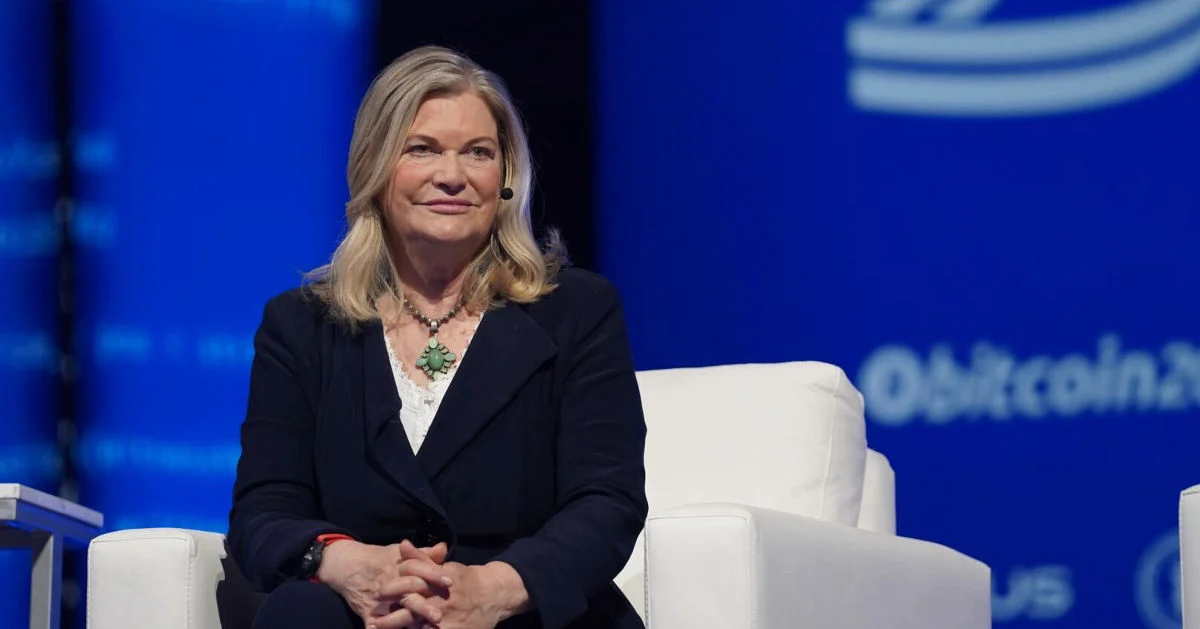
Republican Senator Cynthia Lummis has sharply criticized Democratic lawmakers, accusing them of deliberately obstructing the long-awaited cryptocurrency Clarity Act. Speaking on the "Crypto in America" podcast on Thursday, Lummis expressed frustration that the bill, which she believes could have been enacted months ago, is being unfairly held back by partisan disagreements. With Congress on the cusp of its August recess, the senator emphasized the urgency of passing the bipartisan legislation, which aims to establish a comprehensive regulatory framework for the burgeoning digital asset market.
The Stalled Legislation: A Bipartisan Effort Facing Partisan Hurdles
The Crypto Clarity Act, a product of extensive bipartisan negotiation, has encountered significant headwinds in the Senate, primarily due to reservations held by some Democratic members regarding its current form. Senator Lummis highlighted that despite over eleven months of intensive collaboration with Democrats on the bill, a commitment to a floor vote remains elusive.
"The biggest obstacle is that the Democrats, in spite of having 11 months to work on this bill intensely, which we have done, still won’t commit to voting for it, and that that is the bigger challenge," Lummis stated. She pointed to the bill’s significant expansion in length, noting, "When we started working with [the Democrats] last Labor Day, the Clarity Act was about 300 pages – it’s getting closer to 700 pages. Most of those new pages were added at the requests of Democrats."
This iterative process, characterized by what Lummis described as "messing around" and "pussyfooting," has led to a frustratingly protracted legislative journey. She lamented the constant flux of proposed amendments and counter-amendments, stating, "I want to change this, no, I want to change it back, I like the House version, no, let’s go with the Senate version, and then bringing last minute changes to this bill that could have been brought weeks ago – in fact, months ago – is absurd, and I’m just tired of being played."
A Glimmer of Hope: The Push Towards August Recess
Despite the prevailing challenges, Senator Lummis expressed optimism that a Senate vote on the Clarity Act could still materialize before Congress adjourns for its August recess. She referenced Senator John Thune’s commitment to keeping a place for the bill on the legislative agenda, suggesting that momentum might be building. The tweet from Bitcoin Magazine, shared by Lummis, indicated that Senator Thune "has kept a place for the CLARITY ACT on the agenda before the August recess…and I believe he does intend to go through with it…We will be moving forward."
The stakes are high for the cryptocurrency industry, which has been operating in a landscape of regulatory uncertainty for years. Major financial institutions, prominent industry players, and a bipartisan coalition of lawmakers have thrown their support behind the Clarity Act, recognizing its potential to foster innovation while mitigating risks. However, a faction of Democrats voiced their concerns last week, asserting in a statement that the bill, in its present iteration, falls short of addressing critical issues.
The Genesis and Evolution of the Clarity Act
The journey of the Crypto Clarity Act began with a clear objective: to provide much-needed regulatory certainty for the rapidly evolving digital asset ecosystem. The bill, initially passed by the House of Representatives last year with substantial bipartisan backing, has since become mired in legislative gridlock throughout much of 2026.
One of the significant points of contention, particularly from the banking lobby, has revolved around concerns regarding stablecoin yields. These institutions have expressed apprehension about the potential implications of certain regulatory approaches on the stability and operational models of stablecoins, which are pegged to traditional assets.
In response to ongoing debates and to address emerging ethical considerations, an updated version of the Clarity Act was introduced in the week prior to Lummis’s remarks. This revised iteration reportedly includes provisions aimed at bolstering ethical standards within the crypto space, such as a ban on government officials and their immediate families from issuing or actively promoting cryptocurrencies. This move signifies an attempt to broaden the bill’s appeal and address some of the ethical quandaries that have arisen as digital assets become more integrated into the broader financial system.
Broader Implications and the Road Ahead
The passage of the Crypto Clarity Act would represent a landmark achievement, establishing a definitive regulatory framework for cryptocurrencies in the United States. This clarity is anticipated to unlock significant investment, foster greater institutional adoption, and provide a more predictable operating environment for businesses and innovators in the digital asset sector. Without such a framework, the U.S. risks falling behind other nations that are actively developing their regulatory landscapes for digital assets.
The current stalemate, as highlighted by Senator Lummis, underscores the complex interplay of political interests, industry lobbying, and evolving technological landscapes that characterize the legislative process. While Republicans are actively seeking to build broader bipartisan consensus this week to advance the legislation, the outcome remains contingent on overcoming the reservations of a segment of the Democratic caucus.
Senator Lummis’s Pro-Crypto Stance
Senator Cynthia Lummis, a staunch advocate for the cryptocurrency industry, has earned the moniker "Bitcoin Senator" for her consistent and vocal support of digital assets. Her pro-crypto advocacy extends beyond the Clarity Act, as she has been instrumental in drafting other significant legislation. Notably, she was involved in the creation of the Bitcoin Act, which proposed the establishment of a Bitcoin strategic reserve, and she co-sponsored the 2025 GENIUS Act, aimed at regulating stablecoins. Her deep involvement in shaping crypto policy positions her as a key figure in the ongoing debate over the future of digital assets in the United States.
Her perspective, informed by extensive engagement with the technology and its potential, provides a critical viewpoint on the current legislative impasse. The senator’s frustration reflects a broader sentiment within the pro-crypto community that the industry is being held back by an unwillingness to embrace innovation and provide clear rules of engagement. The coming weeks, leading up to the August recess, will be crucial in determining whether the Crypto Clarity Act can navigate these final hurdles and usher in a new era of regulatory certainty for the digital asset market. The potential for its inclusion in the legislative agenda, as suggested by Senator Thune’s office, offers a renewed sense of possibility, but the ultimate success hinges on achieving the necessary bipartisan consensus.
