

The world of trading cards is experiencing an unprecedented surge, transforming what was once a niche hobby into a spectator sport with significant economic implications. Livestreams showcasing the unboxing of rare packs now command audiences numbering in the hundreds, while the market itself has reached all-time highs, with card values fluctuating hourly and ultra-rare items fetching eight-figure sums. This frenzied market, however, has illuminated a curious paradox: the audience’s engagement often centers not on the visual appeal of the cards themselves, but on the sheer anticipation of what might be revealed. This dynamic has led to critical introspection within the community, particularly concerning the integrity of card grading.
The Grading Conundrum: Who Grades the Grader?
The past year has seen heightened scrutiny directed at the dominant card grading authority. Allegations of grade manipulation, particularly concerning cards processed through the company’s own buyback program, have ignited a crucial debate: "Who grades the grader?" In a market where a single numerical grade can exponentially multiply a card’s value, the objectivity and impartiality of the grading process are paramount. When the entity responsible for assigning that pivotal number also holds a vested interest in the asset’s valuation, the hobby faces a fundamental verification problem, echoing the "trusted third-party problems" familiar to proponents of decentralized technologies like Bitcoin.
This convergence of concerns highlights shared anxieties across seemingly disparate communities. Both trading card collectors and Bitcoin enthusiasts grapple with core questions: what constitutes authenticity, what defines rarity, and what determines value? A meticulously graded card encased in a protective slab and a verified transaction recorded on the Bitcoin blockchain both serve as tangible answers to the underlying desire for assurance. Collectors demanding transparent grading processes and immutable provenance are, in essence, seeking verification over blind trust, regardless of whether they articulate it in those terms. This shared pursuit of verifiable truth underscores a fundamental alignment in ideals between these two distinct yet increasingly interconnected spheres.
BMAG’s Strategic Embrace of Trading Cards
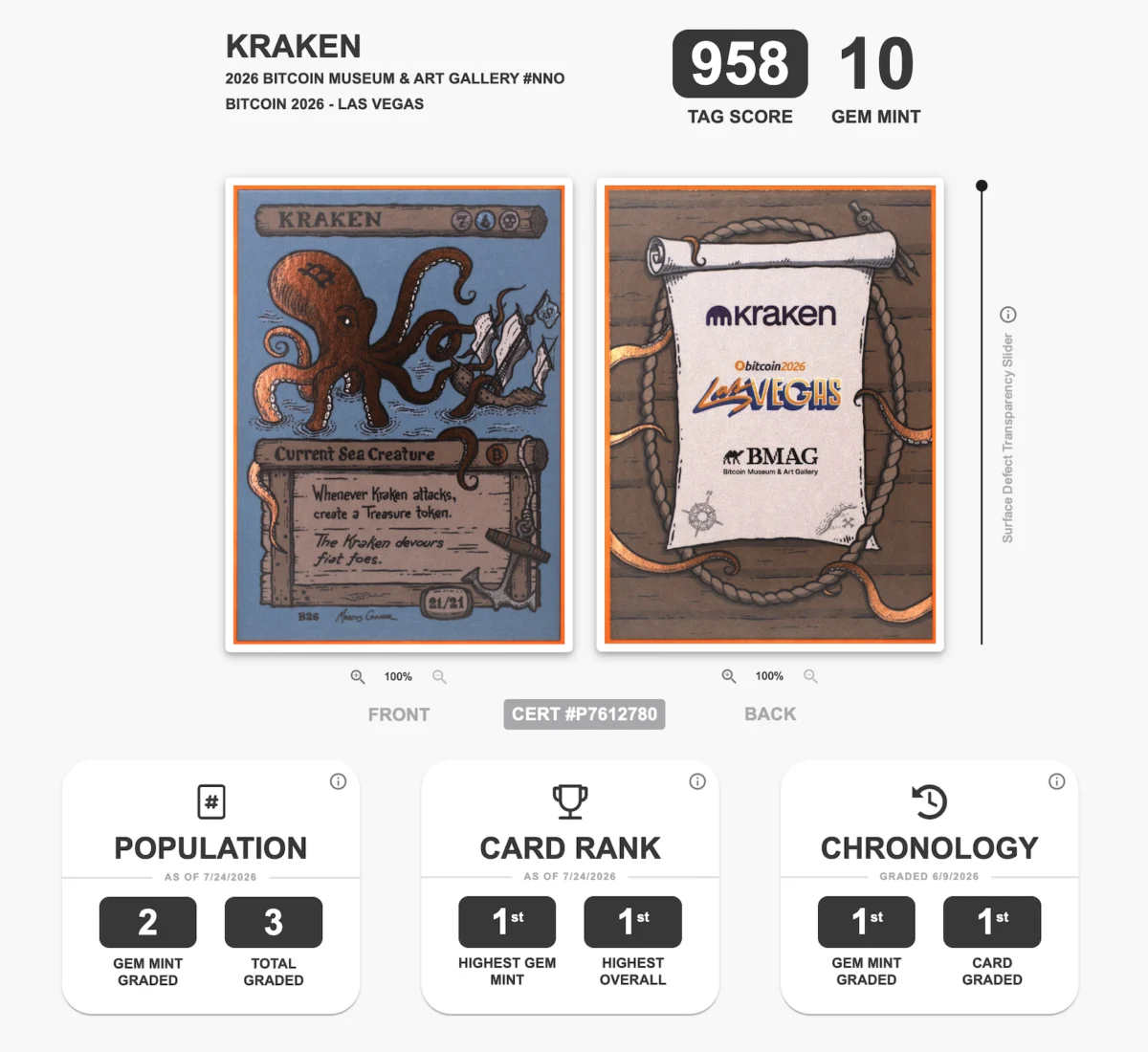
Recognizing this synergy, the Bitcoin Museum and Art Gallery (BMAG) has strategically integrated trading cards into its core programming. As the cultural arm of the Bitcoin Conference for the past seven years, BMAG has facilitated over $8 million (in excess of 130 BTC) in art and collectibles sales. Notably, they have hosted the first-ever Magic: The Gathering tournament at a Bitcoin Conference, a significant event held in Las Vegas that featured partnerships with Kraken and on-site TAG grading services. This initiative stems from a deeply held conviction that the trading card world is posing the same fundamental questions that Bitcoin has already addressed.
The burgeoning importance of trading cards within BMAG’s vision will culminate in a significant event this August. At Bitcoin Asia 2026, scheduled for August 27-28 at the Hong Kong Convention and Exhibition Centre, BMAG will launch a comprehensive Trading Card Expo. This Expo is poised to become a central hub for the trading card community, featuring a curated marketplace populated by established vendors from across Hong Kong and Southeast Asia. The event will also incorporate live activations, on-site grading and authentication services, dynamic card auctions, and an immersive gallery exhibition designed to showcase the cultural and artistic significance of trading cards. Attendees will have opportunities to purchase cards and collectibles, and are encouraged to bring their own cards for grading or direct resale to the more than 40 participating vendors. Hong Kong, renowned as one of the world’s most vibrant trading card markets, provides a natural and fitting venue for such an event within the context of a Bitcoin conference.
A Rich Artistic Pedigree: Beyond the Speculation
However, the BMAG Trading Card Expo aims to transcend a mere marketplace. The trading card format boasts an artistic pedigree that predates contemporary speculative markets. Jefferson Burdick, often considered the father of American card collecting, dedicated his final years to meticulously organizing thousands of cards at the Metropolitan Museum of Art, where his extensive collection remains preserved. Renowned graphic novelist Art Spiegelman honed his creative skills at Topps, developing iconic series like "Garbage Pail Kids" before achieving mainstream acclaim.
More recently, art critic Brian Droitcour has articulated the contemporary relevance of this medium, observing that "a Magic card is an image that does something, rarity and function entwined, while NFTs inherited that logic and captured only the rarity." Droitcour’s analysis suggests that NFTs, by focusing solely on rarity, have fragmented the traditional relationship between artwork and collectible. He argues that contemporary artists are increasingly blurring these lines, creating objects that are simultaneously art and collectible. This perspective provides a critical framework for understanding the deeper artistic currents flowing through the trading card renaissance.
Schizocollage and the New Artistic Frontier
This artistic evolution has been embraced by a generation of artists, many operating under pseudonyms across crypto subcultures, Twitter, and private online forums. These artists have been instrumental in a quiet yet profound artistic rebellion. While the mainstream crypto-art world courted established galleries with polished generative works, this group has forged a distinct path. Their creations are characterized by a dense layering of meme references, anime aesthetics, subtle art historical allusions, and fragmented internet imagery. The sheer complexity of these pieces has necessitated the invention of new critical terminology, with "schizocollage" emerging as a descriptor for this style.
Art critic Dean Kissick, in Spike Art Magazine, contextualized this work within the tradition of deliberately "bad painting," a lineage formally recognized by Marcia Tucker at the inauguration of the New Museum in 1978. Increasingly, the output of this artistic movement is finding its ultimate medium not on gallery walls, but on cardboard. The pack, the pull, the protective sleeve, and the graded slab are being reinterpreted not as mere merchandising accoutrements, but as the very substance of artistic expression.
BMAG’s commitment to this intersection of art and collectible culture is not new. For years, the organization has cultivated a presence within the Bitcoin conference circuit, establishing an art gallery that often operates outside the traditional art world’s established venues. The exhibition of painter Nardo at Bitcoin MENA in 2024, for instance, sparked conversations that centered on memes as units of cultural transmission and the internet’s fragmented detritus as legitimate artistic subject matter. This culminated in the debut of his monumental seven-foot oil painting, "Citadel," at the Bitcoin Conference in Las Vegas – a piece constructed from a 4chan meme, effectively elevating an internet "shitpost" to the status of a monumental artwork.
The trading card movement operates on a parallel trajectory, albeit at a different scale, offering a tangible and accessible format for artistic and cultural commentary. This exploration has been a consistent theme in BMAG’s publications throughout the year, featuring interviews with innovators like Alladan Flinn of Based Trading Cards, who views trading cards as physical "timestamps" of the Bitcoin movement. BMAG has indicated plans to further delve into the artists contributing to this scene and their upcoming contributions to the Hong Kong event in the weeks preceding Bitcoin Asia 2026.
Event Details and Future Outlook
The inaugural Trading Card Expo at Bitcoin Asia 2026 represents a significant step in BMAG’s mission to bridge the gap between digital innovation and tangible cultural artifacts. The event, scheduled for August 27-28 at the Hong Kong Convention and Exhibition Centre, promises a dynamic convergence of collectors, vendors, and artists. Vendors specializing in cards, collectibles, and related goods are invited to apply for table space, with limited availability noted.
BMAG encourages interested parties to follow their X (formerly Twitter) account, @BMAG_HQ, for updates on partnership announcements, upcoming auctions, and previews of artists scheduled to participate in the Hong Kong event. This strategic focus by BMAG underscores a growing recognition of trading cards not just as speculative assets, but as cultural artifacts with a rich history and a vibrant artistic future, mirroring the foundational principles of verifiable ownership and decentralized value that Bitcoin champions. The convergence of these two worlds at Bitcoin Asia 2026 is set to be a landmark event, reflecting the evolving landscape of collecting, art, and digital provenance.
